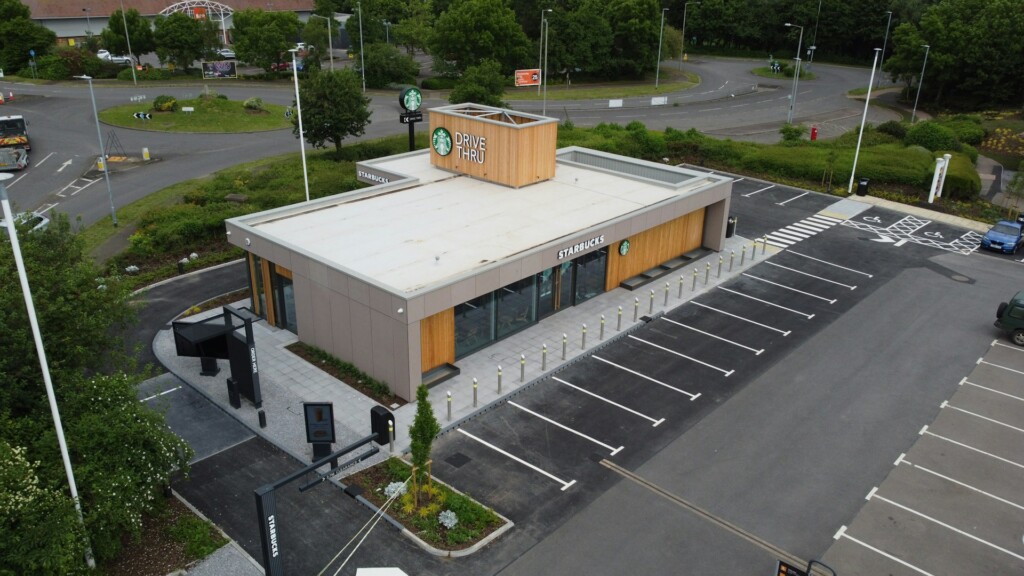
Drive-thru only restaurant construction eliminates traditional dining spaces to focus entirely on speed and vehicle throughput. These projects prioritize operational efficiency over customer seating, creating streamlined facilities designed for rapid order fulfillment and pickup.
We build these facilities with three primary delivery models: ground-up construction for maximum customization, second-generation conversions that leverage existing infrastructure, and factory-built modular units that compress timelines. Each approach shapes budgets differently, from real estate acquisition and sitework coordination to kitchen equipment integration and drive-thru technology implementation.
What Does A Realistic Budget Look Like For A Drive-Thru Only Build?
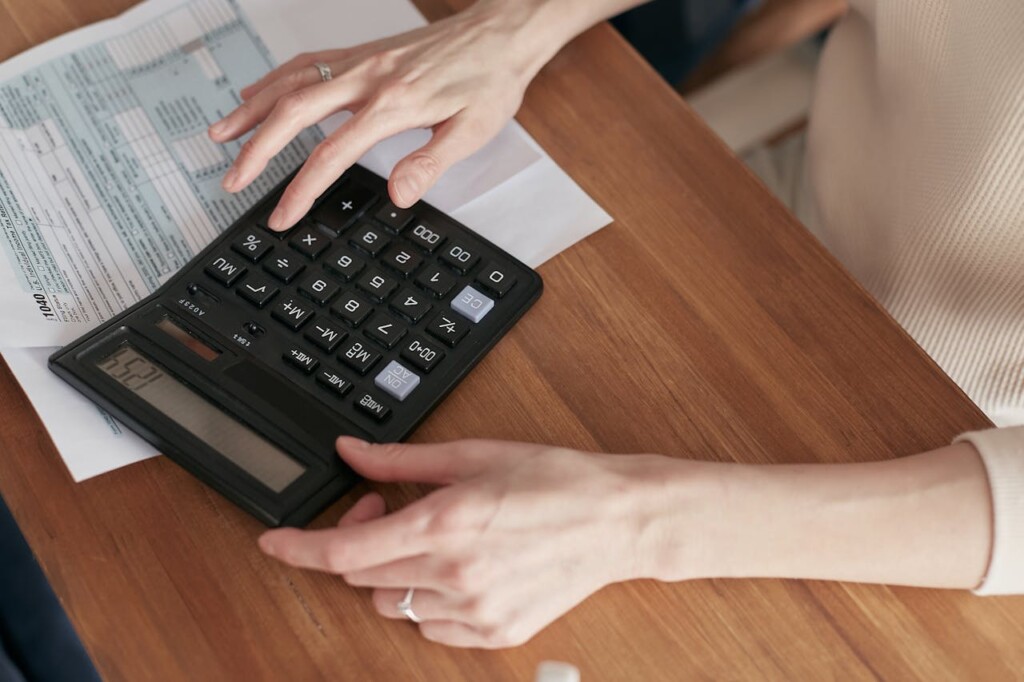
We track drive-thru construction costs across multiple budget categories that vary significantly by project size, location, and complexity. Total project investments typically range from $850,000 to $2,700,000, with hard costs representing the largest portion of most budgets.
Building shell costs form the foundation of drive-thru budgets. For a standard 2,500 square foot structure, we see shell construction ranging from $250 to $400 per square foot, translating to $625,000 to $1,000,000 before equipment and finishes are installed.
A comprehensive budget view for drive-thru construction reveals construction costs typically consume 65-72% of total project budgets. For a standard 1,800 square foot fast-food build, total project costs range from $1.33 million to $2.07 million, with construction averaging $535 to $555 per square foot. Premium urban locations push these figures higher due to increased labor rates and material costs.
Sitework represents a substantial budget line item in drive-thru projects. Drive-thru paving, parking areas, landscaping, and lighting typically add $75,000 to $200,000 to project costs. Exterior features including signage, enhanced paving surfaces, professional landscaping, and comprehensive lighting systems often total $50,000 to $150,000.
Drive-thru infrastructure costs vary dramatically based on system complexity. Basic single-lane configurations start around $20,000, while sophisticated multi-lane systems can exceed $1 million for high-volume locations. Standard lane construction typically runs $20,000 to $200,000, depending on site conditions and traffic flow requirements.
Kitchen and service equipment budgets range from $100,000 to $350,000 depending on menu complexity and production volume. Key equipment costs include fryers at $2,000 to $5,000, griddles from $3,000 to $8,000, and ovens ranging $5,000 to $25,000. Refrigeration systems typically cost $20,000 to $50,000, while beverage and ice equipment runs $7,000 to $17,000. POS systems cost $2,500 to $5,000 per station.
Technology investments for drive-thru operations typically range from $20,000 to $75,000. POS systems cost $7,000 to $25,000, while digital menu boards range from $20,000 to $50,000 depending on screen size and capabilities. AI voice ordering systems require initial investments of $15,000 to $25,000 plus ongoing software licensing fees.
MEP systems typically cost $30 to $60 per square foot for drive-thru installations. HVAC systems alone often range from $15,000 to $50,000, depending on kitchen ventilation requirements and local climate conditions. Electrical and plumbing systems must accommodate high-demand commercial equipment and health department requirements.
Permits and fees commonly range from $5,000 to $50,000, varying significantly by jurisdiction and project complexity. Health department approvals, fire marshal inspections, and building permits each carry separate fee structures.
Pre-opening marketing budgets typically allocate $20,000 to $50,000 for grand opening campaigns and initial customer acquisition. Working capital reserves of three to six months operating expenses, ranging from $50,000 to $150,000, provide financial cushion during the startup phase.
| Expense | Min | Max |
| Real Estate and Construction | $850,000 | $2,700,000 |
| Kitchen and Service Equipment | $100,000 | $350,000 |
| Technology Solutions | $20,000 | $75,000 |
| Initial Inventory and Supplies | $15,000 | $30,000 |
| Licensing, Permits, and Fees | $5,000 | $50,000 |
| Pre-Opening Marketing and Grand Opening | $20,000 | $50,000 |
| Working Capital (3-6 Months) | $50,000 | $150,000 |
Disclaimer: Pricing figures are based on publicly available market data and are intended for general estimation purposes as of November 2025. They do not represent a formal quote from EB3 Construction. Actual costs will vary by project scope, location, labor rates, and material prices.
Which Build Path Fits Best: Ground-Up, Conversion, Or Modular?
Drive-thru restaurant development involves three distinct construction approaches, each with different cost implications, timeline considerations, and operational advantages. The choice between ground-up construction, second-generation conversion, or modular delivery can significantly impact both upfront investment and time to market.
Ground-Up Construction: Comprehensive Control With Variable Costs
Ground-up drive-thru construction offers complete design control but comes with substantial cost variability. Research indicates new builds can range from $12 million to $25 million depending on site complexity and project scope, with land acquisition and building construction typically comprising 60 to 70 percent of total investment. However, more standardized fast-food projects show different benchmarks, with 1,800 square foot facilities totaling $1.33 million to $2.07 million.
This wide cost variation reflects differences in site conditions, local labor markets, and project complexity. Ground-up builds allow us to optimize lane configuration from the start and integrate drive-thru infrastructure into the building design. However, they require extensive permitting, site preparation, and coordination of multiple trade contractors.
Shell buildouts for ground-up projects typically track at $300 to $600 per square foot before equipment and finishes. These costs include structural work, MEP rough-ins, and basic interior preparation but exclude specialized kitchen equipment and drive-thru technology systems.
Second-Generation Conversion: Leveraging Existing Infrastructure
Converting existing restaurant spaces with established drive-thru lanes represents a cost-effective alternative when suitable properties are available. These projects often range from $250,000 to $750,000 when core systems and drive-thru infrastructure already exist in good condition.
The key advantage lies in existing utilities, parking areas, and foundational site work that significantly reduce preparation costs. Conversion projects can reduce setup costs by 40 to 60 percent versus new ground-up construction by leveraging existing mechanical, electrical, and plumbing systems.
Second-generation buildouts typically cost $150 to $300 per square foot, substantially lower than ground-up alternatives. However, success depends on thorough due diligence to assess existing infrastructure condition, HVAC capacity for kitchen loads, and drive-thru lane configuration compatibility with modern operational requirements.
Modular Drive-Thru: Factory-Built Speed And Efficiency
Factory-built modular units represent the fastest path to market for drive-thru only operations. These complete drive-thru facilities can be manufactured and equipped for approximately $100,000 to $300,000, depending on size and equipment specifications.
Steel-frame modular construction, which we implement at EB3 Construction, involves off-site fabrication and on-site installation that significantly compresses project timelines. Modular construction can reduce project timelines by 30 to 50 percent compared to traditional builds, with installation typically completed in days to about one week once site preparation is finished.
The time advantage translates directly to revenue opportunity. Some modular projects can open 6 to 12 weeks faster than conventional construction, allowing operators to capture market share and generate cash flow sooner. Additionally, relocatable modular structures may qualify for accelerated depreciation schedules, such as 7-year depreciation rather than the standard 39-year schedule for permanent structures, though specific tax implications should be confirmed with a qualified tax advisor.
Modular construction also provides predictable costs and controlled quality since units are built in factory environments with standardized processes and materials. This approach eliminates weather delays and reduces on-site labor coordination while maintaining consistent build quality across multiple locations.
What Site And Lane Design Choices Matter Most For Throughput?
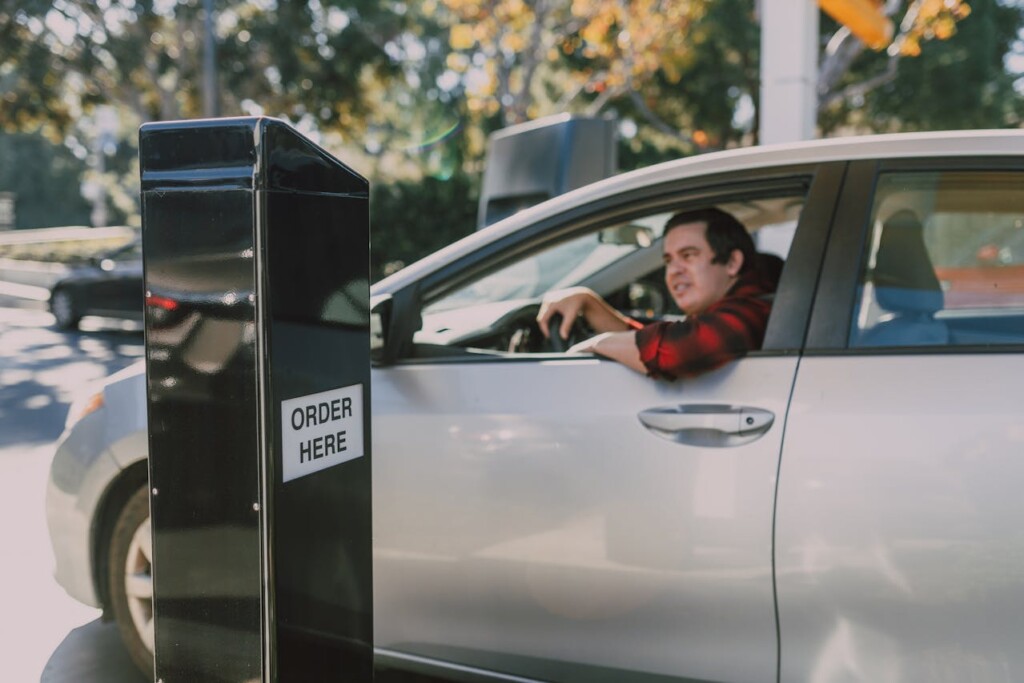
Maximizing throughput starts with strategic lane configuration and hardware placement. We design drive-thru sites to handle vehicle stacking while maintaining smooth traffic flow, focusing on elements that shave seconds from each transaction.
Lane Configuration And Paving Fundamentals
Standard single-lane construction typically runs $20,000 to $200,000, with complex multi-lane configurations driving costs higher. We plan for adequate vehicle stacking capacity, ensuring cars can queue without blocking site access or creating safety hazards.
Lane width matters significantly for throughput. Lanes should accommodate all vehicle types while maintaining efficient flow patterns. Clear directional signage prevents confusion at merge points, and strategic lighting placement ensures visibility during evening operations.
Order Point Hardware And Digital Integration
Digital menu boards represent one of the most impactful investments for throughput optimization, typically costing $20,000 to $50,000. These systems support instant menu updates and dayparting strategies that can reduce customer decision time during different service periods.
Specialized order windows, intercom systems, and payment terminals typically total $5,000 to $15,000. High-quality intercom systems eliminate communication delays that slow order accuracy, while contactless payment options reduce transaction time at the window.
Technology Stack For Speed Optimization
Modern POS systems ranging from $7,000 to $25,000 integrate with kitchen display systems to coordinate order preparation. AI voice ordering technology, with initial costs of $15,000 to $25,000, converts spoken orders to digital text, reducing human error and reallocating staff to food preparation tasks.
The total technology stack commonly ranges from $20,000 to $75,000. When properly integrated, these systems create seamless workflows that boost accuracy while reducing labor dependency during peak hours.
Site Enhancement Elements
Exterior elements including signage, parking surfaces, landscaping, and lighting typically total $50,000 to $150,000. Strategic exterior signage guides traffic flow and reduces confusion at entry points. Proper lighting ensures safety and visibility while supporting extended operating hours.
These site enhancements directly impact throughput by creating predictable traffic patterns and reducing bottlenecks that occur when customers struggle to navigate unclear layouts or poorly lit areas.
How Do Speed And Operations Affect ROI After Construction?
Drive-thru speed translates directly into revenue. Research shows the average total service time hovers around 347.85 seconds across the industry. When we reduce that by just 7 seconds, market share gains increase by 1%. For high-volume locations, a 10% speed improvement generates measurable annual revenue increases that compound over time.
These improvements matter because QSR profit margins typically run 6–9% under standard operations. Optimized drive-thru operations can push margins to 15% or higher. The difference between average and exceptional performance often determines whether a location meets pro forma projections or exceeds them significantly.
Equipment And Technology Drive Operational Efficiency
The equipment and technology choices made during construction directly impact service time and order accuracy. Digital menu boards enable instant updates and dayparting strategies that guide customers toward high-margin items during peak periods. Right-sizing refrigeration capacity prevents bottlenecks during rush hours when demand spikes.
POS terminals configured for drive-thru operations reduce transaction time at each interaction point. AI voice ordering systems can boost accuracy while reallocating labor to food preparation and customer interaction rather than order-taking. These systems work together to shave seconds off each transaction while reducing human error rates.
Peak-Hour Throughput Maximizes Revenue Potential
Peak-hour performance determines the revenue ceiling for any drive-thru operation. Beverage systems that can handle high-volume demand without creating wait times keep the lane moving. Properly sized kitchen equipment prevents preparation delays that cascade through the entire service process.
When we design drive-thru operations for peak throughput, average transaction times decrease across all hours. This creates a compounding effect where faster service attracts more customers, generating additional volume that further improves the return on the initial construction investment. The operational efficiency built into the physical space becomes a sustainable competitive advantage.
Conclusion And Next Steps
Drive-thru only restaurant construction success centers on three critical decisions: selecting the right build delivery model, establishing accurate budgets early, and implementing smart lane and technology choices. These foundational elements determine whether projects open on time and within budget. When we align costs early across sitework, shell construction, kitchen equipment, and MEP systems, we create a framework for predictable outcomes.
For developers prioritizing speed-to-market and standardized rollouts across multiple locations, modular construction represents a compelling path forward. Steel-frame modular units can compress timelines by 30-50% compared to traditional methods, with installation periods measured in days rather than weeks. However, any delivery model requires early attention to permitting timelines, careful sequencing of long-lead items, and design focused on maximizing throughput from day one of operation.
Ready to move forward with your drive-thru construction project? Connect with EB3 Construction to discuss how our modular approach can accelerate your timeline while maintaining quality and cost control.