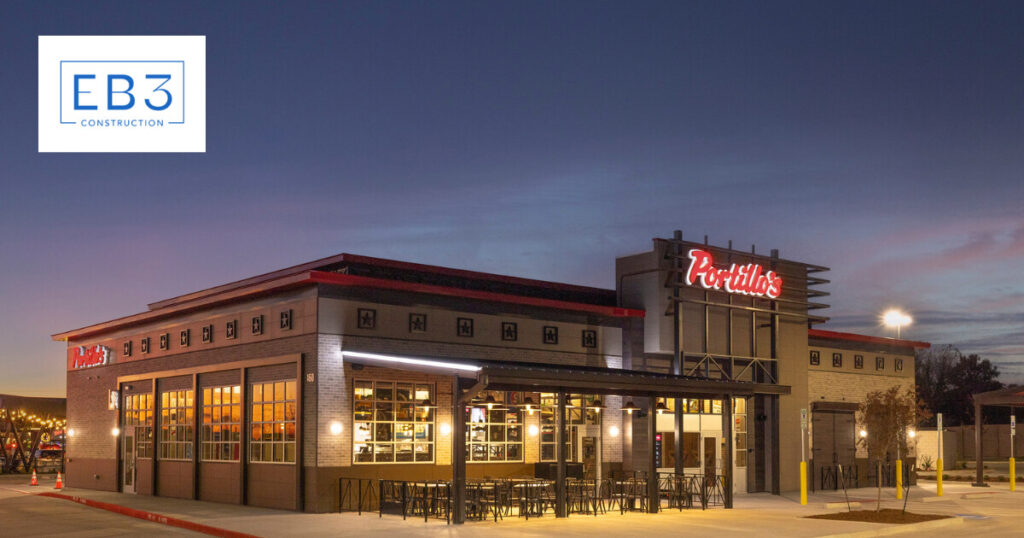

Banks prefer corner locations with drive-thru access. Fast-food chains seek high-visibility spots that capture passing traffic. Coffee shops want standalone spaces near busy anchor tenants.
Retail pad site construction creates freestanding parcels along a shopping center’s frontage. These outparcels sit apart from the main inline space, offering street visibility and direct access that interior spaces cannot match. We build these standalone retail buildings to add income streams, meet specific tenant requirements, and increase overall property value within existing retail centers.
How Do Pad Sites Fit Within Retail Centers And Add Value?

Pad sites are strategically positioned between anchor tenants and main roadways, creating a high-visibility corridor that captures both vehicle and foot traffic. The main inline space sits farther back, behind parking areas, while we place pad sites closer to the street frontage, where they benefit from immediate exposure to passing cars and pedestrians drawn by major retailers.
Anchor tenants provide the foundation for pad site success. When customers visit grocery stores, department stores, or big-box retailers, they create consistent foot traffic that flows past pad locations. This symbiotic relationship means pad tenants benefit from the marketing power and customer draw of established anchors without directly competing for the same consumer spending.
Common Pad Site Tenants And Uses
We typically see banks, fast-food restaurants, casual dining establishments, convenience stores, and coffee shops thrive in pad locations. These businesses capitalize on impulse visits and convenience-driven transactions that complement anchor-tenant shopping trips. Drive-thru operations perform particularly well because pad sites offer the space and access required for efficient traffic flow.
Credit tenants often prefer pad sites because they provide brand visibility and operational independence within a proven retail environment. National retailers are increasingly seeking pad locations that offer street exposure and dedicated parking without the constraints of inline space configurations.
Value Creation Strategies For Developers
We can add value through three primary approaches: building and leasing new pad space, selling individual pads, or executing ground lease arrangements. Building and leasing generates ongoing rental income that directly increases Net Operating Income. This approach works best when market rents justify construction costs and we want to maintain long-term ownership.
Selling pads provides immediate capital that reduces project basis and debt service obligations. The sale proceeds lower our overall investment while maintaining ownership of the primary retail center. This strategy appeals to developers who need liquidity or want to reduce project risk exposure.
Ground lease structures allow tenants to build at their own cost while we retain land ownership and collect consistent ground rent. This approach minimizes our construction risk while securing long-term income from quality tenants who invest their own capital in improvements.
NOI Impact And Asset Value Enhancement
Added income from pad sites flows directly to Net Operating Income, which drives property valuation increases. Whether through rental income, ground lease payments, or reduced debt service from pad sales, these revenue streams improve cash flow and support higher asset valuations at prevailing market cap rates.
Inline rental income continues to flow during pad construction, reducing project risk compared with ground-up center development, where no revenue exists until tenant occupancy. This income stability helps maintain financing relationships and provides cash flow to support construction costs and debt service during the development phase.
What Should Teams Evaluate Before Retail Pad Site Construction?
Site evaluation determines whether construction makes financial and operational sense for your project. The wrong site can drain resources and create ongoing operational headaches. Smart evaluation prevents costly mistakes and positions your development for long-term success.
Traffic Count and Visibility Assessment
Vehicle counts tell only part of the story. We track daily traffic patterns to understand peak periods and directional splits that influence customer access. Visibility studies examine sight lines from different approach angles and driving speeds to confirm customers can spot and safely enter the site.
Morning commute patterns differ significantly from weekend shopping traffic. A site that sees 25,000 vehicles daily might still struggle if most traffic occurs during non-retail hours. We analyze traffic composition to distinguish between pass-through commuters and local shopping traffic.
Sign visibility requirements vary by jurisdiction, but the principle remains consistent across projects. Customers need adequate time to recognize your tenant’s brand, decide to stop, and safely execute the turn. Poor visibility creates safety hazards and reduces customer visits regardless of traffic volume.
Ingress and Egress Planning
Access points determine customer convenience and operational efficiency. We evaluate turn movements from both directions of travel, considering traffic signals, median breaks, and geometric constraints that affect site circulation.
Drive aisles must accommodate delivery trucks and emergency vehicles while maintaining customer flow. Typical retail sites require 24-foot drive aisles, but pad sites with drive-thru operations need wider circulation to prevent conflicts between customer cars and service vehicles.
Exit patterns matter as much as entry convenience. Customers frustrated by difficult exits become one-time visitors. We design circulation that offers multiple egress options without forcing customers through congested areas or uncomfortable turning movements.
Parking Supply Verification
Converting existing parking for pad construction requires careful calculation. Most jurisdictions mandate specific ratios between retail square footage and available parking spaces. We verify that remaining spaces meet both code requirements and practical demand from anchor tenants.
Peak parking demand typically occurs during weekend afternoons and holiday shopping periods. Anchor tenants generate predictable parking patterns that we factor into our calculations. Pad sites should complement rather than compete with existing parking needs.
Cart storage and pedestrian circulation also consume parking space. We account for these operational needs when determining how pad construction affects overall site capacity.
Regulatory Compliance Review
Local zoning codes dictate allowable uses, building heights, and architectural standards for pad development. We review permitted uses to ensure compatibility with intended tenants and confirm that drive-thru operations align with zoning restrictions.
Building setbacks from property lines and interior lot lines vary significantly between jurisdictions. Some areas require larger setbacks from residential zones or impose additional landscape buffer requirements that affect buildable area.
Height restrictions protect sight lines for existing tenants and maintain community character. We verify maximum building heights and evaluate how parapet walls, mechanical equipment, and signage affect compliance with these limits.
Architectural criteria often mandate specific materials, colors, or design elements that must coordinate with the main shopping center. We review these standards early to avoid design revisions during permitting.
Anchor Tenant Proximity and Synergy
Distance from anchor tenants affects foot traffic and cross-shopping opportunities. Pad tenants benefit from proximity to high-traffic anchors, but excessive distance reduces the synergistic value that makes pad sites attractive to national retailers.
Complementary uses create destination shopping that benefits both pad and inline tenants. A coffee shop near a bookstore generates more visits than the same coffee shop isolated from compatible retailers. We evaluate how proposed pad uses enhance rather than compete with the existing tenant mix.
Service timing coordination prevents conflicts during peak operations. Delivery schedules, waste collection, and maintenance activities require careful coordination to avoid disrupting customer access during busy periods.
Pad-Ready Site Preparation
Compacted subgrade preparation accelerates construction timelines and reduces weather delays. Sites with proper soil compaction and drainage can proceed directly to foundation work without extended earthwork phases that expose projects to seasonal weather risks.
Utility rough-ins positioned for pad development eliminate trenching through active parking areas during construction. We verify that water, sewer, electrical, and gas services can reach the pad site without disrupting shopping center operations.
Temporary access routes allow construction traffic to reach work areas without blocking customer parking or creating safety hazards. Staging areas for materials and equipment require adequate space that doesn’t interfere with ongoing retail operations.
Site preparation costs vary significantly based on existing conditions. Rocky soil, high groundwater, or contaminated fill can add substantial expense and delay to construction schedules.
Which Delivery, Documentation, And Scheduling Steps Reduce Risk?

Success in retail pad site construction depends on establishing clear parameters and maintaining tight control over project documentation. We approach every pad delivery with systematic protocols that protect both parties and ensure smooth execution from groundbreaking to the certificate of occupancy.
Plan Controls And Certification Standards
We define controlling plans and architectural criteria during the initial project phases. This alignment between retailer standards and site-specific conditions prevents costly revisions later. Our teams work directly with tenant representatives to establish design parameters that meet brand requirements while respecting local zoning constraints and utility limitations.
Pad certifications require careful attention to engineering liability coverage. We document only certifiable facts about soil conditions, utility capacity, and site preparation work. This approach keeps certifications within standard engineering practice and protects against liability exposure that could exceed professional insurance limits.
Blackout Periods And Schedule Coordination
Retailer blackout periods can derail construction schedules if not identified early. Many food service and retail tenants restrict construction activity during peak seasons, weather-sensitive periods, or holiday rush periods. We map these restrictions against critical-path activities and build appropriate buffers into contract deadlines.
Weather-related blackouts typically affect exterior work such as paving, roofing, and site utilities during winter months. Seasonal opening requirements may limit final inspections and tenant fit-out work during back-to-school or holiday periods. Our scheduling process accounts for these constraints from day one.
Staging Areas And Site Access
Flexible staging areas are crucial when pad construction occurs within active retail centers. We coordinate with property management to identify temporary storage locations and ensure construction traffic doesn’t disrupt existing tenant operations. Our site plans include multiple access routes to accommodate changing conditions during the construction period.
Material deliveries, concrete trucks, and utility crews need clear paths that won’t interfere with customer parking or anchor tenant access. We establish these protocols early and maintain communication with center management throughout the project.
Contract Risk Management
Liquidated damages clauses require clear definitions to avoid disputes during project completion. We establish milestones tied to specific deliverables rather than broad completion dates. Force majeure carve-outs protect against delays beyond contractor control while maintaining accountability for manageable risks.
Warranty terms, assignability provisions, and bond requirements must align across site work contracts and the underlying site development agreement or ground lease. Misaligned warranty periods can create coverage gaps, while inconsistent assignability terms may complicate future tenant changes or property sales.
Financial Coordination
Draw requirements for retailer contributions must match construction loan disbursement schedules. We coordinate these payment streams to prevent cash-flow gaps that could halt construction progress. Our project management approach includes regular reviews with lenders, retailers, and developers to ensure payment timing remains synchronized throughout the construction period.
Contractor insurance and bond requirements must be verified against project specifications and lender requirements. We maintain current certificates and ensure coverage levels meet both contract minimums and actual project risks.
What Development, Leasing, And Financing Choices Shape Outcomes?
Three primary development paths guide pad site execution. We can develop and lease the space ourselves, sell the completed pad to an end user, or structure a ground lease in which the tenant funds all improvements. Each approach carries distinct capital requirements and risk profiles that shape long-term returns.
The develop-and-lease model retains ownership while generating steady rental income. We maintain control over the asset and benefit from potential appreciation, but this requires the highest upfront capital investment. Construction financing bridges the gap until permanent financing takes over, typically based on projected net operating income (NOI) from signed leases.
Credit Tenants Drive Favorable Terms
Credit tenants gravitate toward pad sites because of their visibility and accessibility advantages. National brands with strong balance sheets can support premium pricing and attract financing at lower cap rates. Banks view these tenants as lower risk, which translates into better loan terms and higher property valuations.
Investment-grade tenants often secure triple-net leases that shift operating expenses to the tenant. This structure provides predictable cash flows and reduces management responsibilities. The combination of creditworthy tenants and favorable lease terms creates attractive investment metrics that institutional buyers recognize.
Financing Options Vary by Risk and Tenant Quality
Traditional construction and acquisition financing tends to favor projects with strong debt service coverage ratios. Lenders typically require a DSCR of 1.25x or higher for conventional loans. Tenant quality directly influences these calculations, as credit tenants provide more reliable income streams that support debt service.
When conventional banks tighten lending standards, private money and hard money lenders fill the gap. These sources offer faster execution but at higher interest rates and shorter terms. The trade-off between speed and cost depends on project timing and market conditions.
Owner-occupied projects provide access to SBA financing programs. The SBA 7(a) program supports businesses purchasing their own facilities, while SBA 504 loans provide long-term, fixed-rate financing for real estate and equipment. Both programs require the business owner to occupy at least 51% of the space, making them suitable for single-tenant pad developments.
Structure Selection Influences Risk and Returns
Ground lease structures reduce developer capital requirements while transferring construction risk to tenants. We retain land ownership and collect rent over long lease terms, typically 20 to 99 years. This approach works particularly well with credit tenants who prefer to control their own improvements and benefit from potential tax advantages.
The sale option provides immediate capital recovery and eliminates ongoing management responsibilities. We can sell to the tenant directly or to an investor seeking stable, credit-tenant properties. Sale prices reflect prevailing cap rates and tenant credit quality, with investment-grade tenants commanding premium valuations.
Each financing and ownership structure creates different cash flow patterns and risk exposures. Ground leases provide steady income with lower capital requirements but limit upside potential. Development and leasing maximize returns but require more capital and active management. Sale strategies optimize immediate returns while transferring all future risk and reward to the buyer.
Conclusion And Next Steps

Retail pad site construction delivers visible, accessible space that captures traffic flow and increases Net Operating Income and tenant diversity within existing retail centers. We coordinate these projects to maximize anchor synergy, ensuring pad tenants complement rather than compete with inline tenants.
Success depends on thorough location validation before breaking ground. We assess traffic counts, parking ratios, and zoning compliance while aligning delivery schedules with retailer blackout periods and seasonal requirements. Clear pad certifications, coordinated warranties, and aligned draw schedules among all parties reduce construction risk and keep projects moving forward.
Our next steps follow a structured approach: validate traffic patterns and parking adequacy; confirm zoning setbacks and architectural requirements; establish plan criteria and blackout windows; coordinate warranty terms and construction draws; then select the optimal path aligned with your project goals and risk tolerance. Each choice influences upfront capital requirements, ongoing income potential, and long-term asset value within your retail portfolio.
Ready to explore how pad site construction can enhance your retail property’s performance? Contact EB3 Construction to discuss your outparcel development opportunities.