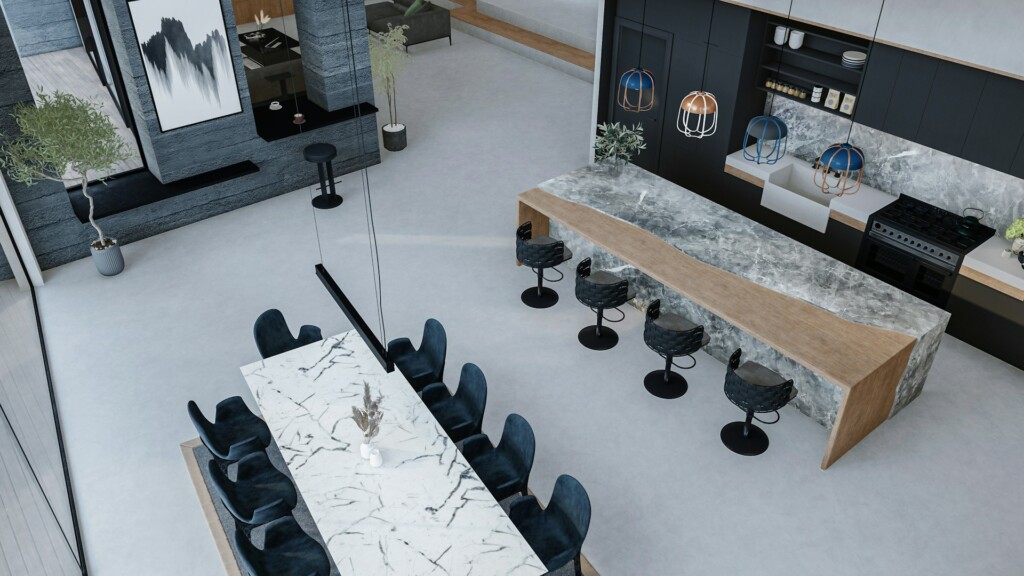
Corporate dining has moved far beyond basic cafeteria service and vending machines. Today’s corporate dining hall builder creates spaces where scratch cooking meets wellness-minded menus and technology-enabled service transforms how employees experience workplace dining.
We design and construct environments that support hospitality culture through flexible stations, coffee bars, and areas that keep teams productive. These projects integrate sustainability frameworks with engagement features that make dining a cornerstone of modern workplace experience.
How Should Programming And Layout Support Modern Corporate Dining?
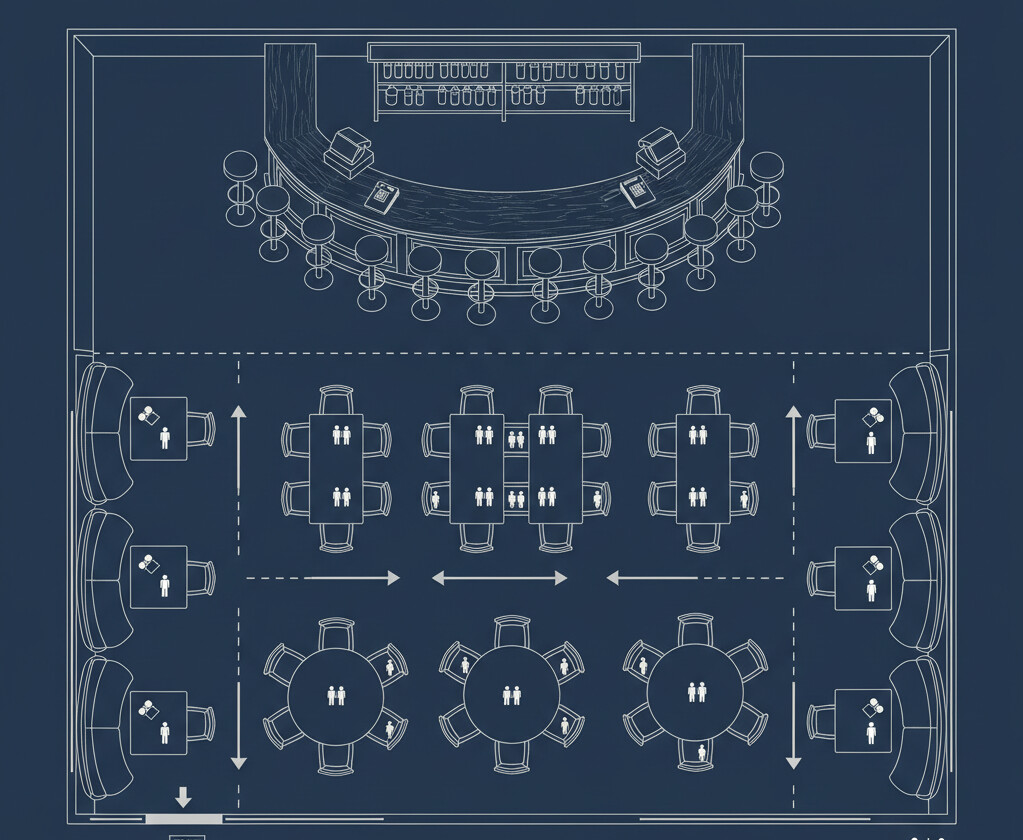
We design spaces around multiple service formats to match how modern employees want to eat. Corporate cafeterias now include buffet lines for traditional hot meals, grab-and-go stations for quick selections, and boxed meal options for eating at desks or remote consumption.
Menu variety drives our station planning. We typically create distinct food stations, each offering seven to ten items that rotate through different cuisines weekly. This includes dedicated salad bar and deli bar areas where employees can customize their meals, plus handheld stations for sandwiches, wraps, and portable options.
Flexible Zones For Events And Seasonal Programs
We build adaptable areas that transform based on programming needs. Pop-up food stations can appear during special events or cultural celebrations. These flexible zones support everything from taco trucks during Cinco de Mayo to soup stations in winter months.
Recharge zones positioned throughout the dining hall provide quick access to coffee and light snacks. These spaces keep employees productive during shorter breaks while supporting extended work sessions in collaborative areas.
Self-Service Display Systems
Our layouts incorporate various self-service elements that reduce labor costs while maintaining food quality. Service cases keep prepared items at proper temperatures while allowing visual merchandising. Counter displays work well for impulse purchases near checkout areas.
Islands positioned in high-traffic zones catch attention and move products efficiently. End caps at the terminus of serving lines encourage additional purchases. We often specify combination hot and cold cases that maximize display variety within limited floor space.
Mobile displays provide operational flexibility. These wheeled units can reposition based on traffic patterns or special events, then store compactly when not needed.
Micro Markets And Unattended Service
We integrate 24/7 micro markets that operate independently of staffed dining hours. These self-contained areas include refrigerated merchandisers, ambient storage, and unattended payment kiosks that process transactions automatically.
Contactless payment systems streamline the grab-and-go experience while collecting valuable data on purchasing patterns. This technology reduces checkout wait times during peak periods and extends service hours without additional labor costs.
Front-Of-House Design Considerations
High-quality finishes create an appealing dining environment that employees want to use regularly. We select materials that withstand heavy traffic while maintaining visual appeal over years of operation.
Traffic flow receives careful attention in our layouts. Clear sight lines help employees navigate quickly during busy periods. Strategic placement of serving stations prevents bottlenecks while maintaining logical progression from entry to seating areas.
What Back-Of-House Infrastructure And Food Safety Features Are Essential?
Corporate dining halls require sophisticated back-of-house systems to handle high-volume operations across multiple service formats. We design these spaces to accommodate scratch cooking while maintaining strict food safety standards that support health department compliance.
Critical Equipment Infrastructure
Hot and cold holding solutions form the backbone of any successful corporate dining operation. We coordinate installation zones that can accommodate combination units maintaining foods at 135°F or above for hot items and 41°F or below for cold storage. These systems must handle diverse menu rotations while supporting quick service during peak hours.
Adaptable equipment layouts allow cafeterias to evolve with changing employee preferences and seasonal offerings. We plan modular cooking stations that can shift between different cuisine types without major reconstruction. Steam tables, convection ovens, and induction cooktops provide flexibility for both traditional and contemporary cooking methods.
Equipment installation zones require careful coordination with utilities and ventilation systems. Buffet lines need dedicated electrical and plumbing connections, while coffee machines require water filtration and drainage. Commercial dishwashers demand specific water temperature and pressure specifications that we integrate during the design phase.
Food Safety Controls And Compliance
Temperature logging systems ensure continuous monitoring of food safety conditions throughout the operation. We install digital monitoring equipment that tracks holding temperatures automatically and alerts staff when conditions drift outside safe ranges. These systems generate the documentation required for health inspections and permit renewals.
Food safety controls extend beyond temperature management to include proper ventilation, pest control access points, and sanitization stations. Hand-washing facilities must meet commercial code requirements with adequate spacing and supplies. Floor drains and grease management systems prevent contamination while supporting deep cleaning protocols.
Health inspection readiness requires designated storage areas for cleaning supplies, maintenance equipment, and documentation. We create spaces that facilitate inspector access while maintaining operational flow. Permit compliance involves coordination with local authorities on fire suppression, electrical systems, and wastewater management.
Production And Storage Workflow Design
Efficient production workflows minimize cross-contamination while maximizing throughput during busy service periods. We design receiving areas with direct access to walk-in coolers and dry storage, reducing handling time and maintaining food quality. Prep stations connect logically to cooking areas and service lines.
Storage workflows support both sustainability targets and operational efficiency. We incorporate waste reduction systems including composting stations, recycling centers, and portion control areas. Inventory management spaces allow for proper rotation using first-in-first-out principles that reduce spoilage.
Team circulation patterns influence service quality and employee satisfaction. We create pathways that allow kitchen staff to move efficiently between preparation, cooking, and service areas without interfering with each other. Break areas and administrative spaces support the warm, friendly service culture that defines successful corporate dining programs.
How Do Micro Markets And Cashier-Free Concepts Change Build Requirements?
Micro markets represent a shift from traditional cafeteria service to autonomous retail spaces that operate around the clock. These contactless, self-serve environments require different infrastructure planning than conventional food service areas. We coordinate installations for unattended kiosks, secure display cases, and technology systems that enable 24/7 operation without staff oversight.
Cashier-free smart merchandisers eliminate traditional checkout counters and register stations. These autonomous retail merchandisers use computer vision and weight sensors to identify products as customers select them. We position these units in high-traffic zones where employees can quickly grab items without waiting in line. The systems automatically process contactless payment through mobile apps or card readers built into the entry points.
Planning For Self-Service Display Infrastructure
Self-service displays require strategic placement to support natural traffic flow while maintaining security. We install islands and mobile units that can be repositioned as demand patterns shift throughout the day. These grab-and-go stations need adequate clearance for wheelchair accessibility and enough space for multiple users during peak periods.
The modular nature of these displays allows us to reconfigure layouts based on menu changes or seasonal offerings. We coordinate electrical rough-ins for refrigerated cases, heated displays, and payment terminals. Each display zone requires dedicated circuits to handle varying equipment loads as operators adjust their product mix.
Technology Integration And Circulation Planning
Tech-enabled ordering systems change how we plan circulation patterns. Mobile displays can be relocated based on real-time data from ordering apps and usage dashboards. We design flexible electrical and data infrastructure that supports these layout adjustments without major renovations.
Safe circulation becomes critical when employees use mobile devices to order and pay while moving through the space. We create clear sight lines and wide pathways that accommodate both browsing customers and those picking up pre-ordered items. Charging stations near seating areas support the mobile ordering experience.
Waste reduction goals influence how we plan storage and disposal areas. Smart merchandisers track inventory precisely, reducing overstock and spoilage. We coordinate smaller, more frequent delivery areas rather than large bulk storage spaces. This approach supports flexible working hours and diverse dietary needs while minimizing food waste through better inventory management.
What Steps Guide A Corporate Cafeteria Build-Out From Ideation To Operations?
The corporate cafeteria construction process requires disciplined sequencing to deliver functional dining spaces on time and budget. We follow proven steps that maintain momentum from initial planning through daily operations.
Ideation And Cultural Alignment
Begin with clear ideation sessions to define the cafeteria’s purpose within company culture. We work with stakeholders to establish menu variety that reflects employee preferences and dietary needs. Service hours must align with work patterns, whether supporting traditional lunch periods or extended dining for multiple shifts.
Document specific requirements for scratch cooking capabilities, wellness-minded offerings, and sustainability goals. This foundation guides all subsequent decisions about space allocation, equipment selection, and operational workflows.
Early Permitting And Health Inspections
Move through permitting processes immediately after design approval. We coordinate with local health departments to secure necessary permits for food service operations. Health inspections require advance planning for proper ventilation, water supply, and waste disposal systems.
Early permit acquisition prevents construction delays and ensures compliance with local food safety regulations. We submit detailed plans showing equipment layouts, utility connections, and safety systems to expedite approval processes.
Construction Coordination And Equipment Installation
During construction, we coordinate installation of specialized foodservice equipment including buffet lines, coffee systems, dishwashers, and display cases. Equipment delivery and installation require precise timing to avoid conflicts with other construction activities.
We manage utility connections for commercial-grade equipment, ensuring adequate electrical capacity, water pressure, and ventilation systems. Installation zones for heavy equipment like dishwashers require reinforced flooring and proper drainage connections.
Construction Oversight From Design To Implementation
Construction oversight ensures the project fits the building structure, available space, and approved budget. We monitor progress against established timelines and coordinate with mechanical, electrical, and plumbing contractors to maintain project momentum.
Regular site inspections verify that installation work meets design specifications and operational requirements. We address any conflicts between original plans and field conditions before they impact the construction schedule.
Operations Handover And Team Setup
After construction completion, an onsite hospitality team takes responsibility for meal and coffee services. We coordinate equipment training, maintenance protocols, and ongoing health inspection management with operational staff.
Technology systems support daily cafe operations through menu management, ordering platforms, temperature logging, and program dashboards. These systems provide real-time insights into service efficiency, food safety compliance, and employee satisfaction metrics.
Conclusion And Next Steps
Corporate dining hall projects require balancing multiple priorities to create spaces employees truly value. We integrate hospitality culture with wellness programs while meeting sustainability goals through technology-enabled solutions. Each project demands flexible stations that adapt to changing menu needs and service styles.
Building these facilities means coordinating complex systems from start to finish. We plan robust back-of-house infrastructure that supports scratch cooking and multiple cuisines. Early alignment on permits, food safety protocols, and equipment installation prevents delays and ensures health inspections pass smoothly. Micro markets with contactless kiosks extend dining convenience beyond traditional service hours, while hot and cold displays support grab-and-go options that reduce waste and improve employee satisfaction.
Ready to create a corporate dining hall that enhances your workplace culture and supports employee wellness? Contact EB3 Construction to discuss your project.