Houston’s industrial landscape is experiencing unprecedented warehouse expansion in late 2025 and early 2026. Two major projects illustrate this momentum: East Coast Warehouse & Distribution announced a $57.5 million temperature-controlled facility in Baytown with 321,440 square feet and capacity for 275 trailers, while Grainger broke ground on a massive 1.2 million-square-foot distribution center in Hockley.
Port Houston leaders emphasize that near-port facilities like these create value-added logistics solutions that strengthen supply chain resilience across the region. The combination of robust port activity, industrial land availability, and strategic highway access positions Houston as a premier destination for warehouse expansion projects seeking proximity to both import gateways and regional distribution networks.
Where Are The Best Locations For Expansion Around Houston?

Port proximity influences location decisions in Houston’s industrial market. The Southeast submarket holds strong appeal thanks to direct access to container terminals and established trucking corridors. The Northwest and Northeast submarkets offer competitive advantages through highway connectivity and land availability for large-scale operations.
Baytown represents the gold standard for near-port siting. The city sits approximately 14 miles from Barbours Cut Terminal and 18 miles from Bayport Container Terminal. Highway 146 provides the primary north-south corridor, while Grand Parkway (SH 99) and Highway 225 create east-west connectivity across the region.
Hockley offers different advantages for high-capacity distribution centers. Located roughly 37 miles northwest of downtown Houston, the area provides larger parcels suitable for million-square-foot facilities. The additional distance from port gates is offset by lower land costs and room for extensive truck courts and trailer staging areas.
Houston’s regulatory environment shapes site selection differently than in other major metros. The city operates without traditional zoning, relying instead on deed restrictions and municipal ordinances to guide land use. Light Industrial (I-1) and Heavy Industrial (I-2) designations typically accommodate warehouse construction and operations.
Rail access adds another layer to location strategy. Several Houston submarkets feature direct rail connections through major carriers like BNSF and Union Pacific, enabling multimodal logistics operations. Near-port facilities can leverage both container drayage and rail movements for inland distribution.
We evaluate each submarket against specific operational requirements. Southeast locations excel for import-heavy operations requiring quick container turnaround. Northwest sites work well for regional distribution networks serving Dallas and other Texas markets. The key is to match submarket strengths to your facility’s primary function and customer base.
What Site And Design Criteria Should Guide A Houston Expansion?
Industrial expansion in Houston requires careful attention to site layout and building specifications. We approach each project by balancing operational requirements with long-term flexibility, ensuring facilities can adapt to changing logistics demands while maintaining efficient throughput.
Site planning begins with the building footprint and extends outward to accommodate truck courts, loading docks, employee parking, and trailer storage areas. We allocate sufficient space for future expansion, recognizing that successful warehouse operations often need to scale capacity within the same location. Clear sight lines and adequate maneuvering space for tractor-trailers are critical design elements we integrate from the earliest planning stages.
Infrastructure And Utility Requirements
Utility verification is a cornerstone of our site due diligence process. We confirm that water, sewer, electrical, gas, and telecommunications infrastructure can support current operations and future growth. Power loads for modern warehouse facilities often exceed standard commercial requirements, particularly when refrigeration or automated systems are involved. We coordinate with utility providers early to avoid costly delays during construction.
Telecommunications infrastructure deserves particular attention for modern logistics operations. High-speed internet and robust data connections support warehouse management systems, inventory tracking, and real-time coordination with transportation networks. We ensure adequate capacity and redundancy for these critical systems during the design phase.
Environmental And Site Conditions
Houston’s topography, drainage patterns, and flood risk require thorough assessment before construction begins. We evaluate soil conditions to determine foundation requirements and assess drainage to prevent operational disruptions during heavy rainfall events. Floodplain management regulations in Houston apply to many industrial sites, requiring elevation certificates and compliance with specific construction standards.
Environmental assessment covers potential contamination from previous site uses and compliance with federal and state regulations. We coordinate Phase I environmental site assessments when warranted and address any remediation requirements before construction commences. This proactive approach prevents project delays and ensures regulatory compliance throughout the development process.
Building Performance Specifications
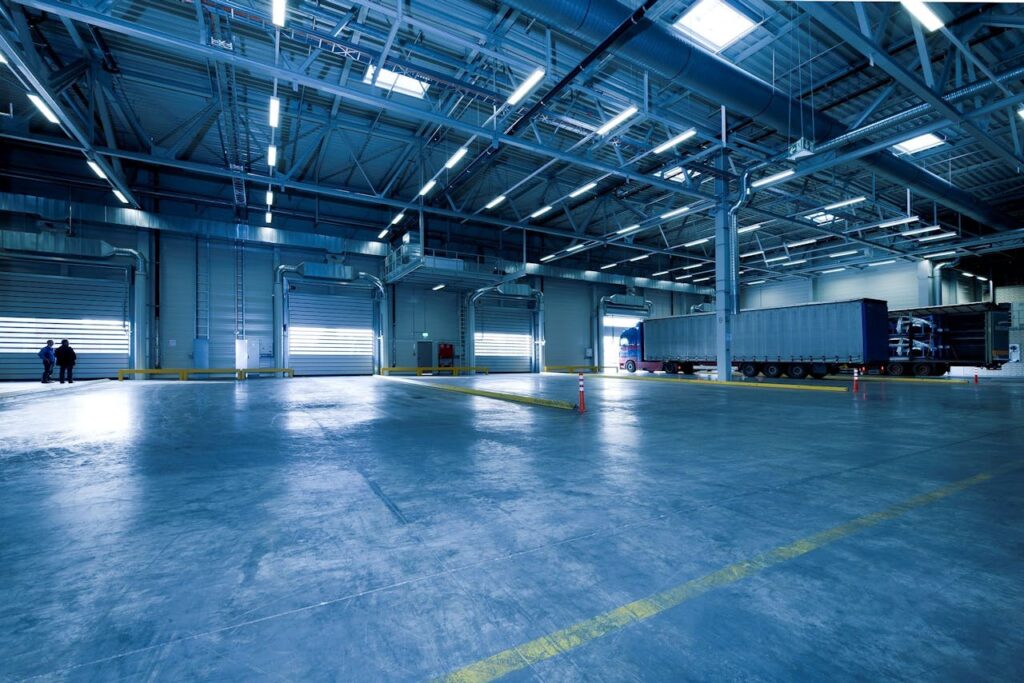
Warehouse facilities near the Port of Houston typically feature tall clear heights to maximize vertical storage capacity. We design for clear heights of 28 to 36 feet, depending on operational and equipment requirements. This vertical space accommodates high-bay racking systems and provides flexibility for various storage configurations.
Loading dock design requires precise coordination between truck court layout and the building interface. We specify appropriate numbers of dock doors and ramp doors based on anticipated traffic patterns and operational schedules. Standard truck bed heights range from 46 to 50 inches, requiring dock levelers and proper approach angles to ensure safe and efficient loading operations.
Vehicle storage areas extend beyond basic truck courts to include trailer parking zones and container staging areas. We design these spaces with adequate turning radii for tractor-trailers and clear access to loading positions. Proper striping and traffic flow patterns reduce congestion and improve safety during peak operational periods.
Construction Methods And Timelines
Prefabricated components can significantly reduce construction timelines while maintaining quality standards. We use pre-engineered metal building systems, precast concrete panels, and tilt-wall construction methods based on project requirements and site conditions. These approaches typically reduce field construction time by 20 to 30 percent compared to conventional methods.
Construction timelines for Houston warehouse facilities typically span 12 to 34 weeks for small to medium facilities, with larger distribution centers requiring longer schedules. We factor in weather delays, particularly during Houston’s hurricane season, and coordinate with subcontractor availability to maintain realistic schedules. Value engineering during the design phase helps optimize both cost and construction duration without compromising operational functionality.
How Do Current Houston Projects Inform Design And Operations?

The Baytown 146 corridor facility offers a clear model for near-port facility design. East Coast Warehouse & Distribution’s new temperature-controlled operation spans 321,440 square feet; the site includes 6.5 acres for the facility and an additional 8.5 acres designated for trailer and container staging. The facility sits 14 miles from Barbours Cut Terminal and 18 miles from Bayport Container Terminal, positioning it to manage import flows efficiently.
This near-port facility demonstrates key design principles we apply in similar projects. The building footprint is roughly half of the total site area, leaving substantial room for vehicle operations. Its 275-trailer capacity requires careful coordination of ingress and egress routes to prevent bottlenecks during peak operations.
The Hockley distribution center takes a different approach, focused on regional reach rather than port proximity. This 1.2 million-square-foot facility on 108 acres in Harris County will house more than 250,000 industrial items with next-day delivery. The larger footprint supports extensive automation and high-throughput features for rapid order fulfillment across the Houston metropolitan area.
Both projects illustrate strategic considerations for site planning and operational efficiency. The Baytown facility prioritizes container and trailer staging to handle import flows, while the Hockley location emphasizes inventory capacity and distribution speed. These contrasting approaches show how facility design must align with specific operational objectives and customer proximity.
We design facilities using these proven models, scaling building size and site area to match target throughput levels. Public warehousing operations, like the Baytown facility, require flexible dock configurations and ample staging areas. Large-scale distribution centers benefit from clear heights of 36 feet or more and numerous dock doors to support high-volume operations. The success of both Houston projects underscores the importance of matching facility design to operational strategy and market position.
What Delivery Models And Services Can EB3 Construction Provide?
We offer design-build delivery to consolidate design and construction under one contract. This approach eliminates coordination gaps between architects and contractors and accelerates project timelines by overlapping phases. Our teams handle architectural design, engineering, permitting, and construction as a unified process.
Turnkey delivery extends beyond design-build by including operational-readiness components. We manage every aspect, from initial feasibility through final commissioning, delivering facilities ready for immediate warehouse operations. This approach works particularly well for distribution centers that require specialized systems integration and testing before handover.
Construction Management And Project Coordination
Our construction management services coordinate all project phases while maintaining cost and schedule control. We handle subcontractor selection, material procurement, and daily field operations to keep projects moving efficiently. Project planning and budgeting establish realistic timelines and budget frameworks based on current market conditions and site-specific requirements.
Field supervision ensures quality standards and safety compliance across all trades. Our on-site teams coordinate deliveries, manage workflows between subcontractors, and conduct regular inspections to prevent rework. This direct oversight maintains project momentum while protecting the owner’s interests throughout construction.
Value Engineering And Cost Optimization
Value engineering reviews design elements to identify cost savings without compromising functionality. We analyze structural systems, mechanical equipment, and building materials to find more efficient solutions. These reviews often yield 5 to 10 percent cost reductions while meeting the performance standards required for warehouse operations.
Our teams evaluate prefabricated components versus site-built alternatives to optimize both cost and schedule. Tilt-wall concrete panels and pre-engineered metal building systems can significantly reduce construction timelines for warehouse projects. We assess which combination delivers the best value for your specific requirements.
Facility Design Options And Construction Methods
Tilt-wall construction provides durable exterior walls with excellent thermal performance for warehouse applications. We cast concrete panels on-site and tilt them into position, creating strong perimeter walls suited to high-bay facilities. This method works well for projects requiring large spans and minimal thermal bridging.
Pre-engineered metal building systems offer faster delivery for standard warehouse configurations. These systems include structural framing, roof systems, and wall panels manufactured off-site for rapid assembly. We coordinate foundation work and site preparation as building components are fabricated, compressing overall project schedules.
Site Development And Regulatory Support
Site evaluations assess topography, drainage, utilities, and soil conditions to inform design decisions. We coordinate with geotechnical engineers and surveyors to establish building placement, foundation requirements, and site development costs. These early assessments prevent costly surprises during construction.
Code compliance coordination ensures projects meet all applicable building codes and zoning requirements. Our teams manage permit applications, plan reviews, and inspections with local authorities. Utility coordination secures connections for water, sewer, electrical, and telecommunications services required for warehouse operations.
We integrate logistics planning into facility design to optimize truck circulation, loading dock placement, and trailer storage areas. This coordination ensures the completed facility supports efficient distribution operations from day one.
Technology Integration And Sustainable Design
3D modeling helps visualize spatial relationships and identify potential conflicts before construction begins. These digital models support better decision-making during design development and reduce change orders during construction. We share models with owners to ensure alignment on layout and functionality.
Sustainable design features reduce long-term operating costs through improved energy efficiency. We evaluate LED lighting systems, high-performance insulation, and HVAC equipment to minimize utility expenses. Cool roof systems and natural lighting strategies further reduce energy consumption throughout the facility’s lifecycle.
Building automation systems integrate lighting, HVAC, and security controls for centralized management. These systems provide operational flexibility while reducing maintenance requirements and energy usage over time.
Conclusion And Next Steps

Houston’s warehouse expansion reflects the Port of Houston’s growing influence and the region’s strengthening logistics network. Projects in Baytown capitalize on proximity to the port for import flows, while facilities in Hockley demonstrate how strategic inland positioning serves broader metropolitan markets. Both approaches underscore Houston’s role as a critical distribution gateway.
Your expansion checklist should begin with submarket selection aligned to operational priorities. Verify that target parcels permit I-1 or I-2 industrial uses under local ordinances and deed restrictions. Size parcels to accommodate building footprints, truck courts, trailer storage, and future growth. Secure utility connections early and plan construction schedules around prefabricated components to minimize weather delays and subcontractor bottlenecks.
Ready to move forward with your Houston warehouse expansion? Contact EB3 Construction to align design-build delivery with your project timeline.