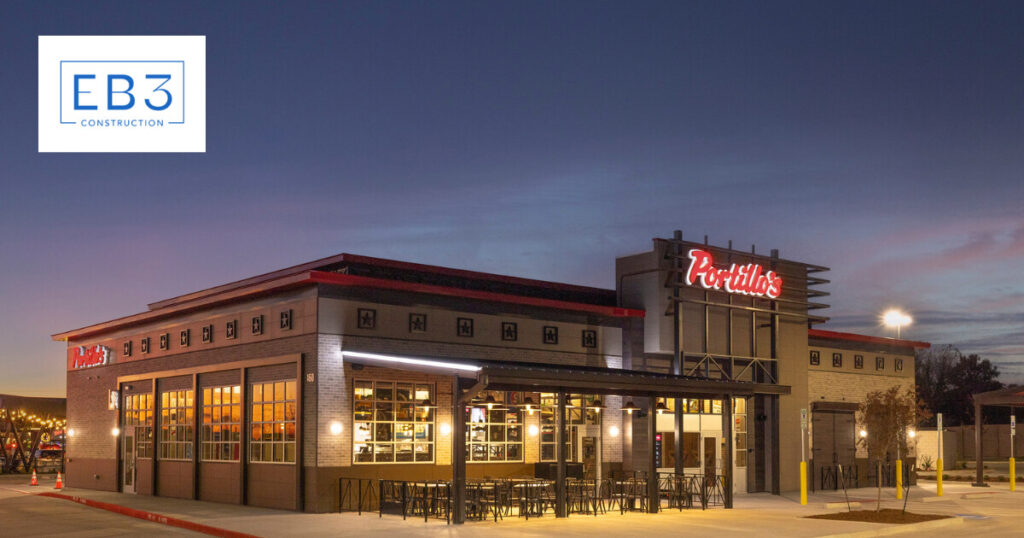

Houston’s commercial development market faces unprecedented pressure to deliver buildings faster than ever. Property owners and developers need warehouses, manufacturing facilities, and office spaces operational within months, not years, to capture market opportunities and meet tenant demands.
Fast-track construction in Houston represents a strategic approach to compressing project timelines without compromising quality. We leverage pre-engineered metal building systems and parallel construction activities to accelerate delivery across the Houston market, achieving schedule compression that positions developers ahead of competitors in this rapidly expanding market.
When Should Houston Developers Choose Fast-Track Methods?

Time to occupancy often determines when fast-track construction makes financial sense. Projects that lose significant revenue for each month of delay are prime candidates for compressed schedules.
ROI-Driven Project Types
Warehouses and distribution centers in Houston’s logistics corridors benefit most from accelerated delivery. These facilities start generating revenue immediately upon occupancy through lease agreements or operational use. Manufacturing plants face similar pressures, especially when production equipment delays jeopardize market commitments.
Mixed-use developments in Houston’s urban core capitalize on fast-track methods when retail tenants have signed leases with fixed opening dates. The business-friendly regulatory environment in Houston supports rapid permitting for projects that meet established criteria. Office buildings in high-demand submarkets can command premium rents when they deliver ahead of competing projects.
Pre-Engineered Steel Systems
Pre-engineered metal building systems compress construction schedules while controlling costs. These systems reduce field assembly time because components arrive fabricated to precise specifications. Steel erection is less susceptible to weather delays than cast-in-place concrete construction.
Design flexibility within pre-engineered systems accommodates most commercial and industrial applications. Clear-span construction suits warehouse operations, while multi-story configurations work for office and mixed-use projects. Cost predictability improves when using standardized components with established pricing.
Critical Success Factors
Early regulatory coordination prevents delays that derail fast-track schedules. We engage Houston’s code officials during design development to identify potential issues before construction begins. Proactive discussions about unusual design elements or construction methods help secure approvals faster.
Site analysis drives construction phasing decisions. Soil conditions affect foundation design and construction methods, while drainage requirements influence sitework sequencing. Utility availability and capacity determine infrastructure coordination needs. Traffic patterns around the site affect material delivery schedules and worker access.
Clear construction phasing allows different trades to work simultaneously without interference. Foundation work can proceed while building components are being fabricated. Site utilities can be installed during foundation curing. This overlap requires careful coordination to maintain quality standards while accelerating the schedule.
How Do Teams Compress Schedules Without Sacrificing Quality?
We achieve schedule compression by executing multiple project phases simultaneously rather than in sequence. Design development runs parallel to permitting while procurement teams secure long-lead materials.
This parallel construction approach requires careful coordination to prevent conflicts between overlapping activities. We use structured communication protocols and shared project schedules, supported by construction project management software, to keep all teams aligned on dependencies and critical milestones.
Overlapping Critical Workstreams
Successful parallel execution begins with identifying which activities can run concurrently without creating conflicts. Foundation work often proceeds while structural details are finalized, provided soil conditions and basic dimensions are confirmed.
Permitting activities start during design development when possible. We submit preliminary plans to expedite review cycles and maintain ongoing dialogue with code officials throughout the process.
Material procurement begins as soon as specifications are locked, even if installation is weeks away. Early commitments prevent supply chain bottlenecks that often derail compressed schedules.
Pre-Engineered Steel Systems
Pre-engineered steel buildings offer significant advantages in schedule compression. These systems arrive with components designed, fabricated, and ready for assembly, reducing field construction time by 30-40% compared to conventional methods.
Weather delays affect pre-engineered steel less than other construction methods. Steel erection can proceed in conditions that would halt concrete pours or masonry work, maintaining schedule momentum through Houston’s variable weather patterns.
The controlled fabrication environment ensures dimensional accuracy and quality that field-built structures often struggle to match under time pressure. This precision reduces rework and keeps the project moving forward.
Supply Chain Management and Early Commitments
Tight supply chain management prevents the bottlenecks that often derail accelerated schedules. We identify critical path materials early and secure commitments before fabrication begins.
Long-lead items receive priority attention during procurement. Materials with 12- to 30-week lead times must be ordered during design phases to avoid schedule impacts later.
We maintain relationships with multiple suppliers for critical materials. This diversification creates options when primary sources face capacity constraints or delivery delays.
Turnkey Delivery and Centralized Accountability
Turnkey construction centralizes responsibility under one contractor, eliminating coordination delays between multiple prime contractors. This unified approach streamlines decision-making and accelerates problem resolution.
Single-source accountability reduces finger-pointing when schedule challenges arise. The turnkey contractor manages all trades and suppliers, maintaining direct control over schedule performance.
Communication flows through established channels rather than complex multi-party coordination. This clarity prevents the delays that often occur when multiple contractors must align their schedules and resources.
Quality Control Under Accelerated Schedules
Quality protection requires a systematic approach when schedules are compressed. We implement enhanced inspection protocols to catch issues before they require costly rework.
Material testing proceeds on accelerated schedules to match construction pace. Concrete samples receive expedited lab analysis, and steel certifications are verified before delivery rather than after installation.
Documentation systems track quality checkpoints throughout the process. Digital platforms capture inspection results, material certifications, and test reports in real time, supporting both quality assurance and schedule maintenance.
Early and proactive permitting prevents the rework cycles that can derail compressed schedules. We engage code officials during design phases to address concerns before construction begins, maintaining project momentum through regulatory approval processes.
What Fast-Track Tactics Work Best For Houston Concrete And Pavement?

Concrete and pavement work demands specific strategies when speed matters. We optimize mix designs to deliver early strength while maintaining workability through careful cement selection and aggregate engineering. Types I, II, and III cements each offer distinct hydration characteristics, with Type III providing the fastest early strength gain and Type I offering the most flexibility for temperature management.
Aggregate gradation requires deliberate attention to particle size distribution. We design gradations that minimize voids while promoting workability, often incorporating intermediate-sized materials from 3/8-inch down to a #8 sieve to reduce paste requirements and improve consistency. This approach typically reduces water demand by 5 to 10% while enhancing finishability.
Mix Design And Chemical Admixtures
Strategic use of accelerators and superplasticizers transforms standard concrete into fast-track material. Calcium chloride accelerators can reduce initial set time to as little as 2 to 3 hours, though we prefer non-chloride alternatives to avoid corrosion concerns with embedded steel. Superplasticizers allow us to reduce water by up to 40% while maintaining slump, directly improving early strength development.
Water-cement ratios between 0.35 and 0.45 provide the optimal balance of workability and early strength. Higher cement contents, typically 600 to 750 pounds per cubic yard, support rapid strength gain but require careful temperature management during hot Houston summers. We adjust mixing water temperature and consider retarders when ambient temperatures exceed 85°F.
Maturity Method For Strength Prediction
The maturity method improves opening decisions by replacing guesswork with data. Following ASTM C1074 concepts, we embed temperature sensors in fresh concrete to monitor time-temperature history. This approach predicts in-place strength development with accuracy typically within 10 to 15% of actual beam breaks.
Maturity calculations use the Arrhenius equation to account for temperature effects on hydration rate. Each mix design requires laboratory calibration to establish its unique activation energy and ultimate strength parameters. Field maturity readings then correlate directly to flexural strength, allowing precise determination of when to open to traffic.
Implementation requires establishing datum temperatures, usually between 14°F and 32°F depending on cement type. We calibrate strength-maturity relationships using beam specimens cured under controlled conditions, then apply these curves to field-measured maturity values for real-time strength prediction.
Early-Age Sawcutting Techniques
Timing sawcuts within hours of placement prevents random cracking while concrete remains workable. We typically begin sawcutting 2 to 6 hours after placement, targeting the window between initial and final set when concrete has sufficient strength to prevent raveling but remains soft enough for clean cutting.
Early-age sawcutting uses silicon carbide or carborundum blades on softer aggregates like limestone, while diamond blades handle harder materials. A cut depth of 3/4 to 1 inch is typically sufficient when timed correctly, relying on shrinkage stresses to propagate cracks through the full slab thickness rather than deep mechanical cuts.
Success depends on recognizing the optimal cutting window. Visual cues include the ability to walk on the surface without leaving footprints and resistance to finger penetration. More precisely, we correlate sawcutting timing to specific maturity values established during mix qualification.
Curing And Environmental Protection
Proper curing accelerates strength gain while preventing surface defects. We apply curing compounds at 1.5 times the standard rate immediately after finishing, ensuring adequate moisture retention during critical early hydration. Membrane curing compounds perform nearly as well as polyethylene sheeting while allowing easier access for sawcutting operations.
Insulating blankets become essential during cooler months or when rapid strength gain is critical. Blankets with minimum R-values of 0.5 maintain elevated concrete temperatures, often achieving 400 psi flexural strength 6 to 8 hours sooner than unprotected concrete. We typically maintain blanket coverage until concrete reaches 350 to 400 psi third-point loading strength.
Temperature management requires balancing heat retention with thermal stress control. Excessive early heat can cause thermal cracking as concrete cools, while insufficient heat slows strength development. We monitor concrete temperature continuously, targeting peak temperatures between 140 and 160°F for optimal results.
Subgrade Preparation And Drainage Design
Sound subgrade preparation supports long-term pavement performance even under accelerated schedules. We compact subgrade to 95% Standard Proctor density with moisture content within 2% of optimum. Lime stabilization improves workability and bearing capacity for problematic clay soils common in the Houston area.
Drainable subbases prevent moisture-related failures that could compromise fast-track investments. We install 6 to 8-inch-thick aggregate subbases with drainage characteristics meeting AASHTO specifications when site conditions permit. Edge drains and proper grading ensure water removal rather than accumulation beneath pavements.
Geotextile fabric separation prevents subgrade contamination of aggregate subbases while maintaining drainage function. This approach is especially valuable in Houston’s expansive clay conditions where seasonal moisture changes create significant subgrade movement.
Construction Phasing And Joint Management
Strategic phasing eliminates problematic small patches while maintaining traffic flow. We design construction phases to avoid segments smaller than 100 square feet, which experience irregular shrinkage and poor performance. Joint alignment across phases ensures continuous load transfer and prevents stress concentrations.
Joint sealing must occur within 8 to 12 hours of sawcutting to prevent debris infiltration and moisture damage. Low-modulus silicone sealants work well with fast-track concrete’s low water-cement ratio, which reduces joint face moisture and improves adhesion. Hot-pour rubber sealants also perform effectively when applied promptly.
Construction sequencing coordinates sawcutting, curing, and sealing operations within compressed timeframes. We typically seal joints while curing blankets remain in place on adjacent areas, maximizing productivity while protecting concrete quality. Proper planning prevents conflicts between simultaneous operations.
What Risks, Codes, And Safety Factors Must Be Managed In Houston?
Regulatory compliance drives fast-track success through early engagement with code officials. Proactive consultations with Houston’s building department reduce typical project delays by 15–25%. We initiate these discussions during design development, presenting preliminary plans to identify potential issues before they become costly field problems.
The Houston Construction Code, which incorporates the International Building Code with local amendments, governs structural integrity, fire safety, and MEP systems. Understanding these requirements early prevents rework cycles that derail compressed schedules. Code officials appreciate thorough preparation and respond more favorably when we demonstrate competence with local regulations.
Construction Safety Program Requirements
Comprehensive site safety programs reduce incidents by approximately 40% while maintaining accelerated timelines. OSHA safety programs form the foundation, and we enhance them with project-specific protocols for fast-track environments. Compressed schedules increase activity density, making systematic safety management even more critical.
Daily safety briefings address changing conditions as multiple trades work in close proximity. Pre-task planning sessions identify hazards before work begins. Emergency response procedures remain current as site conditions evolve rapidly during overlapping construction phases.
Schedule Risk Management Strategies
Weather contingencies protect critical path activities in Houston’s unpredictable climate. We build buffer time into concrete pours, steel erection, and exterior envelope work. Inspection scheduling requires coordination with city officials who may have limited availability during peak construction seasons.
Supply chain disruptions pose significant threats to compressed timelines. Early material commitments and backup supplier relationships prevent single-source failures. We track delivery schedules weekly and maintain contingency plans for critical components like structural steel and MEP equipment.
Pavement Opening Criteria and Load Management
Dowel bearing stresses determine when pavements can safely carry construction traffic and permanent loads. We verify these calculations before allowing heavy equipment access. Loading scenarios consider both construction vehicles and future operational requirements to prevent premature failure.
Nondestructive testing guides opening decisions with real-time strength data. The maturity method provides continuous monitoring of in-place concrete strength development. This approach eliminates guesswork and supports earlier opening when strength requirements are met.
Quality assurance documentation tracks every aspect of the accelerated process. We maintain detailed records of material testing, inspection results, and compliance verifications. These records protect against future liability while demonstrating adherence to performance standards throughout the fast-track delivery process.
Conclusion And Next Steps

Fast-track construction in Houston succeeds through synchronized execution of planning, prefabrication, and quality control. We coordinate early permitting strategies with authorities to reduce delays by 15-25% while securing supply chains and designing systems for rapid field assembly. Pre-engineered metal building systems and prefabricated components enable parallel workflows that compress schedules by 25-40% without compromising structural integrity.
Concrete work follows specific protocols to meet schedule goals. We qualify mix designs with accelerators or superplasticizers for early strength gain, then use maturity-based criteria to open areas safely ahead of traditional 28-day testing. Early-age sawcutting within hours of initial set controls cracking, while proper curing with membrane compounds and insulating blankets supports long-term durability. Construction phasing aligns joints across work zones, with prompt sealing to prevent moisture intrusion and maintain pavement performance.
Contact EB3 Construction to coordinate your fast-track project through Houston’s regulatory requirements and accelerated construction phases.