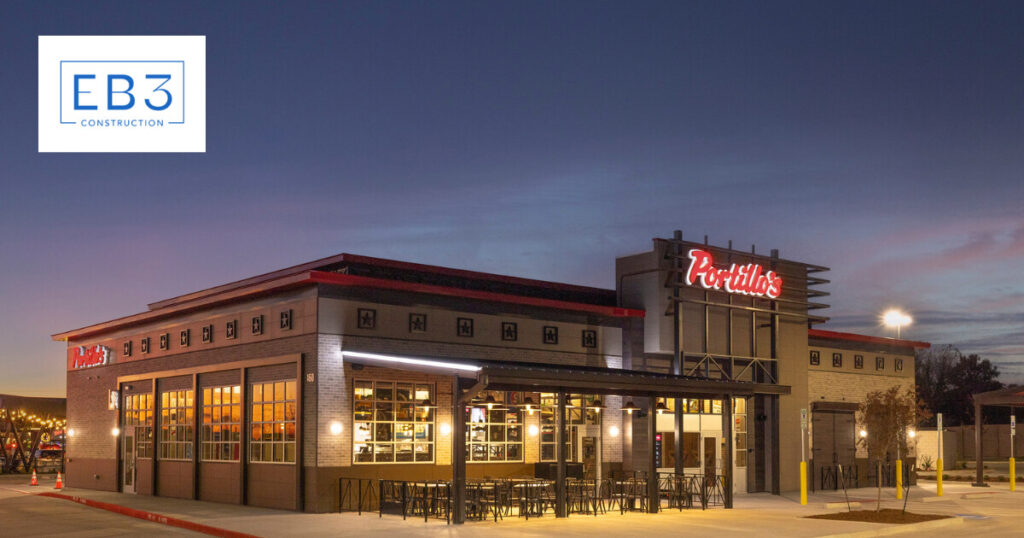
Top-rated commercial builders in Houston deliver the reliability, transparent pricing, and safety protocols that developers and property owners expect. The Houston construction market evaluates contractors through client reviews, work experience, and market presence.
Independent ranking platforms analyze service-quality signals, including satisfaction scores and complaint ratios, to help you build a shortlist before requesting bids.
How Do Rankings Define “Top Rated” In Houston?

Public directories and editorial scoring systems establish clear criteria for rating commercial general contractors. Clutch rankings evaluate contractors based on three key components: client feedback and reviews, work experience and previous projects, and market presence and reputation.
The Clutch methodology assigns point values across these areas. Reviews carry the heaviest weight at 20 points; clients and experience score up to 10 points; and market presence accounts for another 10 points. Together, these form a 40-point Ability to Deliver score that directly influences rankings in the Clutch Leaders Matrix.
Editorial scoring systems targeting Houston contractors use different weighted factors. Average customer satisfaction typically represents 35% of the total score. Service rating accounts for 25%, while complaint percentage carries an equal 25%. Business hours and availability factor in at 10%, with license status rounding out the remaining 5%.
| Component | Points |
|---|---|
| Reviews | 20 |
| Clients & Experience | 10 |
| Market Presence | 10 |
| Total | 40 |
Many scoring systems employ a Bayesian estimate to handle contractors with limited review counts. This statistical approach prevents newer firms from being unfairly penalized while maintaining scoring accuracy across all participants. The estimate considers both the contractor’s actual performance data and broader market averages.
Verified reviews form the backbone of credible ranking systems. Clutch confirms reviewer identity, validates project legitimacy, and maintains strict publication criteria. This verification ensures that rankings reflect genuine client experiences rather than manipulated feedback.
Market presence evaluation extends beyond basic web visibility. Ranking models assess domain authority, industry recognition, thought leadership, and portfolio depth. Contractors with documented case studies, client testimonials, and professional awards typically score higher in this category.
When you evaluate EB3 Construction against these criteria, prioritize verified client feedback over aggregate star ratings. Review recent portfolio work that matches your project type and scale. Check complaint ratios and response patterns to understand how we handle project challenges. Verify our licensing status and confirm our availability aligns with your project timeline.
Which Services Do Top Rated Builders Typically Provide In Houston?
Understanding the full range of services established contractors offer helps you evaluate whether we can handle your specific project. Leading Houston commercial builders typically organize their capabilities around four core areas that align with how the construction industry approaches complex projects.
Delivery Models And Construction Oversight
We structure our services around proven delivery methods that give you control over different aspects of the project. General contracting remains the most common approach, in which we manage subcontractors and coordinate all trades under a traditional design-bid-build framework.
Construction management takes a different approach by providing oversight and coordination while you maintain direct contracts with major trades. This method works well for owners who want more control over individual contractor relationships.
Design-build projects in Houston integrate the design and construction phases under our single contract, streamlining communication and reducing timeline conflicts. We coordinate directly with architects and engineers to deliver a unified approach from concept through completion.
Preconstruction And Regulatory Compliance
Before any construction begins, we handle the planning and compliance work that keeps projects on track. Our preconstruction services include detailed budgeting and estimating that account for current material costs and local labor rates.
Scheduling becomes critical in Houston’s active construction market, where subcontractor availability and permit processing can affect timelines. We develop realistic schedules that account for weather patterns, inspection cycles, and coordination with utility companies.
Zoning and entitlement work requires deep knowledge of Houston’s development regulations and permitting processes. We coordinate with city departments for land planning approvals and handle environmental compliance consulting when projects involve site remediation or stormwater management.
Project Types And Construction Methods
Our project capabilities range from smaller-scale improvements to major new construction. Tenant improvement work in Houston focuses on interior build-outs and renovations within existing commercial spaces, handling everything from office layouts to retail fit-outs.
Ground-up builds involve complete new construction from foundation to finish, requiring coordination of all building systems and site development. These projects demand careful sequencing of trades and materials to maintain efficiency.
Tilt-wall construction uses precast concrete panels that we erect on-site, offering speed and cost advantages for warehouse and industrial projects. This method requires specialized equipment and coordination but delivers durable, efficient buildings.
Capital improvements and remodels address existing buildings that need updates for code compliance, operational efficiency, or aesthetic improvements. These projects often present unique challenges with phased construction to maintain business operations.
Industry Sectors And Specialized Requirements
Different building types require specific expertise and compliance knowledge. Industrial projects demand an understanding of heavy equipment installation, specialized electrical systems, and often complex environmental requirements.
Healthcare construction requires knowledge of medical equipment coordination, infection control protocols, and specialized HVAC systems that maintain proper air pressure and filtration.
Retail and hospitality projects focus on customer experience and brand requirements, often with tight timelines to meet opening dates and seasonal demands.
Office construction emphasizes efficient space planning, technology infrastructure, and tenant improvement coordination in multi-tenant buildings. Education and mixed-use projects combine multiple building types and regulatory requirements under single contracts.
These service categories align with how industry rankings evaluate contractors and help you match your project requirements to the right construction team. When evaluating potential partners, confirm that their experience includes both the delivery method and building type that match your specific needs.
What Do Commercial Projects Cost In Houston?
Houston commercial construction projects typically range from $250,000 to $1.4 million for most builds. This range covers standard office build-outs, retail spaces, and midsize industrial facilities throughout the metro area.
Upscale projects with premium finishes, complex mechanical systems, or specialized requirements can reach $1.95 million or higher. Medical facilities, high-end hospitality projects, and corporate headquarters with extensive amenities fall into this upper tier.
Commercial remodels in Houston currently average about $60 per square foot. This figure reflects tenant improvements, interior renovations, and facility updates that do not involve major structural changes. The per-square-foot approach helps owners quickly estimate renovation budgets for existing spaces.
These cost benchmarks serve as practical guideposts for early project planning. We recommend using them to validate initial budgets before developing detailed estimates. The ranges also help align project scope with available funding and set realistic expectations for finishes and scheduling.
Project size significantly impacts total costs within these ranges. A 5,000-square-foot office renovation at $60 per square foot totals $300,000, while a 15,000-square-foot ground-up retail building may range from $900,000 to $1.2 million depending on complexity and location within Houston.
Current market conditions in Houston show material costs stabilizing after recent volatility, though labor rates continue to rise gradually. These factors influence where specific projects fall within the established cost ranges and affect schedule planning for budget-conscious owners.
Disclaimer: Pricing figures are based on publicly available market data and are intended for general estimation purposes as of February 2026. They do not represent a formal quote from EB3 Construction. Actual costs will vary by project scope, location, labor rates, and material prices.
How Can You Vet And Shortlist EB3 Construction Using These Criteria?

We recommend a systematic approach when evaluating contractors for your Houston commercial project. This seven-step vetting path helps you verify capabilities and ties each evaluation criterion to the ranking factors that define market leaders.
Step 1: Reviews and Satisfaction Analysis
Focus on verified client feedback and satisfaction patterns rather than isolated comments. Look for contractors maintaining high average satisfaction scores with a strong ratio of 4-5-star ratings compared to 1-2-star reviews. We track complaint percentages as a key indicator of service consistency and problem-resolution capability.
Review platforms like Clutch verify client feedback and update ratings regularly, providing more reliable satisfaction data than unmoderated review sites. These verified ratings directly correlate with the customer satisfaction metrics that editorial rankings prioritize when scoring Houston contractors.
Step 2: Experience and Project Fit Assessment
Confirm recent project experience that matches your specific sector and delivery requirements. We examine portfolio examples from healthcare, retail, hospitality, industrial, office, and education sectors to verify relevant capabilities. Project types should align with your needs, whether you require tenant improvements, ground-up builds, tilt-wall construction, or specialized remodeling work.
Delivery model experience matters for coordination and risk management. Verify whether the contractor has proven capability in general contracting, design-build, construction management, or tenant improvement approaches that match your project structure.
Step 3: Market Presence Verification
Examine portfolio examples and recognition in reputable industry directories that support their market standing. We look for consistent project documentation, professional photography, and detailed case studies that demonstrate construction quality and project management capabilities.
Recognition in established directories like Clutch’s Leaders Matrix or local Houston business publications indicates market reputation built through verified performance rather than self-promotion. This market presence directly supports the reputation factors that ranking systems evaluate.
Step 4: Licensing and Availability Confirmation
Verify active Texas contractor licensing and confirm that their availability aligns with your project timeline. We check license status through state databases and ensure coverage includes the specific work scope your project requires. Business hours and responsiveness during the vetting process often predict communication patterns throughout construction.
Availability assessment includes current project commitments and crew capacity. Contractors stretched beyond their resource limits can create schedule risks that affect the reliability factors emphasized in professional rankings.
Step 5: Planning and Compliance Capabilities
Request detailed information about preconstruction services, estimating processes, and scheduling methodologies. We evaluate their understanding of Houston zoning requirements, entitlements coordination, and regulatory compliance—factors that affect project feasibility and timeline management.
Construction planning capabilities include value engineering, permit coordination, and inspection scheduling that prevent costly delays. These preconstruction services directly impact the delivery reliability that top-rated contractors consistently demonstrate.
Step 6: Safety and Quality Control Systems
Request safety metrics including Experience Modification Rate (EMR) scores and OSHA compliance and reporting records. We examine their written safety programs, training documentation, and quality assurance processes that protect workers and ensure the work meets specifications.
Quality control procedures should include inspection protocols, material verification, and defect correction processes. Strong safety programs typically indicate the systematic project management approaches that support consistent delivery and client satisfaction.
Step 7: References and Cost Benchmarking
Contact recent clients to verify project performance, communication quality, and problem-solving capability. We recommend speaking with at least three references from projects similar to your scope and complexity level. Cost comparisons should align with Houston’s typical ranges of $250,000 to $1.4 million for standard commercial work and $60 per square foot for remodeling projects.
Reference conversations reveal communication patterns, change order management, and schedule adherence that documentation alone cannot capture. Cost benchmarking against local market rates helps identify realistic pricing versus potential red flags in unusually high or low proposals.
Conclusion And Next Steps
Selecting the right commercial builder in Houston requires a systematic evaluation that weighs verified reviews, complaint ratios, licensing status, and relevant project experience. These rating factors provide concrete data points that distinguish quality contractors from less reliable options. When evaluating EB3 Construction, review client satisfaction scores, recent portfolio examples, and safety program documentation to gauge our capabilities for your specific project requirements.
Next, align your project scope with the appropriate service delivery model and establish a realistic budget using Houston’s cost benchmarks—$250,000 to $1.4 million for typical projects and about $60 per square foot for commercial remodels. Request detailed proposals with timelines, trade coordination schedules, and client references from similar projects. This documentation enables direct contractor comparisons and helps identify the best fit for your development goals, budget, and schedule.
Contact EB3 Construction to discuss your Houston commercial project requirements and receive a comprehensive proposal with a timeline and references.