
Thirty-five percent of construction professionals’ time goes to nonproductive activities, according to the Bureau of Labor Statistics. The average project runs 20 months behind schedule. These delays often stem from poor planning and limited visibility into task dependencies.
A professional construction schedule for a midsize commercial project maps every activity from groundbreaking to final occupancy. We structure it to show task dependencies, durations, resource assignments, and the critical path that controls project completion. The schedule serves as our coordination tool across trades, inspections, and closeout activities, while adapting to real-world conditions throughout construction.
What Core Elements And Data Fields Should The Schedule Capture?
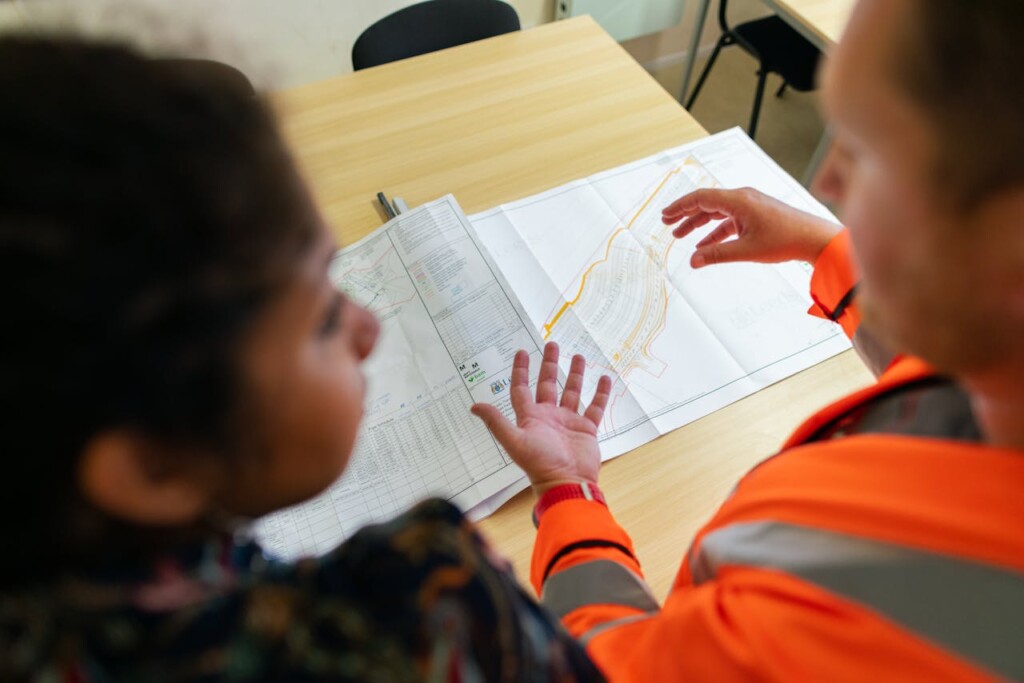
A comprehensive schedule requires structured data capture to maintain project control. We organize schedule information through essential elements that track work scope, progress metrics, and accountability measures.
Foundation Elements
The work breakdown structure forms the schedule’s backbone. We divide projects into manageable tasks with clear deliverables that align with construction phases. This hierarchical approach connects high-level objectives to specific activities, making progress measurable and accountability clear.
Project scope definition captures what work will be completed and the boundaries. We document objectives that guide decision-making throughout construction. These foundational elements prevent scope creep and ensure all team members understand project parameters.
Task and Timeline Data
Each task requires start dates, end dates, and duration estimates. We track percentage complete and current status to measure real progress against planned timelines. This data feeds into progress reports and helps identify potential delays before they impact the critical path.
Task sequencing shows how activities connect to one another. We document dependencies between trades and identify which tasks must finish before others can start. The critical path emerges from this sequencing data, highlighting activities that control the overall project timeline.
Responsibility and Resource Allocation
Every activity is assigned to specific individuals or trades. We capture resource requirements for labor, materials, and equipment to prevent conflicts and ensure availability. This assignment data creates accountability and helps coordinate multiple teams working simultaneously.
Resource allocation includes both human resources and material deliveries. We track labor hours per trade, equipment schedules, and material lead times. This information supports resource leveling and helps avoid bottlenecks that could delay progress.
Milestones and Control Points
Key milestones mark significant achievements like permit approvals, major deliveries, and phase completions. We schedule inspection checkpoints throughout construction to ensure code compliance and quality standards. These control points create natural review moments for progress assessment.
Buffer time accounts for weather delays, material lead times, and regulatory review periods. We build float into the schedule to absorb unexpected issues without impacting the critical path. This buffer planning protects project completion dates.
Progress Tracking and Control Systems
Visual timelines like Gantt charts display schedule status relative to current dates. We update these tools regularly to show actual versus planned progress. Visual representation helps identify trends and communicate status to stakeholders effectively.
The project control system establishes reporting frequency and key performance indicators. We track metrics such as schedule performance index and changes to critical path duration. Change event logs document scope modifications and their impact on timeline and budget.
Short-term look-ahead planning (takt-time planning) focuses on the next three weeks of work. We coordinate near-term activities, resolve conflicts, and ensure resource availability. This detailed planning prevents day-to-day issues from cascading into larger schedule impacts.
How Should Phases And Milestones Be Structured For A Mid-Size Commercial Build?
Effective phase structure creates predictable workflows across a mid-size commercial project. We organize construction into five distinct phases that build sequentially while allowing for parallel activities where appropriate. Each phase contains specific deliverables and checkpoint reviews that maintain quality and schedule control.
The preconstruction phase encompasses concept development, planning, design refinement, budgeting, and contractor selection. During this stage, we finalize architectural drawings, complete engineering calculations, secure financing approvals, and award subcontractor packages. This phase typically requires three to six months, depending on project complexity and permitting requirements.
Mobilization follows preconstruction with site logistics planning, temporary utility installations, and comprehensive safety setup. We establish construction access routes, position job trailers, install temporary power and water connections, and implement safety protocols. Site preparation and demolition activities often begin during mobilization to maintain schedule momentum.
Active construction represents the longest phase, progressing through site preparation and demolition, foundation work, structural framework installation, roofing systems (types), building envelope completion, MEP rough-ins, interior build-out, finish work, and final site work including landscaping. Each subphase includes specific inspection points and quality checkpoints that prevent rework and maintain building standards.
| Preconstruction | 3-6 months | Concept development, planning, design refinement, budgeting, contractor selection |
| Mobilization | Site logistics planning, temporary utility installations, safety setup | |
| Active Construction | Site preparation, foundation work, structural framework, roofing, building envelope, MEP rough-ins, interior build-out, finish work, final site work | |
| Inspections and Approvals | Inspection checkpoints, building department inspections, fire marshal reviews, third-party testing | |
| Closeout and Occupancy | System commissioning, punch list completion, documentation, final inspections, project turnover |
Inspections and approvals occur throughout construction at predetermined stage gates. We coordinate building department inspections, fire marshal reviews, and third-party testing at critical intervals. These checkpoints ensure code compliance before work proceeds to subsequent phases and before systems become enclosed or inaccessible.
Closeout and occupancy activities include system commissioning, punch list generation and completion, documentation compilation, final inspections, and project turnover. We conduct comprehensive system testing, compile as-built drawings and warranties, complete final cleaning, and coordinate occupancy permit approvals.
Strategic milestone placement provides clear progress markers and decision points throughout the project. Design sign-off marks the transition from preconstruction to mobilization. Permit approvals enable construction to proceed legally. Groundbreaking signals the start of physical work and often serves as a ceremonial project milestone.
Structural framework completion represents a major visual milestone when the building skeleton becomes apparent. Major equipment deliveries create coordination points for crane scheduling and site access planning. MEP rough-in completion allows inspection scheduling and drywall installation to proceed.
Building envelope dry-in protects interior work from weather and enables climate-controlled construction activities. Substantial completion indicates the project is ready for occupancy with only minor punch list items remaining. Final inspections and the certificate of occupancy mark successful project completion and owner turnover.
Which Scheduling Methods And Tools Best Fit This Project Type?

Mid-size commercial projects require scheduling methods that balance complexity with practical execution. We evaluate several proven approaches that align with the specific demands of these projects, where coordination among multiple trades, clear timelines, and adaptability are essential for success.
Critical Path Method For Strategic Focus
The Critical Path Method serves as the foundation for identifying tasks that directly control project completion dates. This technique maps out the longest sequence of dependent activities, revealing which tasks cannot be delayed without affecting the overall timeline. We use CPM to prioritize resource allocation where it matters most, ensuring that delays in non-critical activities don’t derail the entire schedule.
CPM proves particularly valuable during the structural and MEP phases of commercial projects. When foundation work extends beyond the planned duration, the method immediately shows how it affects subsequent framing, roofing, and interior activities. This visibility allows us to reallocate crews or adjust sequences before minor delays compound into major problems.
Gantt Charts For Visual Timeline Management
Gantt charts provide the visual timeline that makes complex schedules accessible to all project stakeholders. These bar charts display task durations, overlaps, and dependencies in a format that field teams, subcontractors, and clients can quickly understand. The visual format helps identify potential conflicts between trades and reveals opportunities for parallel work.
Modern construction scheduling software and scheduling platforms enhance traditional Gantt functionality with dynamic updates and real-time progress tracking. When electrical rough-in takes longer than anticipated, the chart automatically adjusts dependent activities like drywall installation and interior finishes. This immediate visual feedback keeps everyone aligned on revised timelines and prevents miscommunication about changed priorities.
Phased Schedules For Trade Coordination
Phased schedules organize work by stages or building zones, creating logical groupings that align with how trades execute their work. This approach proves especially effective in commercial projects where different building areas can progress simultaneously. We structure phases around major completion points like the building envelope, MEP rough-in, and interior buildout.
Zone-based scheduling works well for larger commercial buildings where crews can move systematically from one area to another. Floor-by-floor scheduling in multi-story projects allows trades to maintain a steady workflow while avoiding conflicts. This method also supports better resource planning since we can predict when specific crews and equipment will be needed in each zone.
Three-Week Look-Ahead For Near-Term Precision
The 3-week look-ahead schedule provides the detailed, near-term planning that bridges the gap between long-range schedules and daily work execution. This rolling forecast focuses on the immediate tasks ahead, identifying constraints and preparing solutions before they cause delays. We review and update these schedules weekly to maintain accuracy and responsiveness.
3-week planning excels at spotting issues that might not appear on master schedules. Material delivery delays, permit approvals, and weather considerations become actionable items rather than abstract risks. Field superintendents use these schedules to coordinate with subcontractors, ensuring that each trade has what it needs upon arrival on site.
Construction Scheduling Software For Integrated Management
Modern construction scheduling software integrates all these methods into unified platforms that support real-time updates, resource planning, and progress tracking. Cloud-based tools ensure that schedule changes immediately reach all stakeholders, from project managers to field crews. Advanced scheduling software combines CPM calculations with visual timelines and look-ahead planning within a single system.
These platforms handle resource planning by tracking labor allocation across multiple projects and identifying potential conflicts before they occur. Automated progress tracking reduces manual updates while providing accurate data for project control. Integration with other project management tools creates seamless workflows that support both planning and execution phases of commercial construction projects.
How Should The Team Manage, Monitor, And Adjust The Schedule?
Effective schedule management requires systematic oversight and timely adjustments. We put control mechanisms in place to detect issues early and maintain the flexibility to respond quickly when conditions change.
Establish a project control system that provides reliable performance measurement. This system generates regular progress reports using key performance indicators (KPIs) to track schedule variance, cost performance, and quality metrics. Project monitoring and control processes create a foundation for informed decision-making throughout construction. We set reporting frequency based on project complexity—typically weekly for active construction phases and more frequent during critical activities.
Hold routine coordination meetings to maintain alignment across all project stakeholders. Weekly coordination meetings bring together project managers, superintendents, trade contractors, and key subcontractors to discuss progress, upcoming activities, and emerging challenges. These meetings serve as an early warning system, allowing us to identify potential conflicts before they affect the critical path. We structure these sessions around the look-ahead schedule, focusing on activities planned for the next three weeks while addressing immediate issues that require resolution.
Track actual performance against planned performance continuously. This involves comparing actual start and completion dates to scheduled dates, monitoring task durations against estimates, and updating activity logic when conditions change. We document percent complete for active tasks using objective measures rather than subjective estimates, ensuring accuracy in progress reporting. Schedule updates capture both completed work and revisions to future activities, preserving the integrity of the project timeline.
Perform regular site inspections to verify work quality and prevent rework. Quality defects discovered late in construction often require significant schedule recovery efforts. We coordinate with quality control personnel to conduct systematic inspections at predetermined checkpoints, documenting findings and requiring corrective action before subsequent trades begin work. These inspections protect the schedule by preventing quality issues from cascading through dependent activities.
Manage risks continuously by maintaining appropriate contingency buffers for weather delays, supply chain disruptions, and regulatory approvals. We monitor buffer consumption relative to project progress, triggering additional mitigation measures when reserves are depleted sooner than anticipated. Risk management includes maintaining alternative supplier relationships, tracking permit approval timelines, and adjusting work sequences to minimize weather exposure. Regular risk assessments help us identify emerging threats and deploy appropriate response strategies.
Document and evaluate change events for both cost and schedule impacts before approving modifications. Every change request requires analysis of its effect on the critical path, resource requirements, and project completion date. We maintain detailed change logs that track the source of changes, their justification, and their cumulative impact on project performance. This documentation supports accurate forecasting and helps stakeholders understand how scope modifications affect delivery commitments.
Reallocate resources and resequence work to protect the critical path when delays occur. This may involve shifting personnel from non-critical activities to critical path tasks, authorizing overtime for key trades, or revising work sequences to minimize downstream impacts. We maintain resource flexibility by cross-training personnel and establishing relationships with multiple subcontractors who can provide additional capacity when needed.
Keep the schedule flexible through periodic, comprehensive reviews across all project phases. Monthly schedule reviews assess overall project health, evaluate the accuracy of remaining duration estimates, and identify opportunities for schedule compression if needed. We update the baseline when significant changes occur and maintain historical versions for performance analysis. This ongoing refinement ensures the schedule remains a useful management tool rather than an outdated planning artifact.
Conclusion and Next Steps

We approach professional construction scheduling for mid-size commercial projects as a comprehensive system that spans from planning through execution. A complete schedule maps the full scope through a clear Work Breakdown Structure (WBS), establishes realistic task durations based on field conditions, and identifies the critical path that drives completion dates. We assign specific responsibilities to trades and crews, allocate resources across labor and equipment, and establish key milestones that mark meaningful progress.
Visual management tools like Gantt charts provide clear visibility into timelines, while short-term look-ahead planning keeps immediate work coordinated. We implement robust project control systems that track performance through KPIs, conduct regular site inspections for quality assurance, and maintain schedule flexibility through strategic buffers. When conditions change, we document impacts, evaluate alternatives, and adjust the plan to protect project objectives. Your next steps include confirming project scope boundaries, developing a detailed WBS, selecting appropriate CPM and Gantt chart tools, loading critical milestones and time buffers, and establishing a consistent reporting and review schedule that keeps your commercial project on time and within scope.
Ready to implement professional construction scheduling for your next mid-size commercial project? Contact EB3 Construction today.