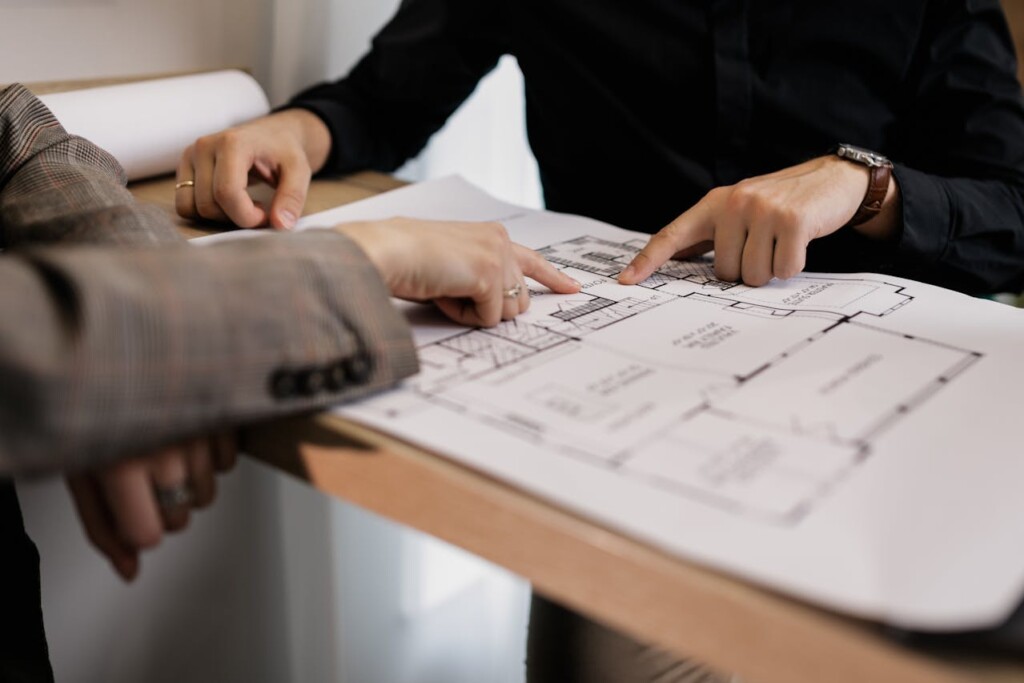
Most construction projects involve at least three separate contracts before a single foundation is poured. A design-build firm consolidates them into one. Under a single contract, one entity manages the architect, engineers, general contractor, and trusted subcontractors, serving as the sole point of accountability from concept through construction.
This integrated project delivery model keeps the design and build phases running in parallel, which compresses schedules and gives owners a clearer line of communication. Rather than managing separate relationships and hoping multiple independent parties stay aligned, the owner works with one coordinated team built around a shared goal.
How Are Design-Build Companies Structured And What Services Do They Provide?
Firm Structure: Three Ways to Organize Around the Same Goal
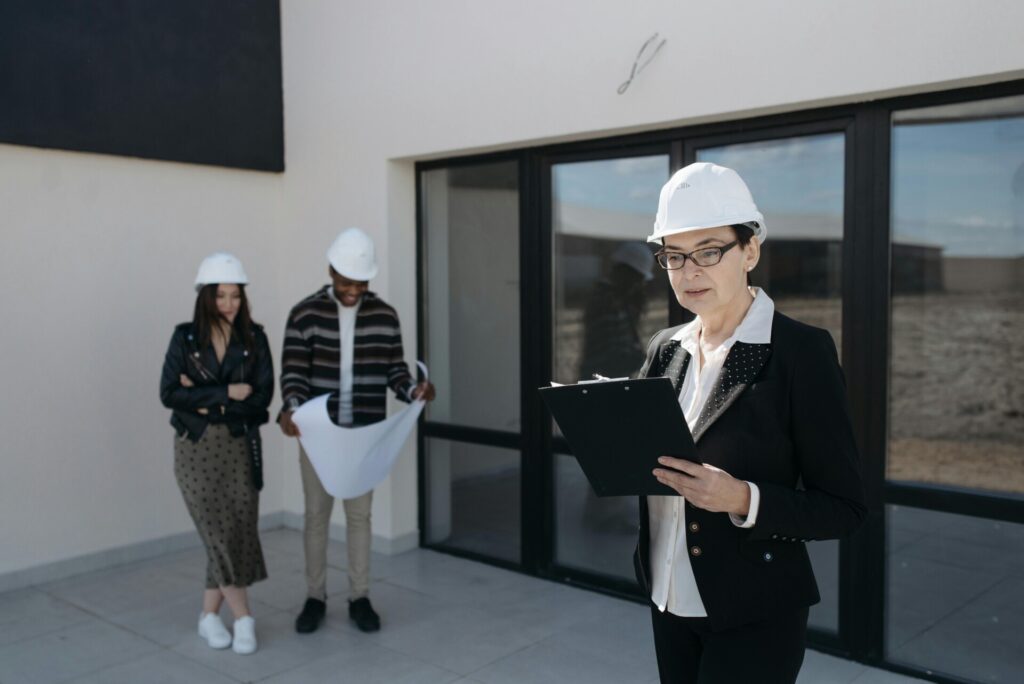
The internal structure of a design-build firm shapes how decisions are made and who holds the most influence during each project phase. Design-forward firms are led by architects or designers, so aesthetic and technical priorities drive early planning while construction expertise is layered in. Construction-forward firms, like a GC-led team, anchor the process in constructability, cost control, and site coordination from day one.
Balanced firms distribute authority across both disciplines, which works well when a project carries equal weight in design complexity and construction risk. The structure a developer or property owner selects carries real consequences: it determines whose instincts shape early budgets, how value engineering is applied, and how quickly field decisions can be made without escalation. At EB3 Construction, our GC-led structure means construction feasibility and schedule discipline are built into every phase of the work, not added as an afterthought.
Preconstruction Services
Before any permit is obtained or ground is broken, design-build firms conduct site assessments and feasibility studies to identify constraints early. This includes reviewing soil conditions, zoning restrictions, utility access, and project viability so cost estimates are grounded in field reality rather than assumptions.
Cost estimating at this stage involves detailed scheduling and resource planning, giving owners a reliable financial picture long before the contract is finalized. Catching budget pressure points during preconstruction avoids the more costly problem of discovering them mid-build, when changes require demolition or rework.
Architectural and Engineering Design Services
Design-build firms handle both architectural and engineering design under the same contractual umbrella, which means structural, mechanical, and civil disciplines coordinate in real time rather than in separate silos. Tools like building information modeling (BIM) and virtual design and construction (VDC) allow teams to visualize the project digitally before physical work begins, surfacing conflicts between systems before they become field problems.
Value engineering runs in parallel with design development rather than following it. When a GC-led team participates in design decisions, material selections and structural approaches are evaluated for both constructability and cost impact while there is still room to adjust. The result is a design that reflects what can actually be built on time and within budget.
Construction Management and Subcontractor Coordination
Once design is sufficiently developed, the firm transitions into active construction management, which includes daily scheduling, on-site coordination, quality control, and subcontractor management. Because all parties operate under one contract, the general contractor can direct subcontractors with clear authority and accountability, rather than mediating between separately contracted teams.
Outside specialists are brought in when a niche skill is required, such as a specific facade system or a proprietary MEP configuration, and they work within the same chain of command. This structure reduces the gaps that typically form when independent contractors have competing priorities or incomplete design information.
Post-Construction Closeout and Documentation
Post-construction closeout under a design-build model is more straightforward than in traditional delivery because all project documentation sits with one team. The closeout process covers as-built drawings, permit sign-offs, systems commissioning, and handover documentation organized for the owner’s ongoing use.
When projects involve complex building systems, owner training may also be included to ensure operators understand how mechanical, electrical, or life safety systems function. Warranty coverage and maintenance support are coordinated through the same firm, giving owners a clear, single point of contact well after the final inspection is complete.
How Does The Design-Build Process Work From Selection To Closeout?
The design-build process follows a sequence of phases, each building on the last, with some running in parallel. Understanding where phases overlap—and why that matters—helps owners and developers set realistic expectations before the first shovel hits the ground.
Team Selection and Early Site Involvement
The process begins by selecting a qualified design-build team. Owners typically develop a draft Request for Proposal (RFP), distribute it to shortlisted firms, and evaluate responses based on qualifications, relevant experience, and communication approach rather than price alone.
At EB3 Construction, we recommend engaging the design-build team as early as the site-selection stage. Bringing construction and design expertise into predevelopment allows the team to weigh in on zoning feasibility, geotechnical conditions, and site access constraints before the owner commits to a parcel. Early involvement at this stage often prevents costly surprises later in the process.
Preconstruction Planning
Once the team is selected, preconstruction planning begins. This phase aligns the owner’s goals with budget realities, establishes scheduling parameters, and produces preliminary drawings. The design-build team conducts site assessments, financial analyses, and constructability reviews to surface potential challenges before they become on-site issues.
Building Information Modeling (BIM) and Virtual Design and Construction (VDC) tools play an important role here. BIM generates detailed digital representations of the structure, allowing the team to test design assumptions, identify coordination conflicts between trades, and produce more accurate cost estimates. VDC extends that process by modeling construction sequencing and logistics, giving all stakeholders a clearer picture of how the project will be built.
This stage also produces an early schedule framework and an initial budget structure. The goal is to enter the design phase with a well-defined scope and a shared understanding of priorities.
Design Phase
With preconstruction parameters in place, the architect and engineering team develop conceptual and then construction-level drawings. The design-build structure keeps designers and builders at the same table throughout this phase, creating a direct feedback loop between design decisions and cost implications.
Value engineering happens organically here. When a structural choice or material selection drives cost above the established budget, the team can explore alternatives without the delays and disputes that arise when design and construction are siloed under separate contracts. The owner reviews progress at defined milestones and provides approvals before the team advances to the next level of detail.
Contracting and Establishing a Guaranteed Maximum Price
Once the design reaches sufficient detail, the team and owner finalize the contract terms. This is the stage where scope, schedule, and price are confirmed in writing. Many design-build projects establish a Guaranteed Maximum Price (GMP) at this point, which caps the owner’s exposure to cost growth. The design-build team solicits bids from prequalified subcontractors, holds those subcontracts, and incorporates them into the GMP.
The GMP structure shifts financial risk from the owner to the design-build team. If actual costs exceed the GMP, the design-builder absorbs the difference. Savings below the GMP are handled according to the terms of the contract, sometimes shared with the owner.
Construction Phase
Construction begins once the contract is executed, though in design-build it frequently starts before all design documents are complete. Early sitework, foundation work, and long-lead procurement can proceed while the team finalizes later design packages. This overlap between late-stage design and early construction is a key schedule advantage of the design-build model.
Throughout construction, the design-build team manages daily scheduling, subcontractor coordination, quality control, and reporting back to the owner. Because design and construction responsibilities rest with a single team, field issues are resolved faster. There is no handoff between separate firms, and no dispute about which party is responsible for a discrepancy between drawings and site conditions.
The owner maintains a single point of contact throughout this phase, which reduces the administrative burden and keeps communication clear and accountable.
Project Closeout
Closeout begins when construction is substantially complete. The design-build team delivers as-built drawings that reflect how the project was actually constructed, not just how it was designed. Sign-offs, inspections, code compliance documentation, and lien releases are compiled into a formal handover package for the owner.
On more complex projects, closeout also includes operational walkthroughs and training sessions to prepare facility staff for building systems. Because all project documentation resides with one team throughout the process, closeout tends to be more straightforward than in delivery models where records are split across separate design and construction firms. The owner receives a complete, organized record of the project from a single source.
What Are The Main Benefits And Trade-Offs?
Schedule And Cost Performance
One of the strongest arguments for the design-build model is speed. According to data from the Design-Build Institute of America (DBIA), design-build projects are completed significantly faster than traditional design-bid-build, with some studies reporting delivery times up to 33% faster and, for some project types, even more. The ability to overlap design and construction phases compresses the overall schedule in ways that sequential delivery methods cannot match.
Cost performance follows a similar pattern. Design-build projects tend to experience roughly 3.8% less cost growth, according to an FMI analysis, than design-bid-build, largely because one integrated team manages both the budget and the design from day one. When the same group drawing the plans is also accountable for building them, there is a direct financial incentive to keep the scope realistic and the numbers tight.
Fewer change orders contribute to that cost stability. Because the design and construction teams operate under a single contract and communicate continuously, conflicts between drawings and field conditions are resolved earlier and with less friction. A discrepancy that might trigger a costly change order in a fragmented delivery arrangement often gets absorbed as a coordination issue in design-build.
Accountability And Owner Burden
The single-point-of-contact structure carries real operational weight for developers and property owners. Rather than managing separate relationships with an architect, a general contractor, and multiple specialty consultants, the owner directs questions, decisions, and concerns to one entity. That consolidation reduces the administrative load and narrows the space where disputes typically emerge between designers and builders.
Risk allocation also shifts in a meaningful way. The design-builder carries responsibility for both design accuracy and construction execution, which transfers a substantial portion of project risk away from the owner. That accountability structure tends to sharpen the team’s focus on constructability and quality, since the same firm bears the consequences of errors on either side.
Trade-Offs Owners Should Weigh
The design-build model does ask owners to accept certain limitations. Direct control over the design process is reduced compared to traditional delivery, where the owner holds a separate contract with the architect and can shape design decisions more independently. In design-build, the owner’s influence depends heavily on how clearly performance requirements and design criteria are written into the contract at the outset.
The absence of a competitive bidding step is another trade-off worth considering. In design-bid-build, multiple contractors submit pricing against the same set of documents, which can drive down construction costs through market competition. Design-build skips that step, so the final price relies more on negotiation and trust than on open competition among qualified bidders.
Project outcomes are also more tightly tied to the capabilities of the selected firm. A design-build team with strong coordination and technical depth will deliver a very different result from one without it. That dependency puts significant weight on the selection process itself, making due diligence on qualifications, references, and past performance essential before any contract is signed.
How Progressive Design-Build Addresses These Concerns
Progressive design-build (PDB) emerged specifically to address the risk that comes with committing to a full design-build contract before the design and budget are fully developed. Under the PDB structure, the owner selects the design-build team based on qualifications rather than price, then collaborates closely during a first phase focused on design development and transparent cost estimating. Construction pricing is finalized only once the design reaches sufficient detail, typically around 60%.
The defining feature of PDB is what practitioners call an “off ramp.” If the owner and the design-build team cannot reach agreement on construction pricing after the design phase, the owner retains the option to separate and pursue construction through a different path. That built-in exit point reduces the commitment risk that makes some owners hesitant about traditional design-build, particularly on complex projects with many unknowns or where scope is still evolving.
PDB does require more active owner involvement during the design phase, including participation in estimating discussions and scope decisions. For owners prepared to invest that time early, the method can reduce risk-driven contingencies and produce a more accurate budget before construction begins. It works best on projects where the design criteria are not yet fully defined and where the owner wants clear cost visibility before making a full construction commitment.
How Does Design-Build Compare To Design-Bid-Build (DBB) And CMAR?
Each project delivery method allocates risk, responsibility, and decision-making authority differently. Understanding these distinctions helps developers and property owners match the right structure to the realities of their projects, whether that means prioritizing speed, cost certainty, or direct control over design decisions.
Design-Bid-Build: Sequential and Familiar
Design-bid-build (DBB) follows a strict linear sequence: the owner hires an architect to complete the design, then opens the project to competitive bidding, and finally awards the contract to the lowest responsible bidder. The designer and the contractor operate under separate agreements with no formal relationship between them.
That separation often creates friction. Without contractor input during design, constructability issues surface during construction rather than beforehand. This often leads to more change orders, disputes over whose drawings caused the problem, and the kind of finger-pointing that delays projects and inflates costs. DBB also requires the design to reach 100% completion before construction can begin, which can extend the overall schedule considerably.
The method still holds a legitimate place on straightforward, low-risk projects where competitive pricing is the primary goal and where the scope is well-defined enough that design changes are unlikely. For publicly funded projects subject to procurement laws, it often remains the required approach.
CMAR: Collaborative but Still Divided
Construction Manager at Risk (CMAR) addresses some of the coordination gaps in DBB by bringing a construction manager on board during the design phase. The CM works alongside the architect, providing input on constructability, materials, and cost as the drawings develop. Roughly midway through design, the CM commits to a Guaranteed Maximum Price (GMP), which caps total project cost unless the scope changes. If the project finishes under the GMP, the CM and owner typically share the savings; if it exceeds the GMP, the CM absorbs the difference.
This structure gives owners meaningful early cost visibility and shifts budget risk to the construction manager. Design and construction phases can overlap to accelerate the schedule. However, the owner still holds separate contracts with the designer and the CM, so coordination responsibility does not disappear entirely. If misalignment develops between design intent and constructability, the owner may find themselves in the middle of resolving it.
CMAR works well on complex, multi-phase projects where early cost certainty matters and the owner has the capacity and experience to manage two distinct contractual relationships simultaneously. Adaptive reuse, treatment facilities, and large institutional builds are common fits.
Design-Build: Integrated from the Start
Under design-build, one contract covers both design and construction. The owner deals with a single team accountable for outcomes across every phase. Because design and construction advance together rather than in sequence, the schedule compresses and constructability is resolved in real time rather than after the fact.
Changes within a design-build delivery go through a single team, which eliminates the disputes that arise when a designer and contractor hold separate contracts and competing incentives. The trade-off is that the owner cedes some direct influence over individual design decisions and bypasses the competitive bid stage. Selecting a capable, trustworthy design-build team is therefore the most consequential decision an owner makes under this model.
Choosing the Right Delivery Method
The decision comes down to four variables: schedule pressure, desired owner involvement, risk tolerance, and project complexity. DBB suits simple, well-defined scopes where competitive pricing is the priority. CMAR fits complex projects where the owner wants collaborative input and a guaranteed cost ceiling but still prefers to hold separate design and construction contracts. Design-build fits projects where speed, integrated accountability, and reduced owner management burden take precedence.
There is no universally correct answer. A developer operating under a tight lease-up timeline faces different priorities than a municipality working within procurement statutes. The structure should serve the project, not the other way around.
Conclusion And Next Steps

Design-build project delivery consolidates design and construction under a single contract, giving owners one team accountable for budget, schedule, and quality from the first site assessment to final handover. The speed advantage is real, cost visibility comes earlier than with traditional methods, and the reduction in the owner-side risk-management burden is significant. That said, the model rewards careful team selection because the design-builder carries substantial responsibility once the contract is signed.
Before committing to design-build for your project, clarify your schedule constraints, budget ceiling, and desired level of involvement during design and construction. Owners who need tight timeline control and streamlined communication often find strong alignment with this delivery method. Those who prefer to manage separate design and construction contracts independently may want to weigh those trade-offs alongside the benefits outlined in this article.
At EB3 Construction, we work with developers and property owners through every phase of the design-build process, from preconstruction planning through final closeout. Contact our team to discuss your project scope and learn how we can support your delivery goals.