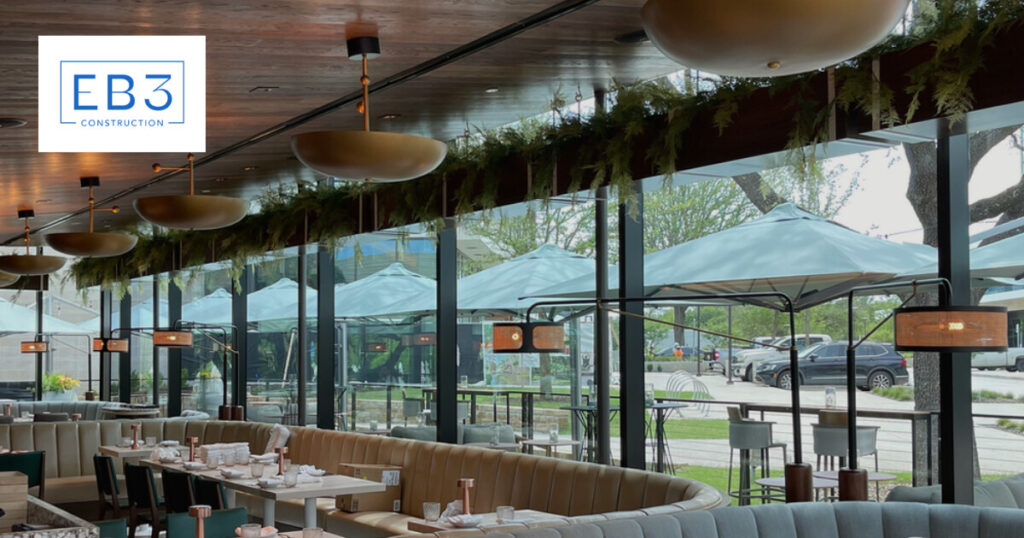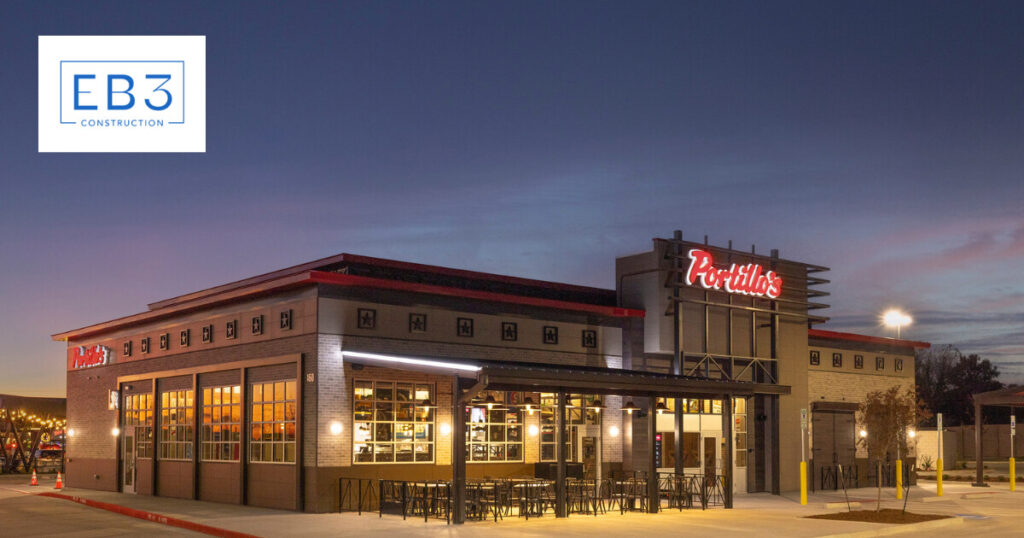

A delayed restaurant opening costs real money. Every week past the target date compounds lease obligations, defers revenue, and adds staff costs that cannot be recovered. In a multi-tenant retail center, the stakes are higher: a poorly managed build-out disrupts neighboring tenants, strains landlord relationships, and can trigger lease violations before a single customer is served.
Knowing which questions to ask a contractor before committing to a restaurant remodel in an existing space is the most direct way to distinguish capable teams from those who will struggle with the project’s complexity. The sections ahead cover five critical areas: verifiable restaurant experience, licensing and insurance, contract and payment protections, schedule and site management, and food-service-specific operations, including permits and MEP coordination.
Do You Have Verifiable Restaurant Experience In Occupied Retail Centers, With A Portfolio And Recent References?
Years in the Industry and Concept-Specific Experience
Total years in construction tell you very little without context. What matters is how much of that time was spent on foodservice construction specifically. Ask directly: what percentage of your completed projects are restaurant or commercial kitchen builds? A contractor who has spent the majority of their career on office interiors or retail shell spaces likely hasn’t navigated the coordination demands of a restaurant build-out inside an occupied retail center.
Concept fit matters just as much as general restaurant experience. A contractor who has built fast-casual counter-service layouts may not understand the service line logic, acoustic requirements, or spatial flow of a full-service dining room. Ask whether they have completed projects that match your specific format, and press for details on how that experience shaped their approach to the build.
Reviewing the Portfolio with Specificity
Finished photography is not a portfolio. Request documented project records from builds completed inside multi-tenant retail centers, where shared utility infrastructure, landlord coordination, and neighbor-tenant constraints add real complexity. A contractor with genuine restaurant build-out experience maintains records that reflect problem-solving, not just attractive end results.
As you review the work, ask targeted questions about restaurant-specific challenges. Did they route ventilation through a ceiling with limited clearance or structural obstructions? How did they handle a grease management system when the existing drain configuration did not support the required interceptor sizing? Did the project achieve first-pass ADA compliance, or did inspection failures require rework? These details reveal whether the contractor has actually managed the technical scope of foodservice construction or simply completed work adjacent to it.
A portfolio that lacks examples of commercial kitchen coordination, equipment integration, or multi-tenant site management is a gap worth probing before any further conversation. Strong contractors can point to specific projects and walk you through how field conditions were resolved.
Contacting References and Asking the Right Questions
Call at least three recent references from restaurant or commercial kitchen projects. Older references may predate current code requirements and do not reflect how the contractor performs under present conditions. When you reach those contacts, ask whether the contractor stayed on schedule, how they handled budget surprises, and whether they coordinated effectively across landlords, designers, equipment vendors, and trade subcontractors.
Multi-stakeholder coordination is where many contractors fall short on restaurant projects in retail centers. The property owner, tenant, architect, equipment vendors, and multiple trade subs all have competing priorities. A contractor who manages those relationships well keeps the project moving. References will tell you whether that coordination was contractor-led or whether the owner had to fill the gap.
Pay attention to how references describe the contractor’s response when unexpected site conditions surface. Every occupied retail center build carries surprises: existing utility conflicts, slab conditions that do not match drawings, or structural elements that affect hood placement. A contractor’s problem-solving pattern under pressure is more predictive of project success than performance on straightforward scopes.
Online Research as a Verification Tool
Beyond direct references, online research adds a layer of verification that references alone cannot provide. Check whether the contractor’s website reflects a professional process specific to restaurant or foodservice construction, not just a general commercial portfolio. A contractor who specializes in this work typically demonstrates that focus through how they present their capabilities and project types.
Review responses to online feedback as closely as the ratings themselves. A contractor who responds to critical reviews with specifics and accountability shows a level of professional maturity that matters on a complex build. Consistent patterns in negative feedback, particularly around schedule management or subcontractor coordination, are worth weighing before you move further in the evaluation process.
What Licenses, Insurance, Contract Terms, And Payment Structures Will Protect The Project?
Contractor Licensing And Trade Credentials
A general contractor license covers the overall project, but a full restaurant remodel in an existing commercial space requires more than a single credential. Each licensed trade scope—electrical, plumbing, and mechanical—must be held by a qualified individual or subcontractor, and those licenses must be verified independently with your state licensing board or local building department.
Request the GC’s license number and cross-reference it directly with the issuing authority. A license that appears current on a contractor’s website may be expired, suspended, or limited in scope. Confirming it yourself takes minutes and reduces the risk that can surface at the worst possible time, such as during a framing inspection or a health department walkthrough.
Insurance Requirements And Certificate Of Insurance Verification
Request the certificate of insurance directly from the carrier, not from the contractor. This single step prevents outdated or altered documents. For commercial restaurant work, commercial general liability coverage typically carries a minimum of $1 million per occurrence and $2 million aggregate, though specific project requirements may call for higher limits depending on jurisdiction and landlord requirements.
Workers’ compensation coverage must be active and extend to all on-site workers, including subcontractor labor where applicable. Any lapse shifts liability for on-site injuries directly to the property owner. Confirm the policy is current before any work begins, and require updated certificates at each major project milestone.
A surety bond adds a layer of financial protection that insurance alone does not provide. A performance bond guarantees project completion per contract terms, while a payment bond protects subcontractors and material suppliers from non-payment. For a restaurant build-out with significant MEP scope, requiring bonding is a practical safeguard, not an administrative formality.
Contract Terms That Define Scope And Limit Exposure
A written contract must define the scope of work with enough specificity that there is no ambiguity about what is included. Review the scope line by line against the bid. Any discrepancy between what was quoted and what the contract requires creates financial exposure before the first nail is driven.
The contract should include a clearly defined termination clause that specifies the conditions under which either party can exit the agreement, the notice period required, and how work completed to that point will be compensated. Without this language, a mid-project breakdown leaves the owner with an incomplete kitchen and no clear contractual path forward.
A maximum materials budget cap limits uncontrolled procurement spending, which matters when supply chain conditions push lead times and unit costs upward. Materials sourcing transparency, combined with documented approval thresholds, keeps the project budget defensible from preconstruction through turnover.
Change Order Controls And Payment Structure
Every change order must be approved in writing before any additional work begins. Restaurant projects are particularly susceptible to scope creep: equipment substitutions, late design changes, and health department revision requests can trigger cost adjustments that compound quickly without a formal approval chain. The contract should identify exactly who has authority to sign change orders on the owner’s behalf, and verbal approvals should carry no weight.
Milestone-based or progress-based payment schedules keep financial exposure in check throughout the build-out. Structured payments align disbursements with verified completion of defined scopes—such as rough MEP, framing, or equipment setting—rather than releasing large sums tied only to calendar dates.
Retainage typically ranges from 5% to 10% of each progress payment and is held until the project reaches substantial or final completion. State law governs how much retainage can be withheld and when it must be released, so the specific percentage and release conditions should be confirmed against local statutes before the contract is signed. This withheld amount gives owners direct leverage when deficiencies surface late in the build-out and incentivizes the contractor to maintain the same rigor through closeout that they applied in the early phases.
How Will You Manage Schedule, Communication, Site Access, And Cleanup In An Active Center?

Who Leads On-Site And Who Has Authority When They’re Not There?
The first question to pin down is straightforward: who runs the job day-to-day? Ask whether a dedicated superintendent or project manager will be physically present on-site, not just checking in periodically. Then ask who holds decision-making authority when that person is off-site, because in an active retail center, unresolved decisions cost hours that compound into days.
A contractor without a clear chain of command on occupied projects creates friction at every stage. You need a named contact, a direct phone number, and a stated response window. Vague answers here are a signal worth taking seriously before you sign anything.
Setting A Communication Cadence That Works
A predictable update rhythm matters as much as the updates themselves. Ask whether the contractor commits to daily check-ins, weekly summaries, or milestone-based reports, and confirm which channel is used for each type of communication. Email, a project management platform, and phone calls each serve different purposes, and a contractor who conflates them tends to let things fall through.
Tie communication checkpoints directly to construction milestones rather than arbitrary calendar dates. When updates are anchored to completed phases such as framing, rough-in, and inspections, you get a clearer picture of whether the project is tracking or drifting. Delays in a restaurant build-out push opening dates, and delayed openings carry real financial consequences for operators and landlords alike.
Construction Schedule, Trade Sequencing, And Look-Ahead Planning
Review the daily schedule in detail: start and stop times, which trades are on-site on which days, and how noisy or disruptive tasks are sequenced relative to neighboring tenants. Demolition, concrete cutting, and HVAC rough-in are not activities that can happen at any hour in a shared retail center without consequences for adjacent businesses.
Ask how the contractor uses a look-ahead schedule to keep trades aligned across the coming two to three weeks. A look-ahead schedule identifies what needs to happen before the next phase can begin, which prevents the common situation in which one trade finishes and the next is not ready to mobilize. That gap is where projects quietly fall behind without anyone flagging it until the delay is already baked in.
Confirm the overall project timeline and ask how the contractor tracks critical path items. If framing slips by three days, does the schedule absorb it, or does it cascade? The answer tells you how tightly the team actually manages sequencing versus how loosely they manage expectations.
Cleanup Standards And Site Logistics In A Shared Center
Daily cleanup in an occupied retail center is a non-negotiable operational requirement, not a courtesy. Hazardous debris, dust, and construction waste accumulate quickly, and in a multi-tenant environment, those conditions affect neighboring tenants, their customers, and the landlord’s relationship with all of them. Ask whether cleanup standards are written into the contractor’s subcontracts, because verbal expectations rarely hold when schedules tighten.
Waste removal plans should specify how debris leaves the site, how often dumpsters are pulled, and how end-of-day conditions are maintained. Ask what the end-of-project turnover standard looks like and who signs off on it. A contractor who treats cleanup as an afterthought will leave you managing landlord complaints during the final push to open.
Weather Contingency And Recovery Planning
Weather disruptions are inevitable, and a contractor operating in an existing space still faces exposure through exterior work, material deliveries, and access conditions. Ask whether the contractor maintains a documented weather contingency plan that identifies which tasks can proceed during adverse conditions and which require recovery days.
More importantly, ask how lost days are recovered without compressing quality or skipping inspections. A recovery plan that simply accelerates the schedule without accounting for trade availability or inspection sequencing creates new problems. The answer you want is a specific process, not a general assurance they’ll figure it out later.
How Will You Handle Permits, Kitchen MEP Logistics, Guest Flow, And Phased/After-Hours Work?
Permit Ownership And Inspection Sequencing
A restaurant remodel in an existing space requires multiple permit submissions running in parallel: building department, health department, and fire marshal. Ask the contractor who owns each submission, who tracks resubmittals, and who sequences final inspections so the certificate of occupancy stays on schedule.
The permit tracker should be assigned to a named person on the contractor’s team, not a vague process. Delays at the health department or fire marshal review stage are common causes of last-minute opening delays. Confirm that whoever manages the tracker has direct experience with food-service plan review, including health department equipment cut sheet submissions and fire suppression approvals tied to the hood system.
Final inspection sequencing matters as much as the initial submissions. Underground plumbing, rough MEP, above-ceiling work, and hood suppression each require sign-off before the next phase closes up. A contractor who understands this sequence builds it into the schedule rather than reacting to it at the end.
Kitchen Hood, Fire Suppression, And Make-Up Air Balance
The kitchen is where MEP coordination either holds together or breaks down. Start with the hood: confirm whether the project requires a Type I hood for grease-producing cooking equipment or a Type II hood for heat and steam, and verify that duct routing to the roof discharge point has already been mapped against ceiling obstructions in the existing space.
Fire suppression tied to the hood system, typically a UL 300 wet chemical system, must be coordinated with the hood installer and the fire marshal’s review process. Ask the contractor how they sequence that coordination and who is responsible if a resubmittal is required. Make-up air balance is equally critical. An unbalanced system creates negative pressure, which affects door operation, HVAC performance, and air quality across the tenant space.
For walk-in coolers, the questions get more specific. Verify that the contractor has verified structural load capacity for the floor and ceiling, mapped refrigeration line routing, confirmed floor drain placement, and reviewed electrical capacity before rough-in begins. These are not items to resolve during installation.
Full MEP Coordination Tied To The Equipment Schedule
Panel capacity and load calculations should be verified against the complete equipment list before a single circuit is roughed in. Commercial kitchens are power-intensive: walk-ins, dish machines, fryers, wok ranges, and POS systems all carry dedicated circuit requirements. Undersizing the panel at this stage creates expensive corrections later.
Gas sizing needs to account for peak demand across all appliances simultaneously, not just individual tail-end loads. The contractor should walk through trunk sizing, drip legs, shutoff valve placement, and appliance access as part of the MEP coordination review. Plumbing coordination covers floor drains, mop sinks, three-compartment sinks, and hot-water recovery sized for rush-hour demand, not average use. Ask how the contractor aligns plumbing rough-in with the equipment schedule to avoid repositioning drains after tile is set.
Front-Of-House Flow, Finishes, And Code Compliance
Guest and staff flow through the front-of-house deserves the same technical attention as the kitchen. Ask how the contractor validates movement between the host stand, bar, kitchen pass, and dining area during the design review. Tight or conflicting paths create operational friction that no amount of décor can fix after opening.
Finish selections in food-service areas carry code requirements beyond aesthetics. Surfaces in splash zones must be smooth and cleanable; fire-rating requirements apply to specific wall assemblies near cooking equipment. The contractor should review the finish schedule against health department standards and local fire code before materials are ordered.
Lighting control zones and acoustic treatments are often treated as late-stage items, but both affect construction sequencing. Lighting zones tied to dimming systems require electrical rough-in coordination, and built-in acoustic panels or ceiling treatments need to be framed into the build sequence, not added as an afterthought.
Phased Construction, After-Hours Work, And Value Engineering
If the space must remain partially operational during construction, a phasing plan is non-negotiable. Ask the contractor to produce a written phasing sequence that identifies which areas remain active, how the construction zone is separated from occupied space, and what temporary barriers and dust control measures are in place to protect guests, staff, and neighboring tenants.
After-hours work options matter in multi-tenant retail centers where daytime noise and disruption affect adjacent businesses. Confirm whether the contractor has experience scheduling noisy trades, demolition, and concrete work outside operating hours, and how that affects the overall timeline and the trade sequencing already established.
Value engineering conversations should happen before construction begins, not during it. Ask how the contractor coordinates with your designer on constructability, and how they identify cost reductions that preserve design intent rather than compromise it. A contractor who brings specific substitution options tied to lead times and budget impact is far more useful than one who simply flags problems without solutions.
Conclusion And Next Steps

A full restaurant remodel in an existing space rewards contractors who provide specifics. The questions covered throughout this article are designed to surface exactly that: documented restaurant experience, active credentials, airtight contract terms, a named on-site lead, and clear ownership of every permit submission—from the building department through health department sign-off.
Contractors who hedge on MEP coordination, skip the phasing conversation, or offer vague timelines signal how they will perform under pressure. The inspection sequence alone requires a contractor who has navigated that path before and can show you how they will manage it on your project.
Before you sign, work through this sequence. Shortlist firms with documented work in multi-tenant retail centers, not just standalone builds. Review portfolios for evidence of grease management, ventilation routing, and ADA compliance handled correctly the first time. Call at least three recent restaurant references and ask directly about schedule adherence, budget control, and how surprises were resolved. Confirm licenses and insurance with the issuing agencies rather than from copies the contractor provides. Align on the permit and inspection sequence, the change-order approval process, and the communication cadence before any contract is executed.
At EB3 Construction, we bring the same structured approach to every restaurant remodel. Reach out to discuss your project and get specific answers from day one.