
EV drivers now expect to charge where they park, transforming traditional parking areas from cost centers into potential revenue generators. This shift creates unprecedented opportunities for property owners and developers who recognize the growing demand for accessible charging infrastructure.
A commercial EV charging infrastructure contractor plans, builds, and supports charging systems from concept to operation. We coordinate business and site assessments to determine feasibility and requirements. Our work includes equipment recommendations, site design, construction planning, and securing necessary funding through grant and incentive procurement. The scope extends through utility upgrades and permitting, site construction, installation and commissioning, plus ongoing operations and maintenance to ensure reliable performance.
How Should Sites Be Evaluated And Designed For EV Charging?
Site evaluation for commercial EV charging begins with a comprehensive audit of existing electrical infrastructure. We assess panel capacity, transformer availability, and distribution systems to determine what upgrades are necessary for safe, reliable charging operations. This upfront evaluation saves time and prevents costly surprises during construction.
The audit process reveals whether sites can tap into current electrical systems or require substantial infrastructure investment. Some locations need only minor panel modifications to support Level 2 charging. Others demand new transformers, upgraded switchgear, and extensive civil work to handle higher-capacity installations.
Electrical Infrastructure Assessment And Planning
Electrical capacity evaluation forms the foundation of any successful charging project. We examine existing service equipment, measure available amperage, and calculate load requirements for planned charging stations. This analysis determines whether current infrastructure can support additional load or requires system upgrades.
Transformer capacity becomes critical for larger installations, especially when supporting multiple DC fast chargers or numerous Level 2 stations. Sites with inadequate transformer capacity need coordination with utilities for upgrades, which can extend project timelines significantly. Early utility engagement prevents delays and ensures proper equipment sizing.
Switchgear and distribution panel assessments identify available circuit space and determine electrical routing options. Modern charging installations benefit from dedicated circuits with proper overcurrent protection. We evaluate existing panels for capacity and condition, recommending upgrades when necessary for code compliance and future expansion.
Site Design For Construction Readiness
Construction-ready design coordinates all site elements before breaking ground. We develop detailed plans showing conduit routing, equipment placement, and excavation requirements. This approach minimizes disruption to existing parking and building operations during installation.
Trenching and civil work planning considers soil conditions, existing utilities, and site accessibility. Some installations require extensive excavation for underground conduits, while others can utilize existing conduit systems or overhead routing. We design pathways that protect existing infrastructure while providing reliable power delivery.
Parking lot and garage layouts influence charger placement and accessibility. Design priorities include maintaining traffic flow, ensuring ADA compliance, and positioning equipment for optimal cable management. Strategic placement reduces installation costs while improving user experience and operational efficiency.
Utility Coordination And Permitting Strategy
Early utility coordination streamlines project approval and prevents construction delays. We initiate contact with utility providers during design development to discuss load requirements, interconnection procedures, and upgrade timelines. This collaboration ensures electrical service meets project needs and complies with utility standards.
Permitting strategies vary by jurisdiction but require detailed documentation of electrical systems, site modifications, and safety measures. We prepare comprehensive permit packages including load calculations, equipment specifications, and construction drawings. Proper documentation expedites review processes and reduces revision cycles.
Load management planning becomes essential for larger installations or sites with limited electrical capacity. We incorporate smart charging systems that balance power distribution, prevent demand spikes, and optimize energy usage. This approach reduces infrastructure costs while preparing sites for future expansion.
Distributed energy resource integration adds value where site conditions allow. Solar carports provide weather protection while generating on-site power. Energy storage systems enable load shifting and demand management. Microgrid controls coordinate multiple energy sources for optimal performance and resilience during outages.
Which Charger Levels, Connectors, And Equipment Suit Different Use Cases?
Understanding charger levels drives equipment selection for any commercial EV charging project. Each level serves different operational needs based on dwell time, power requirements, and user expectations.
Level 1 Charging: Limited Commercial Applications
Level 1 charging operates on standard 120V AC household power, delivering approximately 1.4 to 2.3 kW. This translates to roughly 6-8 miles of range per hour of charging time. The slow charging speed makes Level 1 suitable only for specific commercial scenarios where vehicles park for extended periods, such as employee parking at corporate campuses or fleet depots with overnight storage.
Current deployment statistics show Level 1 represents less than 5% of public charging ports nationwide. Most commercial installations bypass Level 1 due to the lengthy charging times required to meaningfully replenish modern EV batteries. We typically recommend Level 1 only when electrical infrastructure limitations prevent higher-power installations or when project budgets require the most basic charging capability.
Level 2 Charging: The Commercial Standard
Level 2 charging uses 208V to 240V AC power and delivers between 3.7 kW and 22 kW, depending on the installation. Most commercial sites see charging speeds of 15-80 miles of range per hour. Public stations can reach 80 amperage, providing up to 19.2 kW of power output.
Level 2 stations use J1772 connectors as the standard interface. These connectors accommodate virtually all electric vehicles sold in North America, ensuring broad compatibility across different vehicle manufacturers. The J1772 standard supports both Level 1 and Level 2 charging through the same connector type.
Commercial Level 2 installations work well for workplaces, retail locations, hotels, and destinations where vehicles typically park for two to eight hours. The charging speed aligns with common dwell times, allowing drivers to add meaningful range during their visit or work shift.
DC Fast Charging: High-Power Solutions
DC fast charging bypasses the vehicle’s onboard charger and delivers power directly to the battery. These systems require three-phase input at 208V to 480V AC, then convert to DC power for delivery to vehicles. Charging sessions typically range from 15 to 45 minutes to add 100 to 350+ miles of range, depending on the vehicle’s acceptance rate and charger capacity.
Three connector standards dominate DC fast charging installations. The Combined Charging System (CCS) serves as the primary standard for most new vehicles in North America. CHAdeMO connectors support many Japanese vehicle models, though adoption is declining as manufacturers transition to CCS. Tesla’s proprietary connector works exclusively with Tesla vehicles but is increasingly adopted by other manufacturers through the North American Charging Standard.
DC fast charging suits highway corridors, fleet operations, and high-turnover commercial locations where quick charging enables operational efficiency. The high power delivery requires significant electrical infrastructure but matches the rapid service expectations of today’s EV drivers.
Equipment Selection Criteria
We prioritize UL-certified equipment that meets utility approval requirements. UL certification ensures the equipment meets established safety and performance standards, while utility approval confirms compatibility with local electrical grid requirements.
Modular design allows for future expansion and simplified maintenance. Stations with modular components can accommodate changing power requirements or equipment upgrades without complete system replacement. This design approach provides long-term value as EV technology continues advancing.
Intelligent monitoring software enables remote diagnostics, usage tracking, and proactive maintenance scheduling. These systems provide real-time performance data and can identify potential issues before they cause downtime. Advanced software platforms also support load management and integration with building energy systems.
Ambient temperature ratings determine suitable installation environments. Equipment rated for indoor/outdoor use provides installation flexibility and ensures reliable operation across varying climate conditions. We specify equipment with appropriate temperature ranges based on local climate data and installation locations.
What Are The Construction, Installation, And Commissioning Steps?

Groundwork And Infrastructure Development
Construction begins with civil work to establish power pathways. We handle trenching and boring operations to create clear routes for conduits and electrical connections to existing power sources. Trenching depth varies based on local codes and voltage requirements, while boring provides a non-disruptive alternative when crossing under established surfaces.
Our crews coordinate these operations to minimize site disruption. The civil work phase establishes the foundation for all subsequent electrical installation work.
Electrical System Installation And Equipment Setup
Once conduits are in place, certified technicians install electrical wiring according to engineered specifications. We set charging equipment in predetermined locations and complete any required transformer and switchgear upgrades. Each installation follows manufacturer specifications and local electrical codes.
Equipment mounting requires precision alignment for user accessibility and maintenance access. We verify all connections meet torque specifications and safety standards before proceeding to testing phases.
Site Restoration And Final Configuration
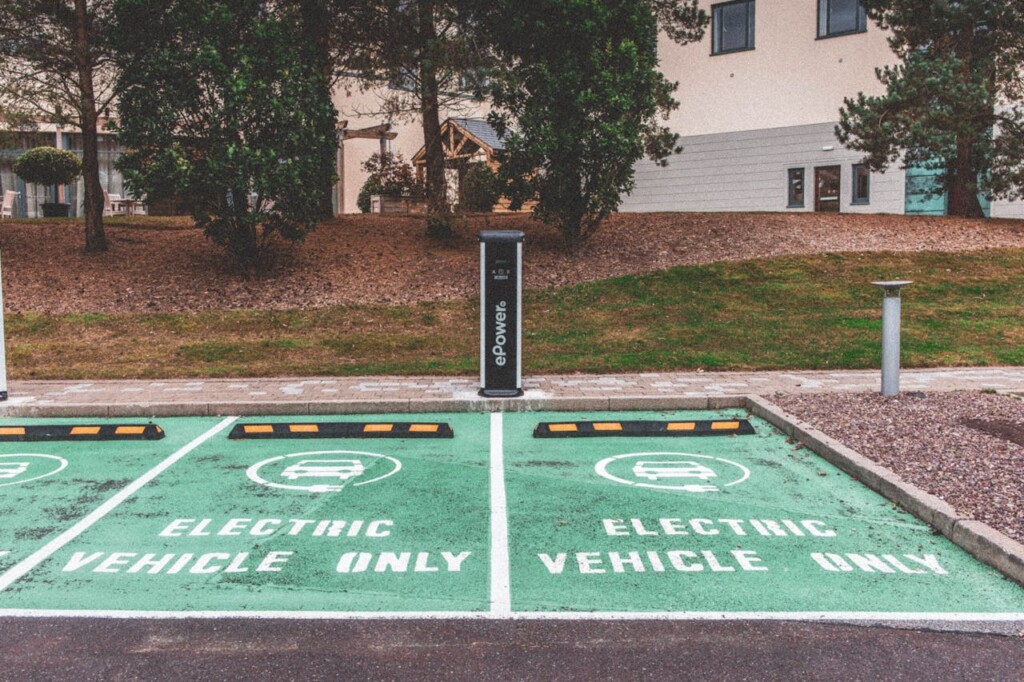
After electrical work is complete, we remediate construction areas with asphalt and concrete restoration. Sites receive fresh re-striping to clearly mark charging spaces and traffic flow patterns. Added signage provides wayfinding and usage instructions for drivers.
Parking lot remediation returns the site to full functionality while incorporating the new charging infrastructure. We coordinate restoration work to match existing surface materials and drainage patterns.
System Testing And Performance Verification
Certified technicians conduct comprehensive commissioning with rigorous testing protocols. We verify power output, safety systems, network connectivity, and user interface functionality. Each charger undergoes live vehicle testing to confirm charging session initiation and completion.
Testing and verification procedures include ground fault protection checks, emergency shutdown testing, and load management system validation. We document all test results for inspection and warranty purposes.
Operations Setup And Maintenance Planning
The final construction step involves establishing operations protocols and warranty service arrangements. We configure network management systems, payment processing, and user access controls. Maintenance plans are implemented to ensure long-term system reliability.
Our team provides site personnel with operational training and troubleshooting procedures. We establish maintenance schedules that align with manufacturer recommendations and site usage patterns.
How Do Cost, Incentives, And Operations Affect ROI?
Commercial EV charging infrastructure projects averaged approximately $6,000 per Level 2 port in 2022, though actual costs vary significantly based on site conditions and scope requirements. Equipment selection, intelligent monitoring software, electrical infrastructure upgrades, trenching distance, and site remediation work drive the largest cost variations across projects.
Hardware costs represent just one component of total project investment. Electrical upgrades may require new transformers, switchgear, or panel modifications to support charging loads. Civil work includes conduit installation, trenching for power distribution, and post-construction parking lot remediation with proper re-striping and signage.
Federal Tax Credits And State Incentive Programs
The federal Alternative Fuel Vehicle Refueling Property Credit provides up to 30% tax credit coverage through 2026, capped at $100,000 per charging port for commercial installations. Meeting prevailing wage and apprenticeship requirements unlocks the full 30% credit, while base projects receive 6% coverage.
State and local programs add another layer of cost reduction. Many utilities offer rebates ranging from $1,000 to $15,000 per port, depending on charger type and installation complexity. NEVI state plans outline additional public funding opportunities, particularly for corridor charging and underserved communities.
We coordinate with clients early in project development to identify and secure all available incentives. Grant procurement requires specific documentation and timeline management, making early engagement essential for maximizing cost offsets.
Load Management Strategies For Cost Control
Smart load management systems reduce operational costs by optimizing when and how charging occurs. Peak shaving functionality prevents demand spikes that trigger utility penalty charges, while load balancing distributes power across multiple charging ports without requiring expensive electrical upgrades.
Time-of-use optimization shifts charging to lower-rate periods when possible. Load shifting with on-site energy storage further reduces grid dependency and utility rate impacts. These software-controlled strategies can cut energy costs by 20-40% compared to unmanaged charging.
Integration with existing building management systems allows coordinated load control across all facility electrical needs. We design systems that prioritize critical building loads while maximizing charging availability during optimal rate periods.
Revenue Generation And Parking Monetization
Commercial sites can generate revenue through charging fees where appropriate for the user base and local market conditions. Workplace charging typically uses flat monthly fees or per-session pricing. Retail and hospitality sites often implement per-kWh or time-based rates.
Revenue modeling considers utilization rates, local electricity costs, and competitive pricing. Sites with high dwell times and captive users typically achieve faster payback periods. Multi-tenant properties may use charging access as a premium amenity while generating incremental revenue.
Parking monetization extends beyond charging fees. Premium parking rates for EV spaces, reservation systems for guaranteed access, and integration with existing parking management platforms create additional revenue streams while improving space utilization.
Conclusion and Next Steps

Building commercial EV charging infrastructure requires coordination across multiple disciplines and stakeholders. From site evaluation through operational management, each project demands careful planning and skilled execution to deliver reliable charging systems that serve both immediate needs and future growth.
We start each project by clearly defining charging goals and identifying target users. A comprehensive site audit provides the foundation for all subsequent decisions, confirming available electrical capacity and identifying civil requirements like trenching and utility access. Equipment selection follows user patterns and site constraints, matching charger levels to expected dwell times while ensuring UL certification and utility approval. Construction planning coordinates permitting workflows with utility coordination and post-installation restoration to minimize site disruption.
Contact EB3 Construction to discuss how we can coordinate your commercial EV charging project from initial assessment through long-term operations.