A steady flow of vehicles needing tire service drives revenue, but only if your facility operates efficiently. How you build a commercial tire shop determines whether your operation can handle peak demand, protect equipment investments, and maintain the workflow that keeps customers moving. The foundational decisions you make during construction directly affect service speed and profitability for years to come.
Successful projects balance the structural shell with operational needs across service bays, overhead doors, customer areas, and future expansion. We approach each build by understanding how tire changers, wheel balancers, hydraulic lifts, and alignment equipment will function within clear-span floor plans and support current capacity as well as future growth through the right bay count, door sizing, and utility planning.
How Should You Plan Bays, Workflow, And Customer Areas?

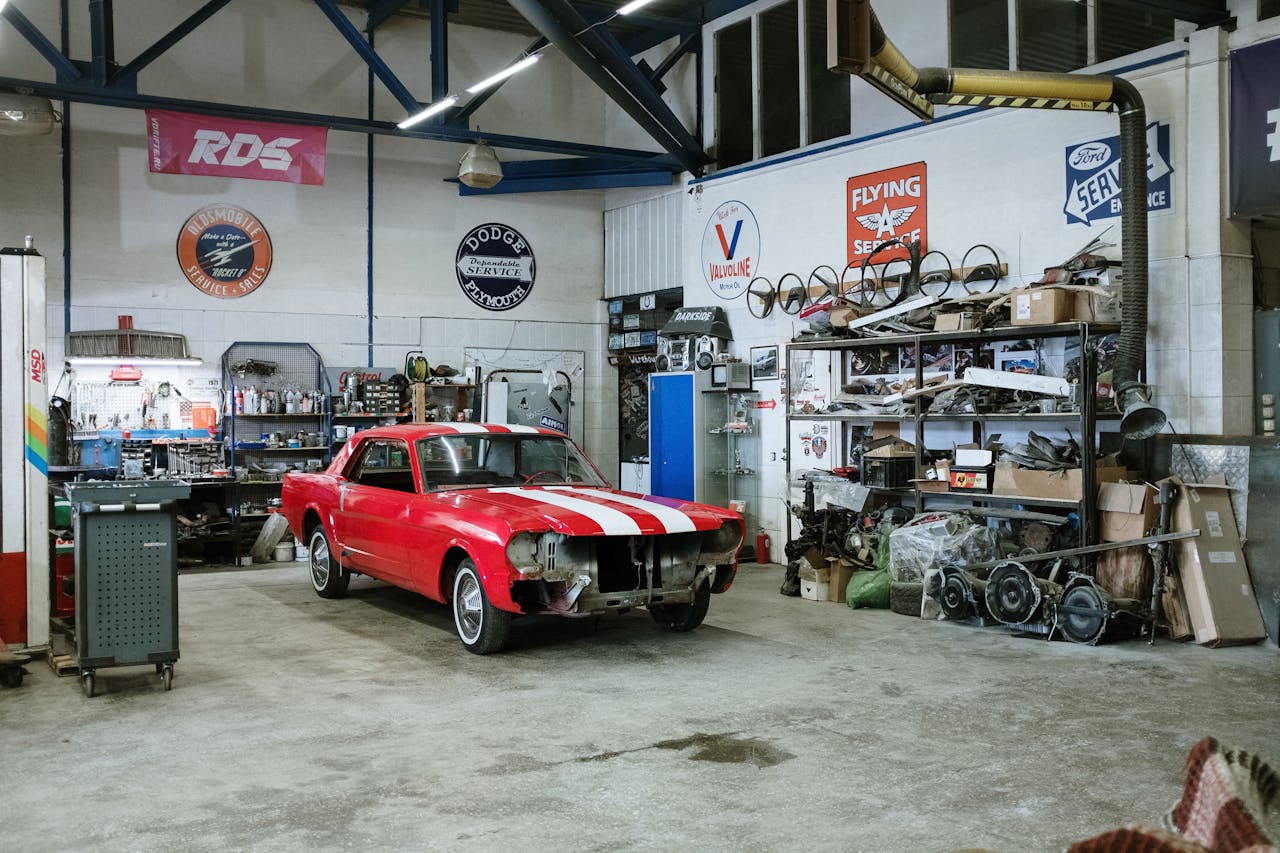
Open-span construction provides the foundation for an efficient tire shop workflow. We establish clear vehicle lanes that separate customer traffic from technician movement. This separation prevents bottlenecks during busy periods and maintains safe working conditions throughout daily operations.
Service Bay Layout for Maximum Efficiency
We position service bays to create logical workflow progression. Diagnostic stations sit near entry points where vehicles first arrive. This placement allows technicians to identify tire issues immediately and route vehicles to appropriate service areas without unnecessary repositioning.
Each service bay requires overhead doors sized for expected vehicle types. Standard passenger cars need 8-foot doors, while light trucks and SUVs require 10-foot openings. Commercial tire services often demand 12-foot doors to accommodate delivery trucks and fleet vehicles.
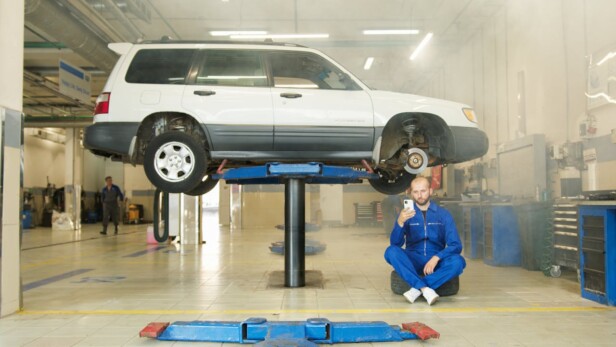
We maintain approximately 15 feet between lift positions to ensure adequate workspace around each vehicle. This spacing allows technicians to maneuver equipment freely while providing safe clearance for opening vehicle doors and accessing wheel wells.
Essential Equipment Placement
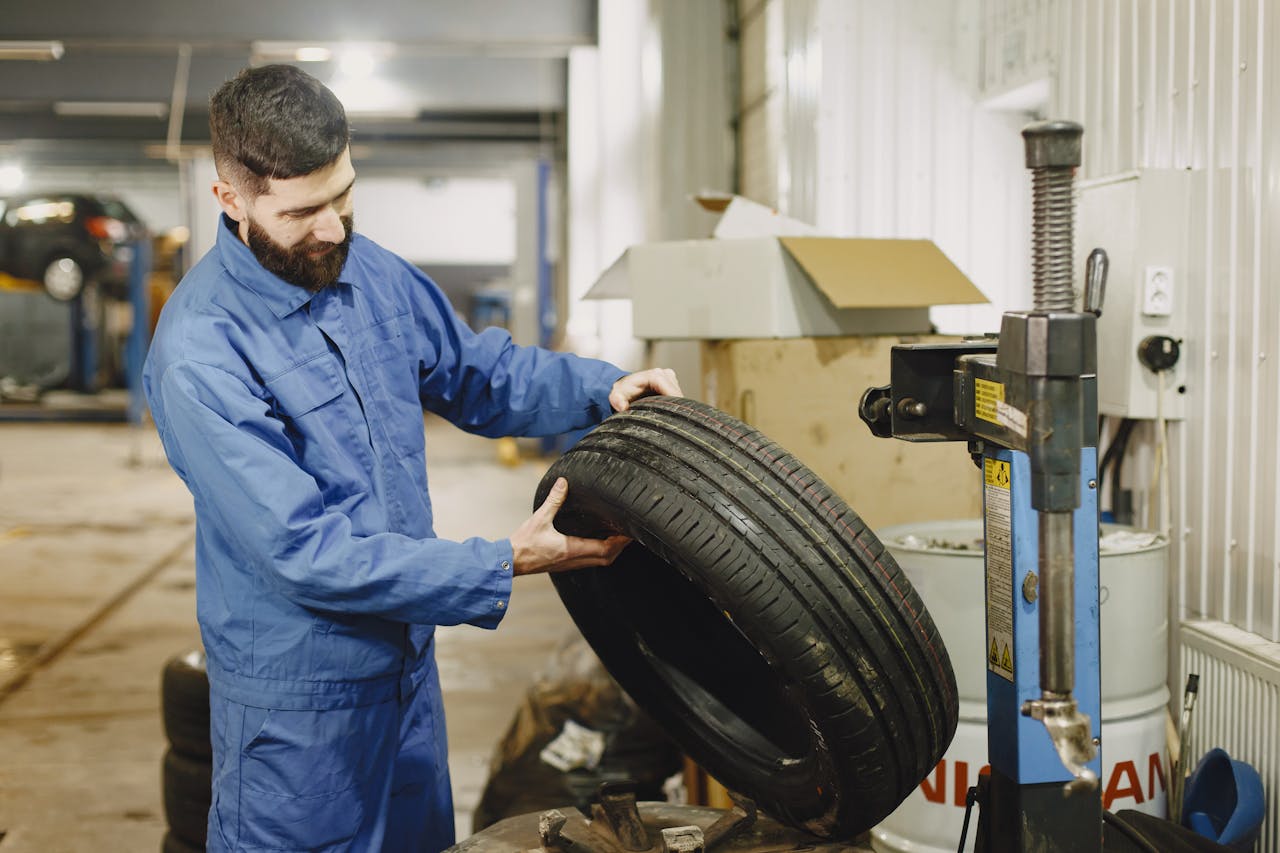
Tire changers occupy central positions within each bay for easy access from multiple angles. We locate wheel balancers adjacent to tire changers to maintain smooth workflow from mounting to balancing. This proximity reduces technician travel time and keeps related processes connected.
Vehicle lifts require strategic positioning that accounts for approach paths. We place alignment equipment in dedicated bays with sufficient clearance for sensor positioning and vehicle maneuvering. Alignment bays typically need additional width to accommodate the specialized equipment and technician workspace.
Air compressors serve multiple bays via overhead line distribution. We position these units centrally to minimize line runs while reducing noise impact on customer areas. Diagnostic scanners sit on mobile stations that technicians can position as needed, without fixed mounting requirements.
Storage and Inventory Organization
Organized tire racks follow vertical storage principles that maximize floor space efficiency. We allocate wall space for tire inventory with clear categorization systems that speed selection during busy periods. Popular tire sizes occupy easily accessible positions, while specialty items are stored in higher locations.
Consumable storage includes dedicated areas for weights, valve stems, patches, and mounting supplies. We position these items within arm’s reach of primary work areas to eliminate unnecessary trips during service procedures. Secure storage prevents inventory loss while maintaining easy access for authorized personnel.
Used tire disposal areas require separation from clean inventory and customer spaces. We designate secure zones that meet environmental regulations while providing convenient access for removal services. Proper drainage and ventilation prevent contamination issues in these areas.
Customer Area Integration
The POS and check-in point occupies a visible location customers can easily find upon arrival. We position this area with clear sightlines to service bays, allowing customers to observe work progress while maintaining appropriate separation from active work zones.
Customer waiting areas integrate comfortable seating with clear views of service operations. Research indicates that customers appreciate transparency in service processes, which builds trust and reduces anxiety during wait times. We include amenities like Wi‑Fi access and refreshment stations to enhance the customer experience.
Digital displays in waiting areas show service progress and estimated completion times. This communication reduces customer uncertainty and demonstrates professional service management capabilities.
Utility Infrastructure Planning
Power distribution requires careful planning to support heavy equipment loads throughout the facility. We install dedicated circuits for lifts, compressors, and diagnostic equipment to prevent overload conditions. Each service bay receives multiple outlets positioned where technicians perform most tasks.
Air lines follow overhead routing that keeps work areas clear while providing convenient access points. We install quick-disconnect fittings at each work position to eliminate dragging hoses across active service bays. Proper sizing ensures adequate pressure at all connection points.
Data drops support diagnostic equipment and point-of-sale systems throughout the facility. We position network connections strategically to eliminate visible cable runs while ensuring reliable connectivity for all electronic systems.
What Codes, Permits, And Safety Factors Should Guide The Build?
We approach tire shop permitting as a foundational element, not an afterthought. Early coordination with local authorities prevents costly delays and ensures code compliance—from applicable fire codes to state regulations—from the ground up.
Essential Permits for Tire Shop Construction
The permitting process begins with your business license, which authorizes commercial operations in your chosen jurisdiction. Most municipalities require a general business license before any construction activities can commence. Zoning approvals typically follow, confirming your location allows tire service operations under local land-use regulations.
Building permits form the core of construction authorization. We submit detailed structural plans showing clear-span layouts, service bay configurations, and utility infrastructure. Local building departments review these submissions against current building codes, with particular focus on occupancy classifications and structural requirements for automotive service facilities.
Environmental Compliance and Waste Management
Tire shops generate specific waste streams that trigger environmental permitting requirements and related reviews outlined in environmental impact assessments. Used tire disposal demands documented removal contracts with certified recyclers. We build in dedicated storage areas that meet containment standards and prevent environmental contamination.
Waste oil storage requires additional permits in most jurisdictions. Storage tanks need secondary containment systems, and disposal processes must follow EPA guidelines. Some locations mandate groundwater monitoring systems, particularly in environmentally sensitive areas.
Fire Safety and Inspection Requirements
Fire safety inspections evaluate both structural systems and operational protocols. Non-combustible steel framing supports these requirements by eliminating wood-based fire risks. We specify fire-rated assemblies where codes require separation between service areas and customer spaces.
Flammable storage regulations affect tire shops handling solvents, oils, and cleaning chemicals. Fire departments inspect storage cabinets, ventilation systems, and emergency egress routes. Proper fire extinguisher placement and employee training programs satisfy most local fire safety requirements.
Insurance Requirements and Risk Management
We design tire shops with insurance coverage requirements integrated into the construction process. General liability coverage typically requires safety features like proper lighting, non-slip flooring, and clear sight lines between service areas and customer zones.
Garage liability insurance covers vehicle damage during service operations. This coverage often mandates secure key storage systems, vehicle protection barriers, and documented service procedures. Workers’ compensation requirements influence equipment selection and safety system specifications.
Utility Infrastructure and System Setup
Heavy equipment demands drive electrical system capacity planning. We size electrical service to handle multiple vehicle lifts, air compressors, and tire changing equipment operating simultaneously. Three-phase power is typically necessary for shops with four or more service bays.
Ventilation systems must meet both comfort and safety standards. Local codes often specify air change rates for enclosed service areas, particularly where exhaust fumes or chemical vapors might accumulate. We integrate mechanical ventilation with natural airflow to optimize both compliance and energy efficiency.
How Can You Future-Proof A Commercial Tire Shop?
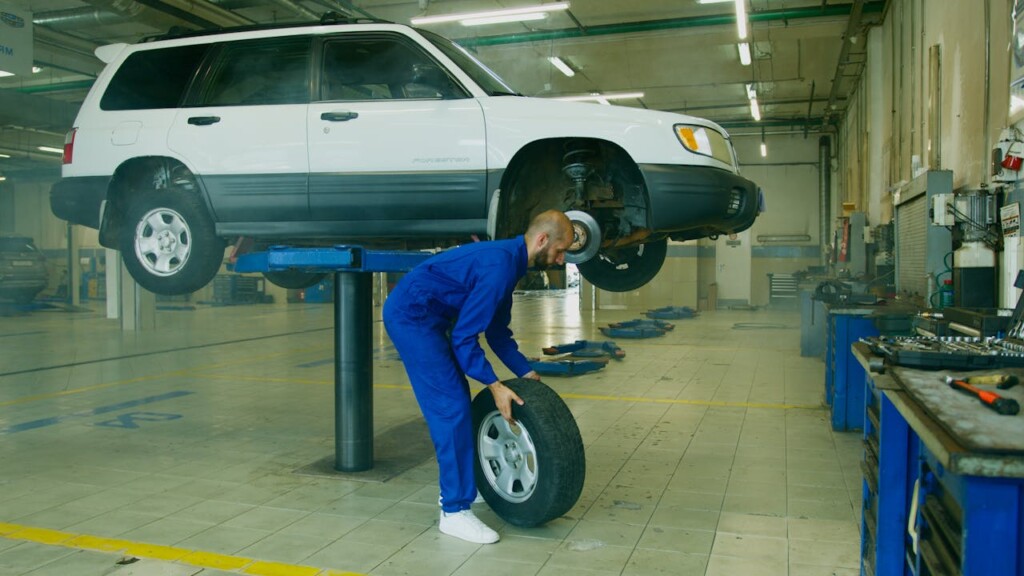
Building for tomorrow starts with smart structural choices today. We design clear-span systems that accommodate expansion without costly modifications to existing bays. The open framework accepts new service positions seamlessly as customer demand grows.
Preplanning overhead door knockouts simplifies bay additions. We position wall systems with removable sections where future doors will be installed. This approach eliminates the need to cut through structural elements or rework utilities when expanding operations.
Expandable Infrastructure and Utility Systems
We size electrical panels, air-compressor capacity, and plumbing mains to handle additional equipment loads. Installing conduit stubs and utility rough-ins during initial construction costs less than retrofitting later. Strategic placement of these systems supports both current operations and future service offerings.
Insulated envelopes with efficient HVAC systems control long-term operating expenses. We specify higher R-values in walls and roofing to maintain comfortable working temperatures year-round. Energy-efficient lighting and climate control reduce monthly utility bills as the business scales.
Flexible Design for Growth
The façade system accommodates branding changes and customer-facing improvements. We use modular construction methods and modular wall panels that accept new glazing, signage, or architectural features without structural modifications. This flexibility supports evolving market positioning and visual identity updates.
Phased construction planning maps out expansion sequences that minimize business disruption. We establish clear zones for future tire storage, alignment equipment, or specialty services such as fleet maintenance. Each phase builds logically on existing infrastructure while maintaining operational flow.
Equipment placement leaves room for additional tire racks, hydraulic lifts, and diagnostic stations. We plan service bay spacing to accept larger vehicles or specialized equipment as service offerings expand. This forward-thinking approach prevents costly relocations when adding capacity.
Conclusion and Next Steps
Commercial tire shop construction requires coordinating multiple systems to create a functional, profitable operation. We build these facilities with pre-engineered steel structures featuring clear-span layouts, dependable overhead doors, and fire-resistant construction. The foundation of success lies in proper service-bay planning, code-compliant permitting, and energy-efficient systems that support immediate operations and future growth.
When we approach tire shop construction, we focus on expandability from the start. Clear-span structural systems accept additional bays without major disruption. Flexible facades and overhead-door knockouts accommodate branding updates and service expansion. Code compliance, environmental permits, and utility capacity ensure the shop operates safely while controlling long-term costs with insulated envelopes and efficient mechanical systems.
Ready to build a tire shop that grows with your business? Contact EB3 Construction to discuss your commercial tire shop construction project.