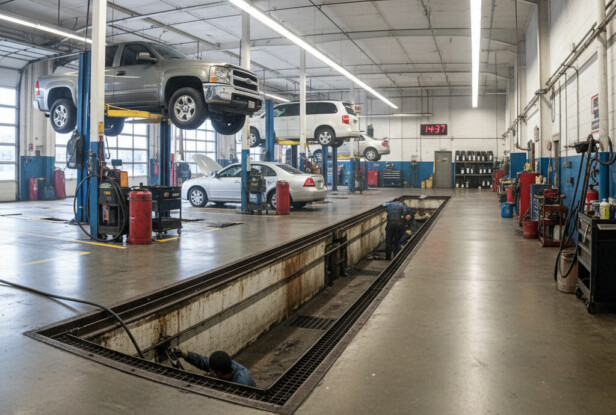
Vehicle downtime costs money by the minute. A lubrication pit contractor builds specialized service bays that move cars through oil changes and routine maintenance with minimal delay.
We plan and construct quick lube pits where drivers remain in their vehicles while technicians work efficiently from below. These facilities serve oil change centers, auto service centers, body shops, full-service garages, and truck repair centers. EB3 Construction provides general contracting services, construction management, or owner’s representation for new construction and building conversions, with support for franchise models, fleet maintenance operations, and car wash conversions.
How Should Safety And Code Compliance Drive Pit Design?

Open pits pose immediate fall hazards that can injure or kill workers and customers. OSHA standards require covers or guardrails to protect personnel from open pits, tanks, and similar hazards. A sealed concrete pit with proper guarding eliminates most below-grade risks while meeting Uniform Building Code requirements for structural integrity and workplace safety.
Walk-on pit covers provide a straightforward OSHA-compliant solution. Covers must support the maximum intended load and allow safe access during maintenance. Stainless steel or aluminum walking surfaces with roll-up designs let crews reach pit areas without sacrificing compliance.
Work platforms with fiberglass decking improve traction and reduce slip hazards around pit edges. Fiberglass resists oil, water, and automotive chemicals better than many common materials. Stair tread covers add grip on steps leading into work areas, while safety nets provide secondary protection against falls through openings.
Lighting systems face harsh conditions from oil splashes, chemical exposure, impact, and constant vibration. Standard fixtures often fail quickly in these environments. IP68-rated linear LEDs resist water and chemical ingress while maintaining corrosion resistance. Low-profile designs fit tight pit spaces and direct light precisely where technicians need it most.
We integrate these safety measures into project drawings and specifications from the outset. This approach ensures proper installation sequencing, meets permit requirements, and creates documentation for future inspections. Code-compliant pit design reduces liability risks while supporting efficient daily operations throughout the facility’s service life.
What Specifications And Features Matter In A Quick Lube Pit?
Most sealed pit installations use standard dimensions: 17 to 21 feet long, 4 feet deep, and about 40 inches wide. These measurements allow proper vehicle positioning and give technicians adequate workspace below the car. The depth provides enough clearance for standing work without requiring full basement excavation.
A seat-on-rail system improves technician mobility in the confined space. This glider mounts on tracks to limit lateral movement while providing smooth access to all service points under the vehicle. Technicians can position themselves precisely at drain plugs, filters, and inspection points without awkward stretching or repositioning.
Tool organization is critical in the limited pit environment. We mount tools directly to pit walls using dedicated brackets and holders. This approach keeps the work area clear of trip hazards and ensures quick access to necessary equipment. A recessed filter cabinet built into the pit wall can store up to 160 oil filters, reducing trips to external storage areas.
Waste oil handling requires careful planning for efficiency and environmental compliance. The system must accommodate rolling drain pans that connect to recovery systems through flexible hoses and cam-lock connections. These pans typically hold about 10 gallons of waste oil, enough for around 10 vehicle services before emptying.
Low-lift compatibility expands the pit’s versatility beyond basic oil changes. When paired with height-restricted lifts, the pit enables simultaneous upper and lower vehicle access. This combination allows tire rotations and other services while maintaining the quick-service workflow that drives profitability.
LED pit lighting for automotive environments offers energy savings and durability. These fixtures must withstand exposure to oil, chemicals, and vibration while providing focused illumination where technicians need it. Proper lighting placement eliminates shadows and reduces eye strain during extended work periods.
Climate control options include forced-air heating or cooling systems that maintain comfortable working conditions year-round. An intercom system enables communication between pit technicians and upper-level staff without requiring workers to leave the pit area. Simple cleaning features, such as sealed surfaces and proper drainage, reduce maintenance time and ensure sanitary conditions.
Engineer-sealed plans streamline permitting by demonstrating compliance with local building codes and safety requirements. These documents typically include foundation specifications, ventilation requirements, and safety system details. Professional engineering approval often accelerates review and reduces revision cycles.
What Are The Cost Factors And ROI Considerations For Lubrication Pit Installation?

Initial Construction Investment Breakdown
Construction costs for lubrication pits vary significantly based on site conditions, local labor rates, and specification choices. Excavation accounts for a substantial portion of the budget, particularly when dealing with high water tables, rocky soil, or contaminated ground requiring remediation. Concrete work includes forming, pouring, and finishing the pit structure with proper reinforcement and waterproofing membranes. Steel reinforcement specifications affect both structural integrity and long-term cost, as inadequate rebar placement can lead to expensive crack repairs years later.
Equipment packages represent another major cost category. Safety systems like pit covers, guardrails, and fall protection equipment carry upfront costs but prevent liability exposure. LED lighting systems cost more initially than standard fixtures but deliver lower energy bills and reduced replacement expenses. Waste oil recovery systems, intercoms, climate control, and specialized tools all contribute to the total investment before the first vehicle enters the bay.
Permitting, Engineering, And Professional Service Fees
Engineer-sealed plans are not optional luxuries but necessary components that affect project timelines and approval success rates. Structural engineers must certify that pit designs can handle vehicle loads, soil pressure, and groundwater conditions. MEP (mechanical, electrical, plumbing) engineers design compliant ventilation, lighting, and drainage systems. These professional fees typically range from 8-15% of construction costs but dramatically reduce the risk of failed inspections or change orders.
Building permit fees vary by jurisdiction and project value. Some municipalities charge flat rates while others calculate fees as a percentage of construction costs. Plan review processes can take weeks or months depending on local workload and design complexity. Budget for potential re-submittals if initial plans don’t meet code requirements on the first pass.
Operational Efficiency Gains And Service Capacity Increases
Lubrication pits enable drive-through service workflows that eliminate the time spent raising and lowering vehicles on lifts. A well-designed pit operation can complete oil changes in 10-15 minutes compared to 20-30 minutes using traditional lift methods. This speed advantage translates directly to increased daily service capacity. A shop completing 40 services per day versus 25 services generates an additional 15 billable transactions daily, or roughly 4,500 additional services annually assuming six-day operations.
Labor efficiency improves when technicians access drain plugs and filters without maneuvering around lift posts or working at awkward angles. Reduced physical strain means lower injury rates and better technician retention. The pit environment also supports concurrent service operations when paired with low-lift systems, allowing tire rotations and brake inspections while performing oil changes.
Long-Term Maintenance Costs And Lifecycle Considerations
Concrete pits require minimal maintenance when properly constructed with adequate waterproofing and drainage. However, budget for periodic concrete sealing every 5-7 years to prevent chemical absorption and surface degradation. Drainage systems need regular inspection and cleaning to prevent blockages from oil residue and debris accumulation.
Lighting systems and safety equipment require ongoing maintenance and eventual replacement. LED fixtures typically last 50,000+ hours but will eventually need replacement. Pit covers experience wear from repeated traffic and may require refurbishment or replacement after 10-15 years depending on usage intensity. Climate control systems need filter changes, refrigerant services, and component replacements according to manufacturer schedules.
Calculating Payback Period And Return On Investment
Payback calculations must account for both increased revenue from higher service capacity and reduced labor costs from improved efficiency. A pit installation costing $75,000-150,000 might generate additional revenue of $2,000-4,000 monthly through increased service volume and faster turnaround times. These figures suggest payback periods of 2-4 years depending on local market conditions and service pricing.
Factor in soft benefits that don’t appear directly in accounting spreadsheets. Faster service times improve customer satisfaction and increase return rates. Reduced technician fatigue leads to fewer errors and better quality control. Enhanced safety systems lower insurance premiums and reduce liability exposure. These intangible benefits compound over time and contribute significantly to overall ROI even though they’re difficult to quantify precisely.
Conclusion And Next Steps For Lubrication Pit Projects
Successful lubrication pit construction hinges on integrating safety, efficiency, and code compliance from the planning stage onward. We prioritize pit covers and safety nets to protect workers and customers. Work platforms with slip-resistant surfaces create stable working conditions. These safety measures, combined with proper pit dimensions and lighting systems, support efficient daily operations.
Engineer-sealed plans streamline permitting and help prevent costly delays. We coordinate all project elements, including waste oil handling systems, ventilation requirements, and low-profile lighting that withstands chemicals and vibration. Multi-location builds benefit from standardized specifications that maintain consistency while meeting local code requirements. Training options ensure your team can operate new systems effectively from day one.
Contact EB3 Construction to discuss your lubrication pit project and explore our construction management services.