
Every commercial building faces a fundamental challenge: providing safe, usable access for everyone. ADA ramp and access upgrades for commercial properties transform how people enter and move through your site by bringing entrances, walkways, and platforms into full compliance with accessibility codes.
These upgrades focus on clear pathways through precise slope calculations, compliant widths, stable landings, and reliable handrails, paired with slip-resistant surfaces. We coordinate these elements so wheelchair users, people using mobility aids, and pedestrians can move safely throughout your building. The scope typically includes entrance modifications, pathway improvements, and platform installations that meet current accessibility requirements.
Which Codes And Approvals Control Commercial ADA Ramp Projects?
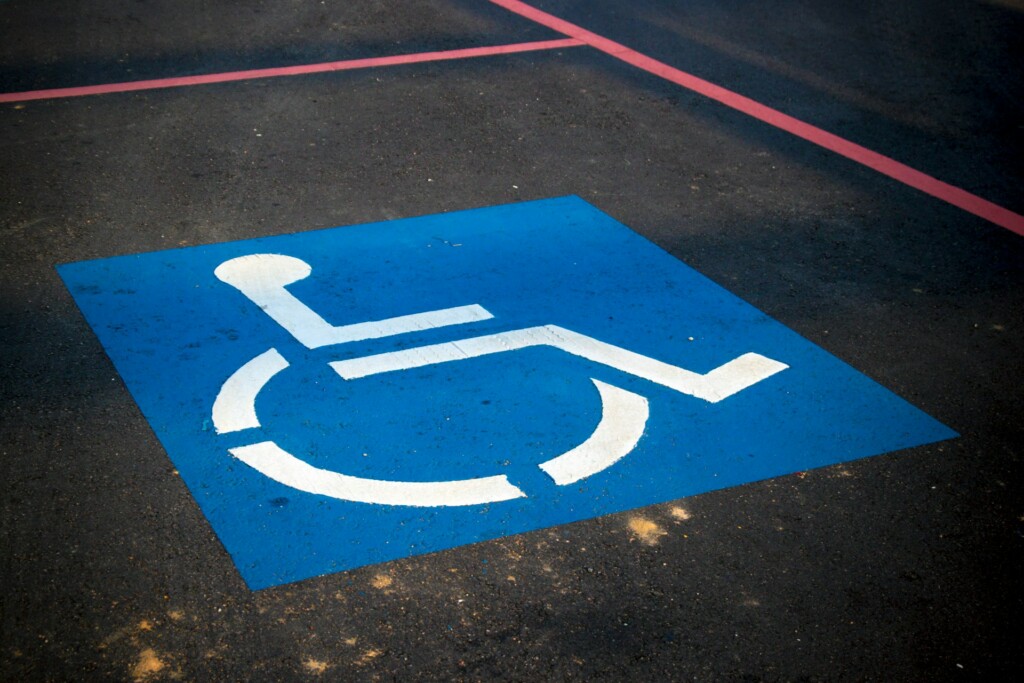
ADA Standards form the foundation for all commercial ramp projects in the United States. The Americans with Disabilities Act Standards for Accessible Design establish specific technical requirements for slope, width, landings, and safety features that we must follow on every commercial installation.
The International Building Code (IBC) works alongside the ADA Standards to govern structural and safety aspects of ramp construction. IBC requirements often determine foundation specifications, load calculations, and integration with existing building systems. ICC A117.1 provides the detailed technical standards that many jurisdictions reference for accessibility compliance.
Local building codes may impose stricter requirements than federal standards. We routinely encounter jurisdictions that mandate wider ramps, different handrail specifications, or additional safety features beyond the ADA minimums. Some California jurisdictions require compliance with Title 24 accessibility standards, which can exceed federal requirements in specific applications.
OSHA regulations apply when ramps provide worker access to elevated areas or serve as emergency egress routes. These standards affect handrail load requirements, surface slip resistance, and structural design factors that we incorporate into commercial installations serving industrial or warehouse facilities.
Permit requirements vary significantly by jurisdiction and project scope. Most commercial ramp installations require building permits, especially when they attach to existing structures or exceed certain dimensions. We prepare permit-ready drawings that include structural details, accessibility compliance documentation, and site-specific engineering calculations to streamline the approval process.
CAD support accelerates both design and permitting phases of commercial projects. We provide detailed technical drawings that show compliance with governing codes, integrate with existing site conditions, and demonstrate proper drainage and accessibility features. These drawings help building departments understand the project scope and reduce review times.
Installation turnaround depends on permit approval timing and material availability. With in-stock modular systems and pre-approved CAD packages, many commercial projects can move from design to installation within one to two weeks of permit approval. This rapid deployment minimizes business disruption while ensuring full code compliance.
What Are The Core Geometry Rules (Slope, Rise, Width, Landings)?
The fundamental dimensions of ADA-compliant ramps follow strict geometric requirements that govern safety and usability. These rules set limits for how steep a ramp can be, how far it can rise before requiring a landing, and how wide the clear path must remain.
Slope Requirements for Running and Cross Slopes
Running slope determines the steepness along the direction of travel and must not exceed 1:12 (8.33%). This ratio means that for every 12 inches of horizontal distance, the ramp may rise only 1 inch vertically.
Cross slope measures the sideways tilt perpendicular to the direction of travel and must not exceed 1:48. This helps prevent wheelchairs from drifting sideways and keeps the surface stable for all users.
Existing sites with space constraints may use steeper slopes in limited cases. A 1:10 slope is permitted only when the rise is 6 inches or less. A 1:8 slope is permitted only when the rise is 3 inches or less. These exceptions support retrofit projects where standard slopes are infeasible.
Rise Limits and Landing Requirements
Each ramp run may rise no more than 30 inches before a level landing is required. This limit reduces exertion and provides rest points on longer ramp systems.
We calculate the total rise as the vertical distance from the starting surface to the ending surface. Projects with rises exceeding 30 inches require multiple runs separated by intermediate landings.
The 30-inch limit applies to each individual run, not the entire ramp system. Multiple runs can be combined to handle greater total rise when properly separated by compliant landings.
Clear Width Standards for Commercial Access
The minimum clear width between handrails is 36 inches for ADA compliance. This provides sufficient space for standard wheelchairs while maintaining structural integrity.
Commercial projects often specify wider configurations to manage higher traffic volumes. We commonly install 48-inch clear widths in busy locations such as office buildings, shopping centers, and healthcare facilities.
The clear width excludes handrail projections and reflects the unobstructed path available for travel. Wider ramps improve traffic flow and accommodate larger mobility devices and assistive equipment.
Landing Geometry for Safe Direction Changes
Level landings are mandatory at the top and bottom of every ramp run. These platforms must be at least 60 inches long and at least as wide as the connecting ramp.
Turning landings require at least 60 by 60 inches of clear space. This accommodates wheelchairs making directional changes without encountering compound slopes or restricted maneuvering room.
Switchbacks and multi-run configurations rely on properly sized intermediate landings to maintain code compliance. We design these platforms to support the specific turning movements required by the site layout while providing adequate rest areas for users.
What Safety Features And Surface Requirements Are Mandatory?
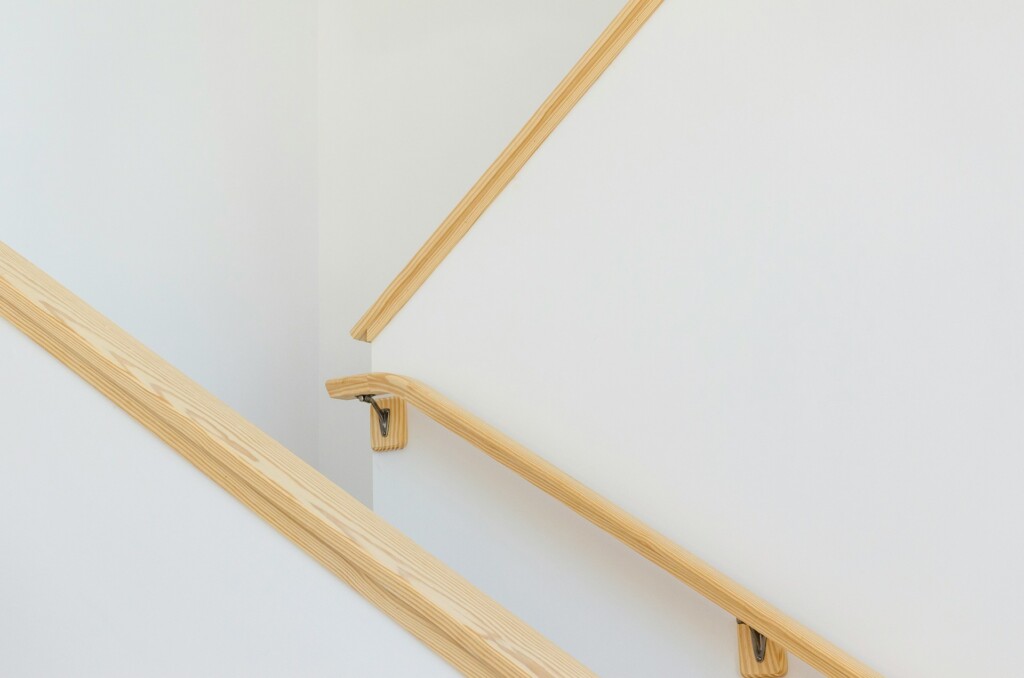
Handrails are required when a ramp run exceeds a 6-inch rise. They must be installed on both sides of the ramp and meet specific positioning requirements. The ADA Standards specify that handrail gripping surfaces must be mounted between 34 and 38 inches above the ramp surface. This height range ensures accessibility for users of varying abilities while maintaining code compliance.
Continuity is critical in handrail installation. Handrails must run continuously along the full length of each ramp run without interruption. Handrail extensions improve safety by projecting at least 12 inches horizontally beyond the top and bottom of each ramp run. These extensions provide users with additional support when transitioning on and off the ramp surface.
Edge Protection Requirements
Edge protection prevents wheelchair casters and mobility devices from slipping off ramp edges. We typically implement this protection through curbs at least 4 inches high; barriers that prevent the passage of a 4-inch-diameter sphere; or extended surfaces that project at least 12 inches beyond the handrail faces. These measures help keep users safely positioned on the ramp surface during travel.
Some installations may qualify for edge protection exceptions. Ramps with rises of 6 inches or less that include compliant side flares can omit edge protection. Similarly, ramp landings serving adjacent runs or stairways may not require full edge protection along connecting sides.
Surface and Drainage Standards
Surface materials must be firm, stable, and slip-resistant in all weather. We design ramp surfaces to shed water through proper slope management and drainage integration. Landing areas require particular attention to drainage because standing water creates safety hazards and code violations.
Cross slopes help direct water away from travel surfaces while maintaining accessibility. A maximum cross slope of 1:48 allows adequate drainage without creating steering difficulties for wheelchair users. Surface textures must provide slip resistance without creating rough conditions that impede smooth wheel movement.
Detectable Warning Applications
Truncated domes serve as detectable warnings in specific contexts defined by federal agencies. DOT standards require these tactile surfaces at public transportation facilities, including rail stations and bus terminals. DOJ requirements may apply to federally funded projects or government facilities. The domes must meet precise specifications for size, spacing, and visual contrast with surrounding surfaces.
Most commercial building projects do not require detectable warnings unless they involve public transit access or receive federal funding. We evaluate each project’s regulatory context to determine when these specialized surfaces are mandatory. Transit facilities require detectable warnings at curb ramps and platform edges to alert users with vision impairments to vehicular hazards.
Which Materials And System Options Work Best For Commercial Upgrades?
Aluminum construction dominates commercial access upgrades because it delivers unmatched durability without ongoing maintenance headaches. The material resists corrosion in all weather conditions, eliminating the warping and rot that plague wood installations. We build with commercial-grade aluminum systems that feature slip-resistant decking surfaces, ensuring safe passage even in rain or snow.
Standard commercial configurations include 48-inch and 54-inch ramp widths to accommodate different traffic volumes and accessibility requirements. The 48-inch option works well for most commercial entrances, while 54-inch systems handle higher-traffic facilities or locations where wider clearances improve ease of use. Multiple platform sizes integrate with these ramp widths, creating custom layouts that fit specific site conditions.
Modular Systems Provide Maximum Flexibility
We construct modular aluminum platforms that can be reconfigured as building needs change. These systems can be disassembled and relocated to different areas of a facility or moved entirely to new construction projects. This adaptability makes them cost-effective for both permanent installations and temporary access during construction or renovations.
The modular approach means we can expand existing systems by adding sections, platforms, or turns without rebuilding the entire structure. Property owners appreciate this flexibility when tenant spaces change or when phased construction requires different access points over time.
Portable Options Require Full Code Compliance
Portable ramp systems offer another material option, but they must meet identical ADA requirements for compliant access. We ensure portable installations include proper slope ratios, landing dimensions, and handrail specifications. The portability factor doesn’t exempt these systems from geometric rules or required safety features.
Temporary access installations using portable systems work well during building modifications or when testing different access configurations before permanent installation. However, we design these temporary solutions with the same attention to code compliance as permanent systems.
We provide complete CAD layouts for both modular and portable systems, ensuring proper fit and code compliance before fabrication begins. Our design packages support the permitting process for commercial buildings, modular facilities, and portable structures, streamlining approval timelines and reducing project delays.
Conclusion And Next Steps For A Compliant Commercial Access Upgrade

A successful commercial access upgrade requires methodical planning that prioritizes code compliance from the outset. We begin every project by confirming the applicable codes: ADA Standards, International Building Code (IBC) provisions, and local amendments that may impose stricter requirements. This foundation prevents costly revisions and ensures permit approval on the first submission.
The measurement and design phase follows a logical sequence. We measure the total rise to determine slope requirements and landing placement, then we specify compliant widths, handrails, edge protection, and slip-resistant surfaces with proper drainage. These specifications translate directly into permit-ready drawings that clearly demonstrate code compliance for reviewing authorities.
Modular aluminum systems accelerate permitting and installation timelines. These factory-engineered components arrive with CAD layouts that support permit applications, and their standardized configurations reduce field coordination time. We can typically quote projects within days and complete installation one to two weeks after permit approval when using modular systems.
For developers and property owners ready to move forward with accessible route upgrades, contact EB3 Construction to discuss your site-specific requirements and timeline.