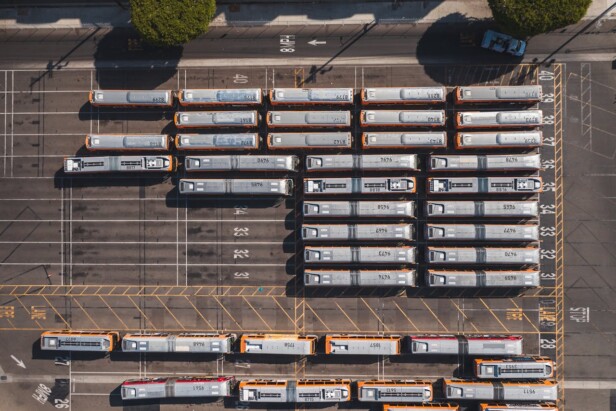
Bus terminals are moving beyond simple bus stops to become complex multi-level operations centers that store hundreds of vehicles, charge electric fleets, and connect directly to major tunnels. A bus terminal construction company specializes in planning and building these intricate transit assets that keep millions of commuters moving daily.
Current demand reflects a transportation revolution happening in real time. Sound Transit reported over 27 million boardings in 2024, marking a 30% year-over-year increase. Meanwhile, the Port Authority of New York and New Jersey has authorized $1.871 billion for a staging and storage facility that will function as an interim terminal before converting to store up to 350 buses with electric charging capabilities, all connected by a ramp structure directly to the Lincoln Tunnel.
What Scopes And Facilities Are Typically Delivered?
Staging And Storage Facilities
The 7-level steel-clad staging and storage facility represents the backbone of modern bus terminal construction. This structure serves dual functions during its operational life. Initially, it operates as an interim terminal, maintaining passenger service while the main terminal undergoes replacement. The facility accommodates up to 350 buses with integrated electric charging infrastructure to support fleet electrification initiatives.
Each level provides dedicated bus storage with vertical clearance designed for double-decker buses. The structure includes street-facing retail space at ground level, creating revenue opportunities while maintaining urban street activation. Climate-controlled environments protect buses from weather exposure and reduce maintenance costs over the fleet lifecycle.
Ramp Structure Systems
Direct tunnel connections eliminate surface street congestion through engineered ramp structures. These facilities feature wider lanes with increased vertical clearance to accommodate modern bus fleets, including articulated and double-decker vehicles. The ramp design incorporates a bypass lane that maintains traffic flow when buses experience mechanical issues or need extended loading times.
Ramp structures connect multiple facility levels to tunnel approaches, allowing buses to move between storage, staging, and operational areas without impacting city traffic. The design reduces vehicle miles traveled on local streets and decreases emissions in surrounding neighborhoods. Safety features include emergency vehicle access and integrated fire suppression systems.
Urban Deck-Over Construction
Deck-overs provide temporary construction staging space during facility replacement phases. The Dyer Avenue deck-overs span approximately 3.5 acres and support construction logistics, material storage, and equipment staging. These structures carry live loads for construction activities while maintaining traffic flow underneath.
Following construction completion, deck-overs convert to publicly accessible green space. The transformation includes soil installation, landscaping, walkways, and community amenities. This dual-use approach maximizes land value while providing long-term community benefits in dense urban environments.
Operations And Maintenance Facilities
Bus Operations and Maintenance Facilities (OMFs) span 12.5 acres and accommodate approximately 120 articulated and double-decker buses. The operations building covers 18,000 square feet and houses dispatch, driver facilities, parts storage, and administrative functions. Fleet management systems coordinate vehicle assignments, maintenance schedules, and operational efficiency metrics.
The 78,500-square-foot maintenance facility includes specialized bays for propulsion system service, electronics diagnostics, safety inspections, and tire maintenance. Each bay provides overhead lifting equipment, compressed air systems, waste oil collection, and parts distribution access. The facility design supports both diesel and electric bus technologies with appropriate charging and service infrastructure.
Integrated Support Systems
Multi-level employee parking structures serve operations staff, maintenance personnel, and administrative teams. Integrated fueling systems include diesel dispensing and electric charging stations positioned for efficient fleet circulation. Automated bus washing systems reduce labor costs and maintain fleet appearance standards.
Right-of-way improvements include new roadway connections, traffic signal coordination, and pedestrian safety enhancements. Site access roads handle increased bus and employee traffic while maintaining neighborhood compatibility. Utility upgrades support increased electrical demand, water consumption, and telecommunications requirements for modern transit operations.
How Do Phasing And Urban Constraints Shape Delivery?
Build in place while staying operational. The staging and storage facility functions as an interim terminal to keep passengers moving during demolition and new construction phases. This dual-purpose approach ensures continuous service while major reconstruction occurs on the same site.
Keep buses off city streets. The new ramp structure allows buses to change floors or access different gates without leaving the facility perimeter. This internal circulation pattern reduces the number of buses maneuvering through Manhattan’s congested street network during peak hours.
Use existing Port Authority property to avoid complications. The Midtown Bus Terminal program is planned entirely on property already owned by the Port Authority. This eliminates the need for private property takings or lengthy acquisition processes that could delay construction timelines.
Stage smart, then give back to the community. Deck-overs provide essential construction staging areas during active building phases. Once construction completes, these temporary structures convert to 3.5 acres of public green space on Dyer Avenue, adding long-term community value.
Lock scope early, manage cost risk systematically. Core and shell components receive authorization at a guaranteed maximum price to establish budget certainty. Remaining project components undergo competitive procurement later in the process to improve price certainty and allow market conditions to optimize costs.
Schedules drive project sequencing. New York work targets a fall 2025 construction start with fall 2028 completion for current authorized phases. The Bus Operations and Maintenance Facility follows a similar timeline with late 2025 construction start and substantial completion scheduled for 2027. These parallel schedules coordinate with environmental approvals and ensure both facilities support expanded transit operations when needed.
Which Features Improve Reliability, Safety, And Sustainability?
Direct tunnel access transforms bus terminal operations by eliminating surface street circulation between facilities and major transportation corridors. We construct dedicated ramp structures that connect buses directly to tunnel systems, reducing idle time on city streets and improving schedule reliability. This approach minimizes bus exposure to traffic congestion and weather delays while cutting local air emissions.
Wider lanes and enhanced vertical clearance accommodate modern fleet requirements, particularly double-decker buses that need additional headroom and maneuvering space. We design lane widths that exceed standard specifications to handle articulated buses and allow safe passing of stalled vehicles. Vertical clearance planning accounts for different bus heights and overhead infrastructure like charging equipment or signage systems.
Bypass lanes provide operational flexibility when buses experience mechanical issues or require extended dwell times. These dedicated lanes allow other buses to continue normal circulation without delays. We integrate bypass systems into overall traffic flow patterns to maintain service frequency and prevent cascading schedule disruptions across multiple routes.
Electric charging infrastructure within storage facilities supports midday charging cycles and fleet electrification goals. We install charging systems designed for high-capacity bus storage, accommodating up to 350 vehicles with dedicated power distribution and management systems. This infrastructure reduces emissions by enabling electric fleet operations and supports renewable energy integration through solar-powered depot designs.
Specialized maintenance bays streamline fleet turnaround through purpose-built spaces for different service functions. We construct bays sized for propulsion work, electronics diagnostics, inspections, and tire services. Integrated fueling and washing systems reduce vehicle movement between service points, cutting maintenance time and improving fleet availability.
Right-of-way improvements and new site access handle increased transit activity from growing ridership and service expansion. We upgrade approach roads, intersection geometry, and traffic signal timing to accommodate higher bus volumes. These improvements reduce conflicts with local traffic while maintaining safe pedestrian access to terminal facilities.
Green space conversion demonstrates long-term community value through deck-over structures that serve dual purposes. During construction, these areas provide staging and laydown space for materials and equipment. After project completion, we convert them to public green space, adding community amenities while managing stormwater runoff from terminal operations.
How Does EB3 Construction Deliver These Complex Programs?
We provide general contracting services that span the complete project lifecycle. Our pre-construction planning establishes feasibility, refines scope, and creates realistic budgets before construction begins. Our comprehensive project management ensures coordination between all trades and stakeholders throughout delivery.
Our delivery methods align with project requirements and client preferences. Design-bid-build offers competitive pricing through structured bidding when schedule permits. Design-build accelerates timelines by integrating design and construction under unified management. Construction management provides owner representation with guaranteed maximum price protection. Public-private partnerships combine public oversight with private sector efficiency for complex financing structures.
Self-Perform Capabilities Drive Project Control
We self-perform multiple scopes to maintain direct control over quality and schedule. Our earthwork teams handle excavation, grading, and site preparation for complex transit facilities. We perform concrete work including foundations, structural elements, and specialized transit-related installations.
Our structural steel erection capabilities support multi-level facilities and complex ramp structures. We handle electrical systems including power distribution, lighting, and electric bus charging infrastructure. Mechanical, plumbing, and HVAC work encompasses everything from basic building systems to specialized maintenance facility equipment.
Fire protection systems receive particular attention given the life safety requirements of transit facilities. Our integrated approach means fewer coordination issues between trades and faster resolution of field conditions.
Conception to Completion Integration
We work from initial concept through final occupancy. Our planning process identifies constructability issues early and recommends value engineering opportunities. Innovation focuses on practical solutions that improve operations while controlling costs.
Execution aligns with predetermined schedule milestones and budget targets. We maintain regular communication with all stakeholders and adjust resource allocation as conditions change. Our approach ensures that complex transit programs meet their operational deadlines while staying within approved budgets.
Conclusion And Next Steps
Modern bus terminal construction has evolved into a sophisticated discipline that balances operational complexity with urban constraints. We deliver multi-level staging facilities that function as interim terminals before converting to 350-bus storage hubs with integrated electric charging infrastructure. Direct tunnel ramp connections reduce street-level congestion while specialized maintenance facilities like the 12.5-acre Bus OMF support expanding BRT operations with dedicated bays for propulsion systems, electronics, and fleet turnaround.
The next phase of your transit program requires strategic decisions around phasing strategy, delivery method selection, and scope sequencing. Define how construction phases will maintain passenger and bus operations throughout the build process. Establish whether design-build, construction management, or public-private partnership delivery best fits your timeline and budget objectives. Most critically, sequence individual scopes so buses and passengers keep moving as new assets come online, ensuring seamless transitions from existing operations to enhanced terminal facilities.
Ready to plan your next bus terminal or operations facility? Contact EB3 Construction to discuss phasing strategies and delivery methods for your transit infrastructure program.