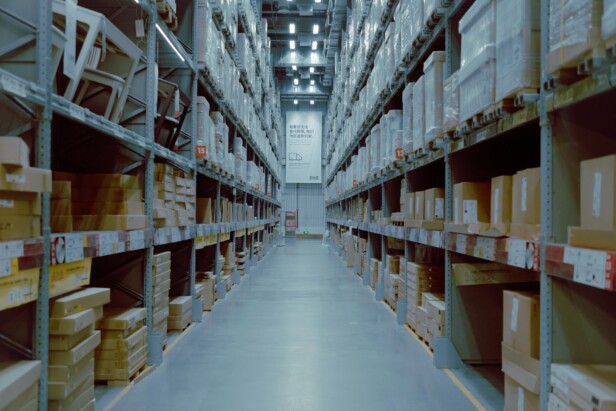
Dallas leads the nation in warehouse and distribution development, with Class A facilities driving the region’s industrial expansion. The DFW market commands the strongest demand nationwide, particularly along major logistics corridors where quality construction meets strategic location advantages.
Class A warehouse construction in Dallas represents a stable investment landscape for 2025–2026, supported by the region’s established subcontractor network and predictable budget planning processes. We anticipate moderate cost growth as the market balances labor pressures with material stabilization, creating opportunities for developers who understand these dynamics and plan accordingly.
What Does Class A Warehouse Construction Cost In Dallas?
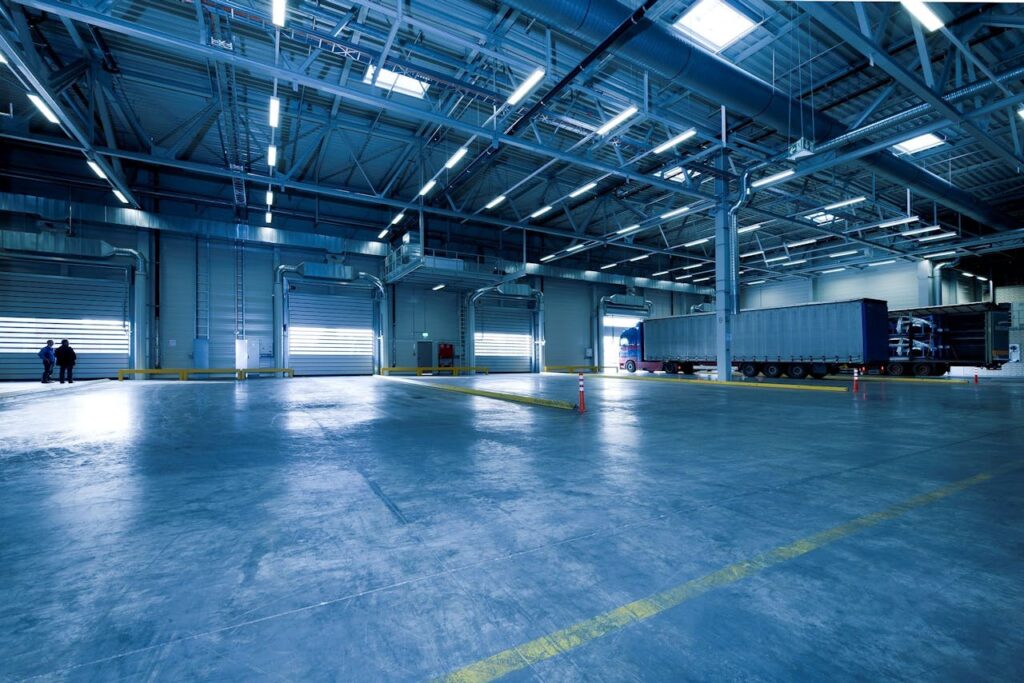
Industrial warehouse construction in Dallas typically ranges from $140 to $230 per square foot. This pricing positions warehouses as the most cost-efficient asset class in the Dallas commercial market. Other commercial construction types average roughly $190 to $340 per square foot depending on complexity and finish requirements.
The cost differential reflects the practical nature of warehouse construction. We focus on functional design rather than premium finishes or complex architectural features. This approach delivers maximum storage capacity while controlling construction budgets.
Primary Cost Drivers For Warehouse Construction
Tilt-wall construction represents the dominant structural approach for Dallas warehouses. This method involves casting concrete panels on-site and lifting them into vertical position. Tilt-wall costs typically range from $20 to $28 per square foot for the wall system alone.
Dock design significantly impacts total project costs through structural requirements and site coordination. The number of loading positions, dock leveler specifications, and truck circulation patterns influence both foundation design and site preparation expenses. We coordinate these elements early to avoid costly modifications during construction.
Slab thickness drives material costs and construction complexity. Standard warehouse slabs require 6 to 8 inches of concrete thickness for typical loading conditions. Heavy equipment or specialized racking systems may require 10-inch slabs, increasing concrete costs by approximately 25% over standard thickness specifications.
[[artifact_table]]Warehouse construction cost breakdown by building component[[/artifact_table]]
Cost Efficiency Compared To Other Asset Classes
Class A warehouses maintain their position as the most economical commercial construction option in Dallas. Office buildings average $190 to $320 per square foot, while medical facilities range from $270 to $430 per square foot. Retail construction typically costs $220 to $360 per square foot.
This cost advantage stems from simplified building systems and standardized construction methods. Warehouses require basic HVAC systems, minimal interior partitioning, and straightforward electrical distribution. We leverage these efficiencies to deliver projects within tight budget parameters while meeting operational requirements.
The efficiency advantage extends beyond initial construction costs. Warehouse buildings offer superior land utilization compared to other commercial types. Single-story layouts maximize usable square footage without the structural complexity and cost premiums associated with multi-story construction.
Which Local Cost Drivers Most Affect Class A Warehouse Builds?
The Dallas labor market continues to apply steady pressure on construction budgets. We see wage growth of 4–6% annually across skilled trades. Electricians, HVAC technicians, and concrete crews command premium rates in this competitive market. Labor shortages in specialized trades push hourly rates higher, particularly for projects requiring advanced coordination.
Material pricing has stabilized compared to the volatility of 2023, though costs remain elevated above pre-pandemic baselines. Steel framing and concrete prices have found equilibrium, but they sit 15–20% higher than 2019 levels. Early bulk procurement helps lock in pricing and avoid supply chain disruptions that can delay schedules.
Energy Code Compliance Drives System Upgrades
IECC 2021 implementation adds 1–3% to baseline construction costs through higher-performance HVAC and insulation requirements. We coordinate these upgrades during design to avoid retrofitting later. Enhanced thermal performance standards require thicker wall assemblies and more efficient mechanical systems.
High-performance HVAC systems demand larger equipment footprints and upgraded electrical service. Insulation requirements call for continuous exterior insulation, which affects wall thickness and structural coordination. These changes impact both material costs and installation labor.
Site Logistics Create Location-Based Cost Variations
Urban infill sites present logistical challenges that can increase project costs by 10–15%. Staging constraints limit material delivery windows and equipment access. Delivery coordination becomes more complex when working around existing traffic patterns and neighboring facilities.
Suburban sites typically offer more flexibility for material staging and equipment movement. Open access allows larger deliveries and reduces handling costs. However, distance from material suppliers can offset some savings through increased transportation expenses.
Design Features Shape Structural Requirements
Cross-dock layouts influence structural bay spacing and loading dock placement. These facilities require clear spans of 40–50 feet to accommodate truck maneuvering and material flow. Structural steel tonnage increases with longer spans, affecting both material and erection costs.
Efficient land use drives design decisions that impact construction budgets. Maximizing building coverage requires careful coordination of utilities, drainage, and fire access. Site work costs increase when optimizing every square foot of developable area.
How Can Delivery Methods And Preconstruction Planning Reduce Risk And Cost?

Design-build delivery transforms Class A warehouse projects by consolidating design and construction under one contract. This integrated approach reduces change orders by eliminating coordination conflicts between separate design and construction teams. Research shows design-build projects achieve schedule reduction of 8–12% compared to traditional bid methods.
Early contractor involvement forms the foundation of effective preconstruction planning. When we engage contractors during the design phase, we align budget expectations with constructability before finalizing drawings. This collaboration identifies potential issues while design changes remain cost-effective rather than expensive field modifications.
Establishing Reliable Cost Benchmarks
Accurate budgeting requires current market data from multiple sources. Updated RSMeans data provides national baseline costs, but we validate these numbers against local contractor estimates specific to Dallas market conditions. This dual-source approach accounts for regional labor rates, material availability, and subcontractor pricing that RSMeans may not fully capture.
Local contractor estimates reflect real-world costs for tilt-wall construction, dock installations, and site-specific factors like soil conditions or utility connections. We combine this local intelligence with RSMeans benchmarks to establish realistic project budgets that withstand market scrutiny.
Planning For Market Inflation
Construction costs continue rising despite material price stabilization. We plan for inflation with a 5–7% contingency that covers wage growth, material escalation, and unforeseen conditions. This contingency proves particularly important for Class A warehouses where finish standards and mechanical systems exceed basic industrial buildings.
The contingency also accounts for schedule-driven cost increases. When projects extend beyond planned duration due to permitting delays or weather, labor and material costs often rise beyond original estimates. A properly sized contingency protects project feasibility when these extensions occur.
Evaluating Lifecycle Costs
Initial construction cost represents only part of total project economics. We evaluate lifecycle costs including energy performance, maintenance requirements, and operational efficiency over the building’s useful life. IECC 2021 compliance adds upfront costs but delivers long-term savings through reduced energy consumption.
Design decisions during preconstruction affect operational costs for decades. Higher-performance HVAC systems cost more initially but reduce monthly utility expenses and improve tenant satisfaction. Quality dock equipment requires greater capital investment but minimizes maintenance downtime that disrupts distribution operations.
Where Is Demand Strongest In DFW, And How Does It Shape Class A Warehouse Design Choices?
DFW leads the nation in warehouse and distribution development, particularly along strategic transportation corridors. The I-20 and I-35 East corridors generate the highest activity levels, driven by proximity to DFW Airport and major highway intersections. These locations offer unmatched access to regional and national shipping routes.
Market data shows concentrated demand in South Dallas along I-20, where major logistics companies establish distribution hubs. The I-35 East corridor attracts e-commerce fulfillment centers seeking rapid access to population centers. Alliance Texas near I-35 West continues expanding its inland port operations, creating sustained demand for large-scale facilities.
How Location Drives Design Decisions
Developers respond to this demand with specific design strategies that maximize operational efficiency. Tilt-wall construction dominates new projects because it provides structural strength at lower cost per square foot. This method reduces construction time and material waste while supporting heavy warehouse loads.
Cross-dock facilities represent the preferred layout in high-demand corridors. These designs eliminate intermediate storage by moving goods directly from incoming to outgoing trucks. We see developers designing facilities with 50-100 dock doors to accommodate this flow, compared to 20-30 doors in traditional warehouse layouts.
Site Logistics Shape Construction Budgets
Site access requirements influence both design and construction costs significantly. Projects along I-20 and I-35 corridors must accommodate 53-foot trailers, requiring wider turning radii and deeper staging areas. We typically allocate 40-50% of total site area for truck circulation and parking, compared to 30% in less intensive locations.
Delivery route planning affects dock placement and building orientation. Facilities serving last-mile delivery networks position docks facing residential areas to reduce travel distances. Distribution centers supporting regional shipping orient docks toward highway access points. These decisions impact utility runs, fire lane requirements, and overall site development costs.
Land efficiency becomes critical in high-demand areas where developable sites command premium prices. Developers maximize rental yield by designing buildings with 60-70% land coverage ratios. This approach reduces per-square-foot land costs while maintaining required truck circulation space.
Conclusion and Next Steps

Class A warehouse construction in Dallas operates within a predictable cost framework of $140–$230 per square foot for 2025–2026. These numbers reflect the DFW industrial market’s stability and competitive advantages. We track moderate cost growth driven by sustained labor demand, IECC 2021 compliance requirements, and evolving site logistics across urban and suburban locations.
Smart execution centers on three critical areas: delivery method optimization, proactive procurement, and contingency planning. Design-build delivery offers the clearest path to schedule compression and change order reduction. Early procurement helps lock material pricing before market fluctuations impact budgets. A 5–7% contingency provides necessary cushion for scope adjustments and unforeseen conditions. RSMeans data and local contractor estimates validate these assumptions while supporting accurate preconstruction planning throughout the DFW industrial market.
Ready to move forward with your Class A warehouse project? Contact EB3 to discuss how our design-build approach aligns with your development timeline and budget targets.