Each year, approximately 22 million workers face potentially damaging noise exposure on the job, with construction sites ranking among the loudest environments. When decibel levels climb above safe thresholds, permanent hearing damage occurs that no surgery or medicine can reverse.
Construction noise standards establish critical exposure limits to protect workers and surrounding communities from harmful sound levels. These regulations define when protective measures must activate, how noise should be measured, and what controls reduce dangerous exposure across construction operations.”
How Do Community Noise Standards Affect Projects (HUD)?

HUD’s noise standards under 24 CFR Part 51, Subpart B establish requirements that affect construction projects receiving federal housing assistance or review. Unlike occupational noise limits focused on worker protection, these community standards address environmental noise exposure for residents and noise-sensitive land uses.
Sites with day-night average sound level (DNL) above 65 dB are classified as noise-impacted areas. The DNL measurement accounts for increased sensitivity to noise during nighttime hours by adding 10 decibels to sound levels between 10 p.m. and 7 a.m., then averaging over 24 hours.
Site Acceptability Categories
HUD divides noise exposure into three distinct zones. The Acceptable zone includes sites at or below 65 dB DNL, requiring no special approvals or mitigation measures. These locations meet HUD’s standard threshold for residential development without additional noise control features.
The Normally Unacceptable zone covers sites between 66 and 75 dB DNL. New construction in this range triggers mandatory attenuation requirements and environmental review processes. Projects must achieve interior noise levels of 45 dB through building design and construction methods.
Sites exceeding 75 dB DNL fall into the Unacceptable category. These locations require approval from the Assistant Secretary for Community Planning and Development or the Certifying Officer for projects under 24 CFR Part 58. An environmental impact statement is typically required, and HUD strongly encourages converting these sites to land uses compatible with high noise levels.
Attenuation Requirements For New Construction
Projects in the Normally Unacceptable zone must incorporate specific noise reduction measures. Sites with DNL between 65 and 70 dB require at least 5 dB of additional sound attenuation beyond typical construction. When DNL exceeds 70 dB but remains below 75 dB, projects need a minimum of 10 dB additional attenuation.
These requirements focus on achieving the interior standard of 45 dB DNL. We coordinate building envelope design, window specifications, and ventilation systems to meet these performance targets while maintaining construction feasibility and cost effectiveness.
Environmental Review And Screening Requirements
During project review, we screen for potential noise sources within specific distances. Major roadways within 1,000 feet of the project site require noise assessment. Railroad lines within 3,000 feet and military or FAA-regulated airfields within 15 miles also trigger review requirements.
Projects in Normally Unacceptable zones require Special Environmental Clearance, while those in largely undeveloped areas may need an environmental impact statement. HUD defines largely undeveloped as areas where less than 50 percent of land within a 2-mile radius is developed for urban uses with available infrastructure.
Planning And Documentation Tools
HUD provides several web-based tools to support noise assessment and mitigation planning. The Day/Night Noise Level Electronic Assessment Tool (DNL Calculator) calculates site exposure from road and railway traffic, incorporating airport projections and impulsive sound effects.
The Barrier Performance Module evaluates noise reduction potential of specific barrier designs and links directly with DNL Calculator results. We use these tools during feasibility studies to determine construction requirements and document compliance with HUD standards before submitting projects for environmental review.
How Should Teams Measure Construction Noise Exposure?
Construction teams have several measurement tools at their disposal to assess noise exposure levels accurately. Sound level meters provide instantaneous readings of noise intensity at specific moments, while personal noise dosimeters track and integrate sound levels over time periods like an 8-hour workday. For more detailed analysis, octave band analyzers can break down noise into frequency components to better understand exposure patterns.
The NIOSH Sound Level Meter App offers a convenient screening tool for iOS devices when quick assessments are needed. This mobile application provides a practical way to identify potential problem areas before conducting formal monitoring with calibrated equipment.
Measurement Configuration And Accuracy
We configure all measurement devices to capture A-weighted decibels (dBA) with slow response settings. A-weighting filters sound frequencies to match how the human ear perceives loudness, making it the standard for occupational noise assessment. The slow response setting averages sound level fluctuations over approximately one second, providing more stable readings than fast response modes.
Measurement accuracy becomes critical for compliance documentation. Cal/OSHA specifies that noise measurement instruments should maintain accuracy within ±2 dBA to ensure reliable results. Regular calibration according to manufacturer specifications helps maintain this precision throughout the measurement campaign.
Practical Screening Methods
Simple communication tests can flag potentially hazardous noise levels before formal measurement begins. When workers need to shout to communicate at 3 feet apart, sound levels likely exceed 85 dBA. If someone must raise their voice to speak with a coworker standing nearby, exposure probably surpasses 90 dBA.
These practical indicators help us prioritize which work areas and tasks require immediate attention during noise surveys. They also provide ongoing awareness for crew members about when noise levels may be reaching concerning thresholds.
Strategic Monitoring Planning
Effective noise measurement requires careful planning of what, when, and where to monitor. We identify tasks with the highest noise potential, determine which workers spend the most time near loud equipment, and calculate exposure durations for different activities. Task-based monitoring becomes especially important since common carpentry tools can generate anywhere from 75 to 115 dBA depending on the specific equipment and work conditions.
Personal exposure monitoring using dosimeters attached to individual workers provides the most accurate assessment of actual exposure levels. This approach accounts for worker mobility, varying distances from noise sources, and the cumulative effect of multiple noise exposures throughout the workday.
What Controls And Hearing Conservation Steps Reduce Risk?
We control noise hazards using a priority-based approach that addresses the source first, then the path, and finally protects the worker. This hierarchy ensures we implement the most effective solutions while maintaining operational efficiency and regulatory compliance.
The key to successful noise management lies in understanding that engineering controls provide permanent solutions, administrative controls offer flexible management options, and personal protective equipment serves as the final defense layer. We coordinate these approaches based on site conditions, project schedules, and exposure levels.
Engineering Controls Target The Source
Engineering controls eliminate or reduce noise at its origin. We specify quieter equipment during project planning, selecting tools and machinery that operate below critical thresholds. Low-noise alternatives exist for most construction operations, from hydraulic systems that replace pneumatic tools to electric equipment that reduces diesel engine noise.
Equipment maintenance directly impacts noise levels. We establish lubrication schedules for bearings, replace worn parts that create vibration, and ensure proper tool operation. A well-maintained piece of equipment typically operates 3-5 dBA quieter than neglected machinery, which can mean the difference between compliance and violation.
Sound barriers and enclosures interrupt the noise transmission path. We install temporary barriers between noise sources and workers, use sound curtains around loud operations, and create enclosures for stationary equipment. Doubling the distance from a noise source reduces exposure by approximately 6 dBA in open areas, making strategic equipment placement a simple but effective control.
Administrative Controls Manage Exposure Time
Administrative controls limit worker exposure through scheduling and work organization. We schedule the noisiest operations during shifts when fewer workers are present, reducing the total number of people exposed to hazardous levels. This approach works particularly well for concrete pours, demolition work, and equipment maintenance.
Task rotation prevents prolonged exposure by moving workers between high-noise and quieter activities throughout the shift. We track exposure times to ensure no individual exceeds daily limits, using time-weighted averages to calculate cumulative exposure. Creating designated quiet areas gives workers relief during breaks and helps prevent hearing fatigue.
Distance management uses the natural attenuation properties of sound. We establish minimum distances between workers and noise sources, relocate break areas away from equipment, and coordinate multiple loud operations to avoid simultaneous exposure. These controls require minimal investment but demand consistent enforcement.
Hearing Protection Devices Provide Personal Defense
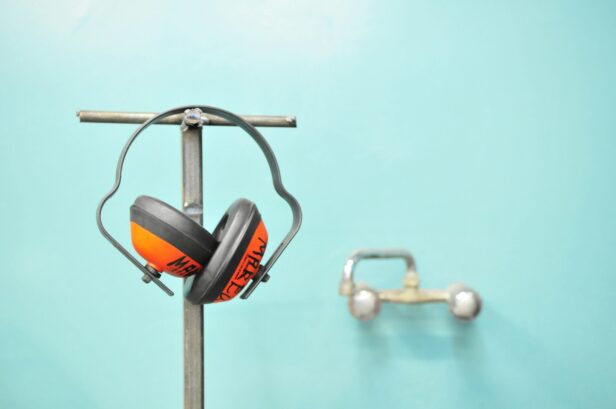
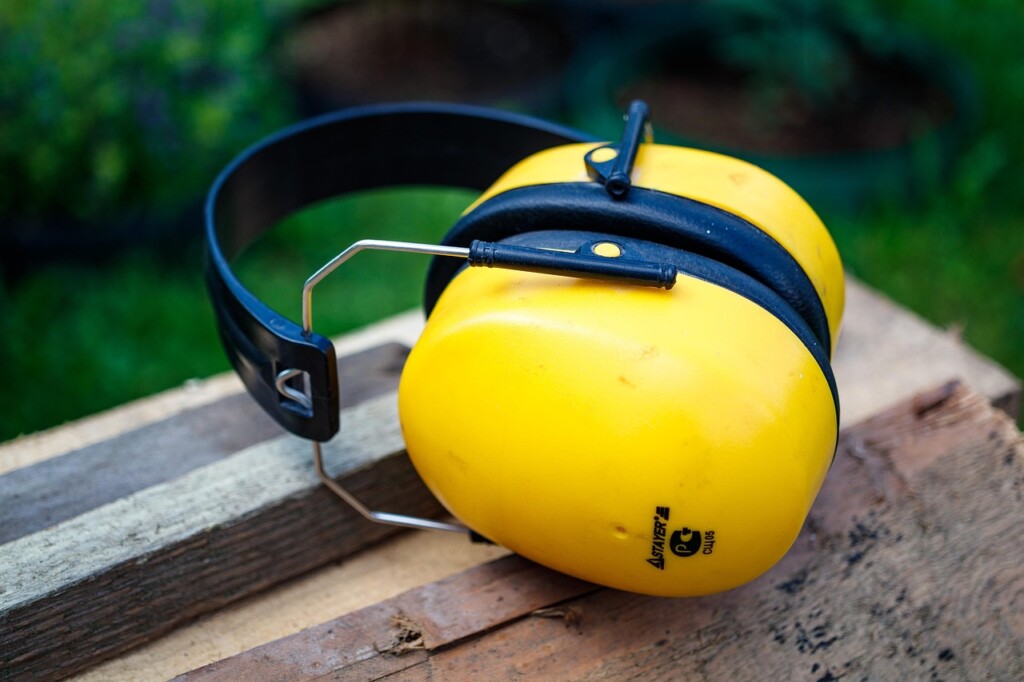
When engineering and administrative controls cannot reduce exposure below 90 dBA TWA in construction, we provide hearing protection devices. Earmuffs offer consistent protection and remain visible for compliance monitoring, while earplugs provide comfort during extended wear and compatibility with hard hats.
Proper selection depends on the noise environment and individual worker needs. We follow Noise Reduction Rating (NRR) guidelines, accounting for real-world attenuation factors recommended by OSHA. Training covers insertion techniques for earplugs, adjustment procedures for earmuffs, and inspection protocols to identify damaged devices.
We establish fit-testing programs to verify actual protection levels, especially for workers with unusual ear canal shapes or those requiring custom protection. Regular replacement schedules ensure devices maintain their protective capabilities, and we provide multiple options to accommodate individual preferences and specific job requirements.
Comprehensive Hearing Conservation Programs
An effective hearing conservation program integrates all control measures into a coordinated system. When construction exposures exceed 90 dBA TWA, we implement programs that include exposure monitoring, audiometric testing, hearing protection, worker training, and medical surveillance for standard threshold shifts.
Exposure monitoring documents actual noise levels and identifies workers requiring program enrollment. We conduct baseline and annual audiometric testing to detect early signs of hearing loss, with qualified professionals performing examinations according to OSHA standards. Follow-up procedures address any standard threshold shift findings through additional protection or medical referral.
Training programs educate workers about noise hazards, proper use of controls, and hearing protection techniques. We cover the effects of noise on hearing, demonstrate correct equipment use, and explain audiometric testing procedures. Record-keeping maintains documentation of all program elements for regulatory compliance and program evaluation.
ANSI/ASSP A10.46-2020 provides additional guidance for construction workers with potential exposures at or above 85 dBA, offering best practices that exceed minimum OSHA requirements. We incorporate these recommendations into our comprehensive approach to hearing preservation and regulatory compliance.
Conclusion And Next Steps

Navigating construction noise standards requires understanding multiple regulatory frameworks that intersect on jobsites. In construction, OSHA triggers enforcement actions at a 90 dBA 8-hour time-weighted average, while NIOSH recommends the more protective 85 dBA threshold. Cal/OSHA defines maximum daily durations by decibel level, creating clear exposure limits that range from 8 hours at 90 dBA down to just 15 minutes at 115 dBA. For HUD-covered projects, we assess site acceptability using day-night average sound levels (DNL) and plan attenuation measures accordingly.
Moving forward, we systematically map noisy tasks and identify nearby receptors who might be affected by construction activities. We measure exposure with calibrated sound level meters and dosimeters to capture accurate data across different work phases. Engineering controls take priority through equipment selection and noise barriers, followed by administrative measures like task rotation and scheduling adjustments. When exposure limits still exceed thresholds, we provide properly fitted hearing protection devices and conduct regular fit-testing. A documented hearing conservation program becomes essential when construction exposures exceed 90 dBA TWA, including baseline audiograms, annual testing, and threshold shift monitoring.
Ready to develop a comprehensive noise management strategy for your next construction project? Contact EB3 to ensure your team meets all regulatory requirements while protecting worker hearing.