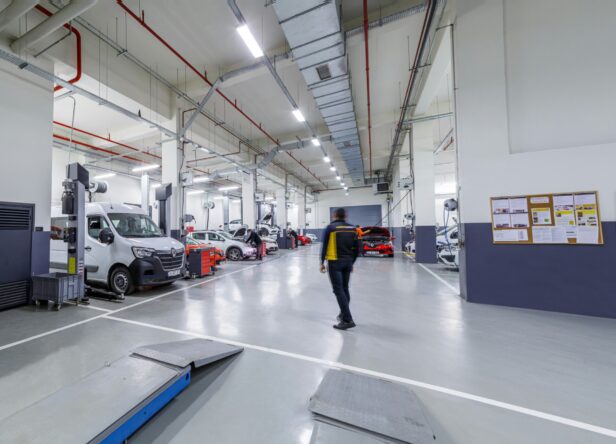
Texas collision centers require specialized facilities that support high-volume automotive repair operations. Recent projects across the state highlight two approaches. One is a two-building site featuring a two-story, 32,250-square-foot collision center paired with a 15,184-square-foot retail building. The other is an 18,000-square-foot metal building collision center in the Katy area equipped with a dedicated paint booth.
A design-build firm for collision centers across Texas provides integrated project teams that bring architectural design, engineering, and construction under one contract to accelerate delivery while maintaining cost control. These facilities typically support collision repair, paint matching, frame repair, dent and scratch repair, hail damage repair, mechanical work, detailing, insurance claim assistance, and rental car coordination. They also feature modern exteriors with accessible parking and large garage bays.
How Does The Design-Build Process Streamline A Collision Center Project?

Design-build combines architectural and construction services under a single contract. This single-entity delivery method closes the gap between design and construction by having one team handle both responsibilities.
The process begins with a Request for Proposal (RFP) that sets clear project parameters. The RFP defines scope boundaries, schedule expectations, durability requirements, and critical operational considerations for the collision center.
Early Development and Planning
Teams develop schematic plans that map out the collision center’s layout and function. These preliminary designs show service bay placement, customer flow, and equipment locations while addressing operational needs specific to automotive repair.
Outline specifications address all major building systems. Architectural specifications detail exterior materials and interior finishes. Structural specifications cover load requirements for heavy equipment and vehicle lifts.
Mechanical, plumbing, and electrical specifications define requirements for compressed air systems, ventilation for paint booths, and high-voltage power for specialized equipment. Security considerations include access control and surveillance systems to protect vehicles and equipment.
Cost and Schedule Evaluation
Cost and schedule options are evaluated early in the design process. This concurrent approach allows teams to identify potential issues and adjust designs before construction begins. Value engineering occurs alongside design development, creating opportunities to optimize both cost and performance.
Schedule evaluation considers the overlap between design completion and the start of construction. Teams can begin site work and foundation preparation while finalizing interior specifications and equipment selections.
Final Documentation and Delivery
Final plans and specifications provide complete construction documents. These detailed drawings include equipment layouts, utility connections, and quality assurance standards that support efficient construction. Construction cost estimates accompany the final plans to confirm budget alignment.
Operation and maintenance manuals support smooth project turnover. These O&M documents detail equipment specifications, maintenance schedules, and operational procedures. This documentation helps facility managers achieve day-one performance and long-term operational success.
What Program And Technical Features Should A Collision Center Include?
A collision center’s program must support its full operational range. The foundation lies in properly sized and configured service areas that allow each function to operate efficiently while maintaining clear workflow patterns.
Core Service Areas
Collision repair bays form the primary production space where bodywork and structural repairs occur. These areas require sufficient ceiling height, electrical capacity for welding equipment, and floor drains connected to oil-water separators. Frame repair space typically needs access for specialized equipment and reinforced floor systems to handle heavy pulling equipment.
Paint matching and refinishing zones require controlled environments separate from general repair areas. The paint booth itself needs a downdraft ventilation system that meets environmental regulations and proper exhaust routing to exterior spaces. Paint preparation areas adjacent to the booth minimize vehicle movement and maintain workflow efficiency.
Mechanical service bays accommodate drivetrain work, suspension repairs, and diagnostic equipment. These spaces need lifts, compressed air systems, and adequate clearance for larger vehicles. Dent and scratch repair areas can operate with lower ceiling heights but require good lighting and dust control systems.
Hail damage work often requires separate space due to volume and specialized repair techniques. We typically plan these areas with flexible configurations that can expand during peak seasons. Detailing areas need water access, drainage systems, and ventilation to handle chemical vapors from cleaning products.
Customer and Administrative Support
Customer reception areas serve as the primary interface with vehicle owners and insurance representatives. These spaces require comfortable waiting areas, private consultation rooms, and sightlines to service operations without compromising security or safety.
Insurance claim assistance spaces provide dedicated areas for adjusters and estimators to work with customers and document damage. Rental car coordination areas facilitate vehicle handoffs and typically connect to parking areas designed for easy customer access.
Technical Infrastructure Requirements
Architectural criteria address building materials, ceiling heights, and thermal performance suitable for collision repair operations. Industrial-grade finishes resist chemical exposure and facilitate cleaning. Clear spans in repair areas eliminate structural obstructions that interfere with equipment placement.
Structural criteria include floor loading for heavy equipment, foundation designs for anchored machinery, and building systems that support overhead cranes where needed. In Texas, lateral design focuses on wind loading rather than earthquake forces.
MEP systems encompass mechanical ventilation for paint operations, electrical capacity for welding and diagnostic equipment, and plumbing for wash bays and parts cleaning. Compressed air distribution throughout repair areas supports pneumatic tools and equipment operation.
Security systems protect inventory, customer vehicles, and equipment. These include perimeter fencing, controlled access points, surveillance coverage, and alarm systems that integrate with local monitoring services.
Site and Exterior Features
Large garage bays accommodate current vehicle sizes while allowing efficient traffic flow. Standard bay dimensions typically measure 12 to 16 feet wide with 14-foot minimum ceiling heights. Drive-through configurations eliminate backing maneuvers that slow operations.
Clear customer entries provide obvious pathways from parking areas to reception spaces. Covered drop-off areas protect customers during vehicle handoffs regardless of weather conditions. Accessible parking meets ADA requirements while maintaining convenient proximity to building entrances.
Exterior design elements seen in Texas facilities include modern facades that project professional capability, extensive glazing for natural light in office areas, and industrial materials suited to the operational environment. These features balance functional requirements with market positioning to attract quality customers and skilled technicians.
How Do Site Planning And Scale Vary Across Texas Locations?

Texas collision center projects demonstrate how acreage planning adapts to different market conditions and operational requirements. The Little Elm facility along U.S. Highway 380 occupies just over six acres and supports a dual-building approach with a two-story, 32,250-square-foot collision center paired with a 15,184-square-foot retail building. This adjacent retail strategy creates additional revenue opportunities while maximizing the site’s commercial potential.
The Katy-area project takes a more compact approach, using an 18,000-square-foot metal building that houses collision services, including a dedicated paint booth. This single-building format reduces construction costs while maintaining operational efficiency. Metal building systems provide clear-span spaces that accommodate large vehicle movements and equipment placement without structural interference.
Service Bay Frontage and Customer Access
Service bay frontage varies significantly between the two project scales. The Little Elm two-story format allows for stacked operations with ground-floor service bays and upper-level administrative or specialty functions. Large garage bays face the primary access routes to streamline vehicle flow from arrival to completion.
The Katy-area metal building emphasizes a horizontal layout with service bays arranged along the building’s length. This configuration provides direct access to each work area while maintaining separation between customer zones and active repair operations. Wide service bay openings accommodate larger vehicles and equipment movement.
Parking Layout Considerations
Parking layouts reflect the operational needs of each facility’s size. The Little Elm site’s six-acre footprint allows for generous parking, with accessible spaces positioned near customer entry points. Wide aprons between parking rows accommodate vehicle movement for customers dropping off damaged cars or retrieving completed repairs.
The more compact Katy-area facility requires efficient parking design that maximizes space while maintaining accessibility compliance. Angled parking configurations can increase capacity while providing easier maneuvering for customers unfamiliar with collision center operations. Strategic placement of accessible parking supports compliance and customer convenience.
What Documentation And QA Steps Support Code And Operations?
Early scope development establishes the foundation for collision center projects by addressing factors that affect construction quality and long-term operations. We evaluate site conditions through assessments that examine drainage patterns, soil stability, utility access, and traffic flow requirements specific to automotive facilities. This initial analysis guides decisions about site layout, building placement, and infrastructure needs that directly influence construction feasibility.
Functional and architectural criteria define how spaces support collision repair operations and meet customer expectations. We establish clear requirements for service bay configurations, workflow between repair zones, and customer-facing areas that support insurance claims and vehicle pickup. Architectural standards address operational efficiency and visual appeal, ensuring facilities project professionalism while supporting complex automotive repair processes.
Structural and MEP requirements receive particular attention during scope development because collision centers demand specialized systems. Structural loads must accommodate heavy vehicle lifts, paint booth equipment, and compressed air systems. We define electrical specifications for high-capacity shop equipment, ventilation for paint operations, and plumbing that handles automotive fluids and wash operations. HVAC design addresses worker comfort and process needs for paint curing and dust control.
Quality assurance standards guide construction from the earliest phases. We establish inspection protocols for critical systems such as paint booth installation, electrical safety compliance, and environmental controls. Construction processes are simplified where possible without compromising performance, reducing complexity while maintaining the specialized requirements collision centers demand. These standards ensure systems perform reliably from day one.
Final plans and specifications are the culmination of design development, incorporating operational requirements, code compliance measures, and quality standards. We complete detailed construction documents that address specialized collision center needs, from paint booth specifications to customer flow patterns. The final construction cost estimate reflects these refined specifications, providing accurate budget projections for owners and keeping construction within established financial parameters.
Turnover materials bridge the gap between construction completion and operational readiness. Operations and maintenance manuals detail system functions, maintenance schedules, and troubleshooting procedures specific to collision center equipment. We develop procedures that support immediate facility operation, covering everything from paint booth startup sequences to customer management protocols. These materials enable facility teams to maintain optimal performance and address operational challenges efficiently from day one.
Conclusion And Next Steps For Texas Collision Center Delivery
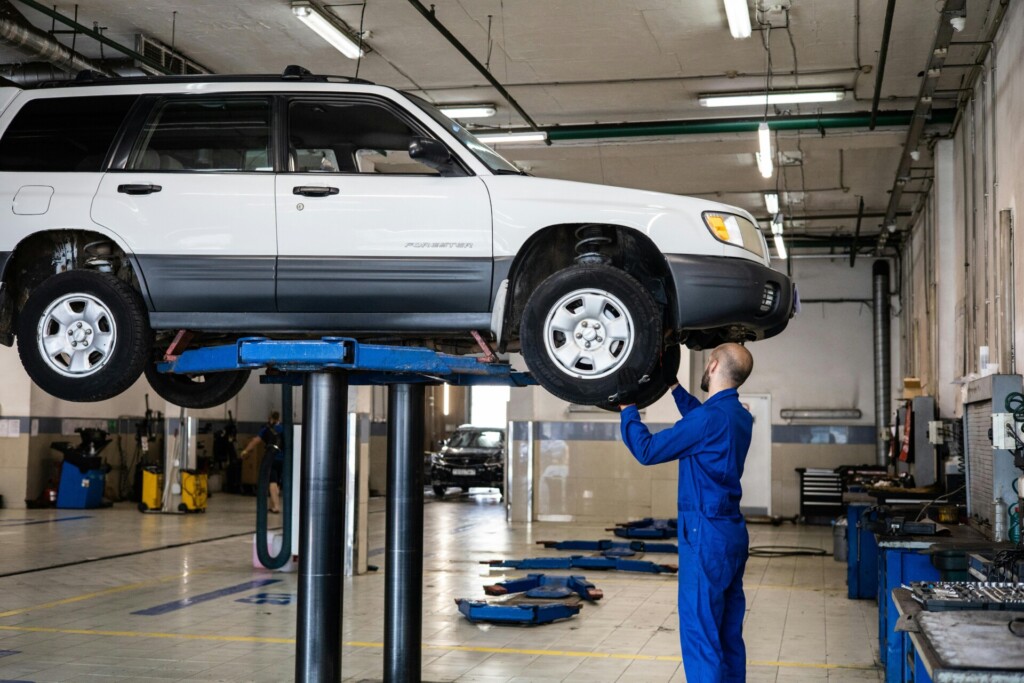
Design-build collision centers across Texas show how integrated delivery aligns design decisions with construction realities while controlling cost and schedule. Projects across the state range from expansive multi-acre developments with 32,250-square-foot, two-story facilities to efficient 18,000-square-foot metal buildings equipped with paint booths. This range shows how the design-build approach adapts to different scales and operational requirements while maintaining the core advantage of single-entity accountability.
Planning a Texas collision center requires clear program development and structured procurement. Start by defining the scope and performance requirements that address your specific operational needs, site constraints, and market positioning. Issue a comprehensive RFP that includes technical specifications, schedule expectations, and quality standards. During the proposal phase, teams develop schematic design solutions alongside outline specifications that cover architectural, structural, and MEP systems. Cost and schedule modeling occur simultaneously, creating integrated delivery plans that support construction feasibility and operational readiness. Final plans, construction cost estimates, and operations and maintenance documentation complete the foundation for a reliable facility opening that meets day-one performance standards.
Ready to explore design-build delivery for your Texas collision center project? Contact EB3 Construction to discuss your specific requirements and site conditions.