Garland sits at the center of one of America’s busiest logistics corridors, where the DFW metroplex handles billions of dollars in freight annually. As businesses race to meet growing distribution demands, a warehouse contractor in Garland, TX becomes essential for planning and building the industrial facilities that keep goods moving.
We design and construct industrial warehouses, distribution centers, and related facilities that serve the unique demands of this market. Our role spans design-build coordination, general construction execution, and specialized systems like electrical, plumbing, and climate control that make these facilities operational.
Which Delivery Methods And Services Should You Expect From EB3 Construction?

We deliver warehouse projects through three primary methods that give developers flexibility in project approach. Design-build consolidates both design and construction under a single contract, allowing us to streamline decision-making and compress schedules. General construction positions us as the primary contractor working with your selected design team to execute completed plans. Construction management places us as your representative, overseeing trade contractors while you maintain direct contractual relationships.
Design-Build Project Delivery
Design-build creates a unified team where we coordinate architects, engineers, and construction crews from project start. This approach reduces communication gaps between design and construction phases while enabling early material procurement and site preparation. We can begin foundation work while upper-level building details are still being refined, significantly compressing overall project timelines.
The integrated structure provides single-point accountability for both design quality and construction performance. When design questions arise during construction, we resolve them internally rather than coordinating between separate teams. This streamlined communication pathway reduces costly delays and change orders that often plague traditional project delivery.
Construction Management Services
Our construction management approach positions us as your project advocate throughout the building process. We coordinate multiple trade contractors, manage schedules, and monitor quality standards while you retain control over contractor selection and major project decisions. This method provides cost transparency since trade contractors hold direct agreements with you.
We implement critical path scheduling to track interdependencies and prevent delays before they impact your timeline. Regular coordination meetings keep all trades aligned while our site supervision ensures workmanship meets specified standards. This oversight becomes particularly valuable in warehouse construction where mechanical systems, loading dock configuration, and storage layouts must integrate seamlessly.
Preconstruction Planning And Value Engineering
Our preconstruction services begin with comprehensive project planning and budgeting that establishes realistic cost and schedule parameters. We conduct constructability reviews during design development to identify potential challenges before they become expensive field problems. Site evaluation includes geotechnical analysis, utility coordination, and permitting strategy to prevent surprises during construction.
Value engineering focuses on optimizing building performance while controlling costs. We evaluate structural systems, building envelope options, and mechanical solutions to find the most cost-effective approach for your specific operational requirements. This analysis considers long-term operating costs alongside initial construction investment to maximize your facility’s lifecycle value.
Construction Execution And Quality Control
During construction, we coordinate daily work activities across all trades while maintaining rigorous quality control standards. Our site supervisors conduct regular inspections and material testing to ensure every component meets specified requirements. Safety protocols receive constant attention, with daily briefings and ongoing training that creates a culture where every team member takes responsibility for workplace conditions.
We track progress against established milestones and adjust resources as needed to maintain momentum. Digital project management systems provide real-time visibility into schedule progress, budget performance, and potential issues. This transparency allows for quick decision-making when field conditions require plan adjustments or material substitutions.
Comprehensive Construction Services
We handle ground-up construction from site preparation through final commissioning. Foundation work includes concrete slabs designed for heavy equipment loads and proper drainage systems. Structural framing accommodates clear-span requirements for warehouse operations while meeting local building codes and seismic requirements.
Tenant build-outs transform shell spaces into functional warehouse environments. We coordinate partition walls, office areas, break rooms, and specialized storage zones according to operational requirements. Interior finish work includes flooring systems rated for forklift traffic, industrial lighting, and climate control systems sized for your specific temperature requirements.
Ongoing Facility Solutions
Our relationship continues beyond project completion through comprehensive facility maintenance services. Preventative maintenance programs keep building systems operating efficiently while extending equipment life. We handle concrete repairs, building envelope maintenance, and mechanical system service to protect your investment.
Emergency repair services provide rapid response when unexpected issues threaten operations. Our maintenance teams carry diagnostic equipment and common replacement parts to minimize downtime. We maintain detailed service records that support warranty claims and help optimize future maintenance schedules based on actual equipment performance.
What Building Types And Warehouse Features Fit Garland Projects?
Warehouse construction in Garland requires selecting building types that balance cost efficiency with operational performance. We construct five primary warehouse building types that suit different project scales and requirements.
Tilt wall construction forms the backbone of many Garland warehouse projects. These precast concrete panels offer durability and thermal performance while maintaining cost control. Precast concrete provides similar benefits with enhanced structural spans for heavy-duty applications.
Wood-framed structures work well for smaller warehouse facilities or phased construction approaches. Pre-engineered metal buildings (PEMB) deliver rapid deployment and clear span capabilities up to 60 feet with 6-inch bay increments. Tensioned membrane fabric structures serve specialized storage needs, particularly for bulk materials or seasonal operations.
Project Categories And Operational Requirements
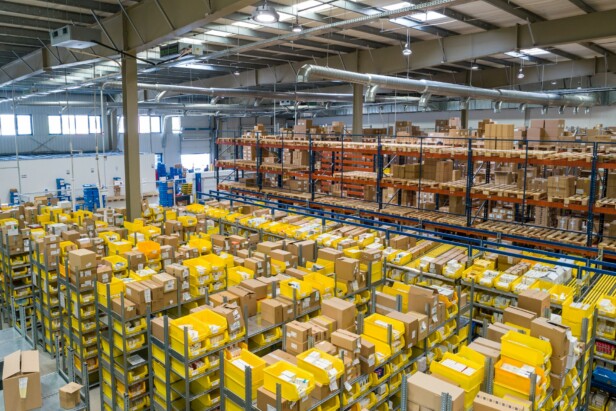
Garland warehouse projects typically fall into five operational categories: warehousing and distribution, manufacturing, waste and recycling, food processing, and energy storage. Each category drives specific design requirements for loading patterns, environmental controls, and structural loading.
Distribution centers need extensive loading dock access with trailer courts and internal circulation paths. Manufacturing facilities require process-specific layouts with utility distribution and equipment foundations. Food processing operations demand strict environmental controls and sanitary design features.
Essential Warehouse Features For Texas Operations
Climate-controlled storage addresses Texas weather extremes. We design systems to maintain controlled temperatures between 55-70°F, refrigerated conditions at 34-40°F, or frozen storage at 0°F and below. These systems require proper insulation, vapor barriers, and HVAC integration.
Loading dock access includes hydraulic levelers, dock seals, and approach ramps sized for regional truck configurations. Freight elevators handle vertical movement in multi-level facilities with capacity for typical pallet loads and forklift access.
Security and monitoring provisions cover perimeter protection, access control, and 24/7 surveillance systems. High-speed connectivity supports warehouse management systems, inventory tracking, and communication networks essential for modern operations.
Layout Planning And Storage Systems
Interior layouts account for racking systems, forklift aisles, and inventory management workflows. Standard aisle widths range from 8 feet for narrow aisle systems to 12 feet for standard reach trucks. Clear heights typically span 24 to 32 feet to maximize cubic storage.
Office and break areas integrate with warehouse operations while maintaining separation for comfort and productivity. These spaces often include shipping offices, quality control areas, and employee facilities sized according to staffing projections and operational requirements.
We coordinate all building systems during construction to ensure seamless integration between structural, mechanical, electrical, and fire protection elements. This approach prevents conflicts and ensures facilities meet both operational needs and code requirements for climate-controlled storage facilities in Texas markets.
How Does Garland’s DFW Location Affect Warehouse Planning?
Garland sits at the heart of the Dallas–Fort Worth metroplex, creating unique opportunities for warehouse operations. We position facilities to capitalize on cross-docking flows and regional distribution patterns that drive efficiency across the supply chain. The city’s location offers direct access to major transportation corridors that connect to ports, rail yards, and interstate highways.
Cross-docking operations require specific site layouts that support rapid freight movement. We design dock configurations with adequate spacing for truck circulation and staging areas that accommodate trailer storage. Internal circulation patterns must allow forklifts and material handling equipment to move efficiently between receiving and shipping areas without creating bottlenecks.
Strategic ZIP Code Coverage
Our work in Garland typically spans the 75043, 75044, 75041, and 75040 ZIP codes. Each area presents distinct advantages for warehouse development. The 75043 area provides access to major freight corridors, while 75044 connects directly to industrial zones with established utility infrastructure.
Site selection within these zones affects operational costs and delivery windows. Properties near I-635 and major arterials reduce drayage time and fuel costs for distribution operations. We evaluate proximity to workforce housing and supporting infrastructure when planning facility locations.
Dock And Yard Configuration For DFW Logistics
Dock positions must align with regional freight patterns. We typically orient loading docks to accommodate both inbound and outbound traffic flows efficiently. Trailer court design includes adequate maneuvering space for 53-foot trailers and consideration for future expansion as operations scale.
Yard circulation planning addresses the unique demands of DFW logistics networks. Wide turning radii accommodate oversized loads common in construction and manufacturing sectors. Security fencing and gate positioning balance access control with operational speed requirements that regional carriers expect.
Scalable Infrastructure For Market Growth
The Dallas–Fort Worth metroplex continues expanding, creating demand for flexible warehouse solutions. We build scalable storage footprints that can adapt to changing inventory requirements and seasonal fluctuations. Electrical and data infrastructure supports warehouse management systems and automated material handling equipment.
Connectivity planning includes high-speed internet access and redundant power systems essential for modern warehouse operations. These systems support real-time inventory tracking and cross-docking coordination that many DFW logistics operations require. Secure access systems integrate with existing security protocols while maintaining the rapid throughput that distribution centers need.
Conclusion And Next Steps
Planning a warehouse project in Garland requires systematic decisions that align with your operational goals and DFW market demands. We recommend starting with your delivery method selection. Design-build offers integrated oversight from concept through completion, while general construction provides traditional design-then-build sequencing. Construction management delivers owner representation throughout the process.
Building type selection directly impacts your project timeline and functionality. Tilt wall construction provides durable, cost-effective solutions for medium to large facilities. Precast concrete offers enhanced structural performance for heavy-load applications. Pre-engineered metal buildings deliver speed and flexibility for standard warehouse operations. Fabric structures accommodate specialized storage needs with rapid deployment capabilities.
Operational requirements form the foundation of your facility design. Define dock count based on projected throughput volumes and truck traffic patterns. Plan freight elevator capacity for multi-level operations or mezzanine access. Map temperature zones according to product specifications, whether ambient, controlled climate, refrigerated, or frozen storage. Security provisions should include access control, monitoring systems, and perimeter protection. High-speed connectivity supports warehouse management systems and automation integration. Office areas require proper sizing for administrative functions and employee amenities.
Tenant build-outs, maintenance planning, and site work complete your project scope. Consider future expansion needs when designing tenant spaces. Develop preventative maintenance strategies for mechanical systems, structural components, and site utilities. Address concrete requirements for loading areas, yard surfaces, and foundation work. Recent Garland projects demonstrate successful integration of these elements, including concrete tilt wall facilities approaching 170,000 square feet with comprehensive site utilities and DFW logistics connectivity.
Contact EB3 Construction to align your warehouse planning with proven DFW market experience and construction capabilities.