Traditional project schedules keep property owners waiting for months or years before they can occupy new facilities and start generating revenue. Fast-track design-build project delivery changes this equation by compressing timelines and accelerating occupancy dates through strategic schedule overlapping.
Fast-track design-build project delivery combines the speed of fast-tracking with the single-entity efficiency of the design-build contract model. Fast-tracking overlaps design and construction phases so field work begins before complete drawings are finalized, while design-build consolidates both services under one contract for streamlined decision-making and risk allocation. This dual approach delivers compressed schedules that can shorten project timelines significantly compared to traditional design-bid-build methods.
How Does Fast-Tracking Work Within Design-Build Projects?
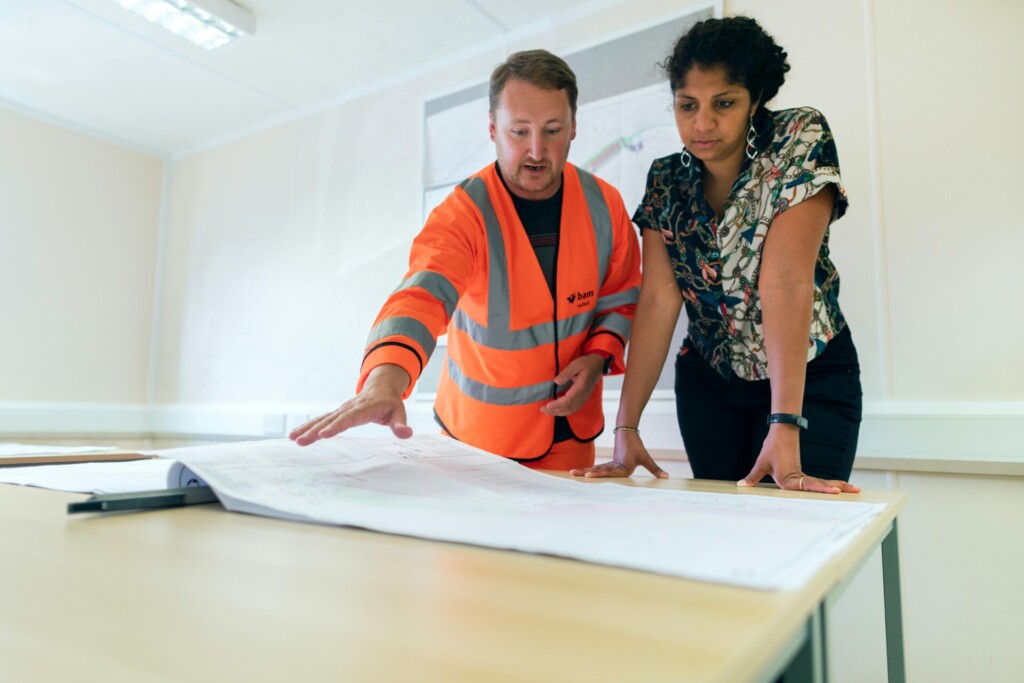
Fast-tracking within design-build projects operates on controlled overlap between design and construction phases. We can begin excavation and foundation work while architectural teams continue developing upper floor plans. This approach requires design teams to stay consistently ahead of field operations by releasing construction-ready packages at precise intervals.
Phased Design And Construction Sequencing
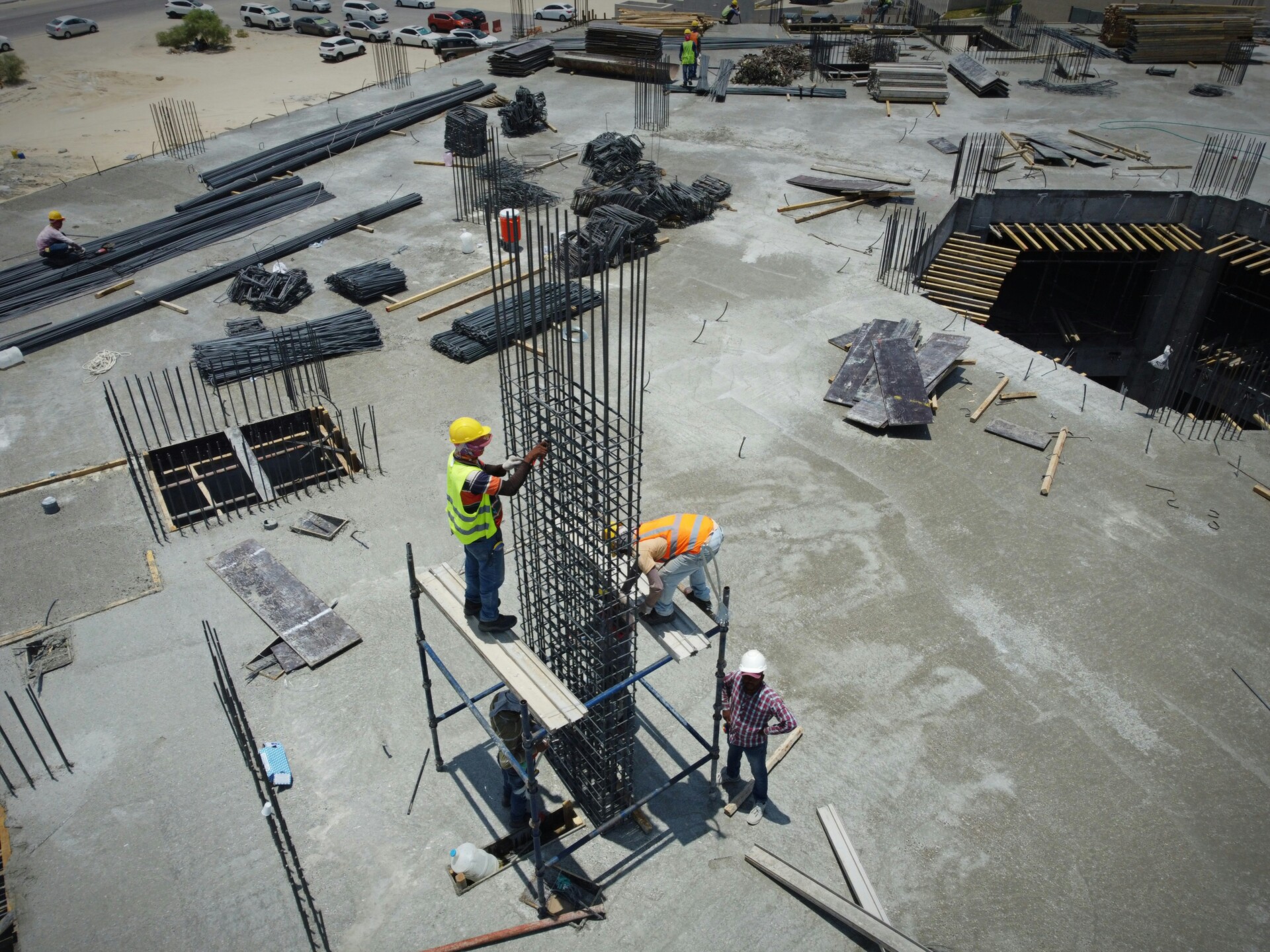
Construction advances through carefully coordinated phases rather than waiting for complete design documentation. We typically permit and construct three to five floors at a time while designers work on subsequent levels. Foundation work begins when we have sufficient programming information about building configuration, height, and site requirements.
Design teams issue continuous sketches and progress sets at 30/60/90% completion to support construction sequencing. Each package contains enough detail for trades to execute their scope while maintaining design flexibility for future phases. This rhythm demands exceptional coordination between all parties involved.
Strategic Bid Package Development
We structure multiple bid packages around construction logic and schedule requirements. Early packages typically include sitework, foundations, and structural systems that drive the critical path. Subsequent packages address building enclosure, mechanical systems, and interior components as design development progresses.
Package timing aligns with material delivery schedules and trade coordination needs. We release structural steel packages early to accommodate fabrication lead times. Mechanical and electrical packages follow as we finalize space programming and load calculations. This sequencing prevents downstream trades from waiting for upstream work completion.
Early Procurement And Long-Lead Item Management
Long-lead procurement begins during schematic design phases to compress overall schedules. We identify critical components like structural steel, HVAC equipment, elevators, and curtain wall systems that require extended manufacturing time. Early purchasing decisions occur based on preliminary specifications and performance requirements rather than final shop drawings.
Procurement strategies balance schedule compression against design flexibility. We may purchase structural steel based on preliminary structural drawings while maintaining contingencies for dimensional adjustments. Elevator specifications lock in early to secure manufacturing slots, with final cab finishes determined later in the process.
GMP Establishment And Documentation
Guaranteed Maximum Price contracts typically establish pricing when design documents reach 70-80% completion. This timing provides sufficient detail for accurate cost estimating while maintaining schedule acceleration benefits. We document extensive assumptions, clarifications, and allowances to address incomplete design elements.
GMP documentation serves as the baseline for evaluating project performance and managing changes throughout construction. Assumptions cover items like soil conditions, utility connections, and finish selections that await final determination. Allowances provide specific dollar amounts for components with undefined scope or specifications.
Coordination Systems And Communication Protocols
Regular coordination meetings maintain alignment between design development and construction progress. We conduct weekly sessions with design teams, trade contractors, and project management staff to resolve conflicts and anticipate upcoming decisions. Critical Path Method scheduling tracks interdependencies and identifies potential delays before they impact the overall timeline.
Construction management software centralizes RFI and change order tracking across all project participants. Digital platforms ensure rapid response times for design clarifications and maintain comprehensive documentation of all project communications. This organization becomes critical when multiple trades require simultaneous design support.
Team Structure And Leadership Requirements
Fast-track success depends on experienced subcontractors familiar with accelerated construction demands. We often pay premium rates for contractors committed to fast-track schedules and capable of working with incomplete documentation. Trade selection prioritizes experience and reliability over lowest initial cost.
Dedicated site superintendents provide full-time project leadership throughout the construction process. These individuals manage constant design changes, coordinate multiple trades, and maintain quality standards under compressed timelines. Strong site leadership prevents small issues from cascading into schedule delays or cost overruns.
What Benefits And Outcomes Can Fast-Track Design-Build Deliver?
Fast-track design-build delivers measurable outcomes that directly impact developer bottom lines. The approach reduces overall project timelines by enabling multiple construction phases to progress simultaneously rather than sequentially.
Accelerated Time To Market
Overlapping design and construction phases compresses total project duration significantly. We see projects that traditionally required 24 to 30 months completed in 16 to 20 months through effective fast-tracking. This time compression stems from starting foundation work while upper-level designs are still being refined.
The accelerated schedule allows property owners to begin generating revenue or occupying space months ahead of conventional timelines. For commercial projects facing immediate market demand, this early occupancy translates directly to captured revenue that would otherwise be lost to competitors.
Financial And Operating Benefits
Shorter construction timelines reduce debt service costs by minimizing the period between initial investment and revenue generation. Construction loans and interim financing carry lower total interest when project duration shrinks by six to twelve months.
Labor cost exposure decreases with compressed schedules. Construction costs have been escalating at approximately 12 to 15 percent annually, making time savings particularly valuable. Early material procurement also helps mitigate inflation impact by locking in prices sooner in the construction cycle.
The improved return on investment comes from both reduced carrying costs and earlier cash flow generation. Property owners can begin lease-up or operations while competitors using traditional delivery methods are still months away from completion.
Broad Project Applicability
Fast-track design-build applies across diverse project types where speed creates competitive advantage. Mixed-use developments benefit from phased occupancy options, allowing retail or residential portions to open while commercial spaces finish construction.
High-rise construction leverages fast-tracking effectively by starting lower floors while upper-level designs are refined. Public infrastructure projects use the approach to minimize community disruption and restore services quickly.
Healthcare facilities represent particularly successful applications, with projects reducing delivery time from six years to four years through overlapping phases. Educational facilities use fast-track methods to meet critical opening dates aligned with academic calendars.
[[artifact_table]]Comparison of fast-track versus traditional delivery timelines across project types[[/artifact_table]]
Disaster recovery projects demonstrate fast-track’s value in urgent situations where community needs demand rapid facility restoration. The approach proves especially effective when experienced teams can maintain quality standards while accelerating delivery schedules.
What Risks, Constraints, And Failure Points Should Teams Plan For?
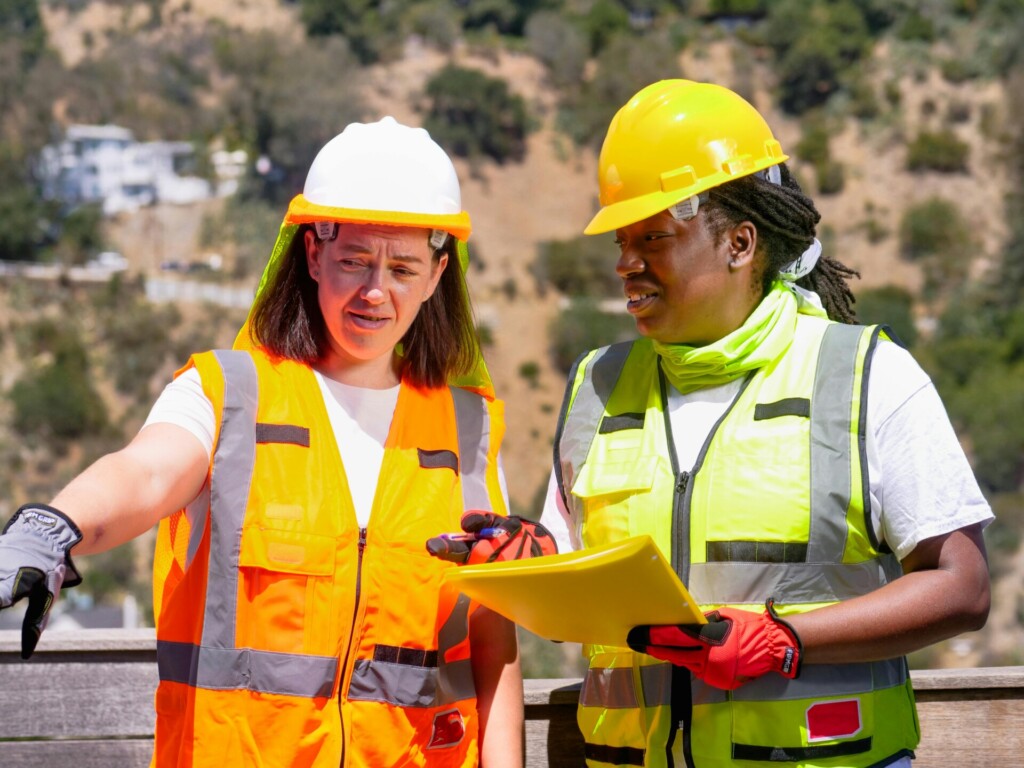
Fast-track design-build projects carry significant risks that can quickly escalate costs and derail schedules. Change orders become frequent when construction begins with incomplete documentation. Rework multiplies when design errors emerge after concrete is poured or steel is erected.
Incomplete Design And Documentation Challenges
Building before design completion creates immediate exposure to change orders. We often see foundation work beginning while upper-level architectural details remain undefined. This approach inherently increases rework potential when design conflicts surface during construction phases.
Design teams staying just steps ahead of field crews face constant pressure. Rushed decisions on preliminary drawings lead to coordination problems between trades. When mechanical systems clash with structural elements, costly fixes become unavoidable.
Shop drawing errors compound these issues. Subcontractors working from partial information submit drawings that require multiple revisions. Each revision cycle delays material procurement and pushes critical path activities further behind schedule.
Financial Risk And Budget Variability
Financial exposure escalates rapidly in fast-track projects. Delays trigger additional financing costs while potential lost revenue mounts. Extended construction periods mean higher labor costs, especially when overtime becomes necessary to recover schedule losses.
Early procurement decisions based on progress sets carry substantial risk. Locking in pricing when documents are only 30% or 60% complete leaves significant unknowns. Industry experts suggest maintaining contingencies around 10% for these early commitments, while projects with minimal reserves of 1-2% frequently encounter serious problems.
Budget unpredictability increases with limited upfront information. Cost variability becomes difficult to control when fundamental design decisions remain fluid throughout construction. Allowances and assumptions must compensate for missing details, but these estimates often prove inadequate.
Operational Stress And Performance Issues
Compressed timelines create high-stress environments requiring rapid decision-making with incomplete information. Project teams face constant pressure to maintain momentum while managing multiple uncertainties simultaneously.
Overtime inefficiency becomes problematic after several weeks of extended hours. Worker productivity typically declines when schedules demand sustained overtime. Research shows that extended overtime periods reduce overall productivity, creating a counterproductive cycle where more hours yield diminishing returns.
Scope And Design Creep Challenges
Scope creep threatens fast-track projects more than traditional delivery methods. Without strict control processes, additional requirements can break alignment with the guaranteed maximum price. Design changes during construction phases carry exponentially higher costs than modifications during initial design.
Managing scope boundaries becomes critical when design evolution continues alongside construction. Teams must establish clear change order protocols to prevent unauthorized additions from consuming project contingencies. Each scope modification requires immediate assessment of schedule and cost impacts to maintain project viability.
Which Practices, Contracts, And Controls Improve Fast-Track Results?
Due Diligence And Preconstruction Planning
We validate pro formas early to verify that financial assumptions align with current market conditions and project scope. Site conditions require careful assessment through geotechnical surveys, environmental studies, and utility mapping before committing to aggressive schedules. This front-end investigation prevents costly surprises that can derail fast-track timelines.
The permitting path demands thorough evaluation during preconstruction. We work with local authorities to understand review cycles, identify potential roadblocks, and structure phased submissions where possible. Early engagement with plan reviewers helps establish realistic approval timelines and prevents permit delays from cascading through the schedule.
Strategic Package Planning And Design Completeness
Bid package strategy forms the backbone of successful fast-track execution. We agree upfront on the number and sequence of packages, defining clear scope boundaries for each release. Foundation packages typically lead, followed by structural, envelope, and finish trades in logical progression.
Progress sets at 30%, 60%, and 90% completion require defined purposes and detail levels. Early sets support procurement of long-lead items, while later iterations provide pricing basis for GMP assumptions. We establish minimum drawing requirements for each milestone to prevent incomplete releases that generate excessive RFIs and change orders.
Documentation standards prevent confusion downstream. GMP assumptions, clarifications, and allowances receive detailed written descriptions with clear scope limits. Owner contingencies reflect project complexity and schedule compression risks, typically ranging from 5% to 15% depending on design completeness and site conditions.
Early Procurement And Coordination Systems
Long-lead item identification occurs during early design phases. Structural steel, HVAC equipment, elevators, and curtain wall systems require advance ordering to support compressed schedules. We align design development pace with procurement needs, ensuring adequate detail for fabrication while maintaining design flexibility.
Coordination meetings follow structured agendas and regular schedules. Weekly progress reviews track design completion, procurement status, and field progress. Critical Path Method scheduling provides objective basis for resource allocation and identifies potential bottlenecks before they impact the overall timeline.
RFI and change order systems require organization and rapid response. We establish clear communication protocols, assign dedicated personnel for processing, and set response time standards. Digital platforms help track status and maintain accountability across all parties.
Quality Control And Safety Oversight
Quality assurance maintains rigorous standards despite schedule pressure. Daily inspections, material testing, and workmanship reviews proceed according to established protocols. We resist temptation to relax QA/QC procedures when timelines tighten, as rework costs far exceed initial quality investments.
Safety protocols receive enhanced attention in fast-track environments. Multiple trades working simultaneously create additional hazards that require proactive management. Daily housekeeping and clear work zone boundaries help prevent accidents and maintain productive work flow.
Team Selection And Contract Risk Allocation
Experienced subcontractors command premium rates but deliver value through reduced coordination needs and fewer surprises. We consider higher compensation for fast-track commitments, recognizing that compressed schedules demand additional resources and expertise. Full-time, dedicated project managers provide onsite leadership essential for complex coordination.
Contract clauses address fast-track specific risks. Differing site conditions and force majeure provisions protect against unforeseen delays. Design-build subcontractor agreements clarify design responsibilities and professional liability coverage. We limit exposure to liquidated damages and seek mutual waiver of consequential damages where appropriate.
Schedule Resilience And Backup Planning
Scope creep management requires vigilant oversight. Change requests receive immediate evaluation for schedule impact, and we maintain strict approval processes to prevent design drift from breaking GMP alignment. Regular design review meetings help identify potential changes before they become expensive modifications.
Feasible completion dates account for real-world constraints rather than theoretical best-case scenarios. We build buffer time for weather delays, permit reviews, and coordination challenges. Phased occupancy plans provide fallback options if full completion faces delays, allowing owners to begin operations in completed areas.
Team building starts with smaller projects before tackling complex fast-track assignments. We develop relationships with proven subcontractors, suppliers, and design professionals who understand compressed schedule demands. This “dream team” approach reduces learning curves and communication gaps that can slow progress on critical projects.
Conclusion And Next Steps
Fast-track design-build project delivery delivers schedule compression and earlier occupancy, but success hinges on balancing speed with comprehensive planning and risk management. We’ve seen how overlapping design and construction phases can reduce project timelines while maintaining quality, yet the approach demands disciplined coordination, clear contingency planning, and robust controls. The key lies in defining how progress sets guide procurement decisions, aligning bid packaging strategies with schedule needs, and establishing adequate owner contingencies to absorb the inherent uncertainties of accelerated delivery.
Moving forward with fast-track design-build requires methodical implementation rather than rushing into complexity. Start with a manageable project that allows your team to develop fast-track expertise without overwhelming risk exposure. Assemble experienced subcontractors who understand the coordination demands and can commit dedicated project managers to maintain onsite oversight. Set clear GMP assumptions and allowances upfront, build in comprehensive QA/QC protocols, and develop schedule backup plans that protect project outcomes when unexpected challenges arise. Contact EB3 Construction to discuss how we can help you implement fast-track design-build strategies that balance speed with quality outcomes.