Restaurant construction in Texas follows a fairly predictable PSF spread once you factor in concept type. Fast-casual builds generally land between $350 and $500 per square foot, where simpler service models and leaner kitchen configurations keep the scope manageable. Full-service restaurants climb to $450–$650 per square foot, reflecting greater plumbing density, more elaborate MEP layouts, and higher finish expectations across both the kitchen and dining areas. Dedicated drive-thru construction sits in its own tier, typically budgeted at $400–$600 per square foot, because the lane infrastructure, service-window framing, and equipment coordination add costs that a standard dining build does not carry.
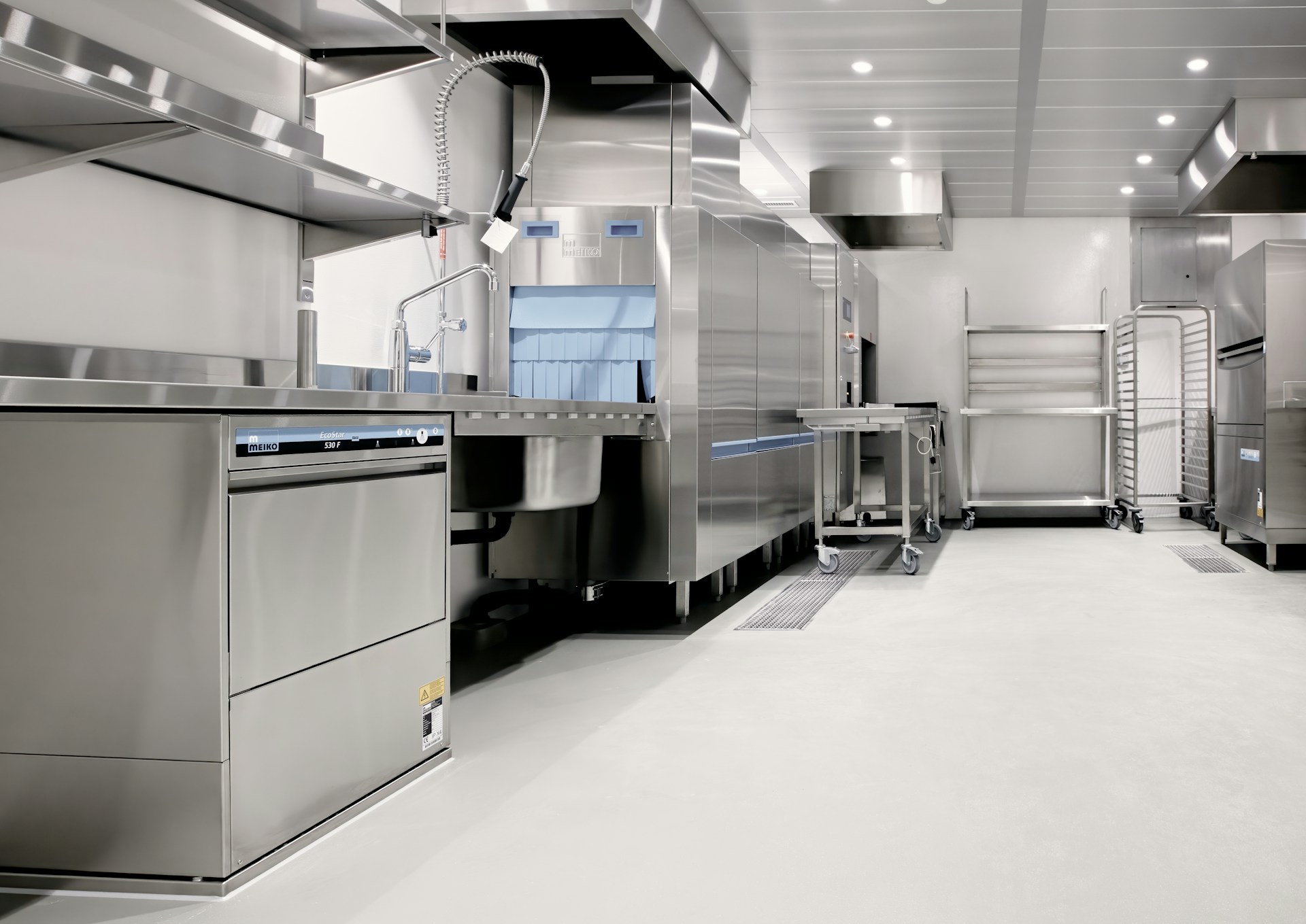
These ranges are starting points. The actual number on any given project shifts based on what systems need to be built into the structure, and for QSR concepts those systems are substantial. Kitchen MEP density in a quick-service format is consistently among the heaviest cost drivers in the building, and understanding why requires looking at each system category individually.
Disclaimer: Pricing figures are based on publicly available market data and are intended for general estimation purposes as of March 2026. They do not represent a formal quote from EB3 Construction. Actual costs will vary by project scope, location, labor rates, and material prices.
Why MEP Systems Drive the Highest Costs in QSR Kitchen Construction
Ventilation and Exhaust Hood Systems
A commercial kitchen that operates ranges, fryers, and griddles requires a Type I exhaust hood with a fire suppression system, as mandated by NFPA 96 standards. This is not an optional upgrade. The hood must be sized to match the equipment below it, and the ducting runs from the cookline through the roof, introducing structural penetrations, roof curbs, and make-up air units into the scope simultaneously.
The cost impact extends beyond the hood itself. Make-up air systems balance the negative pressure created by exhaust fans, and in Texas climates, those units often require heating and cooling capacity to condition incoming air before it enters the kitchen. That additional HVAC load affects electrical panel sizing and roof loading, which can trigger design revisions if not accounted for early.
Grease Interceptor and Drainage Requirements
Every commercial kitchen producing grease-laden wastewater requires a properly sized grease interceptor, and the sizing is determined by the local municipality based on fixture count and flow rate. In Texas, health departments and public works agencies review grease trap specifications during plan review, meaning undersized or improperly located interceptors will generate correction notices that delay permits and push schedules back.
The placement of the grease interceptor drives underground plumbing layout, which affects slab work sequencing. For ground-up builds, we coordinate grease trap sizing and location early in design development so that the underground rough-in can proceed without rework. A typical exterior interceptor installation adds significant cost through excavation, concrete pad work, inlet and outlet piping, and inspection access requirements.
HVAC Load and Kitchen MEP Density
Quick-service kitchens pack a high volume of heat-generating equipment into a compact footprint. Fryers, ovens, warming units, and refrigeration compressors all contribute to the thermal load that the HVAC system must offset. In Texas, where summer temperatures regularly exceed 100 degrees Fahrenheit, that cooling load is substantial and directly influences the tonnage of the mechanical system installed.
Higher HVAC capacity means larger rooftop units, heavier structural curb requirements, and larger electrical-service feeds to those units. The interaction between kitchen equipment layout and MEP system sizing is where costs compound quickly. A poorly sequenced design that finalizes equipment selection after MEP engineering is underway creates costly change orders because panel sizing, conduit runs, and gas line sizing all depend on knowing what equipment loads the system must serve. We finalize kitchen equipment specifications in parallel with MEP engineering to avoid those coordination gaps.
Electrical Service and Structural Implications
Commercial kitchen equipment frequently requires 208/240-volt or three-phase power, which means the electrical service entering the building must be sized accordingly from the utility connection forward. Walk-in coolers, high-temp dishmachines, and commercial mixers each carry dedicated circuit requirements that cannot be served from a standard single-phase residential-grade panel. For ground-up QSR builds, electrical service sizing is established during schematic design and confirmed once the equipment schedule is locked.
Roof penetrations created by exhaust hoods, HVAC curbs, and make-up air units also introduce structural considerations. Each penetration requires framing modifications, waterproofing details, and coordination between the mechanical and structural drawings. On a project where the kitchen occupies a significant portion of the building footprint, the cumulative effect of these penetrations on the roof structure and the waterproofing scope adds cost that may not appear in simple PSF estimates but shows up clearly in trade-level bids.
How Do Site Work, Permitting, And Regional Codes In Texas Affect Budget?
What Site Preparation Actually Costs on a Drive-Thru Build
Ground-up QSR construction in Texas carries site prep costs that extend well beyond the building footprint. Excavation, slab work, structural foundations, and utility upgrades—such as power service, drainage tie-ins, and HVAC connections—are all line items that add up before a single wall goes up. For drive-thru concepts with integrated conveyor or pass-through systems, a total facility build-out budget around $450,000 is a reasonable planning figure, and that number can shift significantly based on how well equipment vendors and construction sequencing are coordinated from the start.
Traffic study fees and zoning compliance costs add another layer. Many Texas municipalities require dedicated traffic impact analyses for drive-thru operations, particularly where lane stacking could affect adjacent roadways or shared access points. These soft costs are easy to underestimate during early budgeting, but can add weeks to the permitting timeline and thousands to the total project cost if they surface late.
Houston: Windstorm, Floodplain, and Drainage Requirements
Houston construction carries some of the heaviest regulatory overhead in Texas. Projects in Harris County and surrounding jurisdictions must account for windstorm engineering requirements, which affect structural framing, roof connections, and glazing specifications. Floodplain compliance adds another dimension, with many sites requiring elevation studies, fill work, or detention system design before a building permit can advance through plan review.
Drainage infrastructure is a persistent cost driver in Houston. Detention ponds, underground storage systems, or regional drainage fees can appear as conditions of site plan approval, and each carries its own engineering scope. We factor these requirements into preconstruction planning so owners don’t absorb drainage costs as a surprise during construction documentation.
Austin: Energy Requirements and Sustainability Scope
Austin’s local amendments to the International Energy Conservation Code and its Austin Energy Green Building program can introduce additional scope on restaurant projects that would not apply in other Texas markets. Energy-efficient mechanical systems, enhanced envelope performance, and, in some cases, LEED-related documentation requirements expand both design fees and construction costs. The city’s plan review process is detailed, and projects that arrive without energy-compliance documentation addressed up front tend to cycle through corrections that delay permit issuance.
For developers planning QSR builds in Austin, the sustainability premiums are real but manageable when scoped early. We coordinate with mechanical and envelope subcontractors during design development to right-size systems that satisfy code without overcapitalizing the mechanical package.
Dallas-Fort Worth and Secondary Texas Markets
The DFW metroplex offers a distinct construction environment. Strong subcontractor availability across concrete, steel, electrical, and MEP trades creates more competitive bid conditions than in most other Texas metros. Municipal permitting in many DFW jurisdictions runs on predictable timelines, which reduces schedule risk when construction sequencing is planned. That said, DFW is not immune to code complexity, and individual city requirements within the metroplex vary, so we confirm jurisdiction-specific conditions on every project rather than assuming uniform standards.
Secondary markets such as San Antonio, Waco, and smaller Texas cities generally present lower land costs, reduced municipal fee structures, and lower labor pricing pressure. Permitting timelines in these markets tend to move faster, and the subcontractor pool, while smaller, is adequate for most QSR build scopes. The trade-off is that specialty vendors and equipment suppliers may require longer lead times for delivery and installation coordination, which creates its own schedule risk if not managed proactively.
How Permitting Timelines and Vendor Coordination Drive Cost
Permit sequencing on a Texas drive-thru build requires alignment between architectural and civil submissions, health department approvals, and fire marshal review, all of which can run on separate tracks with separate timelines. In larger cities, permits for building, mechanical, electrical, and plumbing work are frequently issued independently, which means construction sequencing must account for staggered approvals rather than a single release date.
Vendor coordination is equally consequential. Drive-thru equipment suppliers, particularly those handling conveyor systems, menu boards, and order confirmation technology, operate on procurement timelines that do not always align with construction schedules. When equipment delivery slips past a construction milestone, trades that depend on equipment dimensions or rough-in locations get delayed, and idle time on a job site is a direct cost. We build vendor lead times into the master schedule during preconstruction so equipment delivery and construction sequencing stay aligned rather than colliding at the worst possible moment.
Which Drive-Thru Components And Layout Choices Increase Cost?

Lane Geometry And Physical Dimensions
Lane width sets the foundation for a drive-thru’s construction scope. A standard lane ranges from 10 to 12 feet wide, which works for most vehicle types on a property with a generous turning radius. Tighter turns around a building’s footprint often push that width to 12 feet to prevent curb damage from larger trucks and delivery vehicles.
Where a local jurisdiction mandates an escape lane, the required paved width climbs to roughly 20 feet. That additional lane isn’t just more asphalt; it requires coordinated curb layout, added drainage inlets, and adjusted traffic-flow geometry that can affect how the entire site is graded and striped.
Service window height follows a standard range of 32 to 36 inches measured from the vehicle’s resting surface. Operators who expect a heavy mix of trucks and high-cab vehicles often specify the upper end of that range, which can require adjustments to the rough opening, framing, and exterior wall during construction.
Drive-Thru Window Installation Costs
Installing a drive-thru window ranges from $550 to $1,000, with manual models typically landing in the $550 to $900 range and electric or automatic units running $750 to $1,000. The cost varies based on window size, operation type, and local contractor and electrician hourly rates for completing the rough opening, framing, and electrical connection.
When a window is added to an existing wall rather than built into new construction, the work expands to include removing the existing assembly, retrofitting the wall cavity, and bringing the opening into compliance with current service window standards. That scope adds labor and material costs beyond the window unit itself.
Adding a full drive-thru to an existing restaurant, beyond just the window, typically ranges from $35,000 to $80,000, depending on the scale of the operation and site conditions. Ground-up drive-thru construction is budgeted at a higher tier, generally $400 to $600 per square foot, reflecting the structural, mechanical, and layout work embedded in a dedicated drive-thru concept from the start.
Technology Add-Ons And Their CapEx Impact
Operators increasingly pursue automation options that extend well beyond basic lane and window construction. A climate-controlled conveyor chute system costs approximately $220,000, and that figure covers the enclosure, mechanical conveyance components, weatherproofing, and integration wiring. This type of system adds structural coordination requirements, including slab penetrations and load-bearing considerations for the chute housing.
License plate recognition (LPR) camera hardware adds approximately $80,000 to the CapEx budget, covering cameras, mounting assemblies, control systems, and the application programming interface (API) sync with backend ordering platforms. Redundancy in camera placement is a key specification decision during construction planning, as single-point failures in a high-volume lane create measurable order disruptions.
An automated assembly line for kitchen operations is budgeted at approximately $600,000, and integrating it with the building’s MEP (mechanical, electrical, and plumbing) and conveyor systems during construction requires precise coordination between the general contractor and equipment vendors. A mobile app and cloud backend platform adds another $300,000 in CapEx, though that scope sits outside the physical build and runs through 2026 on a staged development schedule.
Recurring Costs Created By Automation Choices
Technology-driven drive-thru components generate ongoing operational expenses that owners must account for alongside the upfront CapEx. Cloud hosting for the backend platform is approximately $3,000 per month, a fixed and predictable line item that starts the moment the system goes live.
Preventive maintenance contracts for conveyor systems, LPR hardware, and automated assembly equipment add roughly $4,500 per month once those systems are operational. Skipping formal service agreements on these components is a documented source of extended downtime, and in a drive-thru concept where the lane can account for 70 percent or more of total sales volume, unplanned outages carry direct revenue consequences. These recurring costs deserve a place in the pro forma budget well before construction begins.
What Cost Categories And Market Forces Should Owners Plan For, And How Can They Manage Risk?
How Hard and Soft Costs Stack Up on a QSR Project
On a Texas QSR drive-thru build, hard costs typically account for 75 to 85 percent of total project spend. Within that bucket, foundations alone can represent about 11.5 percent of hard costs, with the remainder distributed across structural framing, the building envelope, roofing, and the MEP systems that define a food service build. These line items are tied directly to physical construction, and on a kitchen-heavy concept with high MEP density, they carry real weight.
Soft costs on a QSR project tend to fall below the 20 to 30 percent range cited for complex institutional projects. For a well-scoped fast-casual or drive-thru build, owners should plan for soft costs in the 8 to 12 percent range. That window covers design and engineering fees, permitting and inspection fees, legal costs, and insurance. The tighter range reflects a more defined scope, but it still demands a line-item estimate rather than a rough percentage applied at the end.
Understanding where each dollar sits before breaking ground helps keep a project financeable and controllable. When hard costs and soft costs are separated from the start, lenders can evaluate disbursement structures accurately, and the project team can track overruns by category rather than watching a blended number drift.
Hidden Costs That Move the Budget
Beyond the standard hard and soft cost buckets, a set of costs sits outside the initial estimate on nearly every project. Soil conditions discovered during excavation can trigger remediation scopes that were not priced in preconstruction. Permit delays, particularly in municipalities with complex review cycles, extend carrying costs and push the schedule without adding any construction value.
Material price spikes represent another exposure point. Steel and concrete have both experienced significant volatility in recent years, and the gap between a schematic-level estimate and a construction-phase purchase order can be substantial when commodity markets move. Change orders, often driven by unforeseen field conditions, design adjustments, or equipment coordination gaps, are the most common source of budget overrun on QSR projects we manage.
We treat these hidden costs as a distinct budget category in our preconstruction process. Naming them early, rather than absorbing them into contingency, gives owners a clearer picture of actual risk exposure by phase.
Market Forces Affecting Labor and Materials in Texas
The Texas construction labor market has tightened considerably across the MEP trades. Electricians, plumbers, and concrete crews are all in high demand across the state’s major metros, and that demand translates directly into higher labor pricing and longer lead times for trade commitments. On a drive-thru QSR with a kitchen-heavy MEP package, the electrical and mechanical scopes are substantial, which means labor availability is a genuine schedule and cost variable.
On the materials side, HVAC equipment lead times have lengthened across the market. Ordering commercial HVAC units well ahead of the installation window is standard practice on our projects because delays in equipment delivery create idle time on site and push the project closeout date. Structural steel pricing has also seen upward pressure, and while the DFW area tends to benefit from stronger subcontractor competition, Houston and Austin builds face their own supply-side constraints driven by local volume and code-specific requirements.
Owners who treat these market conditions as fixed assumptions rather than live variables tend to see the largest budget surprises at construction start. We recommend confirming trade-level pricing during design development rather than relying on conceptual benchmarks alone.
Managing Risk Through Staged Budgeting and Value Engineering
We structure project budgets across three stages: a preliminary estimate tied to program and site conditions, a design development estimate once the structural and MEP systems are defined, and a final GMP or bid-level budget before permit submission. Each stage narrows the range and allows owners to make informed go or no-go decisions before committing to the next phase of spending.
Value engineering on a QSR build focuses on three levers: optimizing the structural system to reduce material and labor costs without compromising code compliance, right-sizing the MEP package to the actual kitchen load rather than over-specifying for a worst-case scenario, and evaluating material substitutions on the building envelope and finishes where performance equivalents exist. These are not cuts to the project. They are scope decisions made with full cost visibility.
Regional contingency planning is the final layer of risk management we apply. A 3 to 5 percent contingency range is appropriate for most Texas QSR builds, with the higher end applied to Houston projects given windstorm and floodplain exposure, and to any project with a compressed schedule or incomplete design at bid time. That contingency sits as a line item in the budget, not as a buffer folded into trade prices, so it can be tracked and released as the project progresses.
Conclusion And Next Steps For Texas QSR Drive-Thru Builds
Texas drive-thru budgeting requires decisions to be made in sequence, not all at once. The per-square-foot ranges outlined in this article provide a reliable starting framework, but the final number on any project is shaped by regional code compliance, the MEP density of the kitchen stack, lane geometry, and the extent of automation selected. Each variable compounds the others, which is why locking in scope early matters more than any single line-item decision.
Trade-level budgeting separates projects that close on schedule from those that accumulate change orders. We align equipment-vendor lead times with construction sequencing from the start, because a 12 to 16 week HVAC delivery or a delayed conveyor installation can cascade through the entire schedule. Carrying a 3 to 5 percent contingency, sized to the regional risk profile, keeps that buffer functional rather than nominal when material prices shift or hidden site conditions surface during excavation.
Ready to move forward with your Texas drive-thru build? Contact EB3 Construction to discuss your project scope, regional code requirements, and budget structure with our team.