Commercial kitchen ventilation demands precision engineering and strict code compliance. A single misstep in exhaust hood sizing or grease duct fabrication can cause failed inspections, safety violations, or—worse—catastrophic kitchen fires that can destroy a business overnight.
The right commercial kitchen construction contractor delivers comprehensive ventilation solutions from design through long-term maintenance. We coordinate every component—from hood installation and welded steel ductwork to fire suppression systems and code-compliant wall finishes—ensuring your project meets all safety standards and passes inspection on the first try.
How Do Hood Types, Exhaust Fans, And Makeup Air Systems Work Together For Code Compliance?
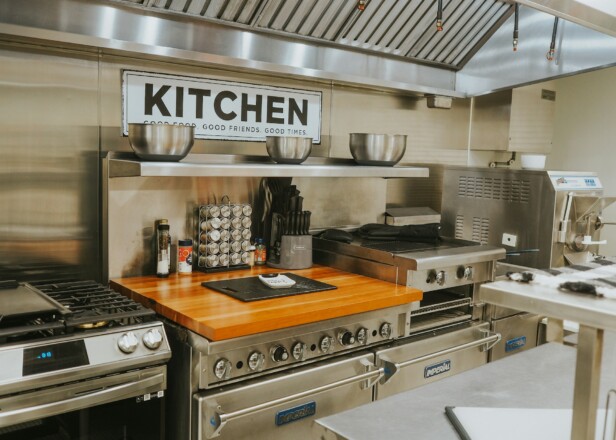
Type I and Type II hoods serve different kitchen functions and must be matched to the specific equipment underneath. Type I hoods handle grease-producing appliances like fryers, grills, and broilers, while Type II hoods capture steam and vapor from equipment like pasta cookers and dishwashers.
Hood Selection Based on Cooking Equipment
The equipment below determines hood requirements. Fryers, charbroilers, and open-flame cooking require Type I hoods equipped with baffle filters to capture grease particles. Steam kettles, convection ovens without grease production, and warewashing equipment are paired with Type II hoods designed for heat and moisture removal.
CFM ratings determine exhaust capacity and must match the heat output and cooking intensity of the equipment. Light-duty equipment typically requires 200-300 CFM per linear foot, while heavy-duty appliances like charbroilers can demand 400-500 CFM per linear foot.
Exhaust Fan Configuration and Ductwork Requirements
Upblast fans mounted on rooftops provide the primary exhaust for commercial kitchen systems. Belt-driven fans deliver higher static pressure capacity, making them suitable for complex duct runs with multiple bends or long horizontal sections. Direct-drive fans offer simpler maintenance and energy efficiency for straightforward installations.
Grease ducts connecting Type I hoods must be of continuously welded, grease-tight steel construction. These welds prevent grease leakage and maintain system integrity during cleaning cycles. Fire-rated wrap may be required where ducts pass through fire-rated assemblies or penetrate floors and walls.
Makeup Air Integration
Makeup air (MUA) units replace exhausted air and prevent negative pressure that can cause backdrafting. In cold climates, tempered MUA heats incoming air to prevent uncomfortable drafts and reduce HVAC loads. The makeup air volume should equal 80-100% of the exhaust CFM to maintain proper building pressure.
Negative pressure beyond acceptable limits can interfere with gas appliance operation and create uncomfortable working conditions. Proper MUA sizing prevents these issues while maintaining code-required ventilation rates.
Turnkey System Components
A turnkey system includes coordinated components that work as an integrated whole. The scope encompasses hood installation, exhaust fan mounting, welded steel ductwork, makeup air units, UL 300 wet-chemical fire suppression, electrical connections for controls, gas connections where needed, permit applications, and final inspections. This comprehensive approach ensures all components function together for reliable code compliance and optimal performance.
What Are Best Practices For Grease Ducts And Fire Suppression?
Grease duct design decisions shape both system performance and project costs from the start. We plan the most direct routes possible to minimize static pressure and fabrication expenses. Straight, vertical runs perform better than horizontal runs with multiple bends, and shorter duct lengths reduce both material costs and fan energy requirements. Complex routing through multiple floors creates additional access challenges and increases the likelihood of grease accumulation in horizontal runs.
We construct all grease ducts using continuously welded, grease-tight steel construction that meets NFPA 96 requirements. This means 16-gauge carbon steel or 18-gauge stainless steel with liquid-tight external welds at every joint and seam. No mechanical fasteners are permitted in grease duct systems. Where ducts pass through fire-rated assemblies or approach combustible materials within required clearances, we apply fire-rated wrap or insulation systems to maintain code compliance.
UL 300 Fire Suppression Integration
Every commercial kitchen handling grease-producing equipment requires a UL 300-compliant wet chemical fire suppression system. We integrate suppression nozzles directly over each cooking appliance and within the hood plenum and ductwork. The system includes automatic fuel shutoffs for both gas and electrical connections, ensuring cooking equipment cannot reignite after suppression activation. Manual pull stations near kitchen exits provide immediate activation.
Wet chemical systems outperform older dry chemical alternatives because they create a foam blanket that cools cooking oils below their autoignition temperature. UL 300 testing specifically addresses the higher ignition points of modern vegetable oils used in commercial cooking. These systems also integrate with the building fire alarm to alert occupants and emergency responders when activated.
Permits and Professional Installation
Licensed contractor installation is mandatory for commercial kitchen ventilation systems. We handle all permit applications, which typically require engineered drawings showing ductwork routing, structural support details, and fire suppression coverage patterns. Local authorities having jurisdiction review these plans before approving construction permits. The permit process adds 2-4 weeks to project timelines but ensures code-compliant installation from the start.
Project timelines extend well beyond installation work itself. Design development, permit submission, and plan review processes often require 4-8 weeks before construction can begin. Complex installations involving structural modifications or multiple agency approvals may take several months from initial design to final inspection sign-off. We coordinate inspection schedules with local fire marshals and building officials to complete required approvals efficiently.
DIY installations consistently fail inspections and create serious safety hazards. Unlicensed work cannot pass required inspections, and insurance coverage may be voided by noncompliant installations. We’ve seen property owners face costly system replacements when attempting to save money on installation labor. Professional installation ensures compliance with safety standards and long-term system reliability while protecting your investment and liability exposure.
Which Wall Materials And Finishes Help You Pass Inspection?

Health departments focus on specific wall surface characteristics during inspections. Walls in food prep areas, storage, warewashing, restrooms, and janitorial facilities must meet strict standards for surface texture and cleanability. Inspectors look for smooth, durable, nonabsorbent surfaces that resist moisture and allow thorough cleaning without harboring bacteria or grease.
The foundation of compliant wall finishes begins with proper surface preparation. Raw wood, unfinished studs, exposed concrete blocks, and textured surfaces that create pits or crevices consistently fail inspection. Approved materials include stainless steel panels, fiberglass reinforced plastic (FRP) panels, ceramic tile with sealed grout, and painted drywall with high-gloss or semi-gloss finishes.
Coverage Heights and Installation Requirements
Wall protection requirements vary by area and intended use. Food preparation and warewashing areas require smooth, nonabsorbent surfaces extending at least 8 feet high from the floor. Restrooms and janitorial zones need similar protection to a minimum height of 4 feet.
Equipment placement drives additional coverage requirements. Walls must extend at least 3 feet beyond open food equipment, sinks, and plumbing fixtures. Behind cook lines and under exhaust hoods, walls require heat-resistant materials like stainless steel or ceramic tile rather than standard painted surfaces.
Installing sealed corner, edge, and joint trim promotes cleanliness and prevents moisture infiltration. We install these details using appropriate sealants that maintain flexibility while providing watertight barriers. Walk-in refrigerators and freezers need interior wall protection with metal cove bases rather than vinyl alternatives.
FRP Panels and Fire Rating Considerations
Fiberglass reinforced plastic panels offer practical solutions for wet areas like warewashing stations and janitorial rooms. These panels provide smooth, easily cleanable surfaces that resist moisture better than painted drywall. Light-colored panels with smooth or pebble finishes meet most jurisdictions’ requirements, while grooved or painted FRP panels typically face rejection.
Fire rating requirements depend on local codes and building type. FRP panels with Class A or Class C fire ratings satisfy most commercial kitchen applications. Some jurisdictions also require USDA or CFIA approvals for food service environments, particularly in facilities handling meat or dairy products.
Installation quality affects inspection outcomes as much as material selection. All panel joints need compatible trim pieces, and gaps between panels must receive proper sealing to prevent insect harborage. Wall penetrations around pipes and conduit require tight sealing with approved materials.
Pre-Approval and Material Verification
District inspectors often request product specifications or samples before approving wall materials for installation. This pre-approval process helps prevent costly material replacements after construction begins. We coordinate with local health departments early in the planning phase to confirm material acceptance and avoid delays.
Jurisdictional variations mean materials approved in one county may face restrictions elsewhere. California’s Alameda County, for example, lists FRP paneling under “generally acceptable finishes” requiring review, while other areas approve specific FRP products outright. Fresno County accepts FRP panels for food preparation areas when properly sealed, but requires samples for unusual applications.
Documentation requirements include manufacturer specification sheets showing fire ratings, cleanability standards, and food service approvals. We maintain these documents throughout the approval process and make them available during inspections. Some inspectors also verify that installation follows manufacturer guidelines and local building codes.
What Drives Budget And Ongoing Maintenance For Hoods And Grease Ducts?
Commercial kitchen ventilation systems represent a significant capital investment, with costs ranging widely by project complexity. Understanding these variables helps property owners budget accurately for installation and long-term operation.
Installation Costs by Linear Foot
Basic commercial kitchen hood installations typically cost $950 to $1,200 per linear foot. These simpler projects usually involve straightforward ductwork runs and standard components without extensive customization.
Full turnkey installations can reach $4,000 to $5,000 per linear foot when the scope includes all major components. Turnkey projects encompass hood fabrication, exhaust fans, makeup air units, fire suppression integration, electrical connections, permits, and final inspections under one contract.
The wide cost variance reflects several key factors that drive the final price. Hood size directly affects material costs and fabrication complexity, while duct length and routing significantly influence labor hours and steel requirements.
Primary Cost Drivers for Kitchen Ventilation Projects
Welded steel fabrication represents a substantial expense in any grease duct system. Codes require continuously welded, grease-tight steel construction, which demands skilled labor and quality materials.
Fire-rated wrap adds material and labor costs to projects requiring enhanced fire protection. Complex duct runs through multiple floors or tight spaces often require this specialized insulation to meet safety standards.
Makeup air units vary widely in cost based on climate control requirements. Basic units that introduce outside air cost much less than tempered systems that heat or cool incoming air to maintain kitchen comfort.
Permitting fees and inspection costs vary by jurisdiction but are unavoidable project expenses. We coordinate these requirements early in planning to prevent schedule delays and additional fees.
| Cost Component | Low End | High End |
| Hood Unit (10-foot) | $3,000 | $7,000 |
| Exhaust Fan & Ductwork | $4,000 | $15,000 |
| Makeup Air Unit | $3,500 | $10,000 |
| Fire Suppression System | $3,000 | $6,000 |
| Labor & Installation | $3,000 | $8,000 |
| Permits & Inspections | $500 | $2,000 |
Disclaimer: Pricing figures are based on publicly available market data and are intended for general estimation purposes as of February 2026. They do not represent a formal quote from EB3 Construction. Actual costs will vary by project scope, location, labor rates, and material prices.
Project Timelines and Planning Considerations
On-site installation work typically requires 2 to 4 days for most commercial kitchen projects. Actual installation time depends on system complexity, ductwork routing, and coordination with other trades.
However, the overall project timeline often extends due to design, permitting, and approval processes. Design development and plan preparation can take several weeks, while permit review and approval add time that varies with the local authority’s process.
Total project durations often run from several weeks to a few months, from initial consultation to final inspection approval. We build realistic schedules that account for these variables to prevent construction delays and cost overruns.
Recurring Maintenance and Operating Expenses
Professional hood cleaning services cost $400 to $600 per visit and are typically required quarterly or semi-annually, depending on cooking volume and local regulations. These services maintain system efficiency and ensure fire safety compliance.
Filter replacements are another recurring expense, with individual filters costing $50 to $150 depending on size and type. Baffle filters may require periodic replacement to maintain proper airflow and grease capture efficiency.
Energy costs from exhaust fans and makeup air systems add ongoing operating expenses that property owners must budget for. High-capacity systems can significantly impact monthly utility bills, especially when makeup air requires heating or cooling.
System expansion can approach new installation costs when existing ventilation capacity is inadequate. Adding cooking equipment often requires upgrading fans, ductwork, or fire suppression systems to handle increased airflow demands safely.
Conclusion and Next Steps
Commercial kitchen compliance requires coordinated planning across ventilation, fire suppression, and building materials. Early collaboration with EB3 Construction helps ensure that hood selection, welded grease ducts, fan sizing, makeup air requirements, UL 300-compliant suppression systems, and code-compliant wall finishes align with local regulations. Building adequate time into your project timeline for design development, permit submission, and inspection scheduling prevents costly delays and keeps construction on track.
Confirm wall material specifications with your district inspector before ordering to avoid rejections and rework costs. Request detailed, line-by-line quotes that break down installation, equipment, and permit costs so you can budget accurately. Establish a maintenance schedule for professional hood cleaning, filter replacement, and fire suppression inspections to keep your system compliant throughout its service life. This proactive step protects your investment and supports ongoing code compliance.
Ready to move forward with your commercial kitchen project? Contact EB3 Construction to discuss your ventilation and compliance needs.