A failed inspection or missed permit can delay a restaurant opening by weeks and cost far more than the original compliance work would have cost. When we build exterior patios and sidewalk seating for restaurants, every decision from day one of planning carries regulatory weight, from how the ground is graded to where the accessible route terminates.
This article covers the codes, design standards, materials, and permit workflows that shape a compliant outdoor dining project, giving developers and property owners a clear picture of what the construction process involves.
Which Codes, Permits, And Licenses Govern Exterior Patios And Sidewalk Seating?

Building And Fire Safety Codes
Outdoor dining construction falls under a layered framework of model, state, county, and municipal requirements. In most jurisdictions, the International Building Code (IBC) governs occupant loads, means of egress, and structural standards for both temporary and permanent outdoor structures. Temporary structures, defined under IBC Section 3103 as those erected for fewer than 180 days, have requirements distinct from permanent construction.
Fire safety codes add another layer of specificity. NFPA 1 and NFPA 101 apply to tents and membrane structures used for outdoor seating, requiring minimum separation distances of at least 10 feet from other buildings, vehicles, and combustion sources. NFPA 701 governs flame propagation performance for fabric materials used in coverings and tents, and certification affidavits are required to confirm compliance. When outdoor cooking or propane storage is part of the project scope, fire permits are typically required, and plans must document equipment placement, fuel storage locations, and ventilation provisions.
OSHA standards apply throughout construction and into ongoing operations, covering worker safety on the job site and hazard controls during build-out. These requirements run parallel to building and fire codes and must be addressed from the earliest phases of project planning.
Zoning, Municipal Ordinances, And Variances
Zoning regulations determine whether outdoor dining is a permitted use on a given parcel and under what conditions. Many municipalities restrict sidewalk cafes and outdoor eating areas to specific commercial zoning districts. In Madison, New Jersey, for example, outdoor dining areas are permitted only within the CBD1, CBD2, and CC zoning districts, and operators must obtain annual licenses that cannot be transferred between owners.
Municipal ordinances add operational controls on top of zoning. Clear path requirements mandate unobstructed pedestrian corridors along public sidewalks. In Cambridge, Ontario, a minimum 1.8-metre Clear Path of Travel must be maintained at all times, free of furniture, signage, and other physical obstructions. Some jurisdictions require variances when a proposed layout does not meet standard setback or clearance rules, and these applications typically require separate review by zoning officers, construction officials, and fire code officials before any permit is issued.
Operating boundaries also fall under municipal control. Hours of operation, noise restrictions, and prohibitions on items such as amplified sound equipment are commonly regulated through local ordinances. In some jurisdictions, outdoor dining is restricted to specific hours, and violations can trigger fines or license suspension.
ADA Accessibility Requirements
Federal ADA requirements apply to exterior dining areas regardless of whether they are temporary or permanent. IBC Section 1108.2.9 requires that dining and drinking areas, including outdoor spaces, be accessible and connected to an accessible route. At least 5% of dining surfaces, with a minimum of one, must be accessible, and those surfaces must provide knee and toe clearance for mobility aid users.
Accessible routes connecting the public right-of-way to the outdoor dining space must meet width, slope, and surface stability standards. Seating must be dispersed throughout the space rather than concentrated in one area. These requirements are non-negotiable and apply even when a project is classified as a temporary installation under the IBC.
Health Permits And Outdoor Alcohol Service
Health permits govern outdoor food handling, waste disposal, and sanitation standards. Operators must demonstrate that outdoor service areas meet the same food safety requirements as interior spaces, including grease management, pest control, and waste disposal permits. Health departments typically inspect outdoor areas as an extension of the licensed premises, and any deficiencies can delay or revoke operating approval.
Outdoor alcohol service triggers a separate licensing process in most jurisdictions. Operators must extend their existing liquor license to cover the outdoor area, and that extension requires approval from the relevant alcohol control authority. In New Jersey, for example, licensed premises must secure permits from the New Jersey Division of Alcoholic Beverage Control before serving alcohol in any outdoor dining area. In Ontario, licensed patios are regulated by the Alcohol and Gaming Commission of Ontario (AGCO) and must include a well-defined, sturdy barrier with a minimum height of 36 inches. Fencing requirements, supervision obligations, and restrictions on patrons leaving the licensed boundary with alcohol are standard conditions attached to outdoor alcohol permits.
How Should Contractors Plan And Design A Safe, Accessible Outdoor Dining Layout?
Site Due Diligence Before A Single Post Goes In
We begin every outdoor dining project with a thorough site assessment. Soil compaction testing, slope evaluation, and utility verification occur before any base preparation or layout work starts. Skipping these steps creates structural problems that surface later, often during inspections or after the first heavy rain.
Grading and drainage are mapped alongside load-bearing capacity checks. A surface that drains poorly breeds standing water, pest activity, and slip hazards. Getting the grade right early eliminates costly corrections during construction and keeps the project on its inspection schedule.
Utility coordination ties directly into layout planning. Gas shutoffs, electrical connections, and service panels must remain accessible throughout the life of the space. We position these access points so they are not buried under fixed furniture, planters, or structural elements that would require demolition to reach.
Building Accessible Routes Into The Layout From Day One
Under the ADA Standards for accessible routes, walking surfaces on accessible paths must maintain a continuous clear width of at least 36 inches. That minimum can narrow to 32 inches only at specific points, such as doorways, and only for a maximum distance of 24 inches. We design to the 36-inch standard throughout the dining field, not just at entry points.
Surface texture and slope matter as much as width. Firm, stable, and slip-resistant finishes are required; loose gravel or uneven pavers do not qualify. Cross slopes must stay within allowable limits to prevent mobility devices from drifting or tipping on the path.
Accessible seating is distributed across the full layout rather than grouped in one corner. At least 5 percent of fixed tables must be accessible, with table heights between 28 and 34 inches and a clear floor space of 30 inches by 48 inches at each accessible position. Knee clearance must reach a minimum of 27 inches high, 30 inches wide, and 19 inches deep to accommodate forward approach by wheelchair users.
Table Spacing, Aisle Widths, And Service Clearances
A 36-inch clear aisle between parallel table edges is the baseline for accessible circulation. We widen those aisles near service points, busing stations, and exits where foot traffic concentrates. Tighter spacing in those zones creates bottlenecks that fail both operational flow and accessibility reviews.
Protruding objects require specific attention in outdoor settings. Any edge positioned between 27 and 80 inches above the ground that projects more than 4 inches into a circulation path creates a hazard for guests with vision disabilities. Umbrella poles, heater stands, and signage frames can fall within that risk zone if placed carelessly along the path of travel.
Passing space is required every 200 feet along accessible routes and must measure at least 60 inches by 60 inches, or be configured as a T-shaped space with stems at least 48 inches long. For compact sidewalk dining footprints, we account for this requirement during the initial layout phase rather than treating it as an afterthought.
Street-Side Seating, Barriers, And Egress Planning
Street-side seating introduces exposure to vehicle and bicycle traffic that enclosed patios do not face. Posts, bollards, or partitions must protect the dining area from traffic while preserving clear emergency access lanes. Local transportation departments set specific barrier requirements, and we coordinate those specifications with the layout before finalizing placement.
Where seating extends onto a platform built over curbside parking, the vertical transition between the sidewalk and the platform cannot exceed one-half inch. Short ramps are permitted for rises up to 6 inches at a maximum slope of 1:10, and they require edge protection or flared sides. Curb ramps, where required, must be at least 36 inches wide with a 36-inch landing at the top.
Egress planning for enclosed or rooftop outdoor spaces depends on occupancy load. We calculate those figures during design and consult the local fire department when the configuration raises questions about egress capacity or exit placement. Rooftop dining areas that include public or common-use spaces require an accessible route to that level under ADA Standards, which affects both vertical circulation design and structural planning.
What Materials, Coverings, And Furnishings Support Durability And Year-Round Use?
Surface And Furniture Material Selection
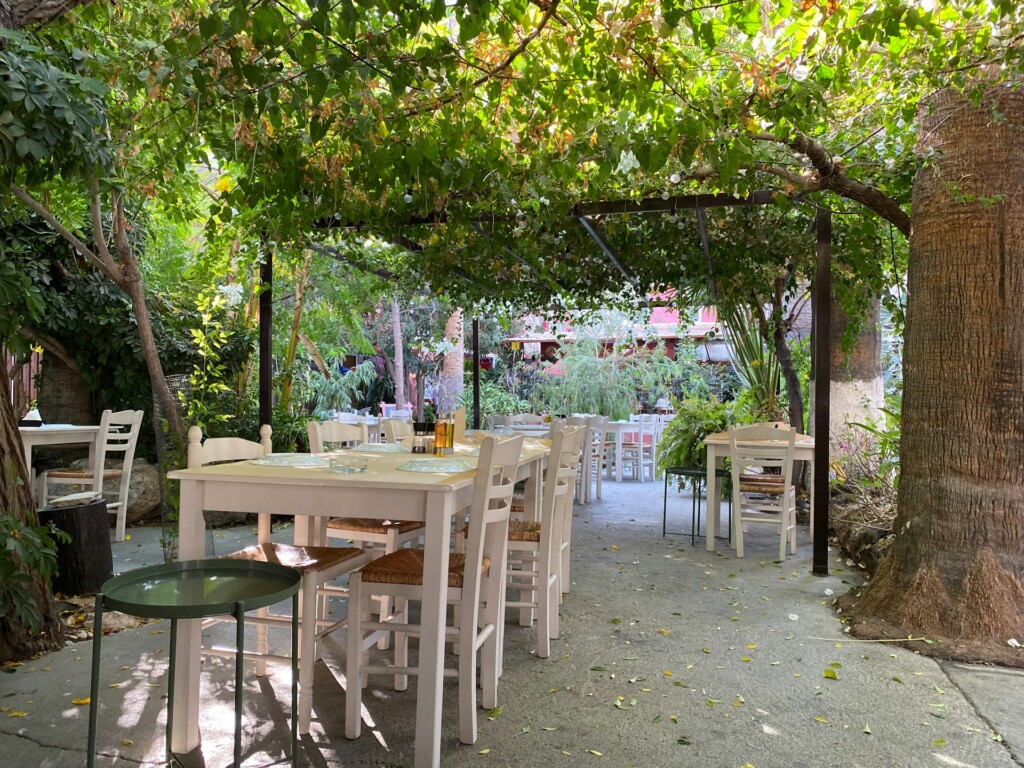
Outdoor dining surfaces endure constant wear from foot traffic, spills, cleaning chemicals, and weather. We prioritize non-porous, stain-resistant finishes for tabletops, counters, and flooring because they resist bacteria buildup and satisfy health code requirements. Porcelain pavers, for example, absorb almost no water, which prevents cracking in freeze-thaw conditions and eliminates the need for periodic sealing.
For furniture frames, powder-coated aluminum offers a practical balance of light weight, rust resistance, and long service life without requiring heavy maintenance. In coastal or high-humidity environments, marine-grade polymer frames perform well because the material resists salt air, moisture, and UV degradation throughout the material, not just at the surface.
Modular seating configurations give operators the flexibility to reconfigure the floor plan quickly for private events, peak service periods, or seasonal capacity changes. Every furniture selection we specify must meet ADA table-height and spacing requirements, as well as any applicable fire-safety ratings, before procurement.
Fabrics And Soft Goods For Commercial Outdoor Use
Cushions, canopy panels, and shade fabrics face intense UV exposure and repeated moisture cycles in commercial settings. Solution-dyed acrylic fabrics, such as those from the Sunbrella brand, are colored throughout the fiber during manufacturing rather than surface printed, delivering fade resistance that typically holds up for five or more years under constant sun exposure.
For high-moisture zones or areas exposed to frequent rain, vinyl-coated fabrics provide a fully waterproof barrier and are easy to clean with standard commercial sanitizers. The trade-off is reduced breathability, so we evaluate ventilation conditions at the site before specifying this option for enclosed or semi-enclosed spaces.
Fire-retardant treatment is available for many commercial outdoor fabrics and may be required under NFPA standards when the material is installed near cooking stations or heating equipment. We confirm applicable fire-rating requirements during the design phase so fabric selections are code-compliant before installation begins.
Climate-Specific Shade And Heating Solutions
Hot-climate installations call for UV-blocking shade structures combined with active cooling measures. Misting systems reduce ambient temperatures at the seating level by several degrees and can be integrated into the patio structure during rough-in to avoid disruptive retrofits later. Outdoor fans mounted on pergola systems or overhead structures improve air circulation and reduce heat buildup under covered areas.
Cold-weather operation depends on retaining warmth without creating fire hazards or code violations. Infrared heaters mounted overhead direct radiant heat downward to occupied areas without open flames, making them compatible with most local fire codes when installed at manufacturer-specified clearances. Windscreens—either fixed panel systems or retractable fabric barriers—reduce convective heat loss and extend the comfortable operating season.
For year-round or seasonal enclosure, engineered fabric covering systems designed to meet area-specific wind and snow loads under the International Building Code (IBC) provide a practical alternative to permanent construction. These systems are available in configurations that span large areas and may be permitted as temporary or permanent structures depending on local zoning classifications. We coordinate structural engineering documentation and IBC compliance for these installations as part of the permit submittal package.
How Should The Permit, Inspection, And Operational Compliance Process Be Managed?
Building a Structured Permit Workflow
We start the permit process well before any application hits a reviewer’s desk. Defining the full project scope, confirming the budget, and assembling all required documents up front keeps the submittal clean and complete. A missing drawing or an incorrect fee calculation can send a package to the back of the review queue, costing weeks on the schedule.
Once the package is ready, we submit complete construction drawings and all applicable fees as a single coordinated submittal. Jurisdictions that receive incomplete submittals often issue correction notices before a substantive review even begins. Avoiding this cycle is straightforward: submit correctly the first time.
When review comments come back, we address them quickly and assign each comment to the appropriate trade or design professional with a firm internal turnaround deadline. Letting review comments sit unresolved is one of the most common causes of permit delays on outdoor dining projects. Active management of the feedback loop keeps the approval timeline moving.
Aligning Inspections with Construction Milestones
After permits are issued, we build inspection scheduling directly into the construction milestone plan. Each phase of work has a corresponding inspection checkpoint, so the site is always staged and ready when an inspector arrives. Waiting until work is complete to think about inspections creates bottlenecks that push back the certificate of occupancy.
Before any official inspection, we conduct internal pre-inspections for the systems most likely to generate failures: fire suppression, commercial ventilation, and ADA accessibility features. These internal walkthroughs let us catch deficiencies on our own schedule rather than during a formal review. We coordinate with all trades before those official reviews, so every system is tested, documented, and ready.
Inspection records are maintained throughout construction. Those records serve as a compliance history that supports future renewals, operational audits, and any disputes that arise after opening. A well-documented inspection trail also simplifies the process when jurisdictions request proof of prior approvals during license renewals.
Maintaining Operational Compliance After Opening
Compliance obligations do not end when the outdoor dining area opens. The physical space must remain clean, organized, and consistent with the approved plans at all times. Furnishings need to be secured after operating hours to prevent displacement into pedestrian paths or obstructing utility access points.
Utility access points, including gas shutoffs, electrical panels, and service connections, must remain clear and unobstructed. Blocking these points can trigger violations during routine inspections and create serious safety risks during emergencies. We build this requirement into the operational handoff so property owners and operators understand it from day one.
Noise is a frequent compliance trigger for outdoor dining spaces in urban areas. Where amplified sound is planned, a Street Activity Permit is typically required before any speakers or live performances are introduced. Operating without that permit can result in fines or restrictions on future outdoor programming.
Operating Rules with Real Consequences
Smoking and e-cigarette use are prohibited in outdoor dining areas under most municipal codes, and enforcement is taken seriously. Signage requirements vary by jurisdiction, but the underlying prohibition is consistent across most urban and suburban markets. Operators who overlook this rule face fines and, in repeat cases, license jeopardy.
Service must remain within the boundaries of the licensed premises at all times. Expanding service into adjacent sidewalk areas or beyond the approved outdoor dining footprint without a permit amendment is a direct compliance violation. The outdoor dining license itself must be kept on-site and available for inspection on demand.
Operating hours are another area where violations accumulate quickly. In many jurisdictions, outdoor dining hours run from 8 a.m. to midnight, though local ordinances vary. Exceeding those hours, even occasionally, can trigger penalties, conditional restrictions, or full license suspension. We make sure operators receive a clear summary of their specific operating-hour requirements as part of the project closeout package.
Conclusion And Next Steps

Every code-compliant patio and sidewalk seating project depends on decisions made well before the first permit is submitted. Early code research, thorough site inspections, and accessibility-focused layout planning determine whether a project opens on schedule or stalls in review. Documented compliance—from zoning approvals through final inspection records—protects the operation long after opening day.
The path forward follows a clear sequence. Confirm zoning classifications and ADA accessibility requirements before committing to a layout. Map existing utilities and drainage conditions to avoid costly mid-project surprises. Select materials and coverings that satisfy both health code standards and local structural requirements. Then build an inspection schedule aligned to project milestones that carries the project from design through the certificate of occupancy, with operational rules already in place for the day the space opens to guests.
At EB3 Construction, we coordinate each phase of exterior patio and sidewalk seating projects, from permit applications and site preparation to inspections and compliance documentation. Contact us to discuss your outdoor dining project.