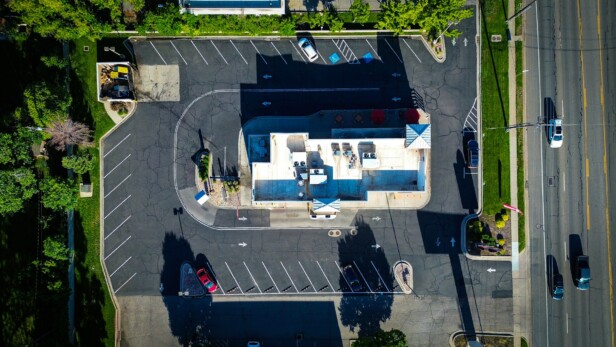
Parking and traffic flow on a QSR project aren’t details to sort out after the site plan is set — they’re operational decisions that affect how fast the build moves and how well the restaurant performs from opening day forward. Getting both right requires treating workforce access during construction and customer circulation after opening as connected problems that need to be planned together from the start.
How to Plan Workforce Parking, Site Access, and Customer Traffic Flow for a QSR Construction Project
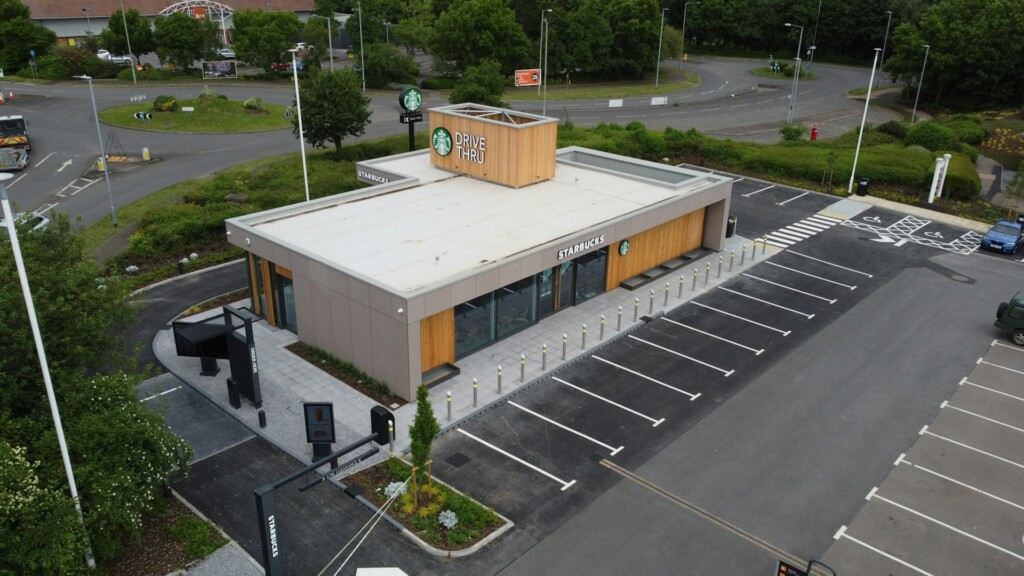
A QSR build moves fast. Framing crews, MEP trades, and finish contractors often overlap within weeks, and each rotation brings different headcounts, vehicle mixes, and start times. We treat workforce parking as a phased, access-first plan that anticipates those shifts instead of reacting mid-build.
Define the Workforce by Phase Before Securing Parking
The first step is building a phase-by-phase workforce estimate. We map out crew counts by trade, identify which subcontractors overlap, and flag any phase-specific access needs such as pre-dawn start times or crews arriving with oversized equipment. A QSR site may start with a lean crew for sitework and utilities, then spike during structural framing and MEP rough-in, and taper back toward finishes and punch-list work.
Subcontractor rotation is a practical reality on any fast-track build. New trades come in, others wrap up, and the number of vehicles onsite can change week-to-week without warning. Knowing those patterns in advance gives us the buffer to keep arrivals predictable across every phase.
Identify Every Vehicle Type on the Project
Parking one hundred workers sounds straightforward until you account for what they drive. A QSR build typically involves personal cars, pickup trucks used by foremen and specialty subs, tool vans during MEP phases, material trailers during framing, and equipment carriers during sitework. Each vehicle type has different spatial requirements.
Garages and off-street lots often carry height restrictions that rule out vans and trailers. Some lots restrict trailer storage entirely. We identify the full vehicle mix early so we can match each type to a location that fits, rather than sending a tool van to a structured garage with a six-foot clearance bar. Oversized vehicles get allocated to open-air, ground-level lots with the turning radius and stall width they require.
Set a Realistic Access Radius for Each Crew Category
Walking distance directly affects shift start times. We use a 0.25-mile radius as the working limit for early-morning crews and workers arriving with heavy gear. That distance keeps the walk short so pre-dawn crews reach the gate before the shift window closes. For general crews on standard start times, a 0.5-mile radius is manageable and keeps nearby off-street lots in play.
Any parking beyond that 0.5-mile threshold requires a shuttle. Relying on workers to self-navigate from remote locations leads to scattered arrival times and late starts that compound across the schedule. Defining the radius up front also prevents scattering crews across unpredictable street parking, which is a consistent source of friction on tight urban or suburban QSR sites.
Allocate Parking Across Three Zones
With the workforce defined and the access radius established, we allocate parking across onsite, nearby off-street, and remote zones based on operational role. Onsite spaces go to essential vehicles only: supervisory trucks, tool vans that need same-day access to materials, and any vehicle directly tied to daily site operations. That keeps the onsite area clear of congestion while reserving proximity for the vehicles that genuinely need it.
Most of the crew parks in nearby off-street lots within the established radius. These lots handle general labor, trade crews, and rotating subs whose headcount fluctuates. When site conditions limit nearby capacity, or when a large MEP crew pushes headcount above what surrounding lots can absorb, remote parking with a dedicated shuttle becomes the right call. That arrangement is especially common on urban infill QSR sites where adjacent street parking is restricted and laydown areas consume what little onsite space exists.
Control Access from Day One
Uncontrolled access creates bottlenecks. We establish access controls at the start of the project and update them as crews rotate in and out. For early-shift entry, that means confirming 24-hour access at whichever lots pre-dawn crews use. Manual check-in processes slow gate flow; license plate recognition (LPR) and QR code passes are more practical for subcontractor rotation because they eliminate the need for physical passes and keep arrivals moving at a steady pace even as headcounts shift.
Designated entry and exit instructions matter too. Workers arriving at a new lot for the first time on a dark, early morning need clear signage, a known gate, and a lit path to the site. Ambiguity at that point in the day costs time. We confirm entry/exit instructions, assign designated gates, and communicate those details to each sub before their crew arrives onsite.
Run Shuttles Around Shift Start Times
When remote parking is in play, shuttle scheduling determines whether the arrangement works. We increase shuttle frequency during the 60- to 90-minute window before each major shift start and run continuous loops through that window. That pattern prevents large groups of workers from arriving at the gate simultaneously after a single shuttle drop, which creates another bottleneck.
Between shifts, shuttle frequency can drop without affecting operations. The goal is to concentrate capacity where it matters: the arrival window. That approach also improves safety for pre-dawn crews, who wait at a well-lit staging point rather than walking several blocks in low visibility before the job site opens.
How Do I Structure Site Access And Traffic Management During Construction?
Traffic Flow, Routing, and Delivery Scheduling
A formal construction traffic management plan starts by defining how vehicles move to, from, and through the site. We establish dedicated construction access points early in preconstruction, then map haul routes that keep heavy trucks away from sensitive areas like school zones, residential streets, and active pedestrian corridors. Public detours are documented and signed before ground breaks—not after complaints arrive.
Delivery scheduling runs parallel to route planning. Targeting off-peak windows keeps haul trucks from compounding existing road congestion. Coordinating concrete pours, steel drops, and material deliveries against the daily traffic calendar prevents unmanaged lane-blocking that draws regulatory attention and delays crews waiting for materials.
Internal Traffic Control Plan (ITCP)
Once vehicles are on site, a separate layer of control takes over. The Internal Traffic Control Plan defines travel lanes through the work zone, designates loading areas for specific trade activity, and enforces one-way circulation wherever space is tight. On a QSR pad, that often means one entry point for concrete trucks and a separate exit loop for dump trucks removing excavated material.
Reversing vehicles are assigned spotters before work starts. Backing incidents are among the most common on-site collisions, and a designated spotter with clear hand signals eliminates the guesswork. We also maintain a hard separation between vehicle lanes and pedestrian paths through the site, with coned buffer zones and physical barriers where foot traffic and equipment operate in close proximity.
Pedestrian Safety and ADA Compliance
When construction activity disrupts a public sidewalk or crossing, a compliant temporary pedestrian route is installed before the closure begins. That means a continuous walking surface with a minimum five-foot clear width, ADA-compliant temporary curb ramps at crossing points, and adequate lighting for early- and late-shift conditions. Signed detours follow MUTCD Part 6 standards.
How Should I Design Customer Parking And Traffic Flow For A High-Volume QSR After Opening?
Drive-Thru Queue Capacity And Lane Configuration
Queue sizing sets the ceiling on how many customers a site can serve without backing traffic onto adjacent roads. A 2024 Florida DOT study observed more than 3,200 drive-thru transactions and found that queue lengths depend on two primary variables: the arrival rate and the service rate. Designing to the average is a mistake; the site needs to hold the 90th percentile queue without spillover.
Lane width standards have shifted. The industry has moved away from an 18-foot per-vehicle stacking length toward 20 feet, and lane widths have expanded from 9 feet to 10 feet, with dedicated 2-foot walkways alongside—reaching an effective 12-foot lane in many configurations. We factor these updated dimensions into sitework coordination so the finished geometry supports safe upstream ordering without pinching adjacent drive aisles.
Multi-lane drive-thru configurations add throughput, but the gain depends on how the lanes merge toward the pickup window. Microsimulation testing shows that a continuous second lane with no forced merge adds roughly 85 to 90 percent of a full lane’s capacity. A merge-then-diverge arrangement reduces overall capacity further. We coordinate lane geometry with the civil team early so the configuration matches the brand’s service protocol, whether that is a Y-lane, dual-lane, or tandem layout.
Order Point Placement And Digital Menu Boards
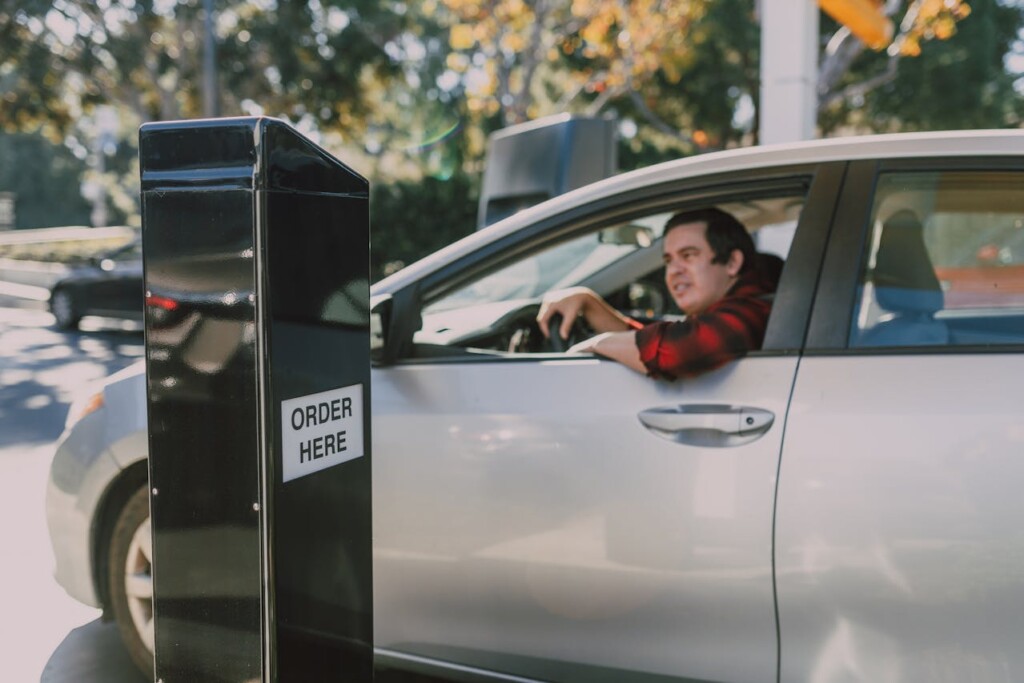
Where the ordering conversation happens determines how quickly vehicles advance to the pickup window. Placing digital menu boards at clear sightlines before the order point gives customers time to decide, which shortens the average order time and improves lane capacity. Duplicate menu boards positioned farther back in the queue serve the same purpose for vehicles still stacking.
According to QSR’s research, 56 percent of QSR customers identified a designated drive-thru lane for mobile-order pickup as the top feature they want from future locations. Separating mobile-order vehicles from standard-order vehicles reduces order-point congestion and allows the kitchen to manage fulfillment timing more precisely. We build this lane separation into the site plan rather than treating it as an afterthought during interior fit-out.
Pickup Parking And On-Site Circulation
Dedicated pickup parking keeps the drive-thru lane moving when orders require additional preparation time. Spaces should be clearly marked, positioned close to an accessible interior pickup point, and sized to accommodate the expected mix of passenger vehicles and delivery-service drivers. Without designated spots, drivers holding for long-prep orders stall the pickup window and compress the entire queue.
Site circulation works when customer paths are intuitive from entry to exit. We separate pedestrian walkways from vehicle lanes with raised curbs or bollards, eliminate blind corners that create conflict points, and keep one-way flow through the lot consistent with the drive-thru direction. Angled parking at 45 or 60 degrees simplifies maneuvering in tighter lots and reduces the turning radius needed at the end of each row.
Loading and unloading zones require their own designated areas away from customer circulation. Delivery trucks need lane widths that accommodate longer wheelbases without blocking drive aisles. We coordinate these dimensions during site design so delivery operations do not conflict with peak customer traffic, particularly during weekday midday periods when fast-food trip generation is highest.
Entry And Exit Points, Signage, And Safety Controls
Separating entries from exits prevents head-on conflicts at driveways and keeps traffic from queuing back onto the public roadway. On larger sites, multiple access points distribute inbound flow across the frontage, which reduces concentration at any single driveway. Aligning access points with existing road geometry and traffic-signal phasing requires coordination with the local municipality during the permitting process, and we handle that as part of site logistics planning.
Directional signage, regulatory markings, and traffic-calming features work together to promote predictable behavior inside the lot. Raised crosswalk markings, speed tables near pedestrian paths, and adequate lighting at all customer service points reduce the risk of accidents during both daytime and late-night service. Strategically placed bollards protect drive-thru windows, menu boards, and building corners from vehicle contact without restricting safe travel lanes.
Technology Integration And Future Scalability
License plate recognition at entry and exit points accelerates flow for repeat customers and supports loyalty-program integration without requiring additional staff at access gates. Smart parking sensors paired with wayfinding displays guide drivers to open spaces directly, cutting the time vehicles spend circling the lot during peak periods. These systems connect to site-wide digital infrastructure, which we rough-in during construction to avoid costly retrofits after opening.
Future growth considerations belong in the original site plan. Leaving conduit capacity for added access points, designing the lot in modular sections that can expand, and sizing utility connections to support an additional drive-thru lane preserve optionality without requiring a full redesign. A site that handles today’s volume with no room to grow becomes a constraint the moment the brand expands its format or drive-thru demand increases beyond original projections.
Conclusion And Next Steps
Parking, access, and traffic flow function as one connected system across a QSR project’s full lifecycle. Decisions made during sitework coordination directly shape how the finished restaurant performs at peak hours, and gaps left unaddressed during construction rarely get easier to fix after opening. Aligning field teams, designers, and stakeholders early in the project keeps both the build and operations on schedule.
During construction, this includes phasing workforce access based on crew count and trade overlap; scheduling deliveries during off-peak windows; maintaining a formal traffic control plan; and keeping pedestrian routes clearly separated from haul traffic. Once the site opens for business, the focus shifts to queue capacity sized for actual peak demand; order points positioned for quick decisions; dedicated pickup parking that keeps drive-thru lanes clear; and lot layouts with signage and lighting robust enough to guide drivers without confusion. Building in room to scale, whether through additional access points or modular lot configurations, protects the investment as volume grows.
Connect with EB3 Construction to discuss how we approach QSR construction planning from site logistics through drive-thru design.