
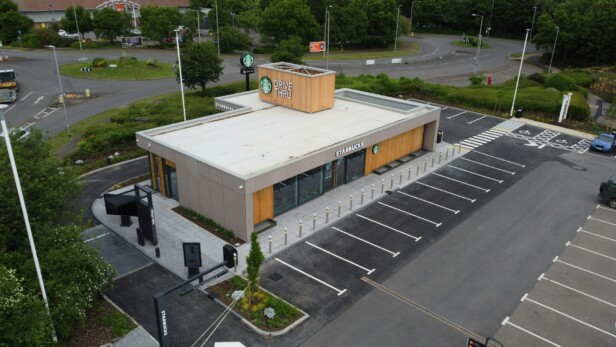
Many Texas QSR projects stall not during construction but before a single permit is submitted, often because the site was never confirmed to allow a drive-thru. In Texas, drive-thru compliance spans zoning, building codes, health department approvals, ADA requirements, and traffic standards, all of which must align before construction can begin.
This article walks through the key checks we coordinate on every drive-thru project—from confirming permitted use and stacking requirements to preparing complete submittals that hold up under city review.
Which Zoning Checks Confirm A Drive-Thru Is Allowed On My Texas Site?

Start With A Permitted Use Analysis
Before signing a lease or committing capital to a site, confirm that both a restaurant and a drive-thru are allowed under the property’s current zoning classification. Texas municipalities each maintain their own zoning codes, so the governing jurisdiction matters. A site zoned General Business in one city may carry different use permissions than a similarly labeled district in a neighboring municipality.
Contact the local planning department directly to verify that food and beverage service with a drive-thru component qualifies as a permitted use at that address. Some jurisdictions list drive-thrus as a permitted use by right, while others classify them as a conditional use that requires additional review. Getting this confirmation in writing before design work begins protects the project schedule and budget.
Review Overlay Districts And Use Restrictions
Many Texas cities layer overlay districts on top of base zoning, and those overlays can restrict or modify what is otherwise allowed. In Austin, for example, the East 12th Street Neighborhood Conservation Combining District limits drive-thru operations to the hours of 6:00 AM to midnight and caps curb cuts at 30 feet for drive-thru accessory uses. Fort Worth’s mixed-use districts prohibit drive-thru windows and stacking lanes along street-facing building facades and, where possible, require that they be located to the rear of buildings.
Beyond hours of operation, overlay districts may govern outdoor seating configurations, alcohol service, and signage limits. A site that appears straightforward under base zoning can carry significant design constraints once overlay requirements are applied. We review these layers during pre-construction feasibility to avoid discovering restrictions after design is underway.
Confirm Bulk Standards And Site Development Rules
Zoning codes also set bulk standards that directly shape site layout. Setback requirements determine how far stacking lanes and service points must sit from property lines and adjacent uses. In Tyler, Texas, service points and stacking lanes on lots abutting residential zoning districts must maintain a setback of at least 80 feet and comply with specific buffer yard landscaping standards. Lots adjacent to office or mixed-use districts carry a 30-foot setback requirement under the same code.
Parking counts, loading area dimensions, and lighting standards are additional bulk requirements that affect site feasibility. A drive-thru layout that satisfies the stacking lane geometry may still fall short of required parking spaces or fail to meet lighting pole spacing rules. Reviewing these standards against the proposed site plan early prevents costly redesigns during the permit review phase.
Understand When A Conditional Use Permit Is Required
When a drive-thru is proposed near residential uses, many Texas cities require a Conditional Use Permit rather than approving the project outright. A CUP triggers a formal review process that typically includes a public notice period, neighborhood outreach, and a hearing before the planning and zoning commission. In Mission, Texas, a BBQ restaurant seeking a drive-thru service window at an existing commercial plaza was required to obtain a CUP, and the permit was issued as non-transferable, meaning a future tenant at the same location would need to apply again.
The CUP process adds time to the overall project schedule. Depending on the jurisdiction, public hearings may require notices to property owners within a defined radius, often 200 feet or more, and commission meeting schedules can add weeks between submittal and decision. Projects near residential zones should budget for this process from the start rather than treating it as an unexpected delay.
Know When A Variance May Be Needed
If the proposed site plan cannot meet one or more zoning requirements as written, a variance may be the only path forward. Variances are reviewed by a zoning board of adjustment, and approval is not guaranteed. The applicant must demonstrate that strict application of the code creates an undue hardship specific to the property, not simply that the variance would be more convenient or cost-effective.
Pursuing a variance adds both time and uncertainty to a project. It is a separate application process from the standard permit review, and a denial can require redesigning the site or reconsidering the location entirely. We evaluate variance risk during pre-construction site analysis so that developers and property owners understand the full picture before committing to a site.
Plan For Realistic Permit Timelines
Texas quick-service restaurant (QSR) drive-thru projects move through multiple sequential and parallel review processes. Permit submissions typically take one to three months to prepare and file. Municipal reviews, depending on the jurisdiction and project complexity, can run from one to six months. Construction itself generally spans two to six months, and final inspections along with licensing can add another one to two months at the close of the project.
Compressing this timeline requires submitting zoning, building, and health applications concurrently when the jurisdiction allows. Waiting for zoning approval before beginning building permit preparation is a common source of avoidable delay. We structure our pre-construction coordination to run these tracks in parallel, keeping the overall schedule as tight as the review process permits.
How Do Stacking, Queuing, And Traffic Studies Affect Drive-Thru Approval?
Why Stacking Requirements Exist And What They Measure
Drive-thru stacking requirements exist for one practical reason: cities want vehicles contained on private property, not spilling onto public streets. A queue that backs out of a site entrance and into traffic creates safety hazards and draws immediate scrutiny from city traffic engineers.
What most developers overlook is that stacking rules typically measure only the capacity of the drive-thru lane itself. They do not account for how vehicles enter or exit the site. Ingress and egress design is a separate consideration, and inadequate access can undermine an otherwise compliant stacking plan.
Requirements vary significantly by municipality. Some cities simply require a lane equivalent to six to eight average vehicle lengths. Others break it down by segment—for example, how many vehicles must queue before the menu board and how many can stack between the menu board and the pickup window. In Tyler, Texas, a single stacking space is defined as 9 feet wide by 20 feet long, with separate categories for inbound and outbound vehicles. Understanding which standard applies in your jurisdiction is a prerequisite to finalizing any site layout.
Traffic Studies And What Reviewers Scrutinize
Many Texas jurisdictions require a Traffic Impact Study (TIS), Traffic Impact Analysis (TIA), or a dedicated drive-thru queuing study as part of the permit application. These are not formalities; city traffic engineers use them to evaluate conditions at the site.
Peak-hour traffic performance is the central concern. Reviewers assess whether vehicles will queue safely without backing onto the public street and how the drive-thru interacts with adjacent intersections and driveways. Noise attenuation from order-point speakers is also evaluated, particularly when residential uses are nearby.
The Dutch Bros closure in Phoenix—where the city revoked a Conditional Use Permit after morning rush-hour queuing repeatedly spilled into public streets—illustrates what happens when traffic studies underestimate demand. That outcome is avoidable with honest traffic modeling early in design.
Site Circulation And Design Elements That Support Approval
Stacking length alone does not satisfy reviewers. The full site circulation plan must demonstrate that queued vehicles will not block parking spaces, drive aisles, or emergency vehicle access. Every entry and exit point needs clear geometry so vehicles can move through the site without conflict.
Dual-lane drive-thru configurations can improve throughput and reduce queue length, but they require well-defined merge points before the pickup window. Poorly designed merges create confusion and slow service, which defeats the purpose of the second lane.
Menu board and speaker placement often matter more than operators expect. Positioning order points away from property lines reduces noise impacts on adjacent uses and can limit the conditions reviewers attach to an approval. Clear sight lines throughout the lane, combined with proper signage and pavement markings, round out a circulation plan that city traffic engineers can approve with confidence.
Which Building Codes, ADA, And Health Rules Should I Coordinate From Day One?

Texas Building Codes and Local Ordinances
Texas building codes vary by city, and that variation has real consequences for structural framing, electrical systems, and site design. What satisfies code in one municipality may fall short in another, which is why we engage local building officials at the start of design rather than during construction. Getting it wrong late in the process leads to rework, and rework costs time and money.
Each jurisdiction adopts its own version of the International Building Code, sometimes with local amendments that affect everything from occupancy classifications to fire-rated assemblies. For a QSR drive-thru, those distinctions affect how we detail exterior walls, specify glazing near the order window, and design the mechanical systems. We review the adopted code edition and any local amendments before drawings reach the plan review stage.
ADA Compliance in Drive-Thru Design
ADA requirements shape more than restroom layouts. Accessible parking stall counts, van-accessible spaces, accessible routes from the parking field to the entrance, door widths, and counter heights all fall under federal accessibility standards that apply regardless of jurisdiction. For a QSR with a drive-thru, the accessible path from parking to the walk-in entrance must be continuous and unobstructed, even when the drive-thru lane cuts across the site.
We coordinate ADA compliance during the schematic design phase so that accessible routes, door hardware, and restroom configurations are built into the layout from the start. Retrofitting accessible features after a plan review comment is far more disruptive than designing them correctly the first time. Building officials flag ADA deficiencies during plan review, and those comments can delay permit issuance by weeks.
Life Safety Systems and Fire Department Coordination
Kitchen fire suppression is a non-negotiable coordination point. Vented hoods with removable filters must be installed over all cooking surfaces, and the suppression system design requires review and approval from the local fire department before rough-in begins. In Austin, for example, establishments exceeding 5,000 square feet must provide a sprinkler system, and those with an occupancy load above 50 people require fire alarms. Rules like these vary by jurisdiction, so we confirm the thresholds that apply to each specific project.
Fire department coordination also covers gas equipment installation with proper ventilation, exit signage, egress path widths, and the placement of fire extinguishers and suppression pull stations. We schedule fire department pre-submittal meetings early so that suppression system drawings are complete and accurate before inclusion in the building permit package. A suppression system that requires redesign after permit submission can push the construction schedule back by a month or more.
Health Department Compliance and Texas DSHS Requirements
In Texas, retail food establishments must secure a health permit before opening, and the review process starts well before construction is complete. The Texas Food Establishment Rules (TFER) set statewide standards for sinks, finishes, handwashing stations, equipment clearances, and refrigeration. Local health departments may add requirements or maintain their own plan review checklists. We coordinate with the authority having jurisdiction early, submit equipment schedules and layout drawings for health review, and incorporate comments before permit submittal to avoid late-stage changes.
What Submittals And Reviews Help Me Avoid Delays Or Denials?
A permit application is only as strong as the documents behind it. Reviewers at the municipal planning department work through a defined checklist, and any missing item triggers a correction cycle that can add weeks to the schedule. We prepare complete submittal packages from the start, covering every document category reviewers expect to see before they begin formal review.
Core Documents Every Submittal Package Needs
A complete zoning and building permit submittal for a QSR drive-thru in Texas typically requires a certified property survey, a dimensioned site plan, and floor layout drawings showing the full interior arrangement. The site plan must show parking provisions, drive-thru lane geometry, ingress and egress points, and pedestrian circulation paths so reviewers can assess site flow without requesting supplemental drawings.
The submittal should also include a written description of the food and beverage service model, proposed hours of operation, and any planned outdoor equipment such as menu boards, header boards, and directional signage. Reviewers use the service description to confirm that the proposed use aligns with the permitted classification and to flag any operational elements that may require additional conditions.
Signage plans warrant their own section within the package. Many Texas municipalities cap the size, height, and illumination of drive-thru menu and header boards, and a submittal that omits signage details often draws a correction request that stalls the entire review. We include dimensioned signage drawings and note any applicable overlay district restrictions on illuminated or digital displays.
Traffic Studies And Off-Site Improvement Triggers
Many Texas jurisdictions require a Traffic Impact Study or a dedicated queuing study as part of the drive-thru approval process. These studies, reviewed by the city traffic engineer, analyze peak-hour conditions and confirm that the on-site stacking capacity does not push vehicle queues onto adjacent streets or block drive aisles. We coordinate with civil and traffic engineers early, so these studies are ready with the initial submittal rather than submitted later in response to reviewer comments.
Some projects trigger off-site improvement requirements that developers do not anticipate at the outset. High-volume drive-thru sites on arterial roads may require the construction of deceleration lanes or left-turn lanes at the site access point before the city will issue a certificate of occupancy. Identifying these triggers during pre-application coordination prevents late-stage surprises that compress construction schedules and strain project budgets.
Noise, Pedestrian Safety, And Late-Hour Operations
Order confirmation speakers and menu board audio systems generate noise levels that neighbors and city reviewers scrutinize, especially near residential zones. We address noise proactively by specifying speaker placement and sound attenuation measures in the construction documents and noting those measures explicitly in the submittal narrative. Reviewers are more likely to approve a package that demonstrates the applicant has already accounted for noise exposure.
Pedestrian circulation across the drive-thru lane is a frequent safety concern that site plan reviewers flag regularly. The submittal should clearly show how pedestrians can move from the parking field to the restaurant entrance without crossing an active stacking lane. Where the site geometry makes a clean separation difficult, we include design solutions such as raised crossings, signage, or pavement markings that address the conflict point directly.
Proposed hours of operation require careful documentation when late-night service is part of the business model. Some Texas cities restrict drive-thru hours near residential properties, and a submittal that lists 24-hour operations without acknowledging proximity restrictions invites a denial or a conditional approval that limits hours. We review local ordinance language on hours before the application is drafted and structure the submittal to reflect what the code will support.
Public Hearings And Neighborhood Outreach
Projects requiring a Conditional Use Permit or a variance move through a public hearing process before a decision is issued. Under most Texas municipal codes, the city must publish a legal notice in advance and allow adjacent property owners to comment. We prepare hearing materials that address the criteria reviewers must evaluate, including traffic impact, neighborhood compatibility, and site design, so the presentation is focused and the record supports approval.
Neighborhood outreach before the formal hearing reduces the likelihood of organized opposition that can complicate the approval record. Engaging adjacent property owners early, explaining the site design, and addressing concerns about noise, lighting, and traffic give the project a stronger position at the public hearing. Submitting zoning, building, and health applications concurrently, where the jurisdiction allows it, compresses the overall timeline and keeps all review tracks moving in parallel rather than sequentially.
Conclusion And Next Steps
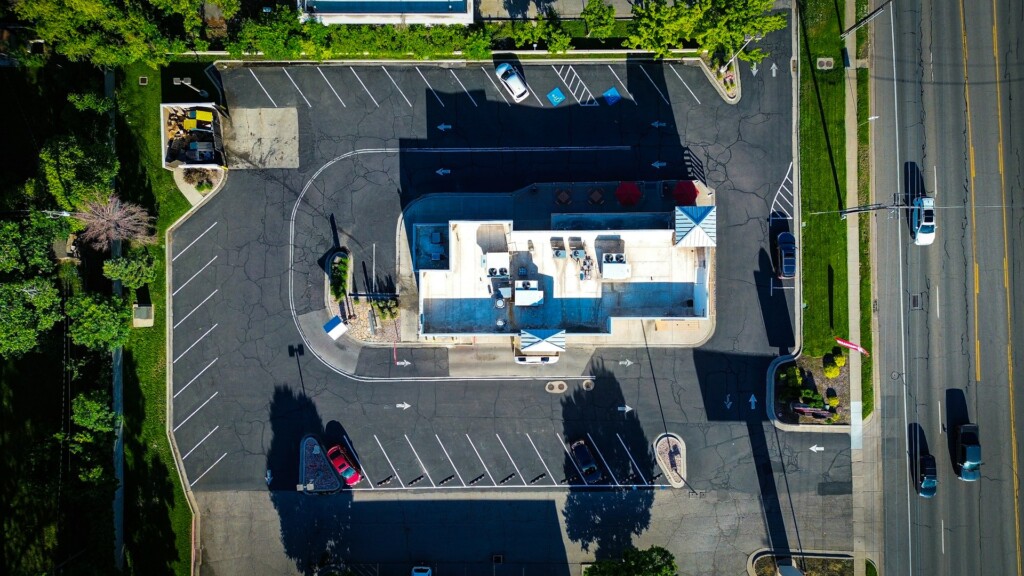
Texas QSR drive-thru compliance brings together zoning, building codes, ADA standards, health permits, and traffic engineering into a single, interdependent process. Each layer connects to the others, and a gap in any area can stall the entire permitting timeline. Projects move most efficiently when feasibility questions are answered before the design is locked in.
At EB3 Construction, we coordinate directly with planning staff, traffic engineers, and civil engineers from the earliest stages of a project. We align zoning, building, and health reviews on parallel tracks instead of sequential ones, and we build permitting timelines around the specific requirements of each jurisdiction, not assumptions. That coordination keeps drive-thru permitting on schedule and reduces the risk of costly revisions during construction.
Contact EB3 Construction to discuss your Texas QSR drive-thru project and start your compliance process on a solid foundation.