Legal challenges from accessibility violations can cost thousands of dollars in penalties and months of construction delays. The Americans with Disabilities Act requires specific construction features that create barrier-free access for people with disabilities, affecting every aspect of building design from parking spaces to door hardware.
ADA compliance construction upgrades transform buildings into accessible environments through targeted modifications to entrances, routes, restrooms, parking areas, and communication systems. We integrate these standards into both new construction projects and renovation work, ensuring every person can navigate and use the space independently and safely.
When Do Renovations Trigger ADA Upgrades, And What Is The 20% Rule?
When we alter a primary function area, ADA regulations automatically require upgrades along the path of travel leading to that space. A primary function area encompasses spaces where major activities occur, such as customer service areas, dining rooms, meeting rooms, or office spaces where employees regularly work.
Interior Path Of Travel Elements
Interior upgrades focus on the route from the building entrance to the altered area. We must address doors and door hardware, ensuring proper opening force and accessible handles. Thresholds need modification to eliminate barriers, while signage must meet height and contrast requirements.
Drinking fountains along the route require accessibility upgrades, including proper height and clear floor space. The nearest restroom on the path of travel must be made fully accessible, covering everything from door width to grab bar placement and fixture heights.
Exterior Path Of Travel Requirements
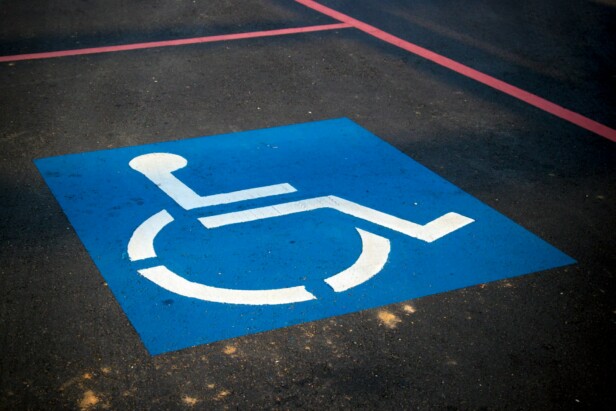
Exterior elements create the accessible route from public areas to the building entrance. We examine the connection from the public sidewalk to ensure continuous accessibility. The nearest accessible parking spaces need proper sizing, access aisles, and compliant striping.
Curb ramps become essential where sidewalks meet parking areas or streets. All signage along this exterior route must meet ADA visibility and placement standards to guide users effectively to the entrance.
The Disproportionate Cost 20% Rule
The 20% rule serves as a cost protection mechanism for property owners. When path of travel upgrades exceed 20% of the primary function area alteration cost, the work is deemed disproportionate. At this threshold, we are only required to spend up to that 20% maximum on accessibility improvements.
This calculation excludes permit fees and focuses solely on construction costs. The 2010 ADA Standards clearly state that alterations made to provide an accessible path of travel become disproportionate when costs exceed 20% of the alteration to the primary function area.
Maintenance Work Exceptions
Routine maintenance projects do not trigger path of travel upgrades. HVAC system work, re-roofing, and electrical work that does not involve switches or receptacles fall under this exception. Painting and other cosmetic work also avoid triggering requirements.
Non-architectural equipment installations, such as computer terminals or office equipment, do not activate upgrade requirements. However, if any maintenance work affects building usability or accessibility features, upgrade requirements may still apply.
Barrier Removal Projects
Projects focused solely on barrier removal operate under different rules. When the alteration’s primary purpose is removing existing accessibility barriers, the additional 20% cost requirement does not apply. This exception recognizes that barrier removal projects already improve accessibility.
Jurisdiction-Specific Thresholds
Some jurisdictions impose cost thresholds that trigger more extensive requirements. In California, Title 24 establishes annual cost thresholds that, when exceeded over a three-year period, require all supporting path of travel elements to be made accessible regardless of cost. These thresholds adjust annually and can significantly impact project budgets when crossed.
Which Building Areas Should You Prioritize For ADA Compliance Construction Upgrades?
We approach ADA compliance construction upgrades by focusing on high-impact areas that directly affect user access and safety. Prioritizing these critical zones ensures we address the most essential barriers while maximizing the benefit of our construction investment.
Entrances And Doors
The main entrance sets the tone for accessibility throughout the entire facility. We ensure doors provide a clear width of 32 inches when fully open, which allows comfortable passage for wheelchair users and people with mobility aids.
Door hardware selection plays a crucial role in accessibility. We install lever handles, push plates, or automatic door operators that people can operate without tight grasping or twisting motions. Automatic doors offer the best solution for heavy exterior doors, especially when paired with motion sensors placed at appropriate heights.
Thresholds require careful attention during construction. We keep them at or below 1/4 inch for exterior doors, ensuring smooth transitions that won’t catch wheelchair casters or create tripping hazards.
Ramps And Curb Cuts
Ramp construction demands precise slope calculations and proper design execution. We maintain the 1:12 maximum slope ratio, meaning each inch of rise requires at least 12 inches of horizontal run.
Level landings at ramp tops and bottoms provide essential rest areas and maneuvering space. We construct these landings at least 60 inches long and as wide as the ramp itself. Intermediate landings become necessary for longer ramps, breaking up runs that exceed 30 feet.
Curb cuts connect accessible parking to building entrances. We design these with proper slopes and adequate width while ensuring they align with the accessible route. Tactile warning surfaces help people with visual impairments detect elevation changes.
Accessible Parking Implementation
Parking area design requires careful space allocation and marking. We provide accessible spaces closest to the main entrance, typically requiring one accessible space per 25 total spaces for most projects.
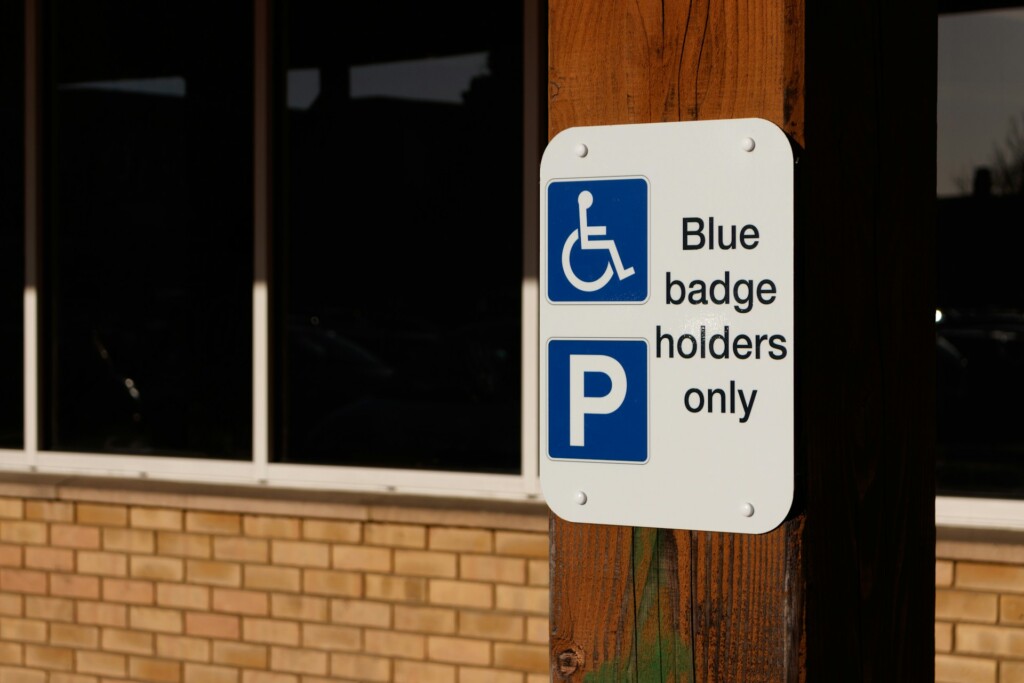
Van-accessible spaces demand additional consideration. These spaces measure 11 feet wide with 5-foot access aisles, or 8 feet wide with 8-foot aisles. We ensure proper signage placement and clear striping that won’t fade over time.
Access aisles connect parking spaces to the accessible route. We construct these with the same slope requirements as accessible routes and mark them clearly to prevent unauthorized parking.
ADA Restroom Upgrades
Restroom accessibility affects multiple design elements simultaneously. We ensure adequate maneuvering space for wheelchair users, typically requiring a 60-inch turning circle or T-shaped clearance area.
Grab bars installation follows specific placement and mounting requirements. Side wall grab bars extend 54 inches from the back wall, while rear wall grab bars span at least 36 inches. We mount these bars 33 to 36 inches above the floor with proper structural backing.
Fixture placement requires precise measurements and careful coordination. Sinks mount no higher than 34 inches with knee clearance underneath. Soap dispensers, paper towel dispensers, and hand dryers must fall within reach ranges without requiring users to lean over other fixtures.
Elevators And Lifts
Elevator specifications address multiple accessibility factors during construction. We size elevator cabs to accommodate wheelchairs with minimum dimensions of 54 inches deep by 36 inches wide for smaller elevators.
Call button placement requires installation at accessible heights, typically 42 inches maximum above the floor. We position buttons to allow both forward and parallel approaches with adequate clear floor space.
Door timing mechanisms need adjustment to provide sufficient opening duration. We set doors to remain open at least 20 seconds when activated, giving users adequate time to enter and exit safely. Braille signage and audio announcements complete the accessibility package.
Signage And Wayfinding
Effective signage combines visual and tactile elements for comprehensive accessibility. We mount permanent room identification signs on the latch side of doors at heights between 48 and 60 inches to the baseline of text.
Tactile signage includes both raised characters and Braille. We ensure proper contrast between text and background colors while using sans-serif fonts for maximum legibility.
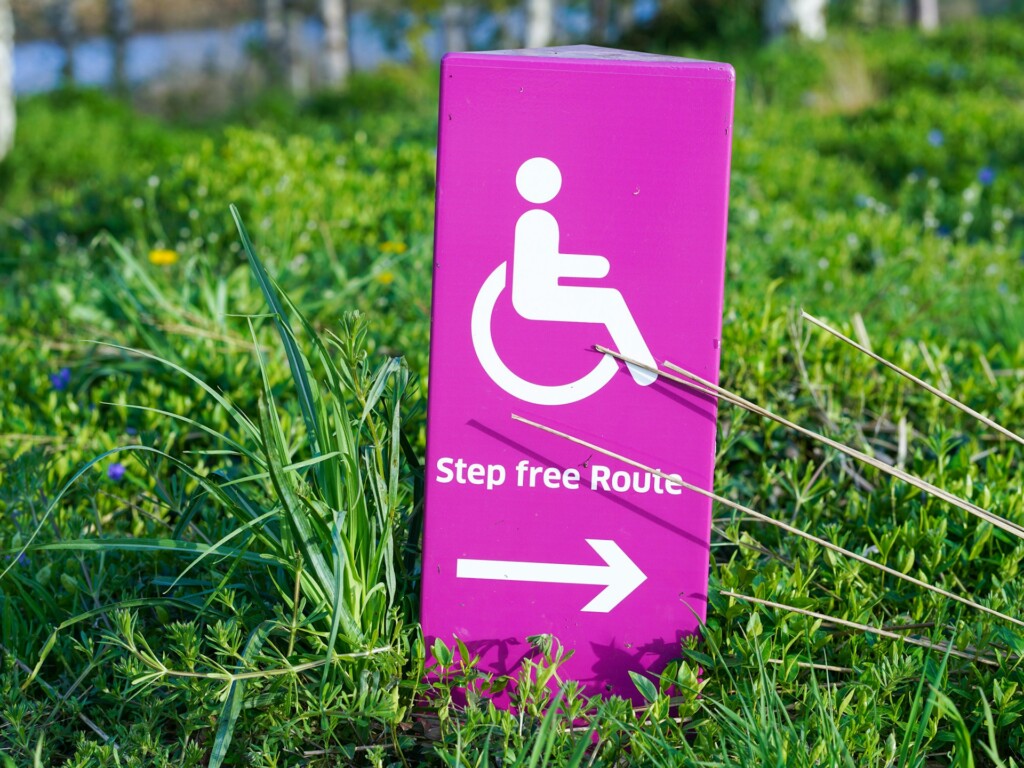
Directional signage helps users navigate complex buildings independently. We place these signs at decision points along accessible routes, using consistent terminology and clear directional arrows.
Workspaces And Public Areas
Counter heights in public areas require multiple accessibility considerations. We provide sections no higher than 36 inches for service counters, with adequate knee clearance for wheelchair users when possible.
Route width maintenance ensures continuous accessibility throughout the building. We keep accessible routes at least 36 inches wide, with passing spaces at 200-foot intervals when routes are less than 60 inches wide.
Public counters and service areas receive careful attention during design and construction. We eliminate protruding objects that could create head-injury hazards while ensuring all interactive elements fall within proper reach ranges.
How Should Project Teams Plan And Manage ADA Compliance During Design And Construction?

Successful ADA project management requires systematic planning from day one. The moment we begin a project, accessibility must become a core objective rather than an afterthought. This approach prevents costly retrofits and ensures compliance becomes embedded in our workflow rather than disrupting it.
Establish Accessibility As A Project Goal From Kickoff
We set the foundation for compliance during our initial kickoff meeting. Accessibility should be identified as a key project goal alongside budget and schedule targets. This meeting establishes clear roles and responsibilities, ensuring everyone understands their part in maintaining compliance standards.
During kickoff, we define who will oversee compliance checks, which team members need ADA training, and how accessibility reviews will integrate into our milestone schedule. Early buy-in from all stakeholders creates a culture where compliance becomes everyone’s responsibility, not just the architect’s concern.
Integrate ADA Standards Into Early Design Phases
Design integration starts with incorporating ADA standards directly into our initial layouts and construction drawings. We embed accessibility features like proper doorway widths, accessible routes, and required clearances into the fundamental design rather than adding them later.
This early integration prevents the expensive rework that occurs when accessibility is considered during later design phases. When we design with compliance in mind from the start, accessibility features enhance the overall functionality rather than constraining it.
Schedule Strategic Reviews And Inspections
We conduct compliance checks at critical construction milestones including foundation completion, framing, and pre-finish stages. These scheduled inspections catch deviations before they become costly problems. Foundation and framing stages are particularly crucial for verifying slopes, clearances, and structural elements that support accessibility features.
Daily oversight by construction supervisors knowledgeable in ADA requirements provides ongoing quality control. We train our site supervisors to recognize potential compliance issues with slopes, door widths, and reach ranges during their regular inspections. This day-to-day contractor oversight helps identify problems immediately rather than waiting for formal reviews.
Deploy Specialized Tools And Training
Field measurement tools ensure precise compliance verification. We use digital inclinometers to measure ramp slopes and surface grades, confirming they meet the 1:12 maximum requirement. Door pressure gauges help us verify that opening forces don’t exceed ADA limits, particularly important for doors with closers or heavy hardware.
Team training on ADA details creates competence across our workforce. We provide targeted training that relates specifically to each project’s requirements, covering common compliance issues like proper grab bar installation, accessible route maintenance, and fixture placement standards.
Leverage BIM And Digital Tools For Early Detection
Building Information Modeling transforms how we approach ADA compliance by allowing us to identify potential issues during design phases. BIM enables us to visualize accessibility conflicts before construction begins, such as insufficient maneuvering spaces or blocked accessible routes.
Digital compliance checking helps us cross-reference our models against ADA standards automatically. These tools flag violations early in the design process when corrections are still relatively inexpensive and straightforward to implement.
Engage ADA Consultants Strategically
ADA consultants provide specialized expertise that prevents costly oversights, especially on complex public projects where compliance risks are higher. We engage these specialists to review construction drawings during design phases and inspect field conditions during construction.
Consultant involvement becomes particularly valuable when projects involve unique accessibility challenges or when local jurisdictions have specific interpretation requirements. Their expertise helps us navigate complex compliance situations that our general construction knowledge might miss.
Embed Compliance Into Project Management Systems
We integrate compliance milestones directly into our project schedules and management processes. Accessibility checkpoints become mandatory sign-offs before advancing to subsequent construction phases, similar to structural or safety inspections.
Shared responsibility across the entire team ensures compliance doesn’t fall to a single individual. We distribute accountability among architects, engineers, contractors, and project managers, creating multiple layers of oversight that catch potential issues from different perspectives.
Conclusion And Next Steps
ADA compliance construction upgrades represent both a legal obligation and a strategic investment. These improvements create inclusive spaces that benefit all users while protecting property owners from potential liability issues. The regulatory framework, particularly the 2010 ADA Standards for Accessible Design, provides clear guidance for implementing these essential modifications.
Moving forward requires a structured approach. We confirm whether your project scope triggers upgrade requirements by evaluating alterations to primary function areas. Budget allocation for path-of-travel improvements typically caps at 20% of construction costs, though some jurisdictions may require full compliance when projects exceed established thresholds. Priority areas include accessible entrances, continuous routes, compliant restrooms, proper parking configurations, and clear signage systems. Embedding compliance checkpoints throughout design and construction phases prevents costly corrections later.
Contact EB3 Construction to integrate ADA compliance seamlessly into your next project.