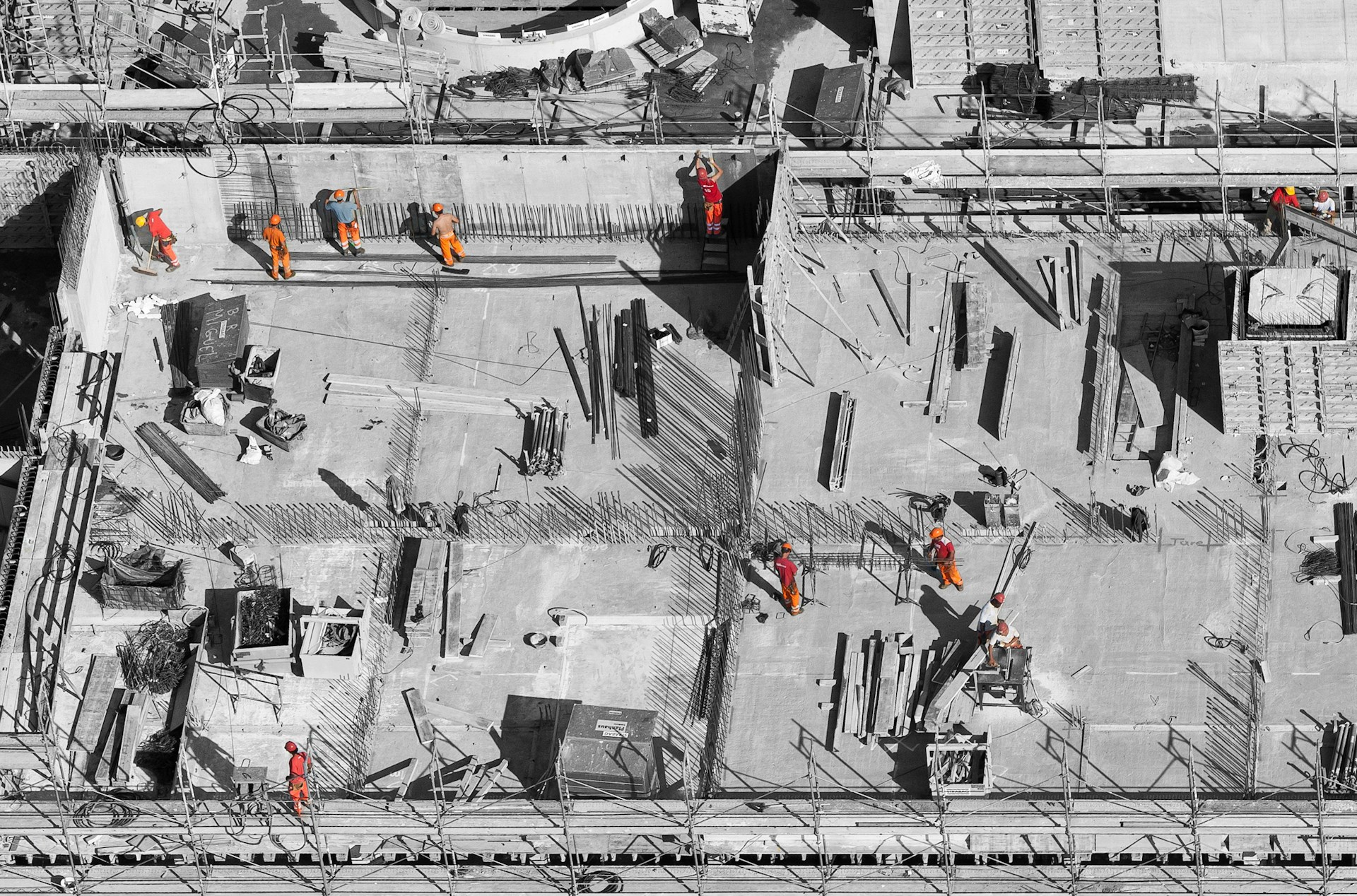

Contractor failure during construction can halt work and cause costly delays for developers and property owners. Research shows that contractor capability directly impacts risk management and project success across the construction industry. As high material costs, labor shortages, and rising interest rates squeeze contractors, failures become more common.
Evaluating a contractor’s ability to deliver consistent quality over many years requires reviewing both proven results and reliable systems. We assess that ability through past performance evaluations, quality control programs, field execution metrics, and structured verification processes that show how contractors manage complex commercial work in practice.
What Past-Performance Proof Shows Long-Term Consistency?

Request comprehensive documentation that reveals patterns over time. Formal past performance evaluations provide the clearest window into consistent delivery. These assessments cover key areas that predict long-term reliability.
Quality of Deliverables
Past performance evaluations should detail technical accuracy, completeness, and professional standards. Examine whether deliverables consistently met or exceeded specifications across multiple projects. Look for specific examples of quality control measures and final product acceptance rates.
Request documentation showing how quality issues were identified and resolved. Strong contractors maintain detailed records of inspection results, rework rates, and client satisfaction scores. These metrics reveal whether quality remains stable under different project conditions.
Timeliness and Schedule Performance
Schedule adherence data shows how contractors manage time pressures across projects of varying complexity. Review milestone completion rates, early deliveries, and delay management strategies. Consistent performers demonstrate predictable scheduling patterns regardless of external challenges.
Examine how contractors handle scope changes and unforeseen delays. The Contractor Performance Assessment Reporting System (CPARS) provides standardized timeliness ratings that allow direct comparisons across government contracts. Request similar documentation for commercial work.
Cost Control and Budget Management
Cost performance reveals financial discipline and resource management capabilities. Analyze budget variance reports, change-order frequency, and final contract values compared to original estimates. Consistent contractors maintain tight cost controls even when facing material price fluctuations or labor shortages.
Review how contractors handle cost overruns and communicate financial challenges. Strong performers provide early warnings and propose solutions before costs spiral. Look for evidence of proactive cost management rather than reactive responses.
Communication and Responsiveness
Communication quality directly impacts project coordination and issue resolution. Past performance evaluations should document response times, meeting participation, and information-sharing practices. Assess whether contractors maintained clear communication channels throughout project lifecycles.
Examine how contractors handled difficult conversations and conflict resolution. Consistent performers demonstrate transparency when problems arise and maintain professional relationships even under stress. Request examples of proactive communication during challenging situations.
Problem-Solving and Adaptability
Problem-solving capabilities separate reliable contractors from those who struggle under pressure. Review how contractors addressed technical challenges, resource constraints, and unexpected site conditions. Look for evidence of systematic approaches to problem identification and resolution.
Strong contractors document lessons learned and implement improvements across subsequent projects. This focus on continuous improvement indicates long-term reliability. Request examples of how past challenges led to better processes and outcomes.
Structured Reference Checks
Conduct detailed reference interviews that probe beyond surface-level satisfaction. This structured approach covers deadline performance patterns, work quality consistency, communication effectiveness, resource management practices, and responses to challenges. These conversations reveal insights that formal evaluations might miss.
Reference checks should include multiple contacts per project to capture different perspectives. Ask specific questions about how the contractor performed during peak workloads, material delays, and weather disruptions. This comprehensive approach validates documented performance claims.
Quantitative Outcomes and Metrics
Numerical data provides objective evidence of consistent performance. Request project KPIs, including completion percentages, safety incident rates, client retention statistics, and repeat business ratios. These metrics reveal patterns that narrative evaluations might overlook.
Track performance trends across multiple years to identify improvements or declines. Consistent contractors show stable or improving metrics over time. Request documentation of corrective actions taken when metrics indicate potential problems.
How Do You Verify The Management Systems That Keep Quality Consistent?
Quality consistency stems from structured management systems that govern every aspect of construction execution. We review corporate quality programs alongside site-specific implementations to confirm contractors maintain standardized processes regardless of project complexity or location. The verification process focuses on documentation, personnel qualifications, and operational controls that prevent quality variations.
Quality Program Structure And Personnel
A contractor’s quality program should demonstrate clear organizational independence between quality control and production activities. Look for dedicated QC representatives who report to management levels independent of construction or scheduling pressures. These personnel must possess proper qualifications and certifications specific to the work being performed.
Training records reveal whether quality staff receive ongoing education on procedures, project requirements, and regulatory updates. Verify that quality personnel complete orientation before starting work and maintain current certifications throughout the project duration. The contractor should provide résumés and certifications for all quality representatives assigned to your project.
Controlled Procedures And Documentation Systems
Effective quality management requires controlled procedures that address all construction processes affecting quality. Request inspection and test plans that clearly define scope coverage, acceptance criteria, key inspection points, and required documentation. These ITPs should specify hold points where work cannot proceed without formal approval.
Document control systems must demonstrate version management, approval processes, and distribution tracking. All project documents should maintain traceability and current revision status. We examine how contractors handle document changes, ensuring obsolete versions are promptly removed from work locations and replaced with current revisions.
Construction Process Control And Special Operations
Construction activities affecting quality require documented instructions appropriate to each trade and operation. The contractor should provide procedures covering earthwork, concrete operations, structural steel installation, piping, electrical systems, and other critical work activities. Each procedure must identify special conditions, inspection areas, hold points, acceptance criteria, and required forms.
Special processes such as welding, heat treating, and nondestructive examination demand additional oversight through qualified procedures and certified personnel. Verify that contractors submit initial and revised special-process procedures for approval and maintain current documentation for personnel, process, and equipment qualifications in accordance with applicable codes and standards.
Equipment Calibration And Testing Programs
Measuring and testing equipment used for quality verification must undergo regular calibration against certified standards traceable to national references. Contractors should maintain calibration records, provide equipment identification systems, and demonstrate traceability through unbroken calibration chains. When equipment falls out of calibration, proper evaluation and segregation procedures prevent invalid test results.
The inspection program should encompass receiving, in-process, and final inspections with documented procedures specifying characteristics to inspect and acceptance criteria. Quality representatives must be sufficient in number and qualification to provide timely, accurate inspection coverage.
Nonconformance Management And Corrective Actions
Written procedures for identifying and controlling nonconforming items establish personnel responsibilities and disposition authority. These procedures must define investigation methods, corrective action initiation, and verification of repairs or rework. Hold tags or similar isolation measures prevent nonconforming items from being used in construction until they are resolved.
Quality records include inspection reports, test results, nonconformance reports, and corrective action tracking. The contractor should maintain complete records demonstrating conformance validation and compliance evidence. Record retention policies must align with contract requirements and regulatory standards.
Subcontractor Management And Code Compliance
Subcontractor quality management procedures ensure all materials and work meet procurement document requirements. The contractor must communicate applicable requirements to subcontractors and obtain written approval for any subcontractors not included in their original proposal. Examine how contractors verify subcontractor quality programs and monitor compliance with project specifications.
Local codes and permitting compliance require documented procedures and evidence of current permits, approvals, and inspection schedules. The contractor should demonstrate familiarity with applicable building codes, safety regulations, and environmental requirements specific to the project location and work scope.
Audits, Surveillance, And Continuous Monitoring
Quality program effectiveness requires routine monitoring through inspections, assessments, audits, and surveillance activities. Internal audit programs should evaluate quality system implementation and identify improvement opportunities. The contractor must respond to all audit findings in writing and implement corrective actions expeditiously.
Communication and transparency practices include regular quality meetings, progress reporting, and stakeholder coordination. We assess how contractors handle quality issues, escalation procedures, and client notification requirements. Effective communication systems prevent quality problems from becoming project delays or cost overruns.
Which Field Indicators And Metrics Predict Repeatable Performance?

Fieldwork ratings provide immediate insight into productivity patterns. We use three simple categories: productive time (active work toward completion), semiproductive time (setup, material handling, coordination), and unproductive time (waiting, rework, idle periods). These classifications help identify which activities drive progress and which create delays.
Work sampling strengthens productivity analysis by capturing representative data across time periods and conditions. Large sample sizes improve confidence in the results, typically requiring observations every 15–30 minutes over multiple days. This method reveals actual labor utilization rates compared to planned productivity targets.
Implementing a Productivity Evaluation Model
A structured productivity evaluation model defines clear production units for each trade and operation. We measure concrete pours in cubic yards per hour, drywall installation in square feet per hour, or electrical rough-in by outlet count per day. These standardized units enable comparison across crews, projects, and time periods.
Cycle time measurement tracks how long each repetitive task takes from start to completion. Recording the impacts of material delays, labor constraints, equipment availability, supervision gaps, and site conditions creates a comprehensive picture of what affects performance. This data supports more accurate scheduling and resource planning for future phases.
Establishing Performance Standards
Standard cycles per hour become benchmarks for typical operations under normal conditions. We establish these targets based on historical data, industry standards, and actual field observations. Regular spot checks against these standards identify when performance deviates from expectations and requires intervention.
Safety protocol adherence is captured in these field observations as well. We confirm that crews follow established procedures, wear required personal protective equipment, and maintain organized work areas. These factors directly correlate with productivity and schedule performance.
Real-Time Performance Monitoring
Site visits reveal crew flow patterns and equipment utilization. Effective teams show minimal idle time, smooth transitions between tasks, and coordinated material deliveries. We document these observations and compare them against planned sequences to identify improvement opportunities.
On-time delivery performance is evident through material staging, equipment positioning, and trade coordination. Late deliveries create cascading delays, while early arrivals can overwhelm storage capacity. Field indicators help predict whether current logistics support schedule requirements.
The most valuable contractors demonstrate systematic delay identification and documentation processes. They track causes, implement corrections, and apply lessons learned across multiple projects. This continuous improvement approach separates consistent performers from those who repeat the same mistakes.
What Due Diligence Steps Reduce Risk Before Multi-Year Awards?
Multi-year construction contracts amplify both opportunities and risks. We need verification methods that can predict sustained performance across changing market conditions, evolving project teams, and business pressures. Effective due diligence before these awards requires systematic evaluation across multiple dimensions.
The key is building a structured process that goes beyond surface-level documentation. We examine business fundamentals, evaluate proposal merits through weighted criteria, and validate capabilities through direct observation and third-party verification.
Implementing a Pre-Qualification Process
We establish baseline requirements that contractors must meet before we consider their proposals. This covers business registration and history, demonstrating continuous operation and growth patterns over multiple economic cycles. Financial stability assessment includes reviewing balance sheets, cash flow statements, and credit ratings from the past three years.
Insurance verification confirms adequate coverage limits for general liability, professional liability, and workers’ compensation. We check that policies remain current and coverage amounts match the project’s scale requirements. Licensing verification ensures all necessary permits and certifications remain valid across the jurisdictions where work will occur.
Safety record evaluation examines OSHA recordables, experience modification rate (EMR), and safety program documentation. We look for trends in incident rates and evidence of continuous safety improvement initiatives. Relevant experience documentation should show similar project types, complexity levels, and contract durations with verifiable completion records.
Weighted Proposal Scoring Systems
We develop transparent evaluation criteria with predetermined weightings for each assessment category. Cost analysis typically represents 30–40% of the total score, examining not just initial bid amounts but also lifecycle costs and change-order history. Experience is weighted heavily for projects with similar scope, scale, and technical complexity.
Technical approach assessment evaluates methodology, resource allocation plans, and innovation potential. We examine how contractors propose to handle coordination challenges, quality control, and schedule management across extended timeframes. Schedule evaluation considers realistic timelines, milestone planning, and contingency management approaches.
Each scoring criterion includes specific point allocations and evaluation standards. We document the scoring rationale to ensure consistent application across all proposals and provide clear feedback to contractors about selection decisions.
Comprehensive Reference and Background Verification
Reference checks probe beyond standard questionnaires to examine real performance under pressure. We contact multiple clients from recent projects, focusing on deadline performance, budget adherence, and problem resolution effectiveness. Communication quality assessment assesses how contractors handled challenges, changes, and stakeholder coordination.
Background checks include legal history searches for litigation patterns, regulatory violations, and dispute resolution outcomes. We verify bonding capacity and examine surety relationships, looking for stability and adequate coverage limits. Insurance verification confirms policy terms, claims history, and carrier financial ratings.
Credit checks and financial statement analysis reveal business stability trends. We examine debt-to-equity ratios, working capital adequacy, and revenue concentration to identify potential financial stress points that could affect project performance.
Direct Assessment Through Site Visits and Interviews
Site visits to active projects provide unfiltered views of actual work practices. We observe crew organization, equipment condition, and site safety implementation. Material storage, waste management, and quality control processes reveal operational discipline that transfers across projects.
Management team interviews assess communication skills, problem-solving approaches, and leadership depth. We examine organizational structure, succession planning, and key personnel retention patterns. The project management systems evaluation covers scheduling software, cost tracking methods, and reporting capabilities.
Problem-solving discussions explore how contractors handle typical construction challenges. We present hypothetical scenarios involving weather delays, material shortages, or design changes to assess adaptability and solution-development skills. These conversations reveal strategic thinking and operational flexibility crucial for multi-year success.
Capability Verification for Long-Term Success
Budget control capabilities require an examination of cost tracking systems, change-order management procedures, and financial reporting accuracy. We review variance analysis methods and corrective action protocols that maintain cost discipline across extended timeframes. Cash flow management assessment ensures contractors can sustain operations through payment cycles and seasonal variations.
Adaptability evaluation examines how contractors respond to changing conditions, new regulations, or evolving project requirements. We assess training programs, technology adoption patterns, and process improvement initiatives that demonstrate continuous capability enhancement. Regulatory compliance verification covers permitting processes, inspection coordination, and code adherence procedures.
Subcontractor network strength assessment examines relationships, performance tracking, and quality control methods. We verify subcontractor pre-qualification processes, performance monitoring systems, and replacement capabilities. Strong networks provide continuity and quality assurance across multiple projects and extended timeframes.
Conclusion And Next Steps

Long-term consistency in commercial construction comes from proven results backed by robust systems. We’ve outlined a comprehensive framework for evaluating contractors who can deliver repeatable quality across multiple projects and years. The evidence you need falls into five key areas that together help predict future performance.
Start with documented past performance evaluations that show consistent quality of deliverables, on-time completion, cost control, effective communication, and strong problem-solving capabilities. Request formal evaluations such as CPARS reports, and verify KPIs across multiple contracts. Move beyond references to examine the contractor’s quality control program, including inspection and test plans, calibration procedures, and corrective action processes. Use field observations to measure real-time productivity and safety compliance.
Finally, conduct thorough prequalification with weighted scoring, site visits, and structured interviews to assess management practices and technical capabilities. Create a simple scorecard that weights these factors according to your project priorities. Track performance after each completed project to refine your selection criteria and improve oversight processes. This systematic approach reduces risk while building relationships with contractors who consistently deliver quality results over multi-year partnerships. Contact EB3 Construction to discuss how we apply these quality management principles across our commercial projects.