Austin operates like a precision clockmaker even as the gears are rebuilt. The city manages record-breaking construction volume on multiple fronts without shutting down essential services. Major work spans airports, highways, transit systems, and downtown towers simultaneously.
Austin-Bergstrom International Airport exemplifies this approach through its Journey With AUS program, expanding terminal capacity and infrastructure while maintaining full flight operations. The I-35 Capital Express projects add managed lanes and include plans to remove the upper deck, lowering the highway below grade through central Austin. Meanwhile, Project Connect’s 9.8-mile light rail advances toward 2033 operations; downtown high-rises, including the Waterline, reshape the skyline; and tech manufacturing facilities rise throughout the region. Workforce capacity emerges as the critical bottleneck, prompting local leaders to develop an infrastructure academy for skilled trades training.
How Is Austin-Bergstrom Keeping Airport Operations Running During Expansion?
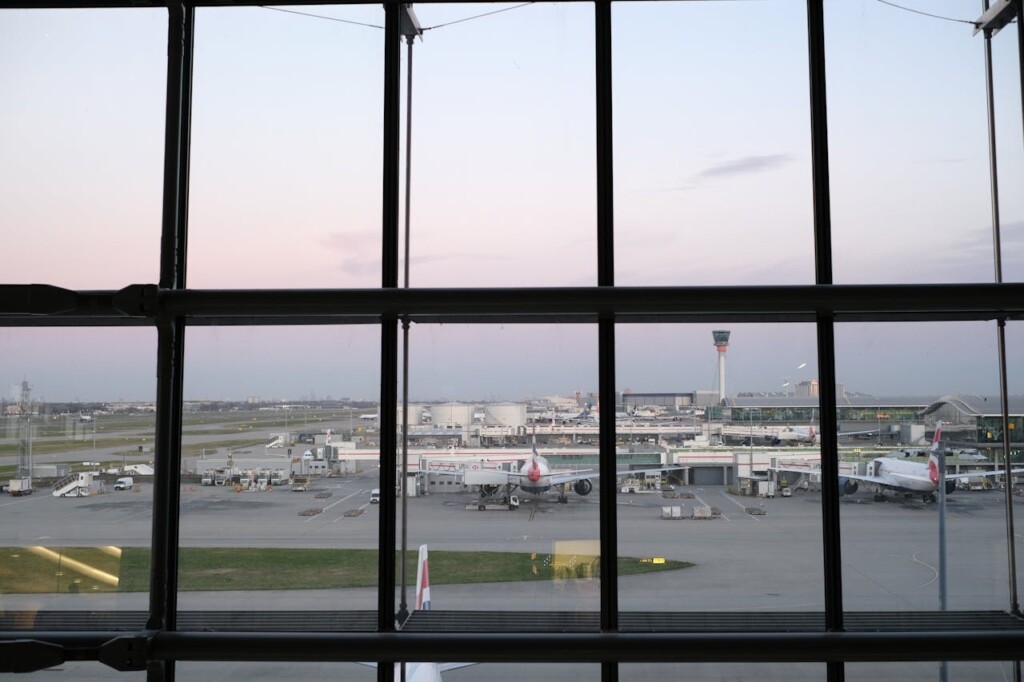
The Journey With AUS program demonstrates how to manage large-scale construction without shutting down a major airport. Each project follows carefully planned phases to ensure the Barbara Jordan Terminal stays operational throughout the expansion. This approach protects passenger flow while adding the capacity Austin needs.
Construction walls and scaffolding mark active work zones, yet flight schedules continue without interruption. The airport manages this balance through strategic sequencing. When TSA Checkpoint 3 closed in February 2024, additional lanes opened at Checkpoints 2 East and 2 West to maintain screening capacity. Checkpoint 2 West now handles TSA PreCheck and CLEAR passengers and stays open until the last flight departs.
The new Outbound Baggage Handling System showcases phased delivery in action. Phase 1 reached substantial completion in summer 2024, allowing the new system to begin screening bags while Phase 2 construction continues toward a 2026 completion. The system will eventually process 4,000 bags per hour across 1.5 miles of conveyor belts, but passengers experience no service interruption during the transition.
Gate management requires particular coordination during terminal expansion. The West Gate Expansion adds three new gates to offset closures needed for future projects. This 84,500-square-foot addition creates buffer capacity before other construction phases require gate access restrictions.
Concourse M will provide six temporary gates connected by shuttle operations while core terminal projects advance. Four contact gates and two walk-out gates will handle narrow-body aircraft during the most intensive construction periods. Once the temporary gates are no longer needed, Concourse M will convert to a freight facility, demonstrating the flexible planning that keeps operations moving.
Parking infrastructure follows the same phased approach. The Yellow Garage breaks ground, with its first 3,000 spaces opening in 2026. This timing enables removal of the Red Garage to make way for the new Arrivals & Departures Hall without reducing total parking capacity during construction.
International Arrivals improvements completed in 2025 added 20,600 square feet for passenger queuing and processing. New baggage carousels can transition between international and domestic arrivals, providing operational flexibility as other terminal areas undergo construction. Multiple international flights can now be processed simultaneously without creating bottlenecks.
Funding for these projects comes entirely from airport revenues, bonds, and Federal Aviation Administration grants. No local Austin taxpayer dollars support the expansion program, ensuring the airport maintains operational independence while managing growth. This funding structure allows construction to proceed on multiple fronts without budget constraints that could force operational compromises.
Which Near-Term AUS Projects Require Careful Phasing Around Operations?
Four major near-term projects at Austin-Bergstrom International Airport require precise coordination to maintain operations during construction. Each project tackles capacity constraints while keeping passengers moving through the terminal.
The Outbound Baggage Handling System spans 1.5 miles of conveyors and is designed to process up to 4,000 bags per hour. Phase 1 reached substantial completion and began screening bags in summer 2024. Phase 2 is scheduled for completion in 2026, delivering the full capacity needed to serve 30 million annual passengers.
Atrium Infill adds approximately 12,000 square feet above the existing baggage claim area. The project fills open space to create new concourse-level floor area for security screening, bag check, and passenger processing. Construction teams are maintaining existing vertical circulation while building the elevated slab and upgrading mechanical, electrical, and plumbing systems.
West Infill transforms more than 75,000 square feet across multiple levels, from the back edge of the existing concourse to the terminal curbside. This renovation houses the new outbound baggage handling system and creates Checkpoint 4, a four-lane security checkpoint expandable to eight lanes. The project includes CT scanners and enhanced screening technology, and additional lanes have been added at other checkpoints to offset the temporary closure of Checkpoint 3 during construction.
The West Gate Expansion delivers 84,500 square feet across three levels on the west end of the Barbara Jordan Terminal. The project adds three new gates to offset future gate closures; five new seating areas; dining spaces for concessionaires; additional restrooms; family and nursing rooms; pet relief areas; and a new mezzanine with an outdoor balcony. Construction proceeds with minimal passenger disruption because of its location on the terminal’s far west side.
Project budgets reflect the scale and complexity of maintaining operations during construction. Approximately $241 million covers the outbound baggage handling system, West Infill, and International Arrivals improvements. The West Gate Expansion carries an estimated cost of $165 million, while Atrium Infill requires approximately $30 million. All projects target 2026 completion and rely on airport revenues, bonds, and Federal Aviation Administration grants rather than local taxpayer funding.
What Long-Term AUS Work Will Reshape Flows And Utilities?

The projects currently under construction are preparing Austin-Bergstrom International Airport (AUS) for immediate growth. Longer-term work will reshape how passengers move through the airport and how the airfield operates. These major components extend into the early 2030s and require careful coordination with existing terminals.
Concourse B And Underground Connection
Concourse B will add 26 gates as a midfield facility, separate from the main terminal building. The new concourse will connect to the Barbara Jordan Terminal through a subgrade tunnel designed for passenger movement and future expansion. Southwest Airlines will anchor the facility with 18 gates, United Airlines will take five, and three will remain available for common use.
The tunnel includes space for a future Automated People Mover system, creating a foundation for additional concourses. Construction is scheduled to begin in 2026, with an estimated opening in the early 2030s. The $1.031 billion project will be delivered in phases to maintain current gate operations during construction.
Airfield Infrastructure Expansion
New Midfield Taxiways will support the expanded gate capacity with approximately two miles of parallel taxiways plus connecting routes. The work includes taxiway bridges for support services and new systems for low-visibility operations. Airfield lighting and signage upgrades will provide guidance for increased aircraft movements.
Security fencing enhancements will protect the expanded perimeter, while in-pavement hydrant fueling systems will eliminate the need for fuel trucks at new gates. Construction is underway, with targeted completion in 2027, ahead of Concourse B’s opening. The $320 million project establishes the foundation for future concourse development beyond Concourse B.
Terminal Entry And Exit Redesign
The New Arrivals & Departures Hall will replace the Red Garage with expanded facilities for passenger processing. The hall features a centralized TSA checkpoint, larger ticketing areas, and enhanced baggage claim operations. A redesigned curbside reduces vehicle congestion, while a new pedestrian bridge connects parking areas to the terminal.
The project requires removing the Red Garage and relocating roadways before construction can proceed. Design work is underway, with construction targeted for the late 2020s and an opening in the early 2030s. The $820 million investment is coordinated with other terminal improvements to maintain passenger flow during construction.
Parking And Ground Access
Yellow Garage construction began in February 2025 and will deliver 7,000 parking spaces in phases through 2027. The first 3,000 spaces open in 2026 to support the removal of the Red Garage for the new Arrivals & Departures Hall. The phased approach maintains parking capacity during the transition.
Surface lots will add approximately 1,400 spaces across multiple phases to support long-term growth. Phase 1 opened with Economy Lot H in late 2024, while additional phases remain in design. The coordinated parking delivery prevents capacity loss during construction periods.
Utility Infrastructure Foundation
The Central Utility Plant will provide chilled and heated water for the expanded campus through thermal energy storage systems. The plant includes chillers, cooling towers, and control systems sized for future growth beyond current expansion plans. New hydronic piping will connect existing and planned facilities across the airport.
Utility duct banks will carry power and telecommunications infrastructure to support expanded operations. Campus-wide utility work is scheduled to begin in 2026 and is targeted for completion in 2028. These systems must come online before major facility openings to ensure reliable operations throughout the expanded airport.
How Do Other Austin Megaprojects Affect Construction Around Operations?
Austin’s citywide construction surge creates overlapping challenges that extend far beyond individual project boundaries. We coordinate across multiple megaprojects competing for the same workforce, equipment, and access routes, while maintaining operational continuity across the metro area.
The I-35 Capital Express spans three major segments. The North and South projects add managed lanes to handle increasing traffic volumes. The Central project presents the most complex staging requirements as crews remove the upper deck and lower the highway below grade through downtown Austin. This below-grade highway construction demands precise, phased traffic control to keep lanes open while excavating around existing infrastructure.
Project Connect’s 9.8-mile light rail line is targeting operations by 2033, creating coordination points with concurrent highway work. The transit environmental review process continues as teams balance construction staging for rail installation with adjacent roadway improvements. We sequence utility relocations and temporary traffic routing to accommodate both projects without compromising either timeline.
Downtown tower cranes signal intensive vertical construction. The Waterline and other high-rise projects require coordinated street closures, crane placement, and material deliveries. Advanced manufacturing facilities across the metro area add another layer of construction traffic and workforce demand to an already stretched market.
The convention center expansion will grow from 365,000 to 620,000 square feet. Construction staging for this $1.6 billion project affects downtown traffic patterns and requires careful coordination with nearby developments. Material deliveries and equipment movement must work around existing convention operations and concurrent projects.
Workforce capacity is the critical constraint across all projects. With simultaneous highway, transit, airport, and vertical construction, skilled labor is increasingly scarce. Local leaders are working to launch an infrastructure academy to address training needs, but the timeline for workforce development extends beyond current project schedules.
We plan sequencing, access, and staffing around these moving parts by staying in close communication with other contractors and agencies. Daily coordination meetings track potential conflicts in equipment deliveries, lane closures, and workforce allocation. Success requires flexible staging plans that adapt to changing conditions while keeping all projects moving forward.
Conclusion: Coordinating Construction Around Operations in Austin

Austin demonstrates how major construction projects can advance while maintaining operational continuity across multiple fronts. At Austin-Bergstrom International Airport, the Journey With AUS program shows how strategic phasing keeps passengers moving through terminal checkpoints even as new facilities rise around them. Careful sequencing of temporary facilities—from Concourse M gates to the Yellow Garage rollout—maintains airport capacity during the most intensive construction phases.
Citywide coordination is equally important as I-35 Capital Express Central, Project Connect light rail, and ongoing vertical development reshape Austin’s infrastructure. Project sequencing across these megaprojects requires constant communication among transportation agencies, careful staging of airfield taxiways and terminal operations, and workforce planning that addresses capacity constraints through initiatives like the emerging infrastructure academy. Construction around operations in Austin succeeds when teams align phasing with operational needs, track project timelines closely, and maintain steady communication that keeps the city moving.
Partner with EB3 Construction to coordinate your project phasing with Austin’s dynamic construction environment.