A successful ground-up commercial construction project requires discipline across six sequential phases. We structure every build around development and planning; pre-design and design; pre-construction; procurement; construction; and post-construction to maintain control of the schedule and budget.
Each phase builds on the previous one, creating checkpoints that help prevent costly delays and overruns. The construction industry has learned that early alignment among stakeholders, accurate cost estimates at each milestone, and quality control throughout the process are the strongest determinants of project success.
How Should You Set Location, Scope, Budget, And Team In Development And Planning?

Location due diligence forms the foundation of ground-up commercial construction. We start with a thorough site evaluation to identify potential obstacles that could derail the schedule or budget early in the planning process.
Location Due Diligence and Site Assessment
Zoning verification forms the first critical checkpoint. We confirm current zoning classifications and review any pending changes or moratoriums that might restrict development timelines. Municipal planning departments often impose temporary development halts during infrastructure reviews or policy updates.
Utility capacity assessments prevent costly surprises during construction. We verify water, sewer, electrical, and gas service availability and capacity at the property line. We also evaluate road capacity to ensure the site can handle construction traffic, delivery vehicles, and future operational loads without requiring expensive infrastructure upgrades.
Fire department access requires early coordination with local fire officials. We confirm that emergency vehicle access meets code requirements and that available water pressure supports sprinkler systems and other fire suppression needs. These factors directly influence building design and construction sequencing.
Soil Testing and Environmental Due Diligence
Geotechnical investigations reveal subsurface conditions that affect foundation design and construction methods. We conduct soil borings to determine bearing capacity, groundwater levels, and potential excavation challenges. Poor soil conditions may require costly foundation solutions, such as deep pilings or soil stabilization.
Environmental assessments identify contamination risks that can halt construction entirely. We perform Phase I environmental site assessments and, when necessary, Phase II testing to detect hazardous materials or contaminated soils. If estimated remediation costs exceed the cost of alternative sites and development options, we recommend selecting a different site before significant investment occurs.
Boundary Surveys and Legal Considerations
Boundary surveys establish precise property lines and identify potential encroachment issues before design begins. We confirm easements for utilities, drainage, and access rights that might restrict building placement or require coordination with neighboring properties.
Replatting approvals may be necessary when existing lot configurations don’t support the planned development. We manage subdivision processes and coordinate with planning departments to adjust property boundaries, consolidate parcels, or create new lots that align with project goals.
Scope Definition and SMART Goals
Project scope definition prevents costly changes during construction. We establish clear parameters for building size, quality levels, functional requirements, and performance standards that guide design decisions and budget development. SMART goals provide measurable targets for schedule, cost, and quality outcomes.
Timeline planning coordinates all development phases from permitting through occupancy. We establish realistic milestones that account for approval processes, weather constraints, and market conditions. Early timeline development helps identify critical path activities and potential schedule risks.
Budget Development and Cost Estimates
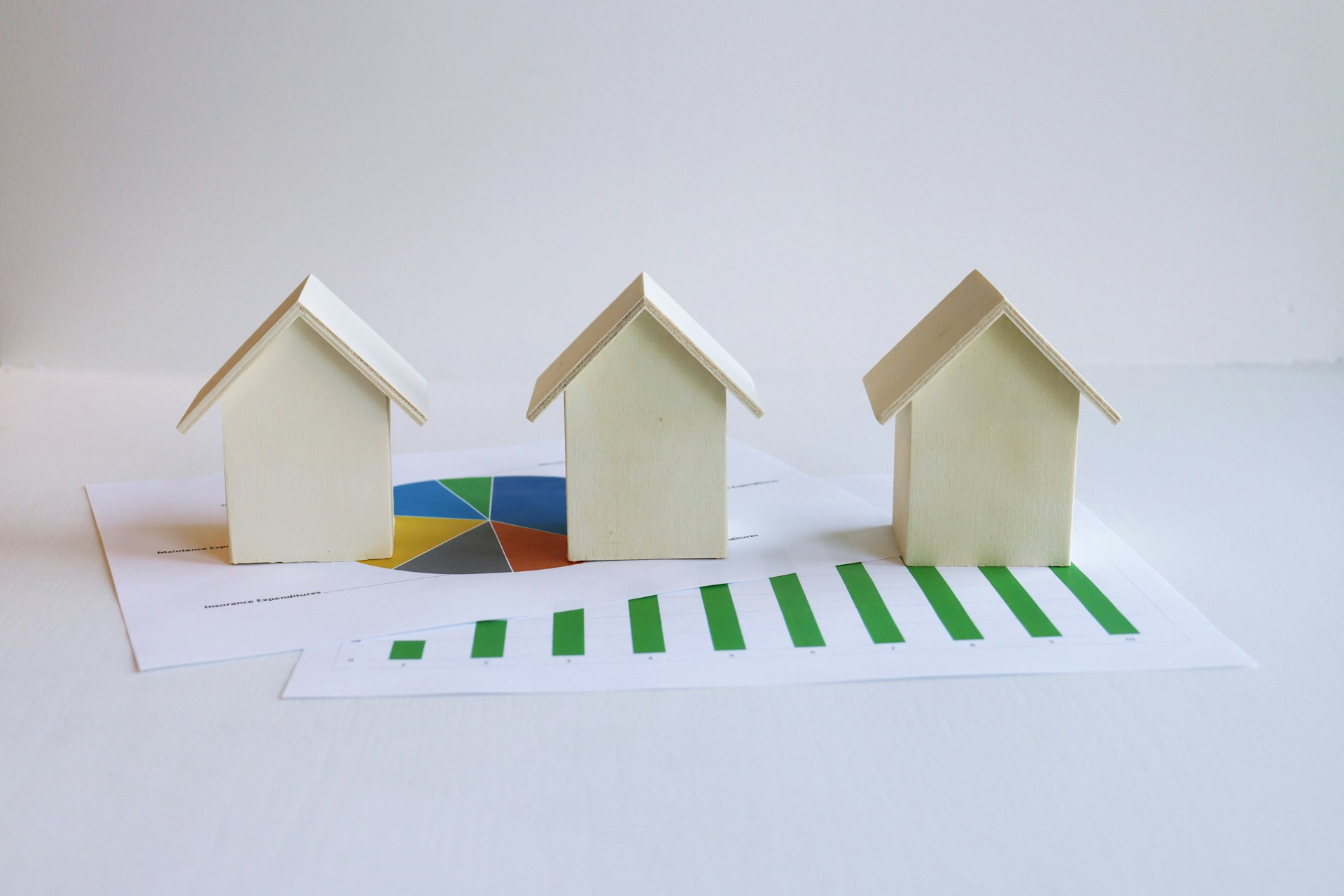
Developing a realistic budget relies on current local cost data and an accurate project scope definition. We use recent cost-per-square-foot data from similar commercial projects in the local market, adjusted for specific site conditions, building complexity, and quality requirements.
Construction cost estimates require detailed analysis of all project components, including sitework, structural systems, mechanical and electrical installations, and finishes. We account for local labor rates, material costs, and contractor availability, which influence pricing and competitiveness.
Budget contingencies address known risks and market volatility. We typically allocate separate contingencies for design development, construction changes, and market escalation based on project complexity and timeline duration.
General Contractor Engagement and Team Assembly
Early general contractor involvement streamlines coordination and improves cost predictability. We engage experienced contractors who understand local market conditions, permitting processes, and subcontractor relationships that affect schedule and budget outcomes.
Stakeholder coordination establishes clear communication channels between developers, designers, contractors, and approval agencies. We create project management frameworks that define roles, responsibilities, and decision-making authority to prevent delays and miscommunication.
Initial timeline and communication plans set expectations for project phases, milestone reviews, and progress reporting. We establish regular coordination meetings and progress tracking systems that maintain alignment throughout the development and planning phase.
What Decisions In Pre-Design And Design Lock In Cost And Schedule?
Pre-design and design phases set the foundation for cost control and schedule adherence. Decisions made during these stages ripple through every subsequent phase, making them pivotal to project success.
Pre-Design Programming Decisions
We begin pre-design by defining the program that guides all future choices. Room counts and sizes determine square footage requirements, which directly impact structural systems and overall costs. Building orientation affects mechanical system efficiency, daylighting strategies, and site preparation needs.
Material and equipment selections at this stage create rough order-of-magnitude cost estimates that guide budget discussions. When we establish these parameters early, we prevent costly redesigns later. A high-level timeline for contract phases helps coordinate consultant schedules and maintain project momentum.
The programming phase also requires establishing SMART goals that align with the owner’s operational needs. These goals inform every design decision that follows. Rushing through programming to save time typically results in expensive changes during the construction documents phase or, worse, during construction itself.
Design Development and Technical Coordination
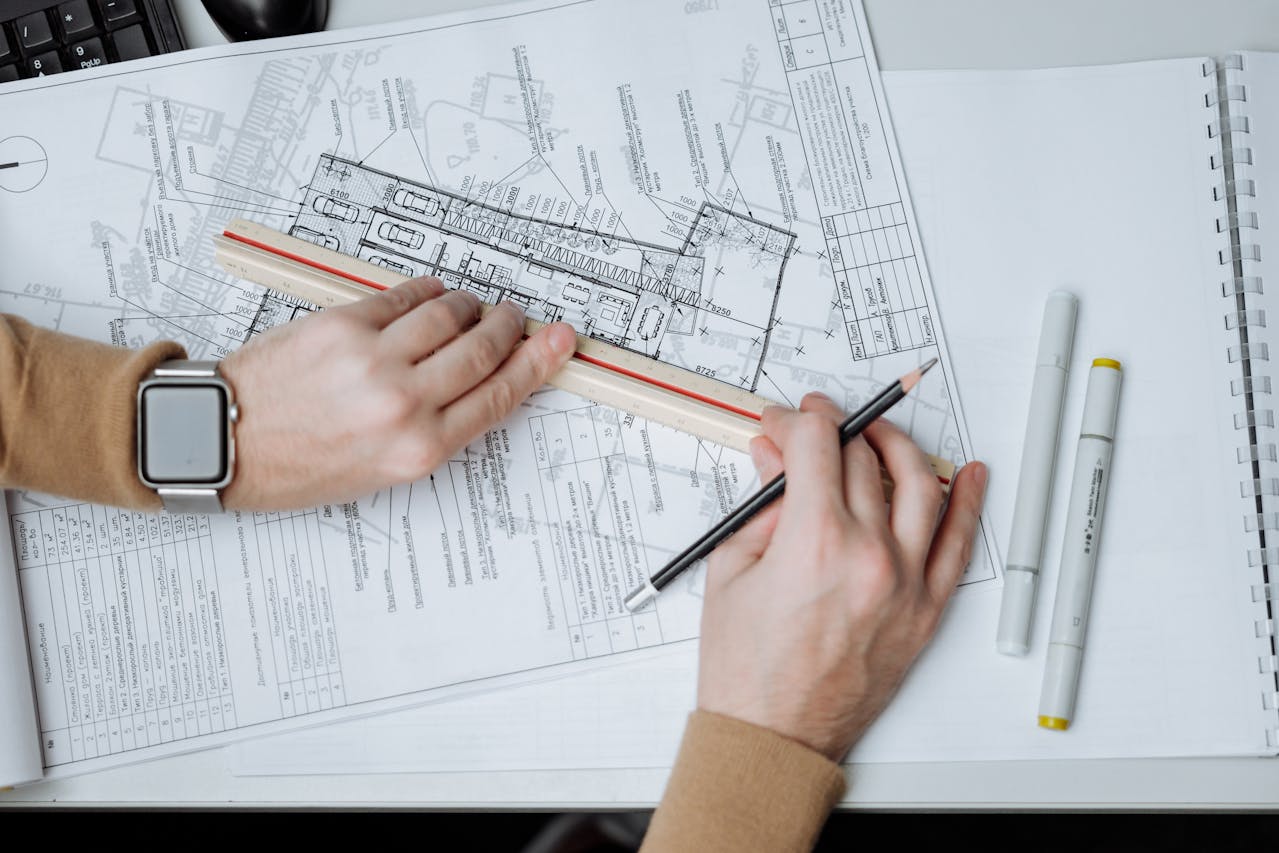
During design development, architects and engineers translate programming into detailed drawings and specifications. Coordination between disciplines determines whether the project stays within budget and timeline constraints.
Mechanical systems planning includes plumbing layouts, HVAC distribution, and equipment sizing. These decisions affect structural loads, ceiling heights, and utility connections. Early mechanical design prevents conflicts that cause schedule delays during the construction documents phase.
Structural engineering confirms building integrity and establishes foundation requirements, framing systems, and load paths. Structural decisions impact excavation scope, material quantities, and construction sequencing. We coordinate structural requirements with architectural features to avoid expensive design conflicts.
Electrical design establishes power distribution, lighting systems, and technology infrastructure. These plans determine conduit routing, panel locations, and service requirements. Electrical coordination with mechanical and structural systems prevents field conflicts that trigger change orders.
Civil engineering plans tie the building to site infrastructure, including roads, utilities, and parking. Drainage design, utility connections, and site grading must align with local regulations and existing infrastructure. Poor civil coordination often leads to permit delays and construction complications.
Code Compliance and Feasibility Studies
Completing zoning checks and feasibility studies during design prevents regulatory delays during permitting. Code compliance reviews ensure designs meet accessibility requirements, fire safety standards, and local building codes. We incorporate code requirements into design decisions rather than treating them as afterthoughts.
Feasibility studies validate that design solutions can be constructed within budget and timeline constraints. These studies identify potential challenges before they impact project schedules. Industry data shows that major projects often run 20% longer than planned and 80% over budget, largely due to issues that trace back to decisions made during the concept phase.
Code-compliant design reduces rework during the construction documents phase and prevents permit delays. When designs align with regulatory requirements from the start, we maintain schedule integrity and cost control throughout the project lifecycle.
Which Pre-Construction And Procurement Tasks Keep You On Budget Before Breaking Ground?

Pre-construction and procurement determine whether your project starts with discipline or scrambles to catch up later. We focus on permits and insurance first, then move through bidding, scheduling, and material sourcing with clear budget targets guiding every decision.
Secure Permits and Insurance Early
Building permits are the legal foundation for construction. We submit permit applications as design nears completion, not after contracts are signed. Federal stormwater permits are mandatory for projects disturbing 1 acre or more and carry strict erosion control requirements that affect site preparation costs. For related planning guidance, see our overview of construction environmental management plans.
Local building departments often require plan corrections before approval. We build buffer time into the schedule for these reviews and responses. Electrical, plumbing, and HVAC permits follow the general building permit, each requiring coordination with trade contractors who understand local code requirements.
Insurance coverage protects the investment before crews arrive. Builder’s risk insurance covers materials and work in progress against theft, weather, and damage. General liability and workers’ compensation requirements vary by state, but gaps in coverage can halt construction immediately. We verify all policies are active and meet project-specific requirements, including coverage for specialized work like crane operations or hazardous material removal.
Bid Subcontractors and Align Selections to Budget
Subcontractor selection drives both quality and cost outcomes. We develop detailed scopes of work for each trade, then solicit competitive bids from pre-qualified contractors. The bidding process reveals market pricing and helps identify potential schedule conflicts early.
Budget alignment means more than accepting the lowest bid. We evaluate each proposal against project specifications, timeline requirements, and past performance records. A plumbing contractor who saves 5% on their bid but adds two weeks to the schedule can cost more than a higher-priced option that finishes on time.
We establish clear selection criteria before opening bids: technical capability, schedule availability, insurance coverage, and financial stability. Subcontractor selection also affects material logistics since different contractors prefer different suppliers and delivery schedules. Early alignment prevents coordination conflicts during construction.
Finalize Schedule Logic and Inspection Milestones
Schedule logic maps the sequence of work and identifies critical milestones that cannot shift without affecting the overall timeline. We establish inspection scheduling early, coordinating with local building departments to understand their availability and response times.
Critical milestones include foundation inspection before concrete pours, framing inspection before drywall installation, and MEP rough-in inspections before walls are closed. Each inspection requires advance notice and proper documentation. Failed inspections create immediate delays and rework costs.
We build inspection requirements into the construction schedule, allowing time for corrections if needed. Weather contingencies and material delivery buffers protect critical path activities from common disruptions. The schedule becomes a coordination tool that keeps all trades aligned with inspection requirements and project deadlines.
Source Quality Materials Within Specification and Budget Parameters
Material procurement balances specification requirements with cost targets and delivery schedules. We identify long-lead items during design development, then issue purchase orders early to secure pricing and delivery dates. Steel, custom millwork, and mechanical equipment often require extended manufacturing time.
Quality materials that meet project specifications prevent rework and warranty issues. We source from established suppliers who understand commercial construction requirements and can provide proper documentation for inspections. Material substitutions require approval from both the design team and the owner to ensure performance standards are maintained.
Cost control means tracking pricing against budget allowances throughout the procurement process. Material costs fluctuate with market conditions, but early purchasing commitments provide price certainty. We coordinate with suppliers to lock pricing for critical items while maintaining flexibility for standard materials purchased closer to installation dates.
Sequence Material Orders and Deliveries to Match Construction Progress
Material logistics prevent bottlenecks and storage issues on active construction sites. We sequence deliveries to arrive just in time for installation, reducing storage requirements and security concerns. Foundation materials arrive before excavation completion, while finish materials are delivered closer to interior work phases.
Labor availability affects material sequencing decisions. Concrete deliveries must align with crew schedules and weather conditions. Drywall delivery requires adequate crew size for efficient installation and proper storage conditions to prevent damage.
Digital communication keeps all stakeholders informed of delivery schedules and any changes. We use project management software to track orders, deliveries, and installation progress. Clear communication prevents duplicate orders, missed deliveries, and storage conflicts that can delay construction progress.
How Do You Run Construction And Closeout To Stay On Time And Pass Inspections?
Construction starts with a kickoff meeting to set access routes, storage areas, work hours, and the quality management plan. This coordination lays the groundwork for smooth operations throughout construction.
Site Preparation And Initial Construction
We establish temporary facilities, including construction trailers, storage areas, and utility connections, before major work begins. Site clearing removes vegetation and debris, followed by excavation to precise depths for foundation work. Proper drainage installation prevents water accumulation that could compromise structural integrity.
Utility rough-ins require careful coordination with local authorities and scheduled inspections. We install temporary power, water, and sewer connections to support construction activities. Each utility connection undergoes inspection before proceeding to the next phase.
Sequential Construction Management
Foundation work starts with precise excavation and forms, followed by concrete placement and curing periods. We monitor weather conditions closely during this phase, since temperature and moisture affect concrete strength development. Foundation inspections verify proper reinforcement placement and concrete quality before moving to framing.
Structural framing creates the building skeleton through systematic installation of floors, walls, and roof systems. We coordinate multiple trades during framing to install structural elements efficiently. The project manager tracks daily progress against the baseline schedule, identifying potential delays before they impact subsequent work.
The building envelope takes shape as we install roofing, exterior walls, windows, and doors. This weatherproof shell protects interior work and allows multiple trades to work simultaneously. MEP rough-ins occur once the structure is weather‑tight to protect electrical, plumbing, and HVAC installations.
Project Management And Quality Control
Our project manager coordinates subcontractors, ensures material deliveries arrive on schedule, and resolves conflicts before they cause delays. Daily progress meetings keep all trades informed about immediate priorities and upcoming work sequences. We track progress against milestones using digital tools that provide real-time visibility into schedule performance.
Quality control measures include regular inspections at critical construction phases. We use detailed checklists to verify that framing meets structural specifications, MEP systems follow approved plans, and all work complies with building codes. These checkpoints prevent rework and support first-time approval during official inspections.
Safety protocols remain paramount throughout construction. We conduct routine safety inspections of scaffolding, fall protection systems, and temporary structures. Material deliveries are coordinated to prevent site congestion while ensuring supplies arrive when needed for each construction phase.
Risk Management And Contingency Planning
Weather delays affect foundation work, concrete placement, and roofing installation the most. We monitor forecasts and adjust schedules to minimize weather-related disruptions. Contingency plans include temporary protection measures and alternative work sequences when outdoor activities become impossible.
Material shortages and supply chain disruptions require proactive management. We maintain buffer inventory for critical materials and establish relationships with multiple suppliers for key components. Early ordering of long-lead-time items prevents schedule delays caused by unavailable materials.
Progress tracking systems identify potential issues before they compound into major delays. Weekly progress reviews compare actual completion against planned milestones, allowing corrective action when work falls behind schedule. Clear communication channels ensure all stakeholders understand project status and any required adjustments.
Post-Construction Closeout Process
Punch list completion involves systematic walkthroughs with design teams and owners to identify remaining deficiencies. We categorize items by priority, addressing safety-related issues immediately while scheduling cosmetic corrections efficiently. Digital punch list management tracks completion status and maintains clear documentation.
The certificate of substantial completion acknowledges that the building is ready for intended use, even if minor punch list items remain. This milestone often triggers final payment releases and allows owners to begin occupancy preparations. Final walkthroughs with building officials verify code compliance before issuing occupancy certificates.
We coordinate final inspections carefully, ensuring all required permits are closed out and all systems pass regulatory review. Building inspection authorities verify electrical, plumbing, mechanical, and fire safety systems meet current codes. The certificate of occupancy represents formal approval for building use and marks successful project completion.
Conclusion: Plan Early, Document Well, And Manage Tightly

Ground-up commercial construction succeeds through disciplined execution of eight interconnected phases. Development and planning establish your foundation through site due diligence, scope definition, and stakeholder alignment. Pre-design and design lock in your cost and schedule parameters through code-compliant drawings and specifications. Pre-construction and procurement secure permits, financing, and materials before you break ground. Construction execution requires tight coordination, regular inspections, and proactive issue resolution. Post-construction closes with thorough punch lists and occupancy approvals.
Early engagement drives on-time delivery and cost control across every phase. Setting SMART goals during development provides clear targets for quality, schedule, and budget. Securing permits and financing before construction begins prevents costly delays. Code-compliant design eliminates rework that derails schedules. Strategic bidding and procurement align material costs with budget targets. Daily project management maintains momentum through systematic progress tracking and quality checks.
Connect with EB3 Construction early in your planning process to establish stakeholder alignment and schedule discipline that keep commercial ground-up projects on track from day one.