Houston’s commercial construction market accounts for more than $5 billion in annual building projects, yet many developers are unclear about what comprehensive construction services include. That gap—between surface-level coordination and full-service construction management—often determines whether a project stays on schedule and on budget or runs into costly delays.
We manage commercial construction in Houston across the full project lifecycle, from initial planning through long-term facility maintenance. This integrated approach covers pre-construction planning, design coordination, field execution, regulatory compliance, and project close-out across diverse markets, including industrial facilities, healthcare facilities, retail centers, office interiors, and warehouses throughout the greater Houston area.
Which Delivery Methods And Management Approaches Are Common?

Successful commercial construction relies on proven delivery methods that create clear accountability and efficient workflows. We work with owners to select the approach that best aligns with project goals, budget requirements, and schedule constraints. Each method offers distinct advantages for different types of construction projects.
Design-Build Integration
Design-build delivers projects through a single point of contact, streamlining coordination between design and construction phases. This integrated approach allows our team to collaborate from project inception, identifying potential conflicts early and resolving them before they affect schedule or budget.
This method reduces traditional handoff delays between design completion and construction start. When design and construction teams work together from the beginning, we can provide real-time constructability review during design development. This collaborative process often leads to more efficient building systems and lower overall project costs through value engineering.
Design-build particularly benefits projects with accelerated timelines. We can begin early site preparation and procurement while design details are being finalized, compressing the overall project schedule without compromising quality control.
Turnkey Construction Services
Turnkey services manage every project stage from initial planning through final completion, delivering a fully operational facility ready for immediate occupancy. We handle all aspects of project development, including permitting, design coordination, construction, and systems commissioning.
This comprehensive approach eliminates the need for owners to coordinate multiple contractors and consultants. We maintain responsibility for schedule adherence, quality standards, and budget performance throughout the entire process. The single-accountability structure reduces administrative burden for property owners while ensuring consistent project oversight.
Turnkey delivery works well for standard building types where owners prefer to focus on their core business operations rather than construction management. We deliver buildings with all systems tested, warranties transferred, and operational documentation complete.
Project Management Throughout the Lifecycle
Effective project management spans from pre-construction planning through project close-out, ensuring consistent oversight and quality control. We define project scope, establish realistic timelines, and develop detailed cost projections during the planning phase. This foundation guides all subsequent decisions and helps prevent scope creep that can impact budget and schedule.
Daily management includes safety oversight, quality inspections, and progress monitoring. Our field supervisors coordinate trade contractors, manage material deliveries, and address issues before they escalate. Regular communication with owners includes progress updates, schedule adjustments, and any necessary change order discussions.
Project close-out involves final inspections, system testing, and comprehensive documentation handover. We complete punch list items, obtain required certificates of occupancy, and provide operation manuals for building systems. This thorough approach ensures facilities are fully ready for occupancy and ongoing maintenance.
Dedicated Project Teams
Specialized project teams bring focused expertise to each phase of construction delivery. Our estimating team provides accurate cost projections based on current market conditions and detailed scope analysis. A constructability review identifies potential conflicts or inefficiencies in design documents before construction begins.
Field supervision ensures daily operations meet quality standards and safety requirements. Experienced supervisors coordinate subcontractor management, monitor schedule adherence, and maintain quality control standards throughout construction. This consistent oversight prevents small issues from becoming major problems.
Compliance reviews ensure all work meets building codes, environmental regulations, and permit requirements. We coordinate required inspections, manage documentation, and address any compliance issues promptly. This systematic approach helps avoid delays during final inspections and certificate of occupancy processing.
What Project Types And Building Systems Are Typical In Houston?
Houston’s commercial construction market serves diverse sectors, each with distinct requirements and facility needs. We work across multiple markets including daycare centers, industrial facilities, veterinary clinics, retail centers, healthcare facilities, storage facilities, office interiors, education, and hospitality projects. Each sector demands specific expertise in building codes, operational workflows, and specialized building systems.
Light Industrial Construction
Light industrial projects make up a significant share of Houston’s commercial construction. Warehouses and distribution centers require large clear spans, high ceilings, and specialized loading dock configurations to support modern logistics operations. These facilities often require crane-ready bays and reinforced structures to support overhead cranes and other material-handling equipment.
Manufacturing and assembly plants present unique challenges with process-specific utility requirements, specialized HVAC systems for air quality control, and robust floor systems to handle heavy machinery loads. Food processing facilities add another layer of complexity with stringent sanitation requirements, specialized drainage systems, and temperature-controlled environments that meet FDA regulations.
Service centers and mechanic shops require specialized ventilation systems for fume extraction, reinforced floors for vehicle lifts, and oversized bay doors for equipment access. These facilities often combine office spaces with high-bay work areas, creating mixed-use design challenges that we navigate through careful space planning and building-systems coordination.
Structural Building Systems
Metal buildings dominate Houston’s commercial construction for their speed, cost-effectiveness, and ability to create long clear spans without interior columns. These systems excel in warehouse construction, manufacturing facilities, and retail centers where open floor plans maximize operational efficiency. Metal building systems can span distances up to 300 feet or more, providing flexibility for future equipment layouts and workflow changes.
| Aspect | Metal Buildings | Tilt-Wall Construction |
| Material | Steel, often pre-engineered | Concrete panels cast on-site |
| Cost | Lower total cost, especially for buildings under 50,000 sq ft | More cost-effective for projects over 50,000 sq ft |
| Construction Time | Faster due to prefabricated components | Can face delays due to weather conditions |
| Flexibility | High, easy to expand, adaptable interior | Less flexible, difficult to modify once built |
| Resistance | Better performance against seismic forces | Superior fire resistance |
| Main Applications | Warehouses, storage facilities, flexible spaces | Distribution centers, facilities requiring high-security |
Metal building construction offers rapid assembly with pre-engineered components manufactured off-site to precise specifications. This approach reduces construction time and weather delays while maintaining consistent quality standards. The structural efficiency of metal framing systems allows for wide column spacing and flexible interior layouts that adapt to changing operational needs.
Tilt-wall construction provides robust concrete shells with superior security benefits and climate-control advantages for temperature-sensitive operations. We cast concrete panels on-site, then tilt them into position using mobile cranes. This method creates durable exterior walls with excellent thermal mass properties that reduce HVAC loads and deliver long-term energy savings for facility owners.
Tilt-wall systems work particularly well for distribution centers, storage facilities, and manufacturing plants where security concerns require substantial wall thickness and impact resistance. The concrete construction provides superior fire resistance compared to other building methods and can incorporate architectural treatments like exposed aggregate or brick facades to meet aesthetic requirements in mixed-use developments.
How Does The Process Run From Pre-Construction To Turnover?
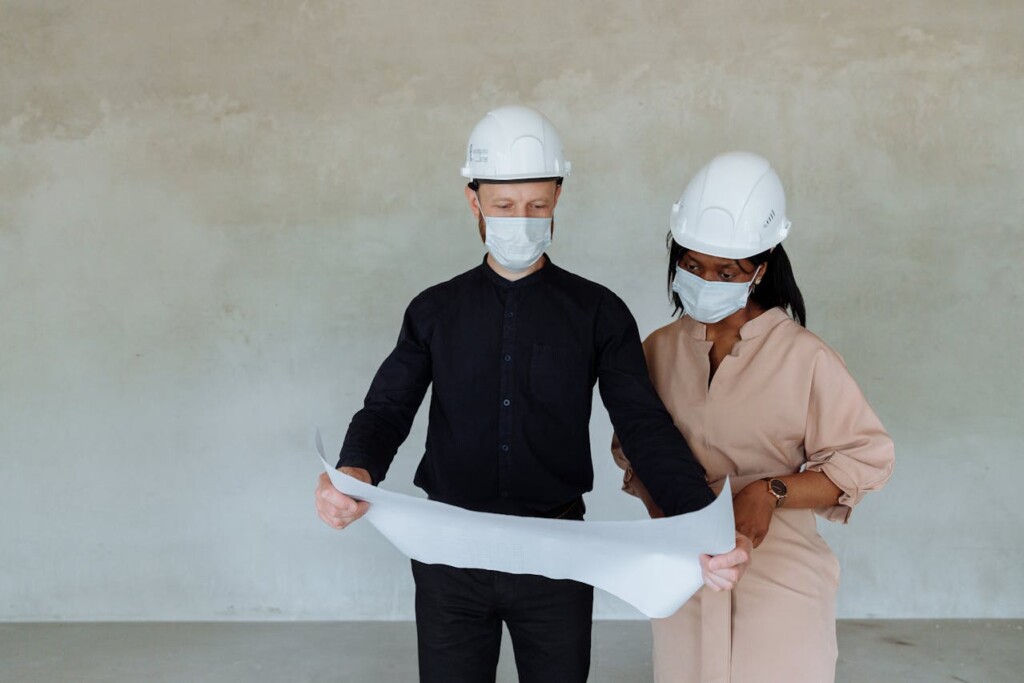
Commercial construction moves through distinct phases that build on one another. We organize these activities to maintain quality control while keeping projects on schedule and on budget.
Pre-Construction Activities
Pre-construction sets the foundation for successful execution. We provide land acquisition support to help clients identify suitable sites and navigate the purchase process. Our constructability reviews examine designs early to identify potential issues before they become costly during construction.
Estimating forms the financial backbone of every project. We analyze drawings, specifications, and site conditions to develop accurate cost projections that account for materials, labor, and equipment. Scheduling coordinates these elements into realistic timelines that consider permit processing, weather constraints, and material delivery windows.
Planning Tools That Drive Efficiency
Building Information Modeling (BIM) serves as our visual coordination tool. BIM allows us to identify conflicts between structural, mechanical, and electrical systems before construction begins. This 3D modeling reduces field changes and helps subcontractors understand their scope more clearly.
Lean construction principles streamline our workflows by eliminating waste and improving coordination. We implement these methods through detailed look-ahead schedules and collaborative planning sessions that bring all trade partners together to solve problems proactively.
Field Execution And Daily Operations
Site work and concrete form the physical foundation of most projects. We coordinate excavation, utility installation, and concrete placement to establish stable working conditions for subsequent trades. Our teams manage these activities with consistent attention to safety protocols and quality standards.
Structural systems follow foundation work and define the building’s framework. Whether installing steel frames, erecting tilt-wall panels, or constructing metal buildings, we sequence these activities to support efficient installation of subsequent building components.
Interior construction brings the project toward completion. We coordinate mechanical, electrical, and plumbing installations with finish work to minimize conflicts and maintain progress. Daily supervision ensures quality standards are met and safety protocols are followed consistently.
Communication And Technology Integration
Mobile platforms enable real-time communication between field teams and project management. We use these systems to document progress, report issues, and coordinate schedule adjustments as conditions change.
Field updates flow continuously to all stakeholders through digital platforms. This transparency helps owners understand project status and allows quick decision-making when changes are needed.
Administrative Coordination
Subcontractor management requires careful coordination of multiple trade partners. We handle contract administration, progress payments, and performance monitoring to ensure all parties meet their commitments on schedule.
Resource management encompasses coordinating materials, equipment, and labor. We track deliveries, manage storage, and coordinate access to ensure efficient workflows across all trades working simultaneously on-site.
Compliance reviews verify that work meets building codes and contract specifications. Our teams conduct regular inspections and coordinate with third-party testing agencies to document conformance with project requirements.
Project Closeout And Handover
Final inspections mark the transition from construction to occupancy. We coordinate with building officials and testing agencies to complete all required certifications before turnover to the owner.
Documentation packages include as-built drawings, warranties, operations manuals, and maintenance schedules. These materials provide owners with essential information for long-term building operations and maintenance planning.
Facility maintenance and industrial coatings extend building life and protect the owner’s investment. We coordinate these services during closeout and establish ongoing maintenance relationships that continue beyond project completion.
Conclusion And Next Steps
Commercial construction services in Houston integrate planning, design coordination, field execution, and project closeout through established project-delivery frameworks. Whether through design-build collaboration or turnkey management, we coordinate every phase to deliver functional facilities that meet operational requirements and regulatory standards.
Next steps call for clear decisions in three areas. First, define your scope and schedule with realistic timelines that account for site conditions, permitting requirements, and construction sequencing. Second, choose between design-build for integrated team collaboration and turnkey services for comprehensive project management with minimal owner involvement. Third, match your building requirements to the appropriate structural system—metal buildings for cost-effective clear spans, or tilt-wall construction for durable concrete shells and enhanced security.
Budget planning should cover construction costs and long-term asset protection through a maintenance plan. Industrial coatings, facility maintenance protocols, and system inspections protect your investment beyond project turnover. Ready to begin your Houston commercial construction project? Contact EB3 Construction to discuss your specific requirements and delivery approach.