
A single government fine for inadequate dust control can cost more than months of proactive site management. In San Antonio, construction dust control focuses on managing fugitive dust across unpaved roads and active construction sites using targeted suppression techniques.
Effective dust control delivers measurable improvements in air quality, site safety, and operational visibility while reducing long-term costs related to equipment maintenance, environmental management planning, and regulatory compliance. Water trucks provide immediate relief, but comprehensive dust suppression strategies protect both crews and surrounding communities from airborne particulates that may trigger health complications and enforcement actions.
What Are The Key Benefits Of Construction Dust Control?
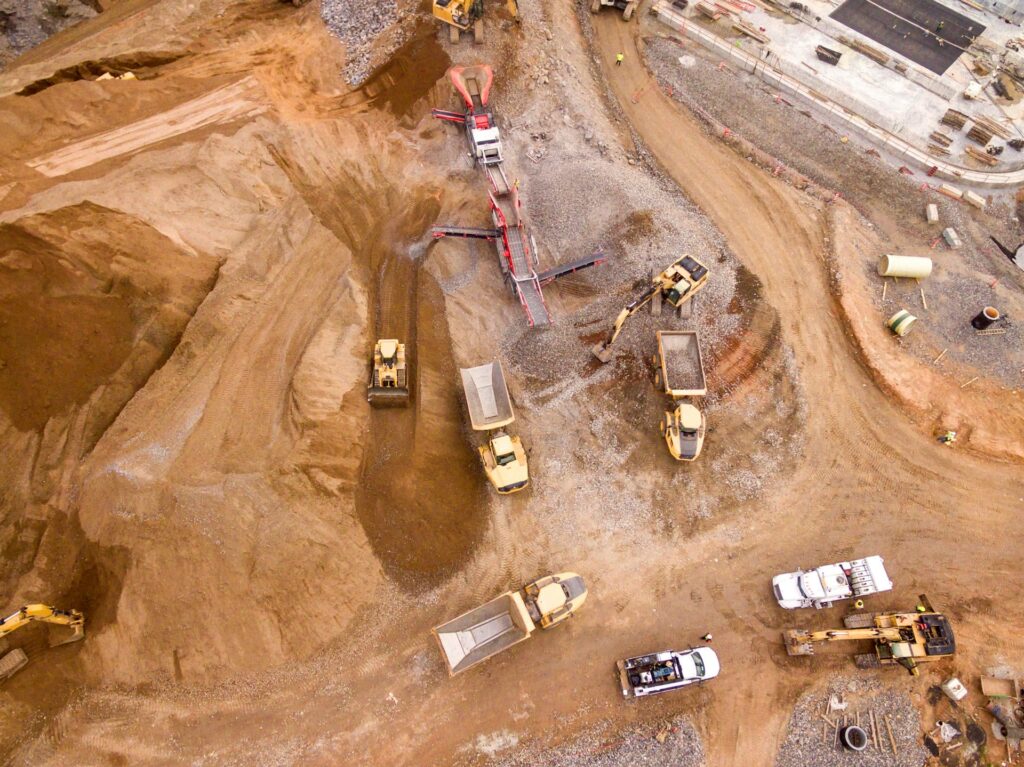
Effective dust control delivers measurable advantages that directly impact project operations and crew safety. These benefits extend beyond basic compliance to create tangible value for construction teams and nearby communities.
Air Quality and Health Protection
Dust control significantly improves air quality on and around the job site. Construction activities generate particulate matter, including PM2.5 and PM10, which pose respiratory health risks to workers and nearby residents. Proper control measures reduce these airborne particles and create healthier working conditions.
Long-term exposure to construction dust can lead to serious health complications, including respiratory ailments and cardiovascular issues. We implement dust control measures to help prevent dust-related illness among crews who spend extended periods on active sites.
Enhanced Safety and Visibility
Safety improves when airborne dust is minimized. Dust clouds can impair vision and create hazardous conditions for both crews and vehicles operating on site. Clear visibility allows operators to work more effectively and reduces the risk of accidents.
Construction sites with heavy equipment traffic benefit most from visibility improvements. When dust settles quickly, operators can maintain better situational awareness and coordinate more safely with ground crews.
Equipment Protection and Cost Savings
Dust control measures reduce maintenance needs caused by dust infiltration into engines and moving parts. Fine particles can accelerate wear on machinery components, leading to more frequent repairs and shortening equipment life. Effective dust management protects these investments.
Water savings represent another significant benefit. While water trucks provide immediate dust suppression, constant spraying is costly and evaporates quickly in Texas heat. More effective control methods reduce the need for continuous water application and lower operational costs over time.
Regulatory Compliance
Construction dust control helps avoid fines because regulations at local, state, and federal levels strictly govern particulate emissions. Regulators monitor compliance with air quality standards and can impose penalties for noncompliance. Proactive dust management ensures projects meet these requirements and avoid costly delays or legal issues.
Which On-Site Dust Suppression Methods Work, And How Are They Applied?
We coordinate dust suppression with proven application methods and materials matched to specific site conditions. The application method determines how well the suppressant penetrates and bonds with the surface.
Application Equipment and Timing
Topical solutions require even distribution across the treatment area. We use pressurized spray equipment for precise coverage of smaller areas, while distributor trucks handle larger road sections efficiently. Spray trailers work well for projects that require mobility between multiple locations.
Hand sprayers provide control for detail work around structures or sensitive areas. After application, we allow 24 hours for the material to set before opening to traffic. This set time ensures proper bonding with surface particles and helps prevent loss of the suppressant under vehicle loads.
Polymer-Based Emulsions for Long-Term Control
Polymer-based emulsions create strong bonds between dust particles through their adhesive properties. These synthetic materials form a cohesive surface layer that resists breakdown under traffic and weather. We apply polymers at residual concentrations of 5 to 15 percent, typically diluted 1:9 with water.
The polymer treatment penetrates 10 to 20 millimeters into the surface. This depth helps resist wear and provides longer-lasting dust control compared to surface-only treatments. Applications generally last from one to several years, depending on traffic volume and climate.
Calcium Chloride for Moisture Retention
Calcium chloride works as a hygroscopic salt that draws moisture from the air to keep road surfaces damp. The material starts absorbing water at 29 percent relative humidity at 77°F, making it effective in moderate humidity conditions. We typically apply calcium chloride flakes at 1.0 to 2.0 pounds per square yard or liquid concentrate at 35 to 38 percent residual concentration.
The hygroscopic action helps maintain surface moisture even under hot, dry conditions. Calcium chloride penetrates several inches into the road base, creating stability beyond the immediate surface. Follow-up treatments use half to one-third of the initial application rate.
Calcium chloride increases surface tension in the water film between particles, which slows evaporation and tightens the compacted surface as drying occurs. The treated surface can be regraded and recompacted with less concern for losing moisture and density.
Magnesium Chloride Performance Characteristics
Magnesium chloride also functions as a hygroscopic salt but begins moisture absorption at 32 percent relative humidity regardless of temperature. This makes it more suitable for consistently drier climates where calcium chloride may not activate effectively.
Under hot, dry conditions with extended low-humidity periods, magnesium chloride can be less effective than calcium chloride. The material works better when humidity levels remain above the activation threshold consistently. We apply magnesium chloride at 28 to 35 percent residual concentration, typically at 0.30 to 0.50 gallons per square yard.
Both chloride-based materials require proper timing. We avoid applying during or just before heavy rain, as this can wash away the material before it bonds with the surface.
Water Truck Applications and Limitations
Water trucks provide immediate dust suppression for short-term control. Regular light watering is more effective than less frequent heavy applications. The added moisture agglomerates surface particles temporarily, reducing airborne dust during active construction periods.
Water evaporates quickly under heat and wind, often requiring reapplication within hours. This frequent reapplication creates ongoing labor and equipment costs that add up over extended project timelines. We use water trucks primarily for daily operational dust control rather than long-term suppression.
Effectiveness depends on proper application rates and timing. Over-watering can create muddy conditions that complicate equipment movement, while under-application provides minimal dust control benefits.
When Should You Choose Soil Stabilization Over Topical Dust Control?
We select soil stabilization when surface treatments fail to provide adequate subgrade support or when projects demand long-term structural integrity. Surface applications are effective for immediate dust suppression, but soil stabilization addresses deeper foundation issues that topical methods cannot resolve.
Deeper soil stabilization becomes necessary when weak subgrade conditions threaten project stability. The process begins with scarifying or loosening the soil to a depth of 3 to 4 inches using a motor grader or specialized reclaimer. We apply the stabilizing material in two passes to ensure uniform distribution throughout the loosened soil matrix.
After applying the material, we grade the surface to achieve proper elevation and cross-slope requirements. Compaction follows, using pneumatic-tired rollers or vibratory compactors to achieve the specified density. The final step involves applying a light lockdown coat to seal the surface and prevent moisture intrusion.
Material Selection for Different Stabilization Needs
Lime stabilization works effectively in clay-rich soils by reducing plasticity and improving workability. Hydrated lime or quicklime reacts with clay particles to create cementitious compounds that increase soil strength over time. Lime-kiln dust (LKD) provides similar benefits while often being more cost-effective than pure lime products.
Portland cement offers rapid strength gain and works well in granular soils where immediate load-bearing capacity is required. Cement stabilization creates a rigid pavement foundation suitable for heavy traffic loads. Cement-kiln dust (CKD) provides an alternative cement source that can reduce material costs while delivering comparable performance.
Class C fly ash contains self-cementing properties that activate when mixed with water, making it effective for both modification and stabilization applications. When combined with other additives, Class F fly ash can enhance soil properties while providing an environmentally beneficial use for power plant byproducts.
Performance Benefits Over Surface Treatments
Soil stabilization increases shear strength throughout the treated depth, creating a more robust foundation than surface applications alone. This enhanced strength prevents rutting and deformation under heavy construction equipment or permanent traffic loads. The treatment also controls shrink-swell behavior in expansive soils, reducing pavement cracking and maintenance requirements.
Load-bearing capacity improvements from stabilization support heavier loads and reduce stress on underlying native soils. This enhanced structural support proves essential for roadways, parking areas, and airport pavements where surface treatments cannot provide adequate foundation strength. The deeper treatment zone creates a stable platform that maintains performance under challenging site conditions.
Where Is Dust Control Most Needed On And Around Construction Sites?
Dust control priorities center on high-traffic areas where heavy equipment and vehicles generate the most fugitive dust. Construction sites require focused attention on unpaved roads requiring stabilizers, heavy haul roads, and quarries and gravel roads where constant traffic churns up particles. Parking areas also need treatment since they handle daily vehicle movement and equipment staging.
Non-traffic applications are equally critical dust sources that we address with targeted solutions. Stockpile sealants and dust caps help prevent wind erosion at material storage areas. Slope erosion control protects embankments and cut areas from weather-related dust generation. These applications require different approaches than traffic areas but have a significant impact on overall site dust management.
Specialized applications extend dust control beyond typical construction boundaries. ADA trails and cart paths need stabilization that meets accessibility standards while controlling dust. Path and trail stabilizers support pedestrian and light-vehicle access. Agricultural roads connecting to construction sites often require treatment to prevent dust migration from adjacent farming operations.
Infrastructure projects present unique dust control challenges that we address with runway-grade solutions. Helicopter and aircraft runway stabilizers must meet aviation safety standards while suppressing dust from rotor wash and jet blast. Military operations demand rapid-deployment dust control that performs under extreme conditions. These specialized applications require materials and techniques beyond standard construction site treatment.
Environmental applications round out a comprehensive dust control program. We apply hydroseed and mulch tackifiers to freshly seeded areas where dust control supports vegetation establishment. These dual-purpose treatments bind soil particles while creating favorable conditions for plant growth, addressing both immediate dust concerns and long-term erosion prevention.
Conclusion And Next Steps For San Antonio Projects

Successful construction dust control in San Antonio requires targeting high-impact areas such as unpaved roads, heavy-haul routes, and active work zones. We apply topical solutions with appropriate 24-hour set times, select polymer-based emulsions or hygroscopic salts based on site conditions, and then proceed to soil stabilization when subgrade strength is required. This systematic approach addresses immediate dust suppression and long-term site stability.
San Antonio’s expansive clay soils and seasonal moisture variations demand careful material selection and thoughtful application timing. We coordinate dust control methods with construction schedules to maintain site safety, equipment protection, and regulatory compliance throughout all project phases. Proper sequencing prevents rework and ensures cost-effective dust management from site preparation through project completion.
Ready to implement effective dust control solutions for your San Antonio construction project? Contact EB3 Construction to discuss soil stabilization and dust suppression strategies.