

Construction crews need space beyond the actual build site. A construction staging area in San Antonio serves as a temporary command center where contractors store materials, park equipment, and set up batch plants for concrete operations.
These staging yards appear throughout San Antonio, often recognizable by their green security fencing and organized stockpiles on gravel surfaces. Trucks line up along adjacent streets while workers coordinate daily operations from temporary facilities equipped with utilities and secure access points.
What Permits, Approvals, And Zoning Rules Apply In San Antonio?
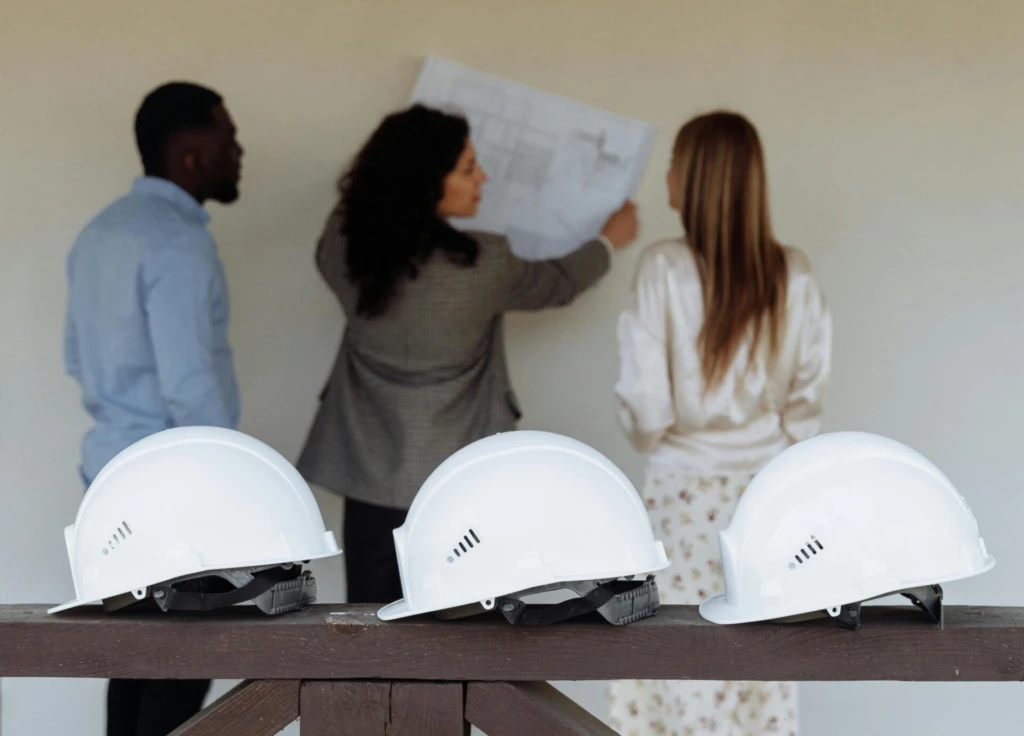
Getting permits and approvals for construction staging in San Antonio requires using the BuildSA online portal, which manages temporary use applications citywide. We navigate this system regularly for our clients and know that proper permitting prevents costly delays and enforcement actions during critical project phases.
The city categorizes staging activities under Section 35-391 of the Unified Development Code, with construction offices and sheds on separate lots requiring a Certificate of Occupancy under the “COO Temporary Use/Tent – Special Event” category. This classification covers structures that support active construction projects but aren’t located on the same property as the main work.
Required Submittals and Documentation
Every temporary use application requires documentation that demonstrates compliance with zoning and safety standards. The site plan is the most critical document, showing staging area locations relative to property lines and nearby residential zones with measured distances. This is not just a rough sketch but a scaled drawing that city reviewers use to verify setback requirements and overlay compliance.
Applications must include documentation of existing conditions, typically through photographs or video taken before any staging activities begin. We document haul routes, surrounding properties, and infrastructure to establish baseline conditions that inform restoration requirements when the project concludes.
Time Limits and Operational Standards
San Antonio enforces time limits on temporary uses that vary by category and intensity. Christmas tree sales receive up to 45 days, while circuses and carnivals are limited to permits of up to two weeks. Most construction-related temporary uses fall into shorter time frames, typically 7 to 30 days depending on scope and impact.
All temporary uses must comply with noise limitations outlined in Chapter 21 of the City Code. These standards are especially important for staging areas near residential zones, where early morning and evening activities can trigger complaints and enforcement actions.
Required Inspections
Before occupying any temporary staging structure, projects must pass applicable inspections from multiple city departments. Building inspections verify structural safety and code compliance. Electrical inspections cover temporary power connections and safety systems. Fire Department inspections focus on access routes, equipment placement, and emergency preparedness.
Health Department inspections apply when staging involves food service, temporary restrooms, or activities that could impact public health. We coordinate these inspections early in the permit process to avoid delays during critical mobilization phases.
Zoning Overlay Requirements
Several overlay districts in San Antonio impose additional requirements that affect staging operations. Near Camp Bullis, the Military Lighting Overlay District (MLOD) regulates outdoor lighting to minimize impacts on military training operations. The Military Sound Attenuation Overlay (MSAO) enforces construction standards for any habitable structures within the overlay boundaries.
Along the Interstate 10 corridor, the Hill Country Gateway (GC-1) and Urban Corridor (UC-1) districts regulate placement, screening, utilities, and signage for staging areas. These overlays require enhanced landscaping, specific building materials, and coordinated signage that maintains the corridor’s visual character.
Recent zoning cases show how staging areas can successfully coexist with commercial and residential uses when properly planned and permitted. Enforcement records also document consequences when work begins without proper approvals, particularly regarding setback violations and inadequate landscape buffers.
How Should Contractors Plan And Operate A Staging Area?
We begin every project by securing an appropriate off-airport staging area that meets operational requirements and regulatory standards. This step drives efficiency throughout mobilization and construction.
The staging layout and operations plan form the backbone of successful project execution. We prepare detailed drawings that show haul routes connecting the staging area to work zones while avoiding disruptions to public traffic and nearby neighborhoods. Public access points receive careful consideration to maintain local traffic flow while ensuring project security. Security fencing surrounds the perimeter with controlled gate access at designated entry points.
Batch plant locations require strategic positioning within the staging area. We evaluate soil conditions, drainage patterns, and proximity to material delivery routes when selecting locations. Stockpiles are organized by material type and frequency of use, with concrete aggregates positioned nearest to batch plants and specialty items stored in weather-protected areas.
Installing temporary utilities supports daily operations throughout construction. We coordinate electrical service for lighting, equipment charging, and batch plant power requirements. Water connections serve dust control systems, equipment washing, and concrete production needs. Communication infrastructure includes internet connectivity for project management and reliable emergency communications.
Documentation of existing conditions protects both contractor and property owner interests. We photograph the staging yard from multiple angles, capturing pavement conditions, existing structures, drainage features, and vegetation. Video documentation records haul route conditions along the entire path from the staging area to the project site. These records establish baseline conditions and support restoration planning at project completion.
Dust control measures address both regulatory compliance and community relations. We install water truck filling stations within the staging area for regular road watering. Gravel surfaces in high-traffic areas reduce dust from vehicle movement. Wind barriers around stockpiles limit material migration during high winds.
Public safety considerations shape every aspect of staging area operations. We maintain clear sight lines at gate entrances and exits to prevent conflicts with pedestrian or vehicular traffic. Traffic control devices guide trucks entering and leaving the staging area during peak hours. Nearby residents receive notification of operating hours and emergency contact information.
Site restoration planning begins during initial setup and continues throughout project execution. We document material quantities used for temporary improvements, track equipment impacts on pavement and landscaping, and maintain restoration material inventories. Final restoration returns the staging property to documented pre-construction conditions, including pavement repair, landscape replacement, and disconnecting temporary utilities.
What Safety, Security, And Traffic Controls Are Required Near Airports?

Airport construction projects in San Antonio operate under stringent federal and local regulations designed to protect aviation safety and maintain operational security. We coordinate closely with airport operations to implement comprehensive control systems that address every aspect of construction activity on and adjacent to airport property.
Access Control and Personnel
All construction work within the Air Operations Area requires controlled access through locked gates or staffed guard stations. Personnel must display current airport ID badges or remain under authorized escort at all times. We ensure our team members have completed required background checks and security training before project mobilization.
Escort procedures apply to workers without individual airport credentials. Escorts maintain visual contact and radio communication with airport operations while supervising construction personnel in restricted areas. Gate guards verify credentials and conduct vehicle inspections before allowing entry to secured zones.
Vehicle Marking and Movement Standards
Construction vehicles operating on airport property must display company identification on both sides in contrasting colors. During daylight hours, all vehicles carry orange-and-white checkered flags mounted at the highest point or use flashing amber beacons. Nighttime operations require steady or flashing lights visible from all directions.
Speed limits vary by location, with typical restrictions of 15 mph on designated haul routes. Vehicles must yield immediately to aircraft operations and emergency response equipment. Two-way radio communication connects construction vehicles with airport operations during active work periods.
Haul Route Delineation and Traffic Control
Approved haul routes are clearly delineated with weighted barricades, traffic cones, and reflective signage. Red steady or flashing lights mark route boundaries during nighttime and low-visibility conditions. We position these controls to prevent inadvertent entry into active aircraft movement areas while maintaining clear sight lines for air traffic control.
Route planning considers aircraft taxi paths, emergency vehicle access, and fuel truck movements. Construction traffic follows predetermined paths that minimize disruption to normal airport operations. Flaggers coordinate vehicle crossings of active taxiways when required by operational conditions.
Equipment Height Restrictions and Lighting
Cranes and equipment exceeding 20 feet in height require at least 48 hours’ advance coordination with airport operations and air traffic control. We submit detailed equipment specifications, operating locations, and scheduled work periods for review and approval. Obstruction lighting is mandatory for equipment that penetrates approach surfaces or poses navigation hazards.
Temporary lighting installations use red omnidirectional lights that meet Federal Aviation Administration intensity standards. These lights operate continuously during equipment deployment and receive daily operational checks. Battery backup systems ensure continued operation during power outages or equipment failures.
Work Area Protection and Marking
Active construction zones employ low-profile barricades designed to minimize aircraft damage during inadvertent contact. Red warning lights mark excavations, material stockpiles, and equipment staging areas during darkness and reduced visibility periods. Trenches and excavations follow strict dimensional limits and require continuous marking with appropriate warning devices.
Stockpile locations consider wind patterns, aircraft operations, and emergency access requirements. Materials remain secured against displacement from jet blast or adverse weather conditions. Clear sight lines preserve air traffic control visibility of active runway and taxiway surfaces.
Daily Inspection and Compliance Verification
Construction crews complete comprehensive site inspections before departing each work shift. These inspections verify proper barricade placement, functional warning lights, secure material storage, and clear emergency access routes. We document inspection results and address any deficiencies before resuming work activities.
Airport operations staff conduct independent inspections to verify compliance with security protocols and operational safety requirements. Noncompliance issues receive immediate attention to maintain continuous operational safety standards. Regular coordination meetings ensure ongoing compliance with evolving airport operational needs.
How Do Staging Areas Fit Into Neighborhoods And Corridors In San Antonio?
When we establish staging areas near residential neighborhoods and commercial corridors in San Antonio, we must follow placement rules that vary by location and zoning classification. Areas such as Stonewall Parkway and Milsa Drive show how staging operations must coexist with single-family neighborhoods and commercial developments. These locations require close attention to base district standards and overlay requirements that govern where materials can be stored and how sites must be screened from adjacent properties.
The GC-1 Hill Country Gateway and UC-1 IH-10/FM 1604 Urban Corridor overlay districts set specific standards for staging areas along major transportation corridors. These overlays regulate placement, landscaping, material screening, and signage. We account for these corridor-specific rules when positioning equipment storage areas and selecting fencing and screening materials that meet both functional and aesthetic needs.
Base district setback requirements are critical when staging areas abut residential zoning. Commercial districts such as C-1 require minimum 10-foot side setbacks and 30-foot rear setbacks when adjacent to residential properties. These measurements are non-negotiable and must be verified during site selection. The 15-foot Type B landscape buffer requirement provides additional separation between staging operations and residential areas, with specified plant materials and maintenance standards.
Parking placement within staging areas follows strict rules, particularly the requirement that parking be located behind the primary structure when adjacent to residential zones. This standard helps minimize visual impact on neighboring properties and maintains the residential character of adjacent areas. We coordinate parking layouts early in the planning process to ensure compliance with these requirements.
Traffic impact assessment thresholds determine whether additional traffic studies are required for staging operations. When activities generate traffic below established thresholds, we can proceed without a formal traffic impact analysis. However, we monitor traffic carefully during operations to ensure compliance with these limits and avoid triggering additional requirements mid-project.
Enforcement cases highlight the importance of obtaining proper permits before establishing staging operations. Projects that begin work without permits or place structures within required setbacks and landscape buffers face immediate enforcement action. These violations can halt construction progress and require costly remediation to bring sites into compliance. We prevent these delays by securing all necessary approvals before mobilizing equipment and materials to staging areas.
Conclusion And Next Steps
Successful construction staging in San Antonio requires careful coordination across multiple regulatory frameworks and operational considerations. We use BuildSA to establish staging areas for temporary use on separate lots, verify base zoning and overlay requirements, and develop comprehensive operational plans that address haul routes, security fencing, utilities, stockpiles, and dust control. This approach supports compliance while reducing project delays and community disruption.
Our staging area protocols include documenting existing site conditions, implementing daily safety and access controls during operations, and completing site restoration upon project completion. Airport projects require strict adherence to Air Operations Area access protocols, vehicle marking requirements, and obstruction lighting standards. When working near neighborhoods and corridor districts such as GC-1 and UC-1, we maintain required setbacks and landscape buffers while meeting MLOD and MSAO lighting and sound standards. These standards protect public safety and help preserve community relations throughout construction.
Ready to establish your next staging area in San Antonio? Contact EB3 Construction for expert guidance on permits, site planning, and regulatory compliance.