
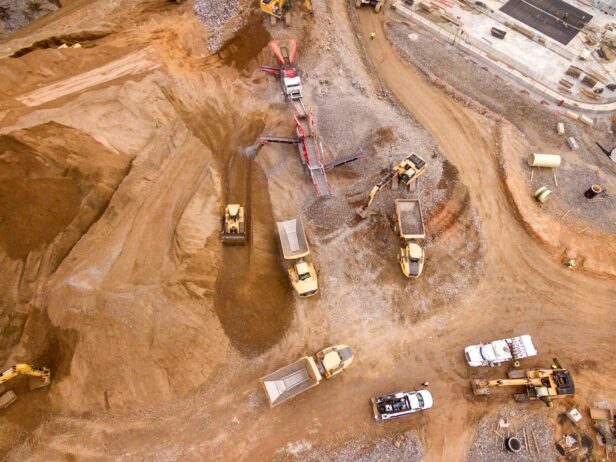
Developing raw land into an industrial site in Texas triggers a layered sequence of approvals that runs from the local planning counter to state agency oversight. Texas does not operate a single statewide building permit authority, so every project starts at the city or county level, with critical state compliance checks woven throughout.
This article walks through the full Texas industrial permitting process, covering land-use entitlements, environmental and infrastructure requirements, building permits, and inspection milestones that lead to a Certificate of Occupancy.
Which Land Use Entitlements Come First (Zoning, Platting, And Site Development)?

Land use entitlements establish the legal foundation for everything that follows. Before a building permit application can proceed on a raw industrial tract in Texas, three layers of approval typically need to align: zoning, platting, and site development. Getting the sequence right from the start prevents costly redesigns and avoidable delays later in the process.
Confirming Industrial Zoning and Pursuing Changes When Needed
The first task is verifying that the subject property has a zoning designation that permits industrial use. Industrial zoning in Texas covers warehouses, manufacturing facilities, distribution centers, and similar operations. It typically addresses concerns such as noise buffers, heavy-truck access, and emissions separation from residential areas.
When the current zoning does not align with the intended industrial use, the path forward involves a formal rezoning application submitted to the city’s planning department. That application triggers public notices, a hearing before the Planning and Zoning Commission, and ultimately a decision by the city council. Depending on the city and the complexity of the case, this process can run from three months to well over a year. Where full rezoning is not required, a specific use permit or variance may provide a narrower approval pathway, though each still requires its own application, hearing, and public notice period.
Industrial rezoning cases involving potential environmental or community impact tend to draw more scrutiny than standard commercial cases. Factoring in that added complexity early, including the possibility of neighbor opposition, helps set realistic timeline expectations before design work begins in earnest.
Jurisdiction Check: City Limits, ETJ, or Unincorporated County
The permitting authority depends on the site’s location. A parcel inside a city’s corporate limits is subject to that city’s zoning ordinances, platting rules, and building codes. A parcel within the city’s extraterritorial jurisdiction (ETJ) may fall under the city’s subdivision and platting authority but not its zoning regulations. A parcel in unincorporated county land operates under a different set of rules altogether.
Some Texas counties have adopted commercial building permit requirements for unincorporated areas. Under Texas Local Government Code Chapter 233, certain counties can require commercial building permits for new construction outside city limits, often administered through the county fire marshal’s office. Confirming jurisdiction at the outset of due diligence determines which entity’s approval process applies and which code requirements govern the project.
Platting and Subdivision Approval
If the industrial tract has not been legally platted as a distinct lot, or if re-subdivision is needed to separate the project parcel from a larger tract, plat approval must be secured before construction can begin. Platting establishes the legal lot, dedicates easements and rights-of-way, and confirms compliance with local subdivision regulations covering drainage and utility layout.
Most Texas cities require a recorded plat before releasing a building permit. Fort Worth, for example, explicitly requires the plat to be filed and recorded with the county before a building permit application can be accepted. The plat approval process typically moves through the planning commission, with the governing body acting on the commission’s recommendation. Municipal authorities are generally required to act on a submitted plat within 30 days of filing.
Texas House Bill 3699, passed in 2023, introduced an important scheduling tool: building construction plans can now be reviewed concurrently with the platting process rather than waiting for plat finalization. This concurrent review does not eliminate the platting requirement, but it allows design and plan review work to proceed in parallel, compressing the overall pre-construction timeline on qualifying projects.
Site Development and Site Plan Approval
Many Texas cities require a separate site development permit or site plan approval for commercial and industrial projects before issuing a building permit. The site plan demonstrates how the proposed development fits the parcel, covering building placement, parking layout, drainage design, landscaping, and environmental ordinance compliance.
In Austin, a site plan permit is a standalone requirement for most nonresidential development. The City of Austin’s consolidated site plan process includes two concurrent elements: a land use element addressing zoning, setbacks, density, and site design, and a construction element addressing grading, drainage, filtration, erosion controls, and tree protection. Both must be released together before construction can proceed. Site plan review in Austin can run 12 to 14 months under standard timelines, though an expedited pilot program aims to cut that window to approximately six months for qualifying projects.
Outside Austin, the scope and timing of site plan requirements vary by jurisdiction. Some cities apply them broadly to any commercial or industrial project above a certain threshold; others limit site plan review to projects with specific triggers such as drainage modifications or proximity to environmental overlays. Confirming local site plan requirements during the jurisdiction check helps avoid discovering the need for site plan approval late in design.
Related Local Permits and Pre-Application Coordination
Land disturbance permits and tree removal permits often run parallel to the site plan and platting processes. Identifying these permits early allows them to be sequenced alongside design rather than discovered as separate approval steps after construction documents are otherwise complete. Missing a required tree removal permit, for instance, can halt site work even after a building permit is in hand.
A pre-application meeting with city or county planning staff is one of the most practical tools available at this stage. These pre-development conferences allow the project team to walk through the proposed use, confirm the full approval sequence, surface major code issues, and identify any site-specific constraints before significant design investment has been made. Most Texas jurisdictions offer this option, and using it early in the entitlement phase often surfaces requirements that would otherwise emerge as costly surprises during formal review.
What Environmental And Infrastructure Permits Apply To Texas Industrial Sites?
Environmental Due Diligence Before Breaking Ground
Before any sitework begins on an industrial project, we coordinate a Phase I Environmental Site Assessment to identify recognized environmental conditions tied to the land’s history. If the Phase I findings raise concerns, a Phase II assessment follows, involving soil and groundwater sampling to determine whether contamination is present. Skipping this step on an industrial site carries serious regulatory and financial exposure, especially when prior land uses may have involved chemicals, fuel storage, or industrial waste.
When contamination is confirmed, the Texas Commission on Environmental Quality’s Texas Risk Reduction Program (TRRP) governs how cleanup must proceed. The cleanup standard applied depends on the land use classification assigned to the site. A commercial or industrial classification can allow for higher Protective Concentration Levels (PCLs) than residential standards, but achieving that classification requires documented landowner consent; without it, the more stringent residential cleanup levels apply by default. In some cases, an institutional control, such as a deed restriction limiting site use, becomes part of the remedy to close out a TCEQ‑supervised cleanup.
TCEQ Stormwater Requirements During Construction
Any construction activity that disturbs one acre or more of soil triggers coverage under the TCEQ Construction General Permit (CGP) TXR150000, which was renewed with an effective date of March 5, 2023. Before mobilizing equipment, we file a Notice of Intent (NOI) through TCEQ’s online STEERS system and have a site-specific Stormwater Pollution Prevention Plan (SWPPP) in place. The SWPPP is not a generic document; it must reflect actual site topography, soil conditions, drainage patterns, and the specific Best Management Practices (BMPs) selected for erosion and sediment control.
Projects disturbing more than five acres, or those considered part of a larger common plan of development, require the full NOI process and carry a permit fee of $225. Smaller disturbances between one and five acres fall under the Small Construction Site Activities category, still requiring a SWPPP and a TCEQ Small Construction Site Notice. The CGP requires BMP inspections at least once every seven days or within 24 hours of a storm event producing 0.5 inches or more of rainfall, and all inspection records must be retained on site for three years. The permit remains active until final site stabilization is confirmed and a Notice of Termination is accepted by TCEQ.
Beyond stormwater during construction, operating industrial facilities must satisfy a separate layer of TCEQ compliance covering air quality, water discharges, waste management, and hazardous materials handling. Depending on the facility’s processes, individual permits and periodic inspections may apply under these operational programs, and those requirements are identified early in our pre-construction coordination with the owner’s environmental counsel.
TxDOT Access and Right-of-Way Coordination
When an industrial site connects to a state highway or requires work within TxDOT’s right-of-way, a driveway access permit and utility crossing approval from the Texas Department of Transportation are required before construction can proceed at that connection point. TxDOT evaluates the proposed access point for sight distance, turning movements, and potential traffic impacts to the state highway system. We initiate this coordination early because TxDOT review cycles can affect the project schedule, particularly for sites with high truck volumes or complex access geometry.
Utility crossings within the state right-of-way, including water, sewer, electrical, and communications lines, each requires a separate permit through the applicable TxDOT district office. Delays in securing these approvals can hold up both site utility work and final roadway connections, so we build this permit track into the master schedule alongside local civil permits rather than treating it as a secondary task.
Utilities, Wastewater, and Infrastructure Connections
Securing water and wastewater service taps is a foundational infrastructure step, and the permit path depends on the facility’s discharge characteristics. Standard commercial wastewater flows through the municipal system after obtaining a standard connection permit. Industrial operations that generate process wastewater with elevated contaminant levels require an industrial wastewater discharge permit from the local utility authority. In Austin, for example, discharging industrial wastewater to the city system requires a specific industrial pretreatment permit, and the approval process involves demonstrating that the discharge meets applicable pretreatment standards before a connection is authorized.
For sites in areas without access to a public sewer system, an On-Site Sewage Facilities (OSSF) permit is required from the relevant county or the TCEQ if the county does not have an authorized program. OSSF design and installation must comply with TCEQ rules, and the system must be sized appropriately for the facility’s anticipated wastewater volume. We identify the applicable wastewater path during early feasibility work so that infrastructure design and permitting proceed on a coordinated timeline with the rest of the project.
| Permit Type | Trigger | Responsible Agency |
|---|---|---|
| Site Operating Permit (SOP) | For sites subject to 30 TAC Chapter 122 that do not qualify for a GOP or TOP, and affected units under the Acid Rain Program | Texas Commission on Environmental Quality (TCEQ) |
| Temporary Operating Permit (TOP) | For temporary sources that change location at least once during any five-year period and affected units under Acid Rain requirements | Texas Commission on Environmental Quality (TCEQ) |
| General Operating Permit (GOP) | For sites with similar operations, emission units, and requirements; streamlined application process | Texas Commission on Environmental Quality (TCEQ) |
| TCEQ Construction General Permit (CGP) | Construction activities disturbing one acre or more of soil | Texas Commission on Environmental Quality (TCEQ) |
| Industrial Wastewater Discharge Permit | Industrial wastewater with elevated contaminants discharged to local systems | Local utility authority |
| On-Site Sewage Facilities (OSSF) Permit | For sites without access to public sewer systems | TCEQ or relevant county |
| TxDOT Driveway Access and Utility Crossings | When an industrial site connects to a state highway or involves utility work in state right-of-way (ROW) | Texas Department of Transportation (TxDOT) |
What Building Permits And State Compliance Checks Are Required?
Local Building Permits and Code Framework
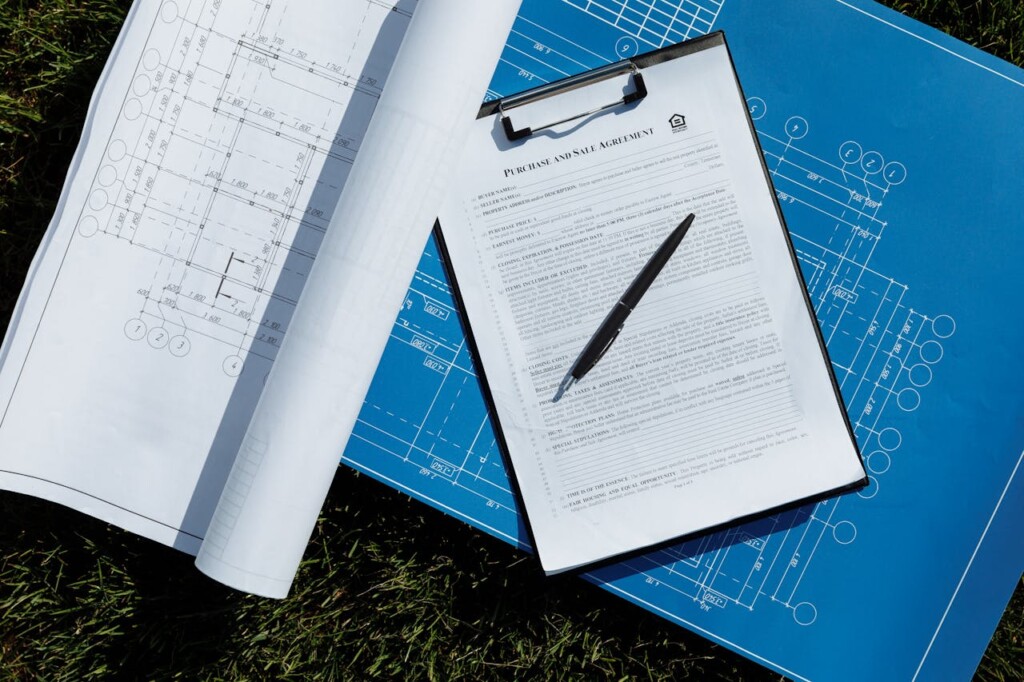
Once zoning, platting, and environmental groundwork are in place, the building permit becomes the central approval that allows construction to proceed. Cities issue building permits and enforce locally adopted codes—typically the International Building Code (IBC) along with the International Fire Code, National Electrical Code, and related mechanical and plumbing codes—each with Texas-specific amendments. Some counties also issue permits for commercial construction in unincorporated areas under Texas Local Government Code Chapter 233.
All construction documents submitted for permit must be sealed, signed, and dated by Texas-licensed architects and engineers. A permit package missing sealed drawings will be rejected at intake, adding time before the review clock even starts. We coordinate closely with our design team to confirm every sheet is properly executed before submission.
Texas Energy Code Compliance
Texas mandates compliance with the state energy code for all new construction. The state code is based on the International Energy Conservation Code (IECC), and plan reviewers check thermal envelope values, HVAC system efficiency, lighting controls, and insulation specifications against its requirements. The specific climate zone in which the industrial site sits determines the applicable performance thresholds. Because Texas spans multiple IECC climate zones, the standards are not uniform across the state.
Energy code compliance is not a document-only exercise. Reviewers examine the actual specifications on the mechanical and architectural drawings. Submitting generic or incomplete energy details often triggers plan review comments that delay permit issuance. We ensure the construction documents address IECC requirements directly and completely before submittal.
Accessibility Registration and TAS Review
Any project valued at $50,000 or more must be registered with the Texas Department of Licensing and Regulation (TDLR) for a Texas Accessibility Standards (TAS) review. TAS is the state’s implementation of ADA requirements and governs everything from accessible parking and routes of travel to restrooms, door hardware, and service counters. A Registered Accessibility Specialist (RAS) reviews the plans for TAS compliance, and a final TAS inspection by that specialist is required at or near project completion.
The TDLR project registration number must be included in the building permit application package. Many cities will not accept a submittal without it. We secure this registration during the design phase so the TAS plan review runs concurrently with local permit review rather than creating a separate delay downstream.
Asbestos Survey Requirements for Existing Structures
For any industrial project that involves renovation or demolition of an existing building, Texas requires proof of an asbestos survey conducted by a licensed inspector before a building permit can be issued. The Texas Department of State Health Services (DSHS) governs asbestos abatement rules, and cities verify survey certification as part of the permit intake process. This requirement applies regardless of the building’s apparent condition or age.
On industrial sites where older structures or site improvements are being cleared or modified, this survey needs to be scoped and scheduled early. Waiting until the permit application stage to commission the survey adds unnecessary time to a schedule that is already subject to multi-department review.
Multi-Department Plan Review
A commercial industrial building permit in Texas does not go through a single reviewer. Plans are routed simultaneously or sequentially across multiple departments, which commonly include building code plan examiners, the fire marshal, MEP trade reviewers, planning and zoning staff, and the engineering or public works department covering drainage and utility connections. Health department review applies where the project includes regulated food service, public facilities, or similar uses.
Each department generates its own set of comments if corrections are needed. We track every department’s review status and respond to comments with revised plans and a written response letter that addresses each item specifically. Quick, thorough responses keep the review moving instead of waiting in a queue for a second cycle.
Review Timelines and HB 14
Under Texas House Bill 14, which took effect September 1, 2023, cities must review and act on building permit applications within 45 days. If a city fails to approve, deny, or conditionally approve an application by day 46, the applicant can engage a qualified third-party plan reviewer to complete the code review. Counties operating under Chapter 233 for unincorporated area permits have a 30-day review window under that statutory framework.
That 45-day clock is a useful tool for schedule planning, but it does not guarantee a clean first review. Most permit packages for industrial projects require at least one revision cycle, which can restart or extend the timeline. We build that reality into our project schedules rather than assuming a single-cycle approval, while using HB 14 as a backstop if a city’s review runs significantly past the statutory deadline.
Conclusion And Next Steps
Developing raw land into an industrial site in Texas demands disciplined sequencing from the first title search to the final sign-off. The permitting path runs through entitlements, environmental compliance, building permits, and staged inspections, with each phase dependent on decisions made in the previous phase. Getting ahead of the sequence, rather than reacting to it, determines whether a project meets its pro forma schedule.
At EB3 Construction, we approach Texas industrial development as a coordinated sequence of parallel and dependent approvals. We confirm zoning alignment and platting status before design dollars are committed, engage in pre-application meetings to surface jurisdiction-specific requirements early, and use the concurrency tools provided by HB 3699 to keep building plan review moving alongside the platting process. Where HB 14’s 45-day review window applies, we track it actively and prepare complete, code-compliant submittals that reduce the back-and-forth with plan examiners. TCEQ stormwater obligations, TxDOT access coordination, TDLR accessibility registration, and multi-agency plan review are all mapped against the construction schedule from the start, not discovered mid-build. During construction, we manage staged inspections, maintain SWPPP compliance on disturbed sites, and coordinate the TAS final inspection to keep the Certificate of Occupancy on track and avoid last-minute delays from overlooked sign-offs.
If you are planning an industrial development in Texas and want a general contractor who understands the full permitting sequence, contact EB3 Construction to discuss your project.