
A 10,000 sq. ft. tilt-wall warehouse in Dallas–Fort Worth will cost between $80 and $230 per square foot in 2025–2026, depending on specifications, site conditions, and how closely the building targets Class A standards. That wide range exists for a reason: a basic shell with standard MEP systems falls at the lower end, while a fully specified facility with higher-grade finishes, denser dock configurations, and premium mechanical systems climbs toward the top.
The sections ahead break down what drives this range for a project of this scale in the DFW industrial market, how to structure the budget across hard costs, soft costs, and contingency, and which permitting and timeline factors influence cost certainty before a shovel hits the ground.
What Per-Square-Foot Range Should You Use For A 10,000 Sq Ft Tilt-Wall In DFW?
The Small-Building Benchmark For Texas
At the 10,000 sq ft scale, the per-square-foot cost increases compared to larger industrial footprints. Small Texas warehouses in the 10,000 to 25,000 sq ft range are typically priced at $80 to $150 per sq ft for the building itself, covering standard sitework and basic interiors, with MEP systems included.
The reason for the higher unit cost is straightforward. Fixed expenses tied to site mobilization, utility connections, and permit fees do not scale down proportionally with building size. Spread across 10,000 sq ft instead of 100,000 sq ft, those costs push the per-square-foot figure up significantly.
The DFW Market Baseline And Class A Reference
Standard warehouse shells across Dallas–Fort Worth commonly fall within the $60 to $110 per sq ft range. That band reflects the market’s dominant tilt-wall approach, a deep regional subcontractor base, and decades of industrial construction activity along DFW’s logistics corridors.
Class A warehouse construction in Dallas spans a wider range. For 2025 and 2026, Class A projects in the Dallas market run approximately $140 to $230 per sq ft, reflecting higher-performance specifications, more demanding MEP systems, and distribution-center-grade features. A 10,000 sq ft facility built to Class A standards will land in that upper band, not the baseline shell range.
What The Tilt-Wall Component Actually Costs
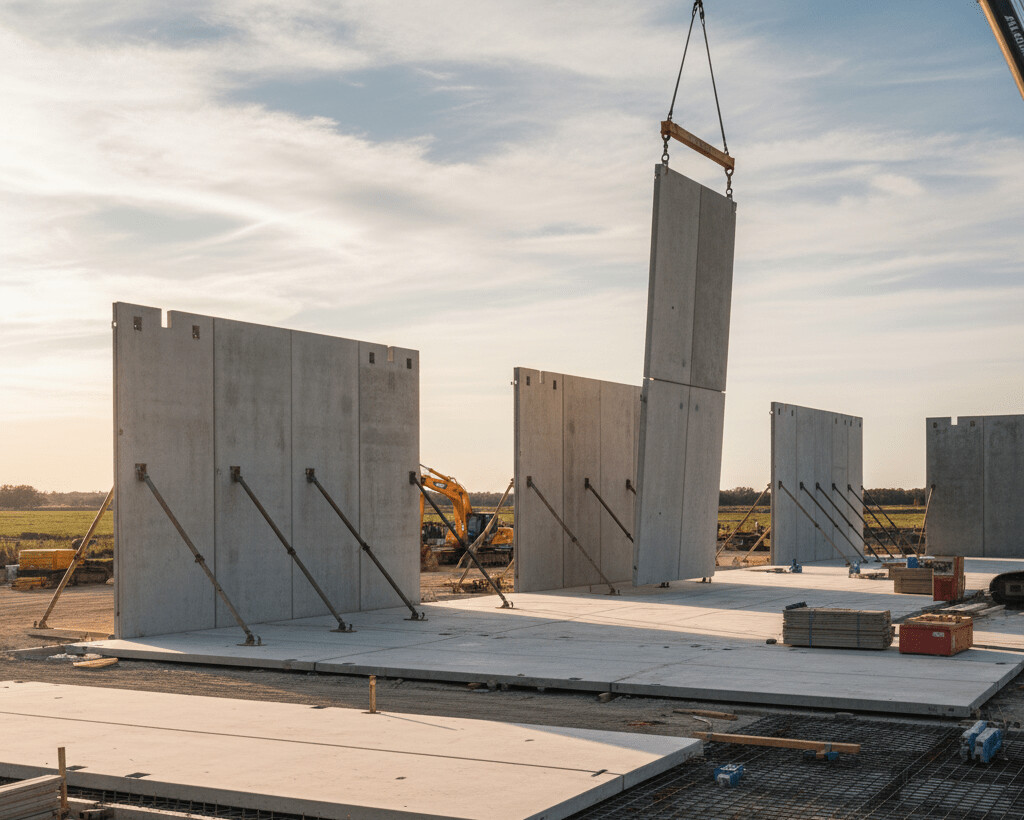
Tilt-wall is the structural method we use most frequently in DFW, and understanding what it costs in isolation helps set accurate expectations. The tilt-wall panel system typically runs $20 to $28 per sq ft for the walls alone.
That figure covers the concrete panels, reinforcement, embeds, and erection. It does not include the slab, roof structure, MEP systems, dock equipment, office build-out, or sitework. Total building cost per sq ft depends on all of those components working together, which is why the wall system cost and the all-in project cost are two very different numbers.
What These Ranges Include And What They Do Not
Texas cost ranges for warehouse construction generally refer to the building shell, basic mechanical, electrical, and plumbing (MEP) systems, and standard sitework. That scope covers foundations, the structural frame, roof, exterior envelope, basic interior finishes, and utility connections within the site boundary.
High-spec interiors, heavy automation infrastructure, complex site conditions, or distribution-center specifications push total cost above baseline. A small office build-out adds partitions, plumbing rough-ins, HVAC, and finish work that the shell-only number does not reflect. Owners planning a 10,000 sq ft facility with even a modest office area should budget toward the upper portion of the applicable range, not the floor.
Which Scope Choices And Local Factors Move The Number Up Or Down In DFW?
Structural System And Slab Design
Tilt-wall construction sets the structural baseline for nearly every warehouse project in DFW. Concrete panel costs and the roof structure together form the shell, and both are sensitive to reinforcement needs driven by racking loads and forklift traffic.
Slab design deserves particular attention for a 10,000 sq ft footprint. Standard warehouse slabs run 6 to 8 inches thick, but heavy racking or specialized equipment can push that to 10 inches, adding roughly 25% to concrete costs for that component alone. Getting the geotechnical report done early provides the data needed to right-size the slab rather than over-engineer it.
Dock Count And Truck Court Configuration
Each dock position adds structural cost through foundation thickening, pit construction, and dock leveler equipment. On a smaller building, the ratio of dock-related costs to total square footage is higher than on a large distribution center, so dock count decisions carry real budget impact.
Truck courts and heavy circulation areas require reinforced concrete paving designed for 53-foot trailers. Wider turning radii and deeper staging areas increase both the paving scope and the overall site footprint, which affects land use efficiency on a 10,000 sq ft project, where every square foot of site area matters.
Interior Build-Out And Office Area
A small office within the warehouse envelope adds partitions, finished flooring, drop ceilings, dedicated HVAC zones, plumbing rough-ins, and upgraded electrical panels. These systems are disproportionately expensive on a small footprint because the fixed cost of each trade mobilization is spread across fewer square feet.
Premium finishes, upgraded restrooms, or a break room with appliances increase office build-out costs. We coordinate these scope decisions during preconstruction so owners understand the cost delta between a functional office and a finished one before the project goes to bid.
MEP Systems And Life Safety
Electrical distribution, LED lighting, HVAC equipment, and plumbing represent a significant share of hard costs on any warehouse project. Distribution center features such as automation readiness, higher clear heights, and heavier power infrastructure trend toward the upper end of the cost range.
ESFR sprinkler systems are standard for most DFW warehouse applications and add meaningful cost through pipe sizing, pump equipment, and coordination with structural bays. We size these systems during design rather than retrofitting them later, which keeps both cost and schedule predictable.
Site And Civil Scope
Standard sitework covers grading, utility connections, access roads, and stormwater features. These costs are already embedded in the $80 to $150 per square foot range for a typical 10,000 sq ft Texas warehouse, but atypical conditions change that picture quickly.
Expansive clay soils, high water tables, or off-site utility extensions can add significant cost above baseline estimates. Urban infill sites in DFW can add 10 to 15% to project costs through staging constraints and delivery coordination challenges that suburban sites do not carry.
Code Compliance And Energy Requirements
IECC 2021 implementation applies to Dallas projects and adds approximately 1 to 3% to baseline construction costs through higher-performance HVAC equipment and continuous exterior insulation requirements. We coordinate these upgrades during design to avoid scope additions during construction.
Local fire code provisions govern hydrant placement, fire access lanes, and sprinkler coverage patterns. These requirements influence site layout and building orientation decisions that have downstream cost implications if they are not resolved before the permit set is finalized.
DFW Labor And Materials Market
Steel and concrete prices have stabilized relative to the volatility of 2022 and 2023, but they remain 15 to 20% above pre-2020 baselines. Skilled trades in DFW, particularly electricians, HVAC technicians, and concrete crews, are seeing annual wage growth of 4 to 6% as the regional market continues to absorb labor across active industrial and commercial projects.
The upside for well-planned projects is DFW’s deep subcontractor base. A project that arrives at bid with complete drawings, a defined scope, and a realistic schedule attracts competitive pricing from a broad pool of qualified trades. Early procurement of key material packages, particularly structural steel and mechanical equipment, locks in pricing before escalation erodes the budget.
How Should You Structure The Budget For A 10,000 Sq Ft Tilt-Wall Project?
Hard Costs: The Physical Build
Hard costs account for roughly 65–75% of the total project budget on a 10,000 sq ft tilt-wall warehouse. This bucket covers every physical element of construction: sitework, foundations and slab, the structural frame, tilt-wall panels, roof assembly, doors and windows, basic interiors for the office and restrooms, MEP systems, dock equipment, and fire protection.
Because this slice of the budget is the largest, it also carries the most exposure to material pricing. Concrete, steel reinforcement, and roofing materials each represent significant line items, and their costs have remained elevated relative to pre-2020 benchmarks. Locking in subcontractor pricing and material packages early in preconstruction directly protects this portion of the budget.
Soft Costs: Design, Approvals, and Financing
Soft costs on a standard warehouse project typically land between 10–20% of the total project cost. For a 10,000 sq ft tilt-wall build, this includes architecture and engineering fees, which commonly run 5–10% of the construction cost for straightforward industrial work, along with permits and approvals, legal review, insurance, lender-required reports, and financing costs.
Owners sometimes underestimate this category because the expenses arrive before physical construction begins. A/E fees, geotechnical reports, and permit application costs are all committed well before the first concrete pour. Accounting for these items accurately in the initial budget prevents shortfalls that can delay the project at critical decision points.
Contingency: Protecting the Number You Committed to
A contingency reserve of 7–10% is appropriate for a project of this scale and type. The fund absorbs material escalation between budget and procurement, unforeseen geotechnical conditions discovered during foundation work, minor scope adjustments, and any schedule-driven cost premiums that emerge during construction.
Sizing the contingency at 7–10% reflects the relatively predictable nature of a standard tilt-wall warehouse build on a prepared site. That said, atypical soil conditions or a compressed schedule can justify moving toward the higher end of that range. We treat the contingency as a structured risk reserve, not a catch-all, which means it is reviewed and adjusted as the project advances through design and into the field.
What Timeline And Permitting Steps Affect Cost Certainty In DFW?
Pre-Development Through Closeout: The Four Phases
A standard tilt-wall warehouse delivery in DFW moves through four sequential phases. Pre-development typically runs one to three months and covers site selection, feasibility analysis, and early budgeting. This is when geotechnical testing should begin because soil reports directly influence foundation design and slab thickness decisions, which affect hard costs.
Design and permitting follow, generally spanning two to four months. During this phase, the A/E team produces construction documents, finalizes the geotechnical report, and initiates municipal reviews. In Dallas, commercial plan review typically takes 10 to 25 business days for the initial cycle, and most projects go through two to three correction rounds before a permit is issued. That totals roughly 8 to 16 weeks from application to permit issuance once corrections are factored in.
Construction typically runs four to eight months for a project at this scale and covers sitework, foundations, tilt-wall panel erection, steel, roofing, MEP rough-in, interior build-out, paving, and landscaping. Closeout adds approximately one month for final inspections, commissioning, and the Certificate of Occupancy. Complex or specialized facilities can push overall delivery to 14 to 18 months or longer.
Key Approvals That Drive Schedule and Cost
Zoning and land use confirmation comes first. Dallas is a fully zoned city governed by the Dallas Development Code, meaning the project must comply with district-specific use, setback, and height requirements before a building permit application is accepted. If a variance is required, a Board of Adjustment application must be resolved before, or concurrently with, permit submission, adding weeks to the schedule.
Building, structural, and MEP permits follow the standard multi-department review path. The City of Dallas reviews commercial projects simultaneously across building code, fire prevention, planning, public works, and mechanical/electrical/plumbing disciplines. Each department issues its own comments, and all must be resolved before the permit clears. Submitting a complete, code-compliant package on the first attempt is the most reliable way to compress this window.
Stormwater and drainage approvals carry particular weight for industrial sites. Site design must account for detention, grading, and drainage patterns that satisfy both the City’s engineering standards and any applicable floodplain requirements. Fire code compliance—covering hydrant placement, access lane geometry, and sprinkler coverage—is reviewed concurrently and must be fully coordinated within the site and building plans before submission.
Where Permitting Decisions Directly Affect Budget
Material escalation risk grows with each week of schedule uncertainty. When permit timelines stretch due to incomplete submittals or unresolved correction cycles, procurement windows can close and subcontractor pricing may shift. Locking in material packages for steel, concrete, and roofing while the permit is still in review is a common way to limit cost volatility.
Early geotechnical work reduces the risk of foundation redesign mid-process. If soil conditions require deeper footings, pier systems, or modified slab reinforcement, discovering those needs during design rather than during construction prevents costly change orders. We initiate geotechnical testing at the earliest feasible point in pre-development for exactly this reason.
Coordinated permitting—where the design team, civil engineer, and GC align documentation before the first submission—reduces correction cycles and keeps the schedule on track. Dallas also offers Q-Team expedited review for commercial projects, with fees of $1,000 per hour in addition to standard permit costs. For projects with compressed delivery requirements, the expense of expedited review is often justified by the schedule compression it enables.
Conclusion And Next Steps
A 10,000-square-foot tilt-wall warehouse with a small office in Dallas–Fort Worth typically falls between $80 and $150 per square foot for standard specifications, with Class A builds closer to $140–$230 per square foot, depending on finish level and operational demands.
The budget structure discussed throughout this article applies regardless of where your project falls within that range. Hard costs account for most of the spend. Soft costs are frequently underestimated, and a 7–10% contingency helps keep a project financially intact when soil conditions, material pricing, or scope refinements shift the numbers. Scope items such as dock count, slab reinforcement, and MEP density remain the clearest levers for controlling where your project lands within the range.
Getting to a site-specific estimate requires aligning program requirements, local subcontractor pricing, and a realistic schedule before any drawings are finalized. At EB3 Construction, we engage early in preconstruction to develop cost models grounded in current DFW market conditions, so developers and property owners carry accurate numbers into financing and approvals, rather than discovering gaps mid-project.
Contact EB3 Construction for a site-specific estimate on your DFW tilt-wall warehouse project.