Restaurant build-out costs in Austin include every expense required to transform a shell space or a second-generation restaurant into a fully operational establishment. These tenant improvements cover construction work, kitchen systems, dining room finishes, and all regulatory compliance needed for opening day.
Based on our construction experience, build-out investments typically range from $100 to $800 per square foot, with most projects landing between $150 and $750 per square foot. Austin consistently trends 10% to 15% higher than other Texas markets due to strong labor demand, sustainability expectations and sustainable construction practices, and more complex permitting requirements that affect both timeline and budget.
Disclaimer: Pricing figures are based on publicly available market data and are intended for general estimation purposes as of January 2026. They do not represent a formal quote from EB3 Construction. Actual costs will vary by project scope, location, labor rates, and material prices.
How Much Does A Restaurant Build-Out Cost Per Square Foot In Austin?

Restaurant build-out costs in Austin typically range from $100 to $800 per square foot, with most projects between $150 and $750. We see this across different project types and finish levels, reflecting the varied demands of Austin’s dining market.
Industry data show an average of about $404 per square foot and a median near $450. These figures align with our construction experience across Texas metro areas, though Austin often commands premium pricing due to local market conditions.
Cost Ranges by Restaurant Concept
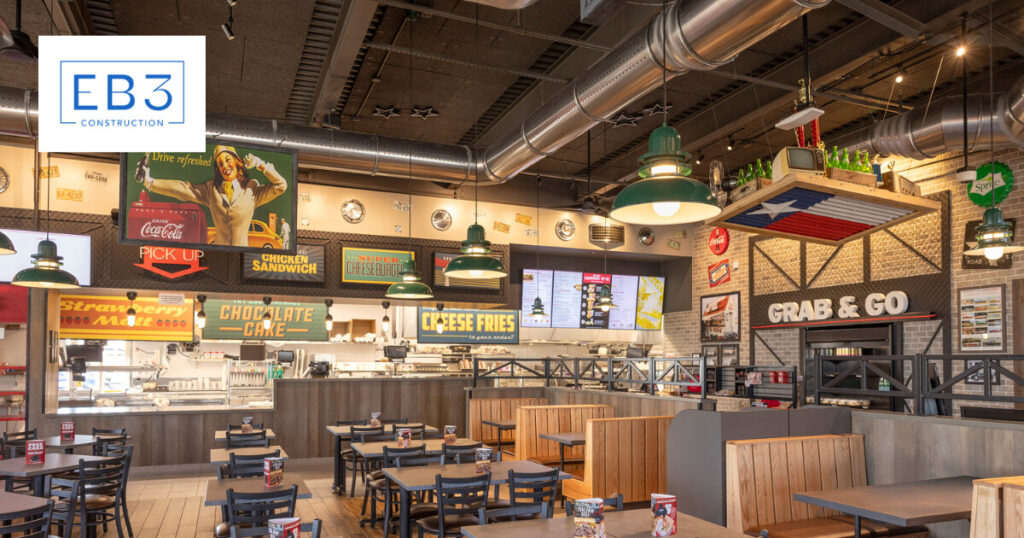
Fast-casual concepts generally range from $100 to $650 per square foot. These projects prioritize efficient service flow and streamlined kitchen layouts that reduce mechanical, electrical, and plumbing (MEP) complexity while maintaining a quality customer experience.
Casual dining establishments typically range from $200 to $850 per square foot. We coordinate more extensive dining room finishes, full-service kitchen equipment, and often bar and liquor service areas that increase construction complexity.
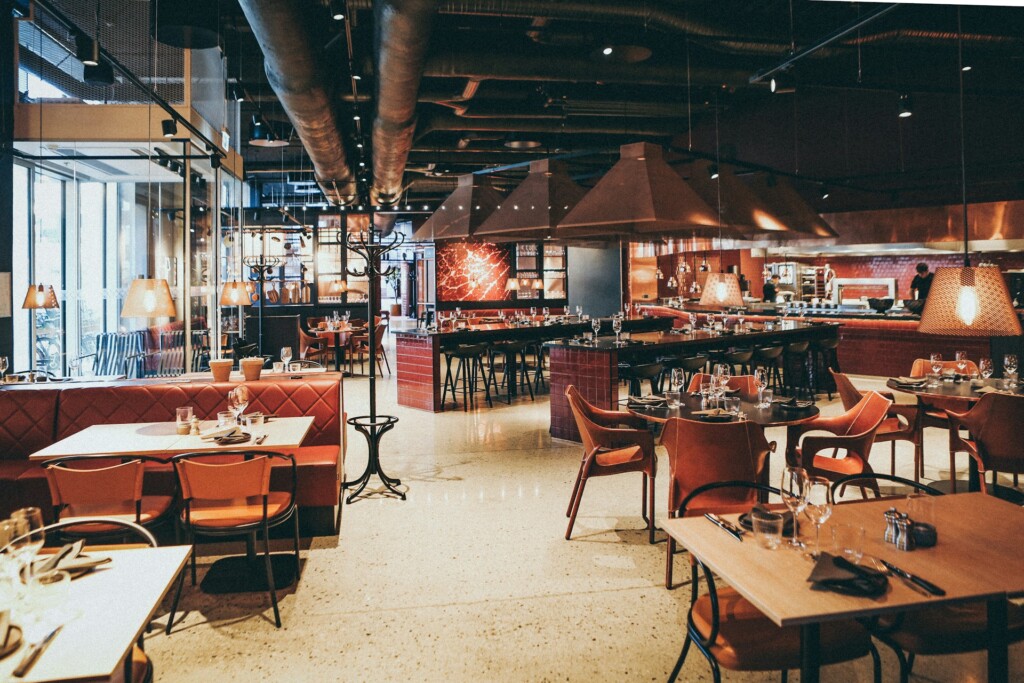
Fine dining build-outs run $300 to $1,000 per square foot. These projects require custom millwork, specialized ventilation systems, and premium finishes that significantly increase both material costs and skilled labor hours.
Austin Market Premium
Austin pricing runs approximately 10% to 15% higher than other Texas markets. We attribute this to strong labor demand from the city’s growth, along with sustainability expectations that often exceed standard building requirements.
Space size significantly impacts total investment. A 3,000- to 5,000-square-foot restaurant at $400 per square foot totals $1.2 to $2.0 million before soft costs and contingencies.
| Restaurant Type | Cost per Square Foot |
|---|---|
| Fast Food / Small Space | $100 – $650 |
| Casual Dining | $200 – $850 |
| Fine Dining | $300 – $1,000 |
These per-square-foot figures serve as planning benchmarks, but actual costs depend on site conditions, finish selections, and kitchen complexity. We recommend detailed cost modeling when architectural plans reach schematic design to validate budget assumptions against local subcontractor pricing.
What Line Items And Budgets Should You Plan For In Austin?
Breaking down restaurant build-out costs into specific categories helps us deliver realistic project estimates. FF&E typically accounts for 30% to 40% of the total build-out budget, representing one of the largest expense blocks. Kitchen equipment alone ranges from $15,000 to over $250,000, depending on concept complexity and capacity needs.
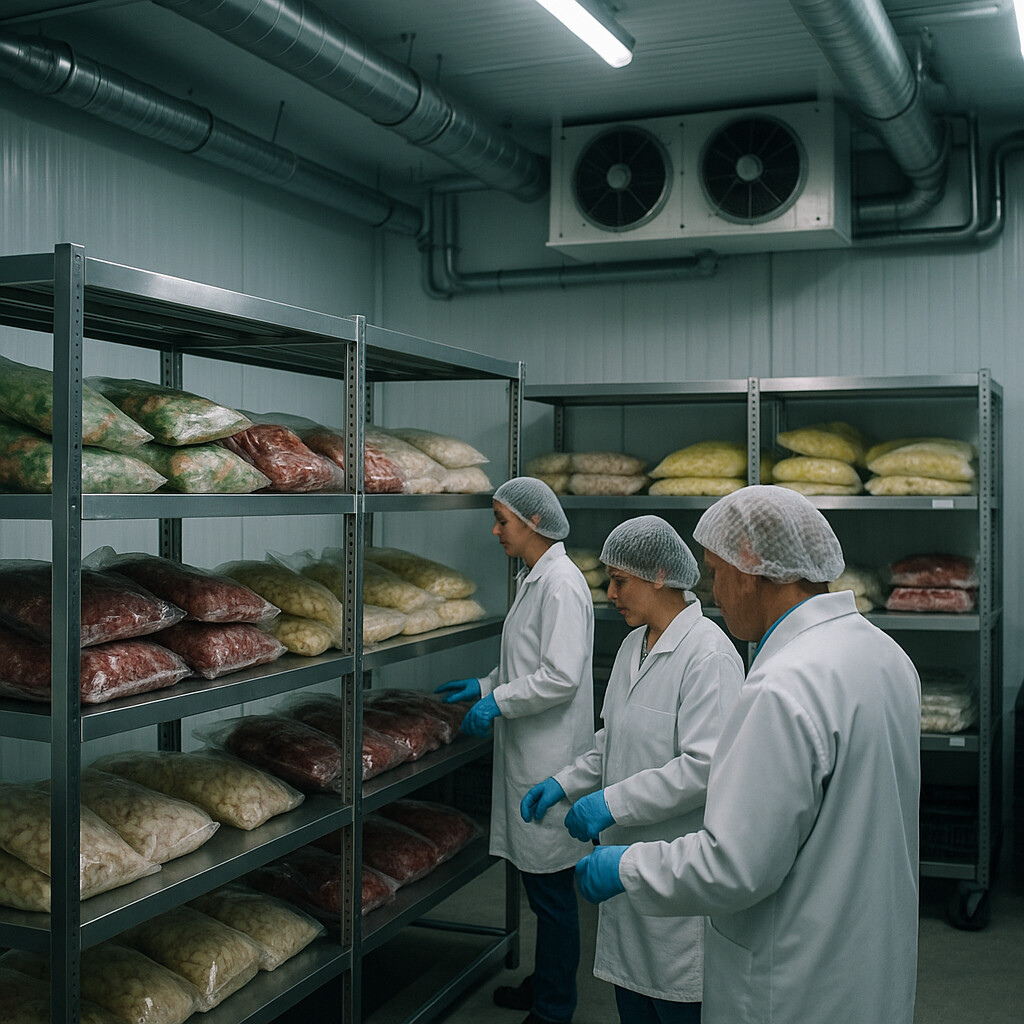
Walk-in coolers are a significant equipment investment at $4,000 to $30,000 per unit. Commercial ranges with ventilation systems cost $1,500 to $15,000 or more, while grills run $1,000 to $10,000. Fryers typically range from $500 to $5,000, dishwashers from $3,000 to $20,000, and reach-in refrigerators from $2,000 to $10,000. Ice machines round out the essential equipment list at $500 to $7,000.
Technology and Point-of-Sale Systems
POS systems vary dramatically in cost and capability. Basic terminals start near $0 with cloud-based solutions and reach $2,000 per terminal for mid-range systems. Legacy POS installations can cost $50,000 to $60,000 per location, though we typically recommend more flexible, modern alternatives for most restaurant concepts.
Permits and licenses typically range from $50 to $1,000 each, with total regulatory costs varying by concept and service type. Health department permits, fire safety approvals, and ADA compliance documentation add layers to the approval process and budget.
Construction and Infrastructure
Electrical work costs $4 to $9 per square foot, covering kitchen power loads, dining area circuits, and code-required systems. Plumbing runs $4 to $5 per square foot for kitchen prep areas, restrooms, and utility connections. Lighting systems typically cost $2 to $4 per square foot, balancing functionality with ambiance requirements.
Utility connections represent a major expense category at $9,000 to $34,500, depending on service availability and capacity requirements. Site development and parking improvements range from $25,000 to $100,000 for projects requiring significant exterior work.
Branding and Pre-Opening Expenses
Signage and exterior branding typically range from $5,000 to $20,000 or more, influenced by permit requirements and design complexity. Menu printing costs $5 to $300 per menu, with restaurant operators typically ordering 1.5 times their seating capacity.
Pre-opening utilities for a 4,000 to 4,500 square foot space run $1,000 to $1,200 per month during construction and staff training phases. Marketing budgets typically represent 6% of projected first-year sales, with roughly 30% allocated to pre-opening promotion and grand opening events.
| Space Buildout and Improvements | $325,000 |
| Interior Design and Finishes | $225,000 |
| Bar and Kitchen Equipment | $125,000 |
| Point-of-Sale System | $40,000 |
| Phone and Security System, Office Equipment | $15,000 |
| Signage and Exterior | $10,000 |
| Opening Inventory | $40,000 |
| Professional Fees (Lawyer, Engineer, Architect) | $100,000 |
| Marketing | $35,000 |
| Working Capital (Operating Expenses) | $150,000 |
| Total | $1,065,000 |
Professional fees, including architectural, engineering, and permitting services, often total $100,000 for comprehensive restaurant projects. Working capital requirements of $150,000 provide an operational cushion for the initial months while building a customer base and refining operations. This Austin example totals approximately $1,065,000, demonstrating how individual line items combine into a substantial project investment that requires careful planning and experienced construction coordination.
What Factors Drive Costs In Austin, And How Much Contingency Should You Carry?
The biggest cost drivers in Austin restaurant construction center on concept complexity and finish quality. Fine dining projects featuring custom millwork, specialized lighting, and intricate ventilation systems can push budgets well beyond fast-casual concepts that rely on standard finishes and streamlined kitchen layouts.
Kitchen size and complexity directly influence MEP scope. A small coffee shop might need basic electrical and plumbing, while a full-service restaurant requires extensive ventilation, specialized grease management, and substantial power distribution. We see these mechanical, electrical, and plumbing requirements adding significant cost as kitchen operations become more sophisticated.
Austin’s market conditions consistently push restaurant construction toward the high end of Texas ranges. Labor demand remains tight, with skilled trades commanding premium wages. The city’s sustainability expectations often require compliance with the Texas energy code and the use of energy-efficient equipment and materials that carry higher upfront costs but deliver long-term operational savings.
Regulatory Compliance Adds Layers of Work
Health department permits, fire suppression systems, and ADA compliance requirements shape both layouts and material selections in ways that impact budgets. Austin’s health department standards require specific surface materials, drainage systems, and equipment configurations that may differ from other markets. Fire safety codes dictate sprinkler placement, egress paths, and kitchen ventilation that may require structural modifications.
ADA compliance extends beyond basic accessibility to include specific measurements for counters, pathways, and restroom facilities. These requirements often necessitate layout adjustments that can affect seating capacity and workflow efficiency. We coordinate these compliance elements during the design phase to prevent costly changes during construction.
Schedule Risk Creates Financial Impact
Permit reviews in Austin commonly extend 2 to 4 months, depending on project complexity and department workloads. Each month of delay generates carrying costs from $15,000 to $30,000, including rent, insurance, utilities, and staff expenses. We’ve managed projects where permit delays pushed total carrying costs beyond initial contingency budgets.
Equipment lead times present another schedule risk. Key kitchen equipment often requires 12 to 16 weeks from order to delivery, and custom items can extend even longer. Trade sequencing delays compound these issues, potentially pushing restaurant openings 4 to 6 months beyond planned dates. Early equipment ordering and clear trade scheduling become essential project management elements.
Contingency Planning And Cost Control Strategies
We recommend carrying a 10% to 15% contingency for Austin restaurant projects. This range accounts for permit delays, minor scope changes, and market fluctuations that commonly occur during construction. Projects with extensive custom work or complex mechanical systems should lean toward the higher end of this range.
Thorough construction drawings and detailed specifications reduce change orders by eliminating ambiguity during the build process. When contractors understand exactly what’s required from the start, they can provide more accurate pricing and avoid costly mid-project modifications.
Renovating existing restaurant space can reduce total costs by roughly 30% to 50% compared to new construction. Second-generation restaurant spaces offer the most budget-friendly starting point, as existing kitchen infrastructure, ventilation systems, and dining areas require modifications rather than complete installation. These spaces help control initial investment while providing faster paths to opening.
Should You Build Out A New Space Or Buy An Existing Restaurant In Austin?
The build-vs.-buy decision shapes both your financial exposure and operational timeline. Acquiring an operating restaurant provides proven revenue streams but typically costs 3–5 times seller discretionary earnings (SDE). Starting with a new build-out gives you complete control over concept and execution but carries substantial construction risk; projects commonly exceed budget and schedule targets.
We see this trade-off regularly in Austin’s competitive market. Established restaurants with solid financials command premium prices because buyers pay for existing cash flow and customer relationships. New construction offers creative freedom but demands careful risk management throughout the development process.
Financial Comparison: Build vs. Buy
Buying an operating restaurant means paying for business value beyond hard assets. Seller’s discretionary earnings (SDE)—which add back owner compensation and discretionary expenses to net income—form the basis for most restaurant valuations. A restaurant generating $200,000 in SDE might sell for $600,000–$1,000,000, depending on growth prospects and market conditions.
New construction costs depend on concept and space requirements. Our Austin budget example shows approximately $1,065,000 for a 5,000-square-foot, second-generation build-out. Raw construction often costs less than acquiring a comparable business with equivalent revenue potential, but startup restaurants face significant market risk without proven demand.
Due Diligence for Restaurant Acquisitions
Both paths require thorough evaluation, though the focus differs. For acquisitions, verify financial performance through tax returns and bank statements rather than relying solely on profit-and-loss statements. Check for equipment liens through Secretary of State filings and confirm that all licenses transfer cleanly to the new owner.
Lease assignment terms often determine deal feasibility. Most commercial leases restrict assignment rights, requiring landlord approval for ownership transfers. Review lease terms carefully, including rent escalations, renewal options, and any operational restrictions that might affect your business model.
Location analysis takes different forms for each option. Existing restaurants offer observable traffic patterns and demographic data, but reputation issues can persist after an ownership change. New locations require market research and foot traffic analysis without historical performance data.
Managing Construction Risk for New Build-Outs
New restaurant construction demands early coordination between design and construction teams. We recommend involving a general contractor with local restaurant experience during design development, not after plans are complete. This approach helps validate design choices against realistic budgets and Austin’s specific code requirements.
Architectural drawings might specify attractive features that significantly impact costs without proportional value. A qualified general contractor can assess these elements during planning phases when modifications are still feasible and economical.
Scope management becomes critical as projects progress. Changes during construction typically cost 2–3 times more than adjustments made during design phases. Clear specifications and thorough drawings reduce change orders and help maintain schedule targets throughout the build-out process.
Conclusion And Next Steps For Austin Restaurant Build-Outs
Restaurant build-out costs in Austin require careful planning and strategic execution. Define your concept clearly and set a realistic scope from the start. Use the per-square-foot ranges outlined above and the Austin example budget to establish a solid financial baseline for your project.
Complete detailed drawings and specifications before requesting bids. Submit these documents to at least three qualified contractors with proven restaurant experience in Austin. We recommend including EB3 Construction in your bidding process given our local expertise and familiarity with Austin’s permitting timelines and regulatory requirements. Confirm timeline assumptions with each contractor, order long-lead equipment early to avoid delays, and maintain a 10-15% contingency for unexpected costs or scope changes. Favor second-generation spaces when possible to reduce upfront investment, and carefully weigh build-out versus acquisition using the due diligence steps outlined earlier. This systematic approach helps control costs and supports an on-time, code-compliant opening for your Austin restaurant.
Contact EB3 Construction to discuss your Austin restaurant build-out project and receive a detailed cost analysis.