Developers and property owners who need a professional front office and a functional warehouse under one roof are building more flex industrial space than ever, driven by supply chain reshoring, hybrid work patterns, and the real costs of maintaining separate facilities. A contractor building a new flex industrial space coordinates the entire project, from sitework and permitting to structural systems and final fit-out, ensuring the layout serves administrative functions and operational workflows in equal measure.
At EB3 Construction, we approach these warehouse/office hybrid projects by planning the front-office experience and the back-of-house flow as a single, unified scope. The result is a building where adaptability and cost efficiency are built into the design from day one, giving developers a foundation for strategic growth without costly reconfiguration later.
Why Choose Flex Space, And How Should Design Support Operations?
The Operational Case For A Blended Layout
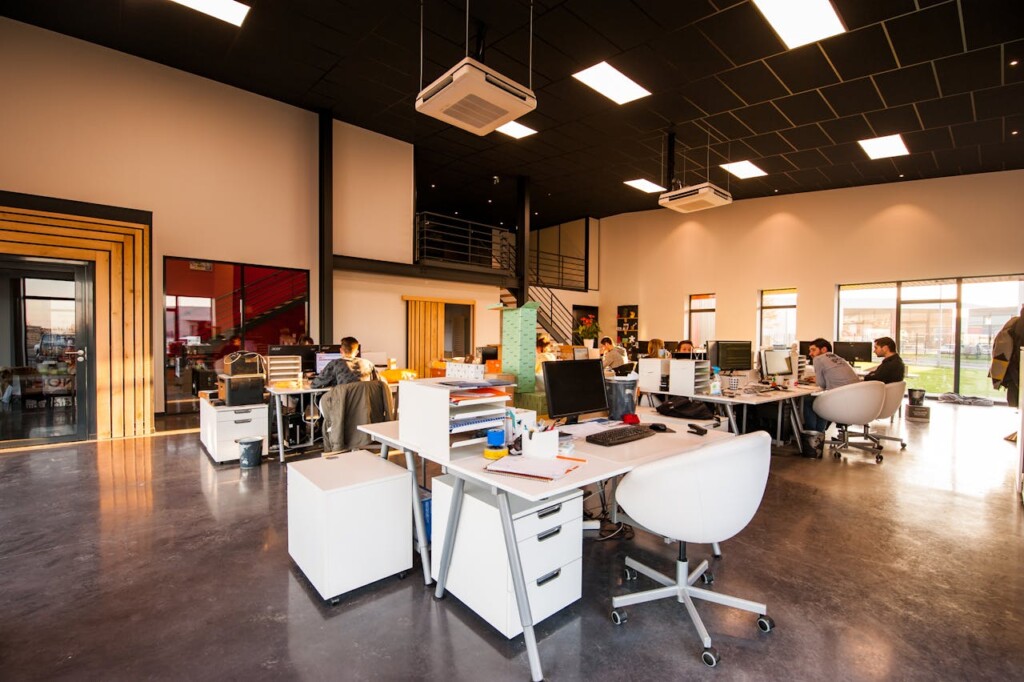
Consolidating office and warehouse functions under one roof removes a cost layer that separate facilities cannot avoid: duplicate leases, duplicate utilities, and the logistical friction of moving people or product between buildings. A scalable layout built for both administrative and operational work lets a growing business add headcount, inventory, or equipment without relocating. That compounding efficiency drives developers toward flex space when weighing industrial real estate options.
Lower overhead is the headline benefit, but the practical gains run deeper. Sales staff can walk from a client meeting directly to the warehouse floor to confirm stock or supervise a rush shipment. That physical proximity shortens decision cycles and reduces communication errors that typically multiply when teams operate across different locations. For property owners, a single, well-designed building also carries stronger leasing appeal because it serves a wider range of potential tenants.
Designing Around Real Workflows, Not Floor Plans
Effective design for a flex building starts with the actual daily sequence of operations, not a generic office-plus-storage arrangement. We map how a client arrives, where staff receive them, and what happens once a meeting concludes. Simultaneously, we trace how inbound freight enters the rear of the building, where it stages before storage, and how outbound shipments queue for loading. Those two workflows should never interrupt each other, and the floor plan is the primary tool for enforcing that separation.
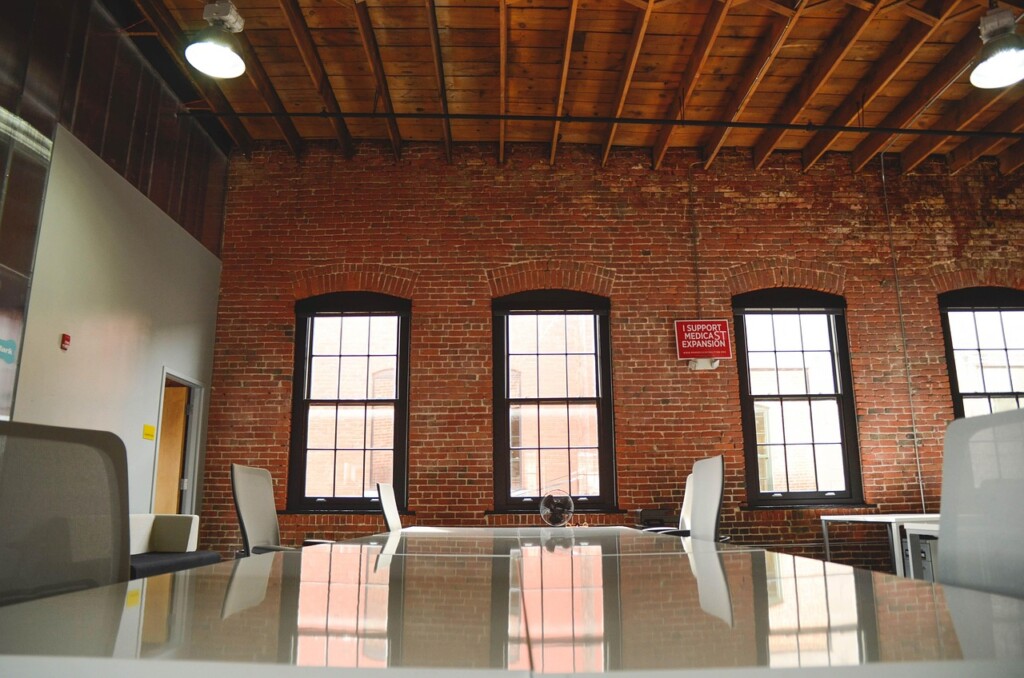
The front office area requires finishes and lighting that support a professional client experience: polished concrete or LVT flooring, dropped acoustic ceilings, adequate power for workstations and videoconferencing, and a reception zone that orients visitors before they see any operational areas. The rear warehouse area has entirely different priorities. Durability, clearance, and utility density matter far more than aesthetics. We treat the transition point between the two zones, typically a demising wall or a large glass-panel opening, as a critical design decision that affects both noise control and operational flow.
Loading Dock Placement And Material Flow
Loading dock placement carries more consequence than most developers anticipate early in the design process. A dock positioned poorly relative to interior storage aisles forces forklift traffic through zones shared with foot traffic, which creates both safety risks and throughput bottlenecks. We position docks to align with the primary storage axis inside the building, so product moves in a direct line from truck to rack without unnecessary turns or cross-traffic.
For flex buildings where multiple tenants or operational modes are possible, we design for both dock-high and grade-level access. Dock-high positions serve distribution-oriented users handling palletized freight. Grade-level overhead doors accommodate smaller delivery vehicles, client pickups, and equipment that does not fit standard dock height. Standard overhead door sizing for flex industrial typically runs 12×14 or 14×16 feet, giving the building flexibility to serve a broad range of freight types without structural modifications later.
Shipping logistics also dictate truck court dimensions. A court that cannot accommodate a full-length semi forces drivers to maneuver in ways that congest parking areas and slow loading cycles. We size truck courts during the site planning phase, before structural decisions lock in the building footprint, so the site works as hard as the building itself.
HVAC Zoning For Comfort And Efficiency
A single HVAC system serving both office and warehouse areas wastes energy and fails to satisfy either zone adequately. Office occupants need precise temperature and humidity control to stay productive during client meetings or focused work sessions. Warehouse workers and equipment require a different standard: adequate ventilation, protection from extreme temperatures, and enough airflow to manage dust and fumes depending on the operation. HVAC zoning resolves this by giving each zone independent controls tied to its actual occupancy patterns and load requirements.
We use Variable Refrigerant Flow systems or dedicated rooftop units for office sections, paired with unit heaters, radiant systems, or high-volume ceiling fans for warehouse areas. The controls link to a building management system that allows each zone to run independently, so conditioning the office on a Saturday does not mean conditioning 10,000 square feet of warehouse at the same time. That granularity directly reduces utility costs over the life of the building, which matters to both owner-operators and tenants evaluating occupancy costs.
The transition zone between office and warehouse, particularly where glass garage doors or pass-through openings exist, requires dampers and controls designed to maintain conditioning on each side when those openings are in use. We coordinate these details between the architectural and mechanical drawings early, because retrofitting HVAC transitions after construction is significantly more expensive than designing for them up front.
High Ceilings And Vertical Usability
Clear height in the warehouse section determines how much of the building’s cubic volume a tenant can use. A 14-foot clear height suits general storage and light manufacturing. A 24-foot clear height opens the space to multi-level racking, overhead conveyor systems, and equipment with extended vertical reach. We establish clear height targets during the structural design phase, because the choice affects column spacing, roof framing, door sizing, and the HVAC equipment that can fit in the space without conflicting with racking or material handling paths.
High ceilings in the office section serve a different purpose. Volume creates a sense of quality and openness that reinforces day-to-day efficiency for staff and communicates credibility to visiting clients. Clerestory windows or translucent wall panels can bring natural light into both the office and warehouse areas, reducing dependence on artificial lighting during daylight hours and improving the working environment in both zones. We integrate daylighting strategies into the building orientation and wall system design rather than adding them as an afterthought, because their effectiveness depends heavily on where the building sits on the site relative to sun angles and neighboring structures.
How Do Lease, Buy, Or Build Decisions And Multi-Tenant Strategies Shape The Project?
Weighing The Three Paths Before Design Begins
The lease, buy, or build decision carries significant consequences for how a flex industrial project gets structured, funded, and eventually used. Leasing an existing space preserves capital and allows faster occupancy, but it trades control for convenience. A developer or business owner who leases gives up the ability to specify structural features, configure the office-to-warehouse ratio on their own terms, or make material changes without landlord approval.
Buying an existing building offers more control and opens the door to equity growth, depreciation benefits, and fixed carrying costs. The challenge is that suitable existing inventory for a true office-front/warehouse-back configuration can be difficult to find, and renovation costs on a mismatched building can rival or exceed ground-up construction. Building new, by contrast, delivers full control over the end product, including design, finishes, structural specs, and unit configuration, though it demands more upfront capital, a longer timeline, and clear decision-making throughout the process.
We work with developers early to frame these trade-offs honestly. The right path depends on the project’s financial structure, timeline, available inventory in the target market, and whether the goal is owner-occupancy, investment, or a mix of both.
Multi-Tenant Structures And Unit Configuration
Many flex industrial developments are built as multi-tenant projects rather than single-occupancy buildings. This structure allows a developer to spread risk across multiple users, generate rental income from day one, or sell individual units outright. Two common models emerge in practice: short-term leased units and association-style purchased units.
Short-term leases give tenants flexibility and provide developers steady income without permanently transferring ownership. Association-style purchased units function similarly to commercial condos, where each buyer holds title to their unit and shares responsibility for common areas through an owners’ association. These purchased units can be depreciated over time and sold later, making them an investment vehicle as much as an operational space.
Unit configuration decisions made early in the design process have a direct bearing on construction sequencing and cost. We plan demising walls, shared utility runs, and common egress routes as part of the base building scope so that individual units can be finished independently without disrupting adjacent spaces or requiring costly rework.
Modular Design As A Tool For Pre-Leasing And Cost Estimation
A modular design approach treats each unit as a repeatable module with consistent structural dimensions, utility hookup locations, and finish packages. This consistency does more than simplify construction. It produces reliable early cost estimates because the scope of each unit is predictable and easy to price. Developers can take those numbers to lenders or prospective tenants with confidence.
Pre-leasing activity often accelerates when prospective tenants can see a clear unit layout, understand their finish options, and trust that the cost structure is grounded in an actual construction plan. Building material lead times and procurement sequencing also factor into this picture. A modular approach allows us to lock in material orders earlier, which reduces exposure to supply chain delays and keeps the schedule aligned with pre-leasing commitments.
We structure the modular framework so that core and shell work can proceed while individual tenant improvement scopes are still being finalized. That overlap between base building construction and tenant planning compresses the overall project timeline without sacrificing quality or coordination.
Tenant Signage And Architectural Consistency
Visual identity across a multi-tenant flex development carries practical and financial weight. When each tenant controls their own signage without guidelines, the result is a fragmented streetscape that undermines the project’s perceived quality and can affect leasing velocity for remaining units. Tenant signage standards, set during the design phase and incorporated into lease agreements or association documents, protect the development’s identity while still giving occupants meaningful visibility.
Consistent architectural elements, such as uniform storefront systems, coordinated canopy lines, and a shared color palette for exterior materials, reinforce the project as a cohesive asset rather than a collection of unrelated spaces. We build these standards into the construction documents so they are enforced during construction rather than left to interpretation after occupancy. Investment planning for a multi-tenant flex project benefits from this discipline because lenders and future buyers assess the project as a whole, and a well-executed, visually unified development commands stronger positioning in the market.
What Building Systems And Features Matter For An Office-Front/Warehouse-Back Layout?

Structure: The Case For Pre-Engineered Metal Buildings
A pre-engineered metal building (PEMB) gives developers a structural system that arrives with engineered components sized to the project. Column spacing, roof framing, and wall panels are coordinated from the factory, which reduces field labor and keeps the construction sequence predictable. For an office-front/warehouse-back program, PEMB framing lets us achieve the wide clear spans needed at the back while supporting a finished front facade without a second structural system.
The column grid also determines where future overhead doors or mezzanines can be added, so the decision made during design has long-term consequences. We plan the structural bay layout with future operational changes in mind so tenants or owners are not locked into a footprint that resists growth.
Front-of-House: Storefront Entry and Glass Doors
The front elevation sets the tone for client visits and daily use by office staff. We typically specify aluminum storefront framing with insulated glazing at the entry, creating a clean, professional appearance that reads as an office from the street. Glass garage doors or oversized glass panels along the office zone can bring in natural light and reinforce an open, collaborative atmosphere without sacrificing thermal performance.
Privacy and security are real considerations here. The glass line needs to be positioned so warehouse activity at the back is not visible through the front, and we detail door hardware and glazing specifications to meet local code requirements for commercial entry. Access control rough-in should be included in the framing phase so card readers or keypad systems can be installed cleanly after the fact.
Back-of-House: Loading Docks, Roll-Up Doors, and Clear Height
The back of the building carries the full operational load for material movement. Standard dock-high doors sit at 48 to 52 inches above grade to align with semi-trailer beds, while grade-level roll-up doors at 12 by 14 feet or larger allow forklifts and delivery vehicles to enter directly. Most flex industrial programs benefit from a mix of both door types depending on the shipping patterns the tenant or owner expects.
Clear height in the warehouse bay drives storage capacity and racking potential. Each additional foot of clear height adds approximately 7 to 10 percent in usable storage volume, making it one of the most consequential decisions in the building program. Flex and mixed-use buildings typically target 16 to 24 feet of clear height, and since raising the roof post-construction is nearly impossible, we confirm this specification before structural drawings are finalized.
Truck court apron depth at the back of the site also matters. A minimum of 120 feet of paved apron gives standard trailers room to maneuver and back into docks without obstructing internal circulation. We coordinate dock bumper placement, dock leveler pits, and drainage at the building perimeter during sitework to prevent conflicts later.
Electrical Systems: Power Density By Zone
Office and warehouse spaces have fundamentally different electrical demands. The front office zone typically needs 200 to 400 amp, three-phase service running at 5 to 10 watts per square foot to support lighting, HVAC, workstations, and standard plug loads. The warehouse back requires higher amperage depending on equipment, conveyor systems, or electric forklift charging stations, which can push demand into the 400 to 600 amp range for light industrial flex use.
We design the electrical distribution with separate panels for each zone so tenant improvements to one side do not disrupt the other. Raised flooring in the office area is a practical method for managing cabling density, particularly when tenants plan to run structured data cabling, AV systems, or power in configurations that will change over time. It avoids the need for core drilling and keeps the floor slab intact.
Adaptable lighting follows the same zone logic. The office front calls for fixture types and color temperatures appropriate for task work and client-facing spaces, while the warehouse back needs high-bay LED fixtures mounted to deliver adequate foot-candles at floor level without creating shadows in racking aisles. Separate lighting controls for each zone allow independent scheduling and dimming.
HVAC Zoning: Separate Systems for Office and Warehouse
A single HVAC system trying to serve both the conditioned office and the warehouse is a construction shortcut that creates long-term operational problems. The two spaces have different thermal loads, different occupancy densities, and different air quality requirements. We install separate mechanical systems for each zone, which give occupants independent temperature control and prevent the warehouse from pulling conditioned air from the office side every time a roll-up door opens.
The warehouse HVAC strategy also depends on the overhead door configuration. Large roll-up doors create significant air infiltration when open, which affects both comfort and energy use. We account for this during equipment sizing rather than treating the warehouse as a sealed space, and we coordinate ductwork routing with the structural framing so equipment mounts do not conflict with sprinkler lines or racking clearances.
Site Planning: Delivery Access And Parking
Delivery access and employee parking function as separate traffic patterns on the site, and they should be separated in the site plan. Truck traffic for the back of the building should have a dedicated drive aisle with turning radii that accommodate standard trailers without requiring backing maneuvers from a public street. Customer and employee parking belongs at the front, adjacent to the office entry, so pedestrian and vehicle paths do not cross the truck court.
Outdoor storage areas, trash enclosures, and trailer parking also need designated locations in the site plan. Leaving these decisions to the tenant after occupancy typically results in improvised arrangements that conflict with code compliance or create access problems during inspections.
Technology Readiness: WMS Integration and CRM Infrastructure
Warehouse management systems (WMS) and customer relationship management (CRM) platforms are standard tools for the kinds of businesses that occupy flex industrial space. These systems require reliable network infrastructure, and the time to plan for that is during rough-in, not after walls are finished. We coordinate conduit routing and data room sizing with the electrical and low-voltage scope so the building can support robust connectivity from day one.
This means pulling conduit to dock doors for access control and sensor tie-ins, sizing the telecom room to hold networking hardware appropriate for the tenant’s technology footprint, and providing grounded power circuits at workstation locations in the office zone. Tenants who integrate WMS with their shipping workflows often add handheld scanners, label printers, and connected dock equipment, so we treat the data infrastructure as a buildable system rather than an afterthought.
How Should Budget, Schedule, And Quality Control Be Handled?
Setting a Preliminary Budget Around Clear Priorities
A preliminary budget takes shape when project goals are defined early and specifically. Before any numbers go on paper, we work with developers and property owners to establish what the space must accomplish operationally, because those functional requirements drive cost more than almost anything else. A hybrid flex build carries a different cost profile than a standard warehouse or a standalone office, and recognizing that distinction from the outset keeps estimates grounded.
A standard industry recommendation is to incorporate a contingency fund of 5 to 10 percent of the total project budget, scaled to the project’s complexity and known risks. For a flex industrial build with both office finishes and warehouse-grade infrastructure, the higher end of that range often reflects reality more accurately. Setting that buffer early protects the schedule and avoids reactive decisions later in the construction sequence.
Design Choices That Shift the Budget
Large overhead doors are a straightforward feature on the warehouse side, but their cost impact extends beyond the door itself. In colder climates, oversized openings require heavier insulation at the door head and improved perimeter sealing to maintain thermal performance inside the building envelope. In warmer regions, the concern shifts toward solar gain and the additional HVAC load required to compensate for frequent door cycles. These are real cost variables we account for during preconstruction, not corrections made after the slab is poured.
Specialized spaces add another layer of cost that catches developers off guard when not flagged early. A tenant requiring a lab, clean room, or hazardous materials storage area brings additional mechanical systems, upgraded electrical infrastructure, and code-required safety systems into the project. Each of those elements carries its own permit requirements, inspection milestones, and lead times for equipment. We identify these requirements during the planning phase so they are priced into the budget rather than treated as change orders midstream.
Zoning complexity on hybrid projects also affects the budget in ways that are easy to underestimate. A flex building that combines office occupancy with warehouse or light industrial use may fall under multiple zoning classifications depending on the jurisdiction. That can mean separate permit tracks, dual inspection timelines, or additional compliance documentation. Resolving zoning questions before the design is finalized prevents costly redesigns and schedule delays tied to regulatory review.
Trades Coordination and Construction Sequencing
Schedule efficiency on a flex industrial build depends heavily on how well the trades are sequenced and coordinated. Carpentry, electrical, plumbing, mechanical, and finishes all have interdependencies that, when poorly timed, create bottlenecks. We manage construction sequencing directly so that rough-in work is inspected and approved before finishes begin, and so that no trade is left idle while another catches up.
Quality control runs through every phase of that coordination. We conduct regular site inspections at key construction milestones rather than relying on a single final walkthrough to catch deficiencies. This approach surfaces issues when corrections are straightforward, rather than after surrounding work limits access. On a build with both front-office finishes and back-of-house industrial systems, the quality standards for each zone differ significantly, and our supervision accounts for both without treating one as secondary to the other.
Aligning the trades around a shared schedule also supports budget discipline. Labor costs accumulate quickly when sequencing breaks down, crews mobilize before conditions are ready, or rework pulls a trade back to a completed area. Early clarity on priorities, including which systems must be operational before others can follow, gives our team the structure needed to maintain both schedule efficiency and cost control through to substantial completion.
Conclusion And Next Steps

A contractor-led build for a flex industrial space with office in front and warehouse in back succeeds when every decision—from structural system selection to HVAC zoning—ties to how the space will operate. The sections above covered key planning considerations, including design coordination, ownership strategies, building systems, and budget management. Bringing those elements together before breaking ground often makes the difference between a smooth construction timeline and a costly one.
The most effective way forward is to start with what you know and build clarity outward. Define your operational workflows first, then compare your lease, buy, or build options to those workflows. Confirm your modular unit strategy early, since consistent bay dimensions simplify permitting, reduce fabrication costs, and support pre-leasing. Plan loading dock placement and power density requirements before finalizing the floor plan. Those choices affect structural layout, HVAC zoning, and insulation specifications. Set a preliminary budget that accounts for both hard construction costs and soft costs such as engineering and permits, and include a contingency of five to ten percent for unforeseen conditions. Finalize HVAC zoning and interior finishes last, once the structural and mechanical framework is set.
Contact EB3 Construction to align your design, budget, trades, and construction timeline with the goals of your flex industrial project.