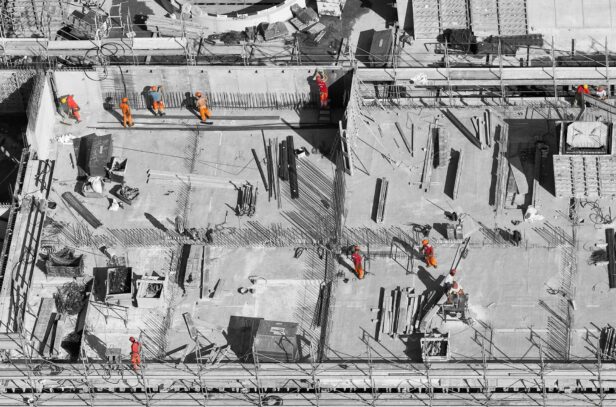
Flex industrial buildings with office-front and warehouse-back layouts have become the backbone of modern light industrial development. We coordinate these ground-up construction projects from initial design through final occupancy, managing every aspect of the build process.
As a general contractor for flex space development, we handle design coordination, city permitting and code compliance, and complete construction management. These projects typically feature a professional storefront entrance leading to finished office space, with warehouse areas and roll-up doors positioned toward the rear for operational efficiency. Our role encompasses mechanical, electrical, and plumbing systems integration, structural system selection, and full sprinkler system installation to deliver move-in ready facilities.
How Do Design And Permitting Work For A New Flex Office/Warehouse Build?

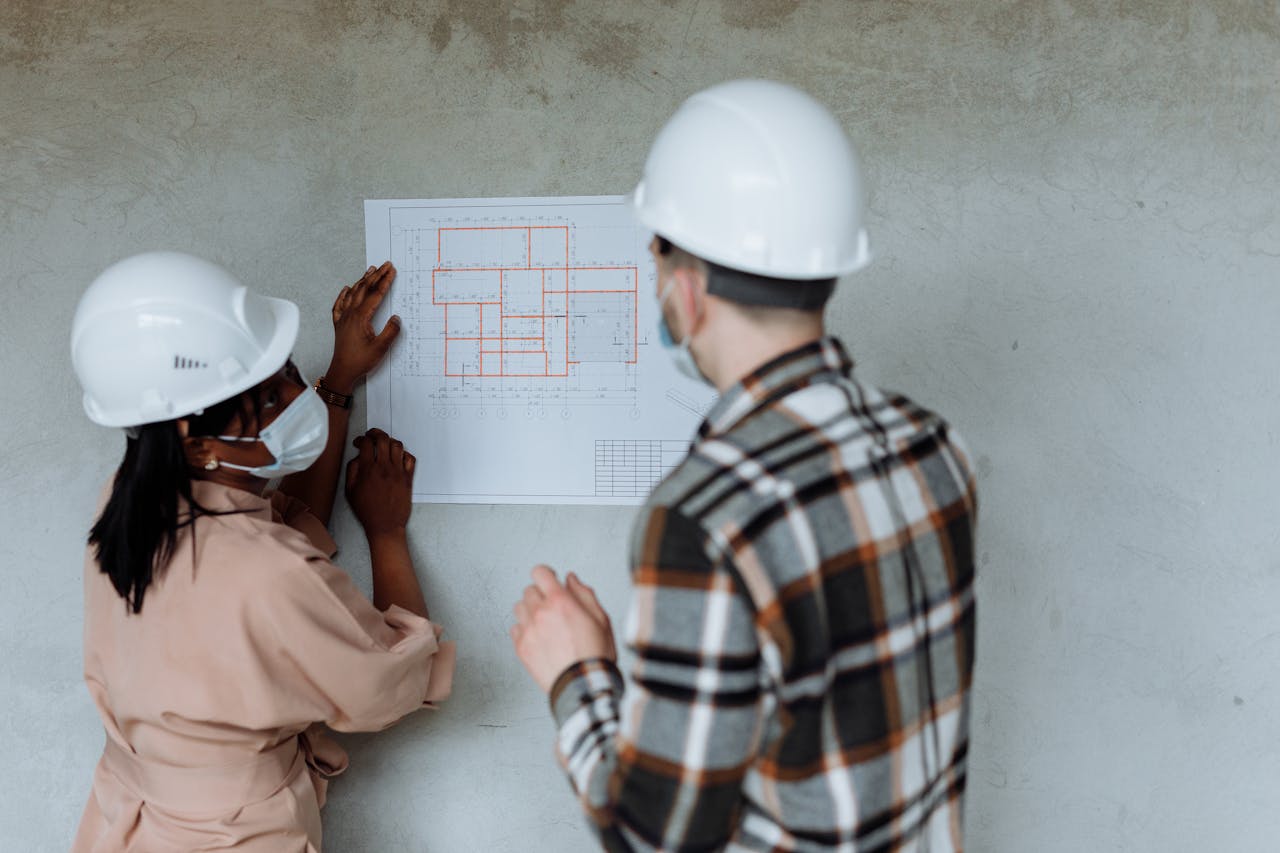
Design and permitting require a comprehensive package of drawings that city planners use to evaluate your flex project. We prepare this documentation to demonstrate compliance with building codes and safety standards. The process involves coordinating multiple disciplines and ensuring all drawings align with local requirements.
Essential Drawings for Your Permit Package
Cities typically require between 10 and 15 drawings, depending on the scope of work planned for your flex space. The permit package is a roadmap city planners use to review your project efficiently. Each drawing addresses specific aspects of construction and must meet municipal standards.
The Data/Building Code Summary Sheet serves as a table of contents for the entire permit package. City planners use this sheet to quickly locate information about wall sections, materials, and construction details. Architectural symbols on this sheet help officials find detailed specifications for each building component.
When renovating existing space, an Existing Construction Demolition Schedule shows exactly which walls, ceilings, or fixtures will be removed. This drawing typically highlights demolition areas in red to clearly indicate what gets torn out. We coordinate this schedule with structural requirements to ensure load-bearing elements remain protected during demolition.
The New Wall Build-Out Plan details where demising walls and office partitions will be constructed. These drawings show compliance with fire separation requirements and indicate materials that meet building code standards. Color coding helps distinguish new construction from existing elements, making city review more straightforward.
Technical Systems Documentation
A Reflected Ceiling Plan shows the ceiling layout as seen from above, including grid systems, open-ceiling areas, lighting placement, and exit signs. This drawing coordinates with HVAC and electrical layouts to ensure proper integration of all overhead systems. Acoustic tile locations and open-ceiling sections are clearly marked to guide installation teams.
Electrical Drawings provide detailed information about receptacle outlets, switches, lighting systems, and ground-fault circuit interrupters. These plans should include grounding details, available fault current calculations, and panel specifications. Licensed electrical engineers typically prepare these drawings to meet city inspection requirements and ensure safe installation practices.
HVAC Mechanical Drawings show ductwork routing, vent locations, and heating and cooling equipment placement. We coordinate these drawings with ceiling plans to ensure proper airflow throughout the space. Gas, water, and electrical connections that serve HVAC equipment require coordination between multiple trades and city inspections.
Plumbing Drawings indicate fixture locations, piping routes, and water heater specifications. These plans show how potable water, waste lines, vents, and drainage connect throughout the building. We include details for toilets, sinks, and isolation valves, along with diagrams showing water risers and sanitary stacks that comply with National Plumbing Code requirements.
Code Compliance and Accessibility Requirements
The ADA Overview addresses accessibility requirements that apply when new construction exceeds certain dollar thresholds. This drawing shows bathroom access modifications and other accommodations required by the Americans with Disabilities Act. We evaluate each tenant build-out to determine the scope of ADA compliance needed for the project.
Demising Wall and Door Schedule drawings specify fire-rated wall assemblies that separate tenant spaces. These walls serve as firewalls to slow fire spread between adjacent units in multi-tenant buildings. The door schedule indicates the correct door types, positions, and materials required throughout your flex space.
Energy code documentation, including COMcheck compliance reports, must accompany your permit package. COMcheck software evaluates building envelope, lighting, and mechanical systems against International Energy Conservation Code standards. This documentation helps confirm your flex build meets current energy efficiency requirements.
Contractor Selection and Project Coordination
We can lead the design process and coordinate with specialized consultants to prepare your permit package. This approach streamlines communication between disciplines and reduces the potential for conflicts between drawings. Managing the design phase helps control the schedule and ensures all drawings align with the construction methods we plan to use.
Some developers prefer a bid process for contractor selection, involving requests for pricing and references from multiple general contractors. Project managers often coordinate this bidding to evaluate different approaches and select the team best suited for the specific flex build requirements. We work within either approach to deliver complete permit packages that support smooth city review and approval.
Which Structural Systems And Layouts Fit Flex Industrial Projects?
Selecting the right structural system and layout strategy drives both construction efficiency and long-term operational flexibility. We approach these decisions based on project scale, timeline priorities, and tenant requirements. Each system offers distinct advantages depending on your specific development goals.
Primary structural systems for flex industrial projects:
PEMB (pre-engineered metal buildings) deliver factory-engineered efficiency for straightforward flex projects. These systems use rigid steel frames with tapered members that optimize material placement while reducing field labor requirements. We coordinate PEMB fabrication early in the design process to lock in pricing and delivery schedules, which typically accelerates overall project timelines.
Conventional steel with precast panels combines structural flexibility with rapid enclosure installation. This approach allows us to accommodate varying bay sizes and future modifications while maintaining construction speed. The precast panel system provides strong durability and can incorporate architectural features that enhance curb appeal for multi-tenant developments.
Ground-up masonry with wood trusses is a proven approach for projects requiring traditional construction aesthetics or specific fire ratings. We use this system when local market preferences favor masonry facades or when zoning requirements call for more substantial exterior materials.
Layout configurations that support flexible operations:
The storefront office at the front with large rear bay doors remains the most marketable configuration. This layout provides professional street presence while maximizing warehouse functionality. We typically design 12×12 or 14×14 overhead doors to accommodate various truck sizes and equipment needs.
Glass garage doors or sliding barn doors provide operational flexibility between office and warehouse spaces. These systems allow tenants to open spaces for larger equipment or create flow-through areas during peak operations. We coordinate these openings with HVAC zoning to maintain climate control efficiency.
Modular, repeatable bays simplify both construction and pre-leasing. We establish consistent bay dimensions that accommodate standard racking systems and material handling equipment. This approach allows for more accurate early cost estimates and helps prospective tenants visualize their operations more easily.
Unified tenant signage maintains consistent project identity while providing individual tenant recognition. We develop signage standards during design that coordinate with architectural elements and local sign ordinances. This planning prevents conflicts during tenant improvements and preserves property values.
Design flexibility supports combining or splitting units to match tenant demand. We design structural bays and utility rough-ins to support various unit configurations without major modifications. Multi-tenant flex parks benefit from paved parking areas sized for truck maneuvering, multiple overhead doors for each unit, and clear tenant entries that reinforce individual business identities while maintaining overall project cohesion.
What MEP, Life Safety, And Interior Fit-Out Elements Are Typical?
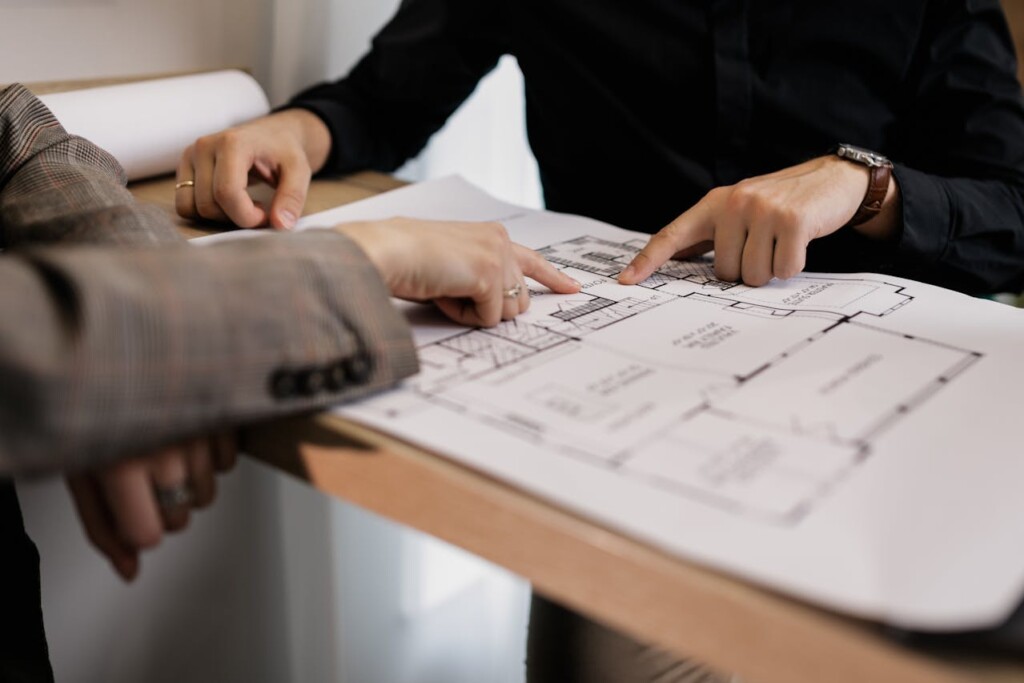
MEP systems form the operational backbone of flex industrial projects. These systems must accommodate both office environments that require comfort conditioning and warehouse spaces that need functional utilities and fire protection.
Electrical Infrastructure Requirements
Electrical systems in flex buildings handle diverse power demands across mixed-use spaces. We design electrical panels to serve both office loads and industrial equipment, with separate circuits for warehouse bay doors and office HVAC units.
Receptacle layouts follow distinct patterns for each zone. Office areas receive standard 120V outlets at desk height, while warehouse areas need 240V connections for equipment and strategically placed outlets for cleaning and maintenance. Ground-fault circuit interrupters (GFCIs) protect wet locations and outdoor connections.
Exit lighting is critical in these configurations. We install battery-backed emergency fixtures along egress paths from warehouse areas to storefront exits. Motion sensors control warehouse lighting to reduce operating costs while maintaining safe visibility.
HVAC System Design
HVAC design requires careful coordination between architectural layouts and mechanical equipment. We use floor plans and reflected ceiling plans to calculate proper airflow distribution for temperature-controlled office areas and warehouse zones with varying heating needs.
Ductwork routing poses unique challenges in flex buildings. Office areas typically need full conditioning with supply and return ducts, while warehouse spaces often use unit heaters or radiant systems. The transition between zones requires proper dampers and controls to maintain comfort without wasting energy.
Equipment selection balances efficiency with maintenance access. We position heating and cooling units where they can serve both areas effectively while remaining accessible for service calls. Warehouse areas might use dock-mounted units or suspended equipment that won’t interfere with overhead door operations.
Plumbing System Configuration
Plumbing systems serve distinct functions across building zones. Office areas require standard fixtures, including sinks, toilets, and water heaters sized for typical occupancy loads. We route potable water lines to serve break room and restroom areas with adequate pressure.
Warehouse plumbing focuses on utility needs and code compliance. Floor drains become essential near overhead doors and in areas where washdowns might occur. We install hose bibs for cleaning equipment and landscape irrigation where needed.
The sanitary stack and vent system must accommodate both areas properly. We size waste lines for office fixtures while ensuring adequate drainage for any warehouse floor drains. Water riser systems provide reliable pressure throughout the building, with isolation valves allowing maintenance without disrupting the entire facility.
Fire Protection and Life Safety Systems
Fire protection requirements vary significantly based on occupancy classifications. Many jurisdictions require full sprinkler systems in new flex construction, especially when combining office and warehouse uses under one roof.
Demising walls between units serve as both property boundaries and fire barriers. We construct these walls to meet fire-resistance ratings specified by building codes, typically one or two hours depending on building size and occupancy loads.
Sprinkler system design must address both areas appropriately. Office zones need standard spray patterns for typical contents, while warehouse areas might require different head types for higher ceilings and potential storage configurations. We coordinate sprinkler locations with structural elements and overhead door tracks.
ADA Compliance Integration
Accessibility requirements apply when new construction creates public or employee work areas. We integrate ADA requirements into the overall building design rather than treating them as an add-on.
Paths of travel from parking to office areas must meet specified slope and surface requirements. Door hardware, restroom layouts, and counter heights must meet specific dimensions to ensure accessibility. We coordinate these elements during design to avoid costly retrofits later.
Interior Fit-Out Considerations
Modern flex projects often deliver finished office spaces ready for immediate occupancy. This includes complete electrical systems, HVAC conditioning, and plumbing fixtures installed and operational at turnover.
Warehouse areas receive basic utilities with accommodations for future tenant improvements. We provide electrical rough-ins for potential equipment locations and HVAC connections where tenants might add supplemental conditioning. Temperature control becomes especially important for specialized uses like cold storage or dry goods warehousing.
Racking and shelving accommodations require coordination during construction. We ensure adequate floor-loading capacity and avoid utility conflicts where heavy storage systems might be installed. Clear heights and door alignments support efficient material handling operations from day one.
What Do Budgets And Unit Programs Look Like For Small-Bay Flex?
Real project examples provide the clearest picture of flex development costs and how we structure rentable units. These figures help set realistic expectations for construction budgets and rental income potential.
A detailed 20,000-square-foot project illustrates typical economics. The development features ten individual 2,000-square-foot units, each with red-iron construction supporting the warehouse area. Each unit includes a 14×14 bay door for equipment access and a two-story office component with dedicated bathroom facilities.
Construction costs for this project range from $175 to $205 per square foot, reflecting the complexity of multi-tenant construction with individual MEP systems and finished office areas. Monthly rental rates for these units typically fall between $2,700 and $3,000 per unit, depending on market conditions and the amenities provided.
Smaller projects can achieve similar efficiency at a reduced scale. A five-unit, 7,250-square-foot ground-up flex build shows how complete infrastructure drives value. This project includes full sprinkler systems throughout all units, complete MEP installations ready for immediate occupancy, and finished offices that allow tenants to move in without additional build-out costs.
Modular, repeatable bay designs form the foundation of cost-effective flex development. Standardized unit layouts let us refine cost estimates early in the process and present consistent options to prospective tenants during preleasing. This approach reduces construction variables and speeds permitting and tenant decision-making.
Structural-system selection directly affects construction costs and long-term durability. Pre-engineered metal buildings offer speed and cost efficiency for basic warehouse functions. Conventional steel frames with precast panels provide enhanced durability and a professional appearance at a moderate premium. Masonry construction with wood trusses represents a traditional approach that balances initial costs with long-term maintenance considerations.
Smart program decisions support construction budgets and leasing velocity. Consistent bay sizes simplify mechanical and electrical rough-in work while creating familiar spaces for potential tenants. Standardized door and office configurations reduce custom fabrication costs and enable bulk purchasing of common components. These efficiencies compound across multiple units within the same project.
Conclusion And Next Steps
Building a flex industrial space with an office-front and warehouse back requires strategic planning and thorough preparation. We coordinate with developers and property owners to establish fundamental project parameters before moving into permitting. The office-front/warehouse-back layout, unit sizes, and bay door specifications form the foundation for every successful flex build.
Selecting the structural system directly affects schedule and budget. Whether choosing pre-engineered metal buildings for speed, conventional steel with precast panels for durability, or masonry with wood trusses for cost control, we align these decisions with project timelines and financial targets. Our experience shows that a modular bay design creates predictable cost structures and supports pre-leasing efforts.
Preparing a comprehensive permit package helps prevent construction delays and ensures code compliance. Complete documentation includes electrical plans with receptacles and panels, HVAC mechanical drawings with airflow calculations, plumbing drawings with fixture schedules, ADA accessibility requirements, and demising wall specifications. We coordinate the reflected ceiling plan to integrate lighting, exit signs, and mechanical systems. Energy code checks and COMcheck documentation verify compliance with local building requirements.
Life safety elements demand careful attention throughout planning. Sprinkler systems, when required, are coordinated with the structural and MEP systems. Demising walls function as fire barriers between tenant spaces. We document these elements early to avoid redesign during construction. Interior fit-out specifications ensure move-in-ready offices and functional warehouse operations that meet tenant expectations.
Ready to move forward with your flex industrial project? Contact EB3 Construction to coordinate your project from concept through construction completion.