Commercial construction Amarillo TX encompasses everything from ground-up builds to comprehensive remodeling delivered by licensed general contractors throughout the West Texas Panhandle. Local teams manage complex project planning and maintain emergency response capabilities for urgent building issues. The scope typically covers office remodeling, commercial finish-outs, and ongoing facility services for businesses in Amarillo and nearby Canyon.
These projects require coordination across multiple trades, regulatory compliance, and careful scheduling to minimize business disruption. We see developers and property owners pursuing both new commercial construction and adaptive reuse of existing structures across diverse sectors in the region.
Which Delivery Methods Fit Your Project: General Contractor, Construction Management, Or Design-Build?

A general contractor Amarillo teams work directly with the owner’s architect under separate contracts. The general contractor takes overall responsibility for construction, managing subcontractors and coordinating the build according to completed design documents. This traditional approach provides clear accountability and works well when plans are finalized before construction begins.
Construction management operates differently by focusing on organization and coordination across all project phases. The construction manager acts as the owner’s representative, providing cost control and schedule oversight while working alongside the design team. This method allows construction planning to begin during design development, potentially accelerating project timelines.
Design-build Amarillo delivery streamlines the process by placing both design and construction under single-entity delivery. One team handles everything from initial concepts through project completion. This approach can reduce communication gaps and speed up completion since the design team and builders collaborate from the start rather than working in sequence.
Pre-engineered steel buildings offer another path for specific commercial applications. These work particularly well for warehouses, manufacturing facilities, and straightforward commercial spaces.
| Delivery Method | Timeline | Cost Control | Owner Involvement |
|---|---|---|---|
| Design-Bid-Build | Longer timelines | Competitive bidding offers pricing transparency | High involvement due to separate contracts with designer and builder |
| Design-Build | Streamlined and faster | Less transparency but earlier pricing establishment | Lesser owner input on specific design elements |
| Construction Manager at Risk (CMAR) | Potentially faster through collaboration | Guaranteed Maximum Price provides budget control | High involvement to ensure early contractor input |
| Integrated Project Delivery (IPD) | Fast through early collaboration | Shared risk/reward model | Requires significant involvement and commitment |
Choose your delivery method based on three key factors. Speed favors design-build when you need fast completion, while traditional general contracting works better when you have time for thorough bidding. Single-point accountability points toward design-build or construction management, depending on whether you want the builder or manager taking primary responsibility. Design complexity influences the choice as well, with intricate projects often benefiting from construction management oversight or design-build coordination.
The Construction Industry Institute found that construction management can improve schedule and budget outcomes when the construction team provides input during design. Each method serves different project needs, and the right choice depends on your priorities for schedule and budget control.
How Can In-House Fabrication And Millwork Support Your Amarillo Build?
We coordinate with specialized production facilities throughout Amarillo that operate substantial millwork and metal fabrication operations. A typical setup includes a 42,000-square-foot millworks facility capable of producing cabinets and trim, alongside a 7,500-square-foot metal fabrication shop handling structural steel and miscellaneous metals. These production capabilities represent significant infrastructure investment and advanced equipment capacity.
In-house fabrication directly impacts project schedules by reducing dependency on external suppliers and eliminating shipping delays from distant locations. When structural steel components and millwork pieces come from local shops, we maintain direct oversight of quality control processes and production timing. This coordination advantage becomes particularly valuable during Amarillo’s weather-sensitive construction seasons when external deliveries face potential delays.
Metal fabrication shops with adequate capacity can handle both standard structural elements and custom miscellaneous metals required for specialized commercial applications. The ability to fabricate handrails, stairs, platforms, and architectural features in-house allows for precise coordination with other construction phases. We can sequence millwork production to align with building progress, ensuring cabinets and trim arrive exactly when interior work reaches the appropriate stage.
Quality control benefits from direct communication between our field teams and fabrication personnel. When issues arise or modifications become necessary, we can address changes immediately rather than working through external vendor representatives. This streamlined communication reduces the potential for errors and rework that can occur when multiple parties handle design interpretation and production coordination.
Cost implications vary depending on project scope and material specifications. Local fabrication may offer competitive pricing for standard items while providing premium value for custom work that requires multiple revisions or tight tolerances. We evaluate each project’s fabrication requirements against available shop capacity and regional sourcing options to determine the most cost-effective approach.
Property owners should ask specific questions about fabrication capabilities during contractor selection. Which elements will be produced in-house versus sourced from regional partners? How does the contractor’s shop capacity align with your project’s metal and millwork requirements? What backup plans exist if shop capacity becomes constrained during peak construction periods? Understanding these fabrication logistics helps developers make informed decisions about contractor capabilities and project risk management.
Which Commercial Sectors See Active Construction In Amarillo?
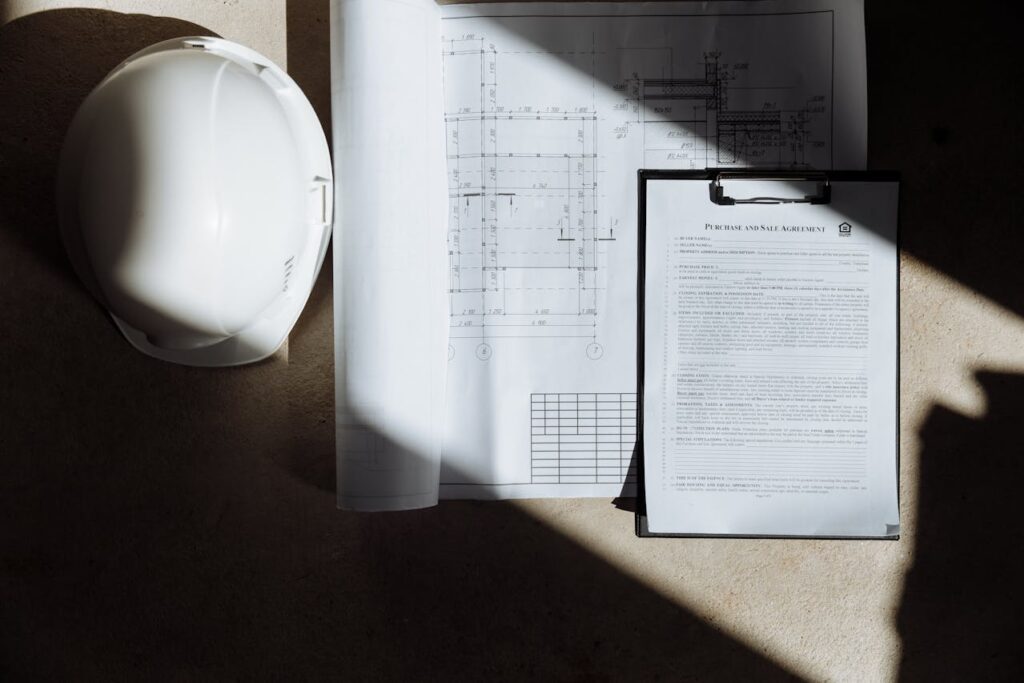
Amarillo’s commercial construction landscape spans diverse sectors that reflect the region’s economic foundation and growth patterns. We see consistent activity across civic and government projects, financial institutions, healthcare facilities, industrial developments, laboratory spaces, office buildings, retail establishments, spiritual centers, warehouse construction, restaurants, athletic facilities, and higher education infrastructure.
Healthcare construction in Amarillo represents one of the most robust sectors. The established Medical District anchors significant activity with ongoing expansions at BSA Health System and Northwest Texas Healthcare System. Laboratory spaces often integrate with healthcare developments, creating specialized environments for medical research and diagnostic services that require precise environmental controls and technical infrastructure.
Industrial construction maintains strong momentum throughout the region. Manufacturing facilities, processing plants, and distribution centers capitalize on Amarillo’s central location and transportation access. Warehouse construction follows similar patterns, with developers building modern distribution facilities that serve regional and national supply chains across the Texas Panhandle.
Civic projects encompass municipal buildings, government facilities, and public infrastructure that supports community growth. These developments often require specialized knowledge of public procurement processes and compliance with specific governmental building standards. Religious facilities represent another active segment, with congregations expanding and renovating worship spaces, educational buildings, and community centers.
Office remodeling drives substantial commercial activity as businesses adapt existing spaces for modern workplace needs. Retail build-outs continue across Amarillo, from small tenant improvements to large-scale shopping developments. The restaurant sector maintains steady construction activity with new concepts, franchise expansions, and facility renovations.
Athletic facilities construction serves both institutional and recreational markets. Higher education projects at institutions like Amarillo College and West Texas A&M University drive significant construction volumes, including classroom buildings, research facilities, dormitories, and campus infrastructure.
We handle additions and commercial finish-outs across all these sectors, adapting our approach to each project’s specific occupancy requirements and operational needs. Sector experience matters significantly in commercial construction because each industry brings unique code requirements, operational workflows, and performance standards that affect design and construction approaches.
Conclusion And Next Steps
Define your project scope first, then select your preferred delivery method among general contractor, construction management, or design-build based on your priorities. General contracting works well when you want direct oversight with your architect. Construction management offers detailed coordination across all phases. Design-build provides single-point accountability and faster timelines.
Verify that potential contractors have experience in your specific sector and occupancy type. Ask whether millwork or metal fabrication will be handled in-house or sourced from regional partners, as this affects both schedule and cost control. The Amarillo Chamber of Commerce contractor listings provide a comprehensive directory of local commercial construction options across multiple categories.
Contact EB3 Construction to discuss aligning delivery method, project scope, and schedule for your commercial construction project in Amarillo.