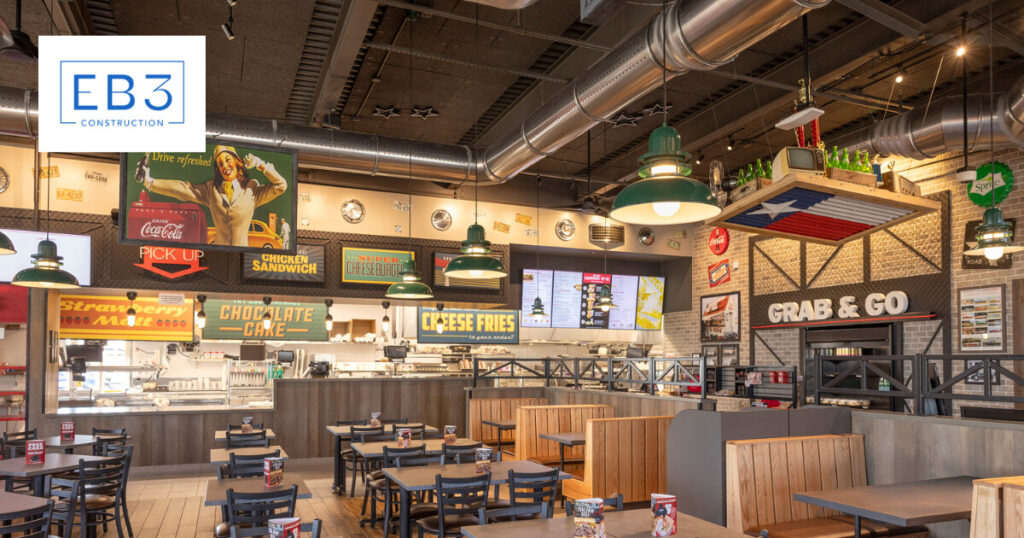
Natural wood and warm pendant lights draw your eye as soon as you step into Austin’s newest casual dining spots. The city’s restaurant scene has shifted toward relaxed spaces where conversation flows under light streaming through oversized windows.
This approach to casual dining build-out projects in Austin reflects the city’s outdoor culture and social atmosphere. Open layouts, natural materials, and thoughtful lighting create environments that suit quick lunches as well as lingering dinners with friends.
How Should Dining Room Layout And Seating Be Organized?
Small tables anchor the main dining room. They provide flexibility for different party sizes without overwhelming the room. Black chairs and tables maintain clean lines throughout.
Group seating creates intimate conversation areas. Upholstered chairs in blue and gray tones add visual warmth and support longer dining sessions. These soft seating elements balance the hard surfaces of wood and tile.
Communal picnic tables maximize outdoor capacity. They encourage social interaction among separate parties. The long tabletops accommodate larger groups while preserving the casual atmosphere essential to this dining style.
Clear sightlines connect seating zones. Open pathways allow servers to move efficiently between tables. Guests can see across the entire space, creating energy and visual connection from the entrance to the patio.
According to MityLite’s restaurant seating guide, treating two-top tables as building blocks allows easy reconfiguration for larger parties while maintaining intimate dining options for couples. Strategic positioning creates clear traffic lanes of 24 to 30 inches between seating areas for smooth service flow.
What Bar And Service Features Support Guest Flow?
The bar serves as the central hub in many of the casual dining spaces we design. Its strategic placement creates natural gathering points and supports smooth operational flow.
Backbar shelving serves dual purposes in these layouts. Bottle displays create visual interest while keeping spirits organized and accessible. Plant accents soften industrial elements and add life to service zones. This combination maintains functionality while supporting the relaxed Austin dining aesthetic.
Warm task lighting illuminates the service counter without creating harsh shadows. This targeted approach helps bartenders work efficiently during peak hours. The color temperature matches the space’s overall warmth, creating consistency between bar and dining areas.
We design bar depths to accommodate multiple staff members simultaneously. Standard 24-inch service corridors allow bartenders to move freely without colliding. This spacing becomes critical during dinner rushes, when speed and coordination matter most.
Dark wood ceilings add visual weight above the service area. This contrast draws attention upward and adds depth in the bar area. The ceiling treatment also helps define the service area as distinct from surrounding dining spaces while maintaining a visual connection to the overall room.
How Do Lighting And Finishes Shape The Guest Experience?
Layered lighting creates the warm atmosphere that defines successful casual-dining spaces. Woven pendants hang over seating areas, casting focused pools of light that encourage conversation and intimacy. These fixtures are used both indoors and outdoors, maintaining visual consistency across zones.
Bar lighting glows softly to highlight the service counter without harsh glare. Task lighting supports efficient operations, while ambient lighting sets the overall mood. Together, they ensure staff can work effectively while guests enjoy comfortable illumination.
Material Selections Drive Visual Impact
Black-and-white checkered flooring provides a classic foundation that anchors the space. This bold pattern creates visual interest without overwhelming other design elements. Wood ceilings add natural warmth above dining areas, while sloped roofs introduce architectural variety that breaks up large interior volumes.
A curved wall wrapped in blue tile serves as a focal point that draws the eye and defines distinct zones within the open layout. This feature wall adds color and texture while maintaining a relaxed, approachable atmosphere.
Softening Elements Balance Hard Surfaces
Upholstered chairs in blue and gray tones provide comfort while introducing subtle color variation. These soft seating options contrast with hard surfaces such as wood and tile, creating a balanced tactile experience. Greenery accents throughout the space add natural elements that soften the overall aesthetic and connect indoor areas with outdoor dining zones.
We coordinate these finish selections to support restaurant operations and meet the comfort expectations of casual-dining guests. The materials work together to create spaces that feel welcoming rather than sterile, encouraging guests to linger and return.
What Outdoor And Storefront Elements Matter Most?
Covered outdoor dining spaces expand usable restaurant capacity while creating comfortable environments that encourage extended guest stays. We find that pergola-covered seating areas provide year-round comfort by offering protection from intense sun and unexpected weather. The sloped wooden roof design promotes natural drainage while maintaining the open-air feel guests look for in outdoor dining.
Woven pendant lights suspended from these covered structures establish the warm ambiance guests expect indoors. This lighting continuity blurs the transition between interior and exterior spaces. Picnic tables arranged throughout these covered areas accommodate larger groups and foster the casual social interactions that define successful Austin dining establishments.
Maximizing Street Visibility and Natural Light
Large storefront windows serve dual purposes in casual dining construction. These expansive glass installations flood interior spaces with natural daylight during peak lunch hours while creating visual connections between diners and street activity. We position these windows to showcase the restaurant’s energy to passersby.
The transparency provided by floor-to-ceiling windows turns the dining room into a showcase of restaurant activity. Guests inside can observe street life, while pedestrians glimpse the warm, inviting atmosphere within. This visual exchange drives foot traffic and reinforces the restaurant’s role in the neighborhood fabric.
Integrating Landscaping with Urban Context
Street trees and sidewalk plantings enhance outdoor comfort without requiring direct maintenance from the operator. We design outdoor seating areas to take advantage of mature trees for natural shade and visual softening. These established landscape elements soften the harder edges of urban construction while providing seasonal interest throughout the year.
The benefits of greenery extend beyond aesthetics. Trees filter street noise, create natural privacy screens between dining areas, and establish microclimates that keep outdoor seating comfortable through Austin’s changing weather. Strategic placement of outdoor furniture leverages these natural amenities while maintaining clear pedestrian flow.
Conclusion and Next Steps
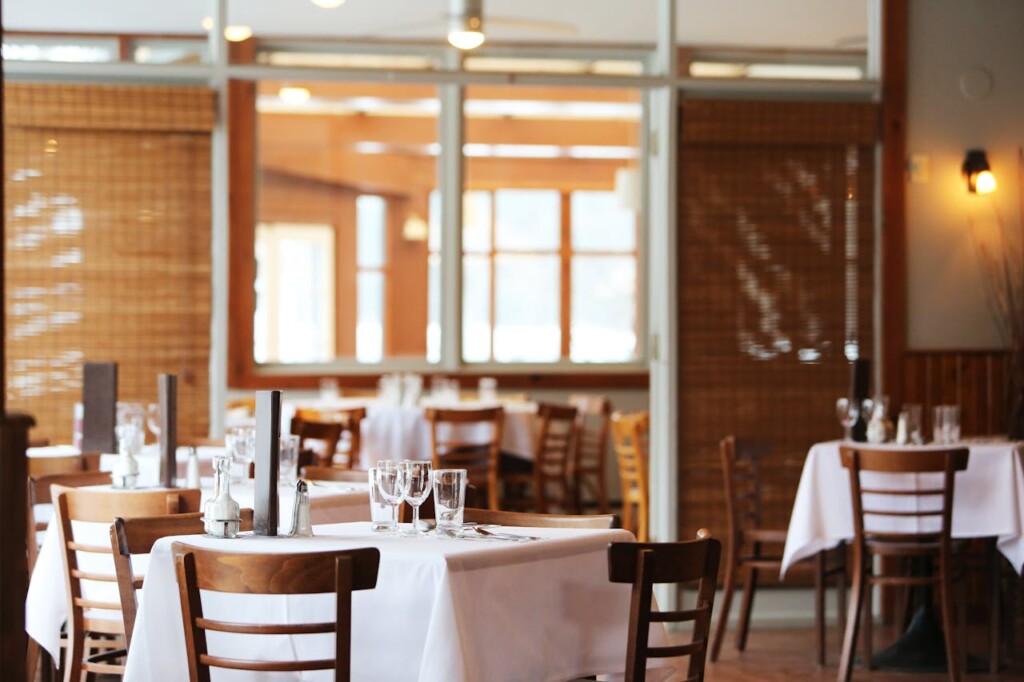
The visual elements we’ve examined throughout this casual dining build-out in Austin analysis reveal a clear design strategy. Open seating arrangements, paired with a bar-centric layout, create natural gathering spaces that encourage interaction. The combination of warm pendant lighting, wood accents, and a curved tiled feature wall adds visual interest while maintaining the relaxed atmosphere guests expect. These design choices work together to support operational efficiency and guest comfort.
As you plan your outdoor patio and interior spaces, prioritize elements that reinforce this cohesive approach. Focus on layered lighting that transitions seamlessly from indoor to outdoor areas. Select durable materials that can handle Austin’s climate while maintaining a warm, welcoming aesthetic. Integrating natural textures, strategic greenery placement, and flexible, open seating will ensure your space functions well during peak service and create the social dining experience that defines successful casual restaurants in Austin’s competitive market.
Ready to bring these design elements together in your casual dining project? Contact EB3 Construction to discuss how we can execute your vision with precision and expertise.