A restaurant build-out in an occupied retail center has consequences a standard commercial project doesn’t. Neighboring tenants share walls, loading zones, and parking. A poorly managed construction schedule delays your opening and disrupts everyone around you, creating friction with landlords and center management before your first customer walks through the door.
Knowing which questions to ask when interviewing contractors for a restaurant project in a multi-tenant retail center can be the difference between a smooth delivery and a costly, drawn-out build. The sections ahead outline what to verify: experience, licensing, contracts, scheduling, and restaurant-specific operations.
What Experience, Portfolio, And References Should You Verify?
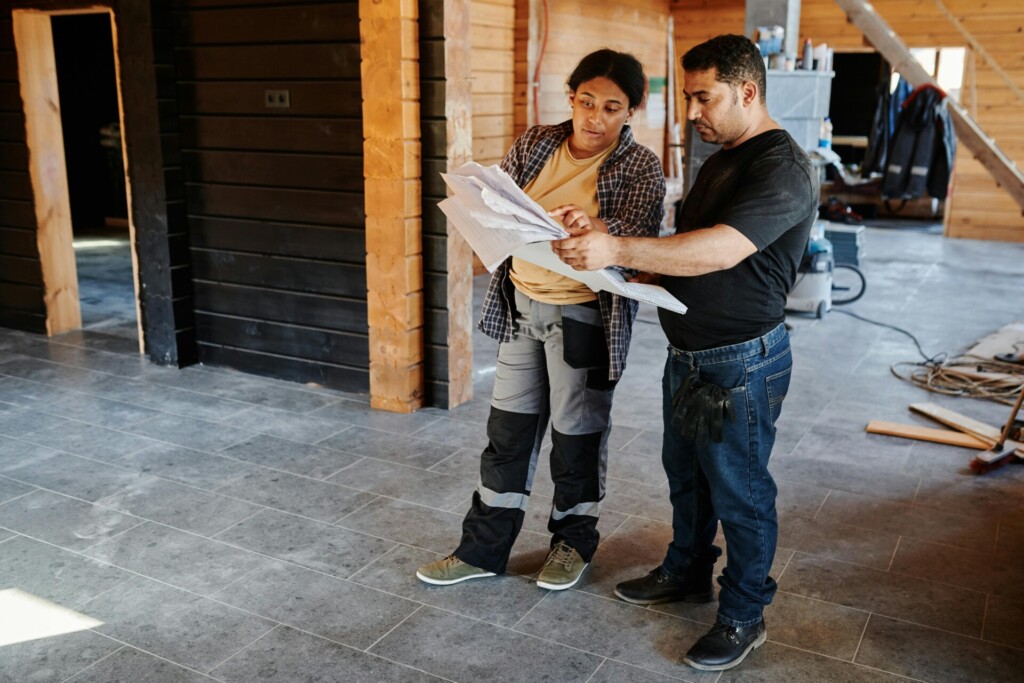
Years in the industry matter, but they tell only part of the story. A contractor who has spent a decade building office interiors or retail shell spaces carries a fundamentally different skill set from one who has coordinated MEP rough-ins around commercial hood placements or navigated health department walkthroughs for a food-service occupancy. Start by asking directly: How long have you been in the industry, and what share of that work has been in restaurant or food-service construction?
The follow-up question is equally important. Ask whether they have experience with your specific concept—whether it’s a full-service dining room, a fast-casual counter-service layout, or a bar-forward space with shared kitchen zones. A contractor who has only built one format may struggle with the service line flow and spatial logic of another.
Reviewing the Portfolio with Specificity
Request a portfolio and look past the finished photography. Ask to see projects that match your shell-space conditions, specifically builds within multi-tenant retail centers where coordination with neighboring tenants, shared utility infrastructure, and landlord requirements adds complexity. Professional contractors maintain documented records of completed restaurant builds, and a strong portfolio should reflect real problem-solving, not just attractive interiors.
As you review the work, press for examples of restaurant-specific challenges the contractor resolved. Did they manage grease management system installation when the existing drain configuration was inadequate? How did they handle ventilation routing in a space with limited ceiling clearance or structural constraints? Did the build meet ADA compliance requirements on the first inspection pass? These are the details that separate contractors with genuine restaurant construction experience from those with general commercial backgrounds.
Contacting References and Asking the Right Questions
A reliable contractor will provide client references without hesitation. Call at least three, and make sure they are from recent restaurant or commercial kitchen projects rather than older work that predates current code requirements. According to best practices in commercial vetting, questions should focus on whether the contractor stayed on schedule and within budget, how they handled unexpected site conditions, and whether the client would hire them again.
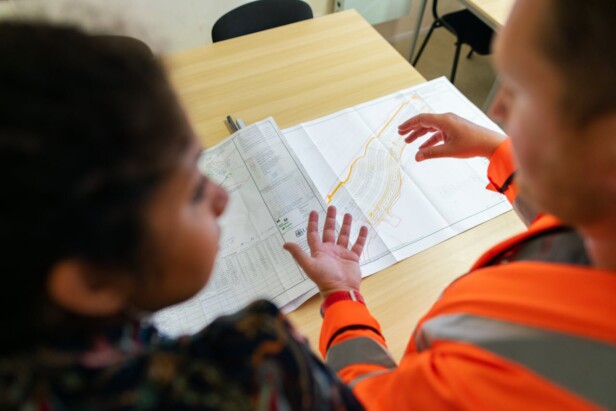
Pay close attention to how references describe the contractor’s ability to manage multiple stakeholders. Restaurant projects in retail centers routinely involve coordination between the property owner, the tenant, the architect or designer, equipment vendors, and multiple trade subcontractors. A contractor who communicates clearly across those relationships reduces friction and keeps the project moving. References will tell you whether that coordination actually happened or whether the owner had to manage it themselves.
Compatibility between the contractor’s past work and your project vision is the final checkpoint. If their portfolio skews toward quick-service buildouts and your concept demands a nuanced guest experience with specific materials, lighting, and restaurant flow requirements, raise that gap in the interview before moving forward.
What Licenses, Insurance, And Contract Terms Should You Confirm?
Contractor Licensing
A valid contractor license is the baseline requirement before any other discussion. Licensing requirements vary by state and sometimes by municipality, so confirm the license type matches the scope of work. A general contractor building out a restaurant in a multi-tenant retail center may need a commercial license, in addition to trade-specific credentials for electrical, plumbing, or mechanical work.
Ask the contractor which license they hold and whether it covers the full scope of your project. Request the license number and verify it through your state or local licensing board. An unlicensed contractor working on a commercial project creates liability exposure for the property owner, and it can complicate permitting and inspections later.
Insurance Coverage
Two insurance types are nonnegotiable for commercial restaurant work: commercial general liability (CGL) and workers’ compensation. CGL coverage protects against bodily injury and property damage claims arising from construction activity, which is especially important in an active retail center with nearby tenants and customers. In New York City, for example, the NYC Department of Buildings requires contractors to carry at least $1 million per occurrence and $2 million aggregate in general liability coverage.
Workers’ compensation is equally critical. It covers the contractor’s employees if they are injured on-site, and the absence of it can shift financial responsibility to the property owner in some jurisdictions. Request a current certificate of insurance before the project begins, and confirm that coverage remains active throughout construction. Ask whether the contractor also carries a surety bond, which provides an additional financial backstop if the contractor fails to complete the work or meet contract obligations.
Contract Terms That Protect Your Project
The contract structure matters as much as the coverage behind it. Ask the contractor whether they are comfortable working under a joint contract that gives both parties clearly defined roles, rights, and obligations. This structure reduces ambiguity, particularly on complex commercial projects where design teams, landlords, and property managers may all have input.
Two clauses to address directly are the termination clause and a maximum materials budget. A termination clause defines the conditions under which either party can exit the agreement, protecting you if the work stalls or deviates significantly from the agreed scope. A maximum materials budget sets a firm spending cap on materials, preventing cost overruns that can surface mid-project when substitutions or sourcing decisions are made without owner approval.
Payment Schedule and Materials Sourcing
Clarify the expected payment schedule before signing anything. Most commercial construction contracts use milestone-based or progress-based payment structures, where funds are released as completed work is verified rather than on a fixed calendar. This approach keeps payments tied to real progress and gives property owners leverage to address quality issues before the next disbursement. A retainage provision, typically 5% to 10% withheld until project completion, adds another layer of protection against unfinished or defective work.
Ask what payment methods the contractor accepts and whether early payment discounts or late payment penalties apply. Beyond payments, ask where the contractor normally sources materials and whether their preferred suppliers align with your budget expectations. Materials sourcing decisions made early in the project can have a measurable impact on total project cost, lead times, and quality consistency throughout the build.
| License Requirement | Insurance | Minimum Thresholds |
| General Contractor License | Commercial General Liability (CGL) | $1 million per occurrence / $2 million aggregate |
| Specialty Trade Licenses (Electrical, Plumbing, Mechanical) | Workers’ Compensation Insurance | – |
| Surety Bond | May be required; provides additional financial protection | Varies |
How Will The Contractor Manage Schedule, Communication, And On-Site Coordination?

Who Oversees the Project Day to Day?
One of the most direct questions to ask is who will personally oversee your build. A contractor may have an impressive track record, but if a qualified superintendent or project manager is not physically present on-site each day, small coordination problems can snowball quickly.
Ask specifically whether a dedicated project manager (PM) will be assigned to your restaurant buildout and whether that person will be on-site daily or split across multiple projects. In a multi-tenant retail center, where adjacent tenants are open for business, an absent or distracted superintendent poses real risk for schedule drift and neighbor complaints. Clarify whether a foreman will be the primary on-site lead when the PM is off-site, and confirm that person has decision-making authority.
Status Updates and Communication Channels
Stakeholder updates should follow a predictable cadence, instead of happening only when problems arise. Ask how often the contractor will formally update you on progress: daily check-ins, weekly summary reports, or milestone-based communications tied to the phases of construction.
Get specific about the format and channel. Will updates come via email, a project management platform, or a phone call? Who is your direct line of contact when an urgent question surfaces mid-build? Studies show that nearly 88% of delayed projects also go over budget, a pattern that often traces back to gaps in communication rather than purely technical issues. Knowing exactly who to call and how quickly you can expect a response removes one of the most common friction points in a commercial buildout.
Construction Schedule and Timeline
Request an anticipated daily schedule that shows site hours, trade sequencing, and key milestones. In a retail center, standard business hours for neighboring tenants may constrain when certain loud or disruptive work can happen, so confirming daily start and stop times matters early.
Ask for the estimated overall timeline and probe whether the contractor typically finishes within the agreed time frame. A contractor who can speak to how they manage look-ahead scheduling and trade sequencing shows a proactive approach rather than a reactive one. When one trade runs behind, the ripple effect through drywall, painting, and final inspections can push a project weeks past its target completion date.
Cleanup Plan and Post-Construction Handoff
Confirm the contractor’s post-project cleanup plan before work begins. In a shared retail environment, debris, dust, and material staging affect neighboring tenants and the property owner, not just your space.
Ask whether daily cleanup is part of the site protocol and who is responsible for managing waste removal throughout the build. A clear cleanup plan tied to each phase of construction signals that the team respects the broader property and the landlord relationship you need to protect.
Weather Contingency and Schedule Recovery
Severe weather will halt certain exterior work, deliveries, or concrete pours. Ask the contractor directly: What is your strategy when weather disrupts the schedule? A capable team will have a documented weather contingency plan that includes buffer time, pre-ordered materials, and a method for recovering lost days without compressing the quality of downstream work.
For a restaurant project with a firm opening date tied to lease obligations or marketing commitments, schedule recovery planning deserves a direct answer, not a vague reassurance. The contractor’s response reveals how they handle the unexpected, which is one of the clearest signals of their overall management discipline.
What Restaurant-Specific Logistics And Operations Should You Cover?
Permits, Inspections, and Occupancy Certification
Restaurant construction in a multi-tenant retail center triggers a longer permit chain than most commercial builds. Ask the contractor directly: Will you manage submissions to the building department, health department, and fire marshal, or does that coordination fall to us? A contractor with genuine restaurant experience will have an established workflow for tracking each approval, including fire suppression reviews, ventilation requirements, and electrical code compliance.
Health department plan checks deserve specific attention. Inspectors review kitchen layout, sink counts, surface materials, and drainage before approving occupancy. If the contractor has not built a restaurant before, those reviews can stall for weeks. Press for a clear answer on who owns the permit tracker and how resubmittals are handled when an authority requests revisions.
Occupancy certification is the final gate before opening. Ask whether the contractor coordinates the sequence of final inspections so the building, fire, and health sign-offs align, rather than stacking up at the end of the project. A missed step in that sequence can delay opening by days or longer.
Kitchen Logistics: Hood, Walk-in Units, and MEP Coordination
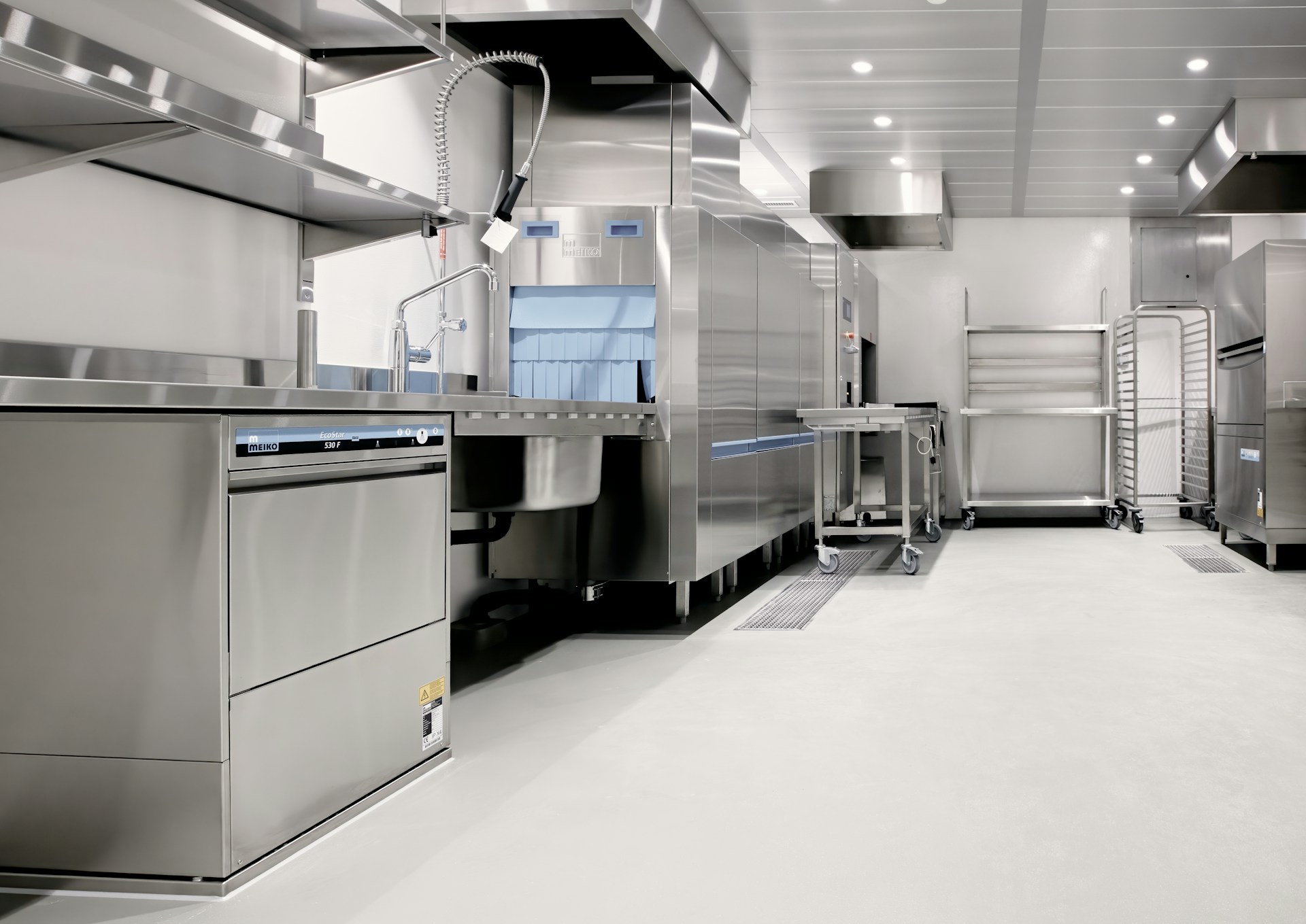
The kitchen is where restaurant construction separates from standard commercial interior work. Start by asking how the contractor plans the kitchen hood and exhaust system. Hood type, duct routing, roof penetrations, fire suppression integration, and make-up air balance all interact. Poor coordination between the hood layout and mechanical rough-in is a common source of inspection failures and rework on restaurant projects.
Walk-in coolers and freezers carry their own coordination demands. Their structural weight, refrigeration line routing, floor drain placement, and electrical load must be confirmed early against the building’s existing slab and utility capacity. Ask whether the contractor has confirmed load calculations and panel capacity for the full kitchen equipment list before rough-in begins.
MEP coordination covers the broader picture: gas line sizing, plumbing for mop sinks and floor drains, hot water recovery, and electrical circuits for high-demand equipment like dish machines and ovens. A kitchen layout that looks functional on paper can create serious bottlenecks if the utility rough-ins are not sequenced correctly. Ask the contractor to walk you through how they coordinate the MEP trades with the kitchen equipment schedule so there are no conflicts when equipment arrives on-site.
Guest Experience: Flow, Materials, Lighting, and Acoustics
The front-of-house build carries its own set of questions that connect directly to how a restaurant performs on opening night. Ask how the contractor thinks about movement between the host stand, bar, kitchen pass, and dining floor. Circulation that works on a floor plan can still feel congested once furniture, fixtures, and staff are in place. A contractor with restaurant experience will flag those issues during design coordination rather than after framing is complete.
Material and finish selections affect both code compliance and brand identity. Flooring, wall coverings, and ceiling systems must meet fire-rating and cleanability requirements while still supporting the design intent. Ask whether the contractor reviews finish selections against code requirements before procurement, or whether that responsibility sits with the architect alone.
Lighting and acoustics are often treated as afterthoughts, but they shape the dining experience as directly as food quality. Ask how the contractor coordinates lighting control zones between dining, bar, and kitchen areas, and whether acoustic treatments are built into the ceiling and wall assemblies during construction, rather than added as a fix after the build.
Downtime, Phased Construction, and After-Hours Work
For remodels and renovations inside an active retail center, downtime management is a central concern for both the restaurant operator and the landlord. Ask the contractor how they approach phased construction when portions of the restaurant need to remain operational. A clear phasing plan separates the work sequence into stages that protect revenue-generating areas while construction moves through the back-of-house or non-service zones.
After-hours work is a practical tool in active centers where daytime construction would disrupt neighboring tenants or shared-space operations. Ask directly: Do you have crews available for overnight or early-morning shifts, and how would that affect the overall project schedule and cost? Some trades, particularly those involving loud demolition or utility tie-ins, may need to occur outside standard business hours regardless of phasing preferences.
Confirm that the contractor has experience managing the logistics of phased construction, including temporary barriers, dust control, and safe pedestrian separation during active construction phases. In a multi-tenant environment, those details are not optional considerations; they affect the contractor’s relationship with the property manager and the project’s standing with the retail center throughout the build.
Design Coordination and Cost-Function Improvements
Ask whether the contractor will coordinate directly with your architect or interior designer throughout construction or only at the start. Effective design coordination means the GC is reviewing drawings for constructability, flagging conflicts before they reach the field, and communicating changes back to the design team in real time. When that loop breaks down, design intent erodes through field decisions made without context.
A contractor worth hiring will also surface value engineering opportunities without being asked. That means proposing alternatives that preserve the design outcome while reducing cost or simplifying installation. Ask for a specific example of how they have approached that balance on a previous restaurant or foodservice project. The answer reveals whether they treat design coordination as a service or simply as a handoff.
Conclusion And Next Steps

The questions covered throughout this article form a structured framework for evaluating contractors for a restaurant project in a multi-tenant retail center. Experience with food service facilities, verified licensing and insurance, clear contract terms, and a defined management structure all indicate whether a contractor is genuinely prepared for this type of work. A contractor who can answer these questions with specifics, not generalities, is worth serious consideration.
Project readiness for restaurant construction goes beyond credentials. It comes down to how a contractor handles safety planning, manages the permitting process, coordinates MEP trades, and protects neighboring tenants during construction. The details of kitchen logistics, phased construction, and guest flow reflect whether a team has actually built in this environment before—or is learning on your project’s timeline.
At EB3 Construction, we understand the weight of these decisions. Reach out to our team to discuss your restaurant project and get answers to the questions that matter most.